HelloGrowthCRM software
Built for real small-business sales teams
HelloGrowthCRM helps reps qualify faster, follow up on time, and close more deals—with practical automation in one place.
- AI lead scoring and pipeline visibility
- Built-in dialer, WhatsApp, and email automation
- Sales forecasting and RevOps-ready reporting
A customer contact program is a planned approach to keeping in touch with your customers regularly and meaningfully. It helps your business stay connected, address customer needs, and increase loyalty by managing communications like follow-ups, support, and promotions in an organized way. This article covers why small business owners need one, how to create it, a practical example, common mistakes, and how HelloGrowthCRM supports this process.
Why this comes up / what goes wrong
Small business owners often lose leads or customers because they don’t follow up consistently or track communications well. Many run sales and customer service on text messages, emails, and spreadsheets, which can cause missed messages, slow responses, and disorganized customer information. Without a clear customer contact program, it’s hard to maintain relationships, respond quickly to service requests, or encourage referrals. This results in lost revenue and unhappy customers.
Step-by-step
- Define your customer segments: Identify groups of customers based on factors like purchase history, location, or service needs. Check that these segments align with your business goals.
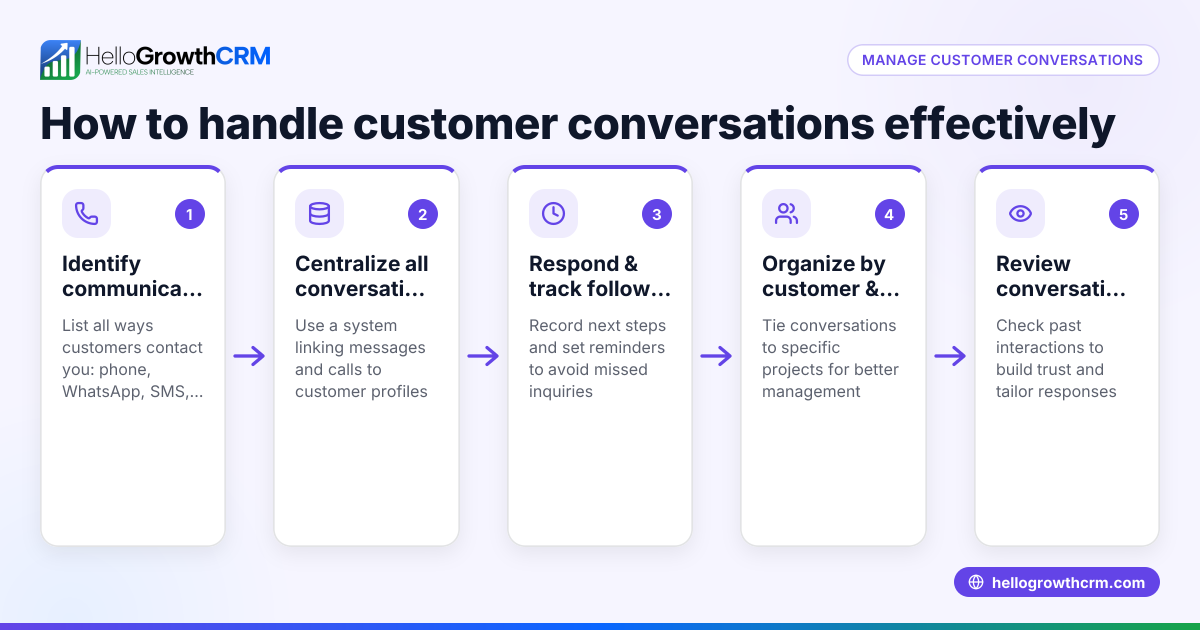
- Choose communication channels: Decide how you will contact customers—email, WhatsApp, SMS, phone, or a combination. Confirm these channels fit customer preferences and your team’s capacity.
- Set contact frequency and timing: Plan when and how often to reach out, such as welcome messages after purchase, monthly newsletters, or follow-up calls. Verify the timing respects customer preferences and avoids over-contact.
- Create message templates and content: Develop clear, helpful messages for each contact type—sales follow-up, support updates, promotions, or referral requests. Review content for clarity and relevance.
- Implement tracking and documentation: Use a system to log every customer interaction so your team can see the history and next steps. Ensure the system allows easy updates and access.
- Train your team: Make sure everyone understands the program, the tools used, and their roles. Check for understanding and provide ongoing support.
- Review and adjust regularly: Monitor response rates, customer feedback, and sales results. Adjust your program to improve effectiveness.
For managing customer health and prioritizing outreach, consider tools like a customer health score.
Example (fictional figures)
A plumbing company in Austin, Texas wants to improve customer follow-up. They send a welcome SMS within 24 hours of service, a maintenance reminder every six months, and ask for referrals after each job.
- They serve 1,000 customers annually.
- 60% respond to welcome SMS.
- 40% book maintenance after reminder.
- Referral requests generate 50 new leads.
Calculations:
Welcome SMS responses: 1,000 × 60% = 600
Maintenance bookings: 1,000 × 40% = 400
New leads from referrals: 50
If average job value is $500:
Revenue from maintenance: 400 × $500 = $200,000
New lead revenue potential (assumed 20% conversion): 50 × 20% = 10 new customers
New customer revenue: 10 × $500 = $5,000
Total potential revenue increase = $200,000 + $5,000 = $205,000
This example shows how a structured customer contact program can increase repeat business and new leads.
Common mistakes
- Inconsistent follow-up: Leads and customers fall through the cracks when follow-up is irregular. Prevent this by scheduling contacts and using reminders.
- Ignoring customer preferences: Contacting customers too often or on unwanted channels causes annoyance. Always ask and respect preferences.
- Using multiple disconnected tools: Managing contacts via email, text, and spreadsheets separately leads to confusion. Use integrated tools to keep everything in one place, like WhatsApp and SMS CRM.
- Not tracking interactions: Without logging communications, teams duplicate efforts or miss opportunities. Keep detailed records for every customer.
- Lack of team training: If staff don’t understand the program or tools, execution suffers. Provide clear training and documentation.
Doing this in HelloGrowthCRM
HelloGrowthCRM helps manage customer interactions after the sale by keeping service requests, referrals, support tickets, and knowledge base articles linked to the same customer record as the deal. This integration makes it easier for your team to follow up and support customers efficiently. Learn more about these features at HelloGrowthCRM for the United States.
Frequently asked questions
What is a customer contact program? A customer contact program is a plan that outlines how and when your business communicates with customers to maintain and grow relationships. It includes the channels, frequency, and content of communications.
Why does my small business need a customer contact program? Without a structured program, you risk losing leads, missing follow-ups, and frustrating customers. A program helps you stay organized, respond quickly, and encourage repeat business and referrals.
How often should I contact my customers? Contact frequency depends on your business and customer preferences. Common practices include immediate follow-up after purchase, regular check-ins or newsletters, and timely reminders for service or promotions. Avoid over-contacting by monitoring feedback.
What tools can help manage a customer contact program? Using a CRM that integrates communication channels and tracks interactions is best. HelloGrowthCRM offers a customer portal, referrals tracking, and support tickets to keep all customer information and service requests together.
How do I measure if my customer contact program is working? Track metrics like response rates, repeat purchases, referral numbers, and customer satisfaction. Adjust your program based on these insights.
Key takeaways
- A customer contact program organizes how and when you communicate with customers.
- It prevents lost leads and improves customer satisfaction through consistent follow-up.
- Use integrated tools to track interactions and manage communications efficiently.
- Regularly review and adjust your program based on customer feedback and results.
- HelloGrowthCRM features like the customer portal and referrals tracking support ongoing customer contact and service.
Start your customer contact program today to build stronger customer relationships and grow your business. You can Start on the Free Forever plan (200 leads, no credit card) to try HelloGrowthCRM’s tools and see how they help.
Ready to put this into practice?
Set up your pipeline, WhatsApp follow-ups, and AI lead scoring in minutes — free, no credit card.
Try HelloGrowthCRM freeGet CRM tips in your inbox
Join thousands of sales professionals who get weekly insights on CRM strategy, AI automation, and pipeline optimization.

The HelloGrowthCRM team publishes guides on CRM strategy, AI sales tools, and revenue operations for small business sales teams.