HelloGrowthCRM software
Built for real small-business sales teams
HelloGrowthCRM helps reps qualify faster, follow up on time, and close more deals—with practical automation in one place.
- AI lead scoring and pipeline visibility
- Built-in dialer, WhatsApp, and email automation
- Sales forecasting and RevOps-ready reporting
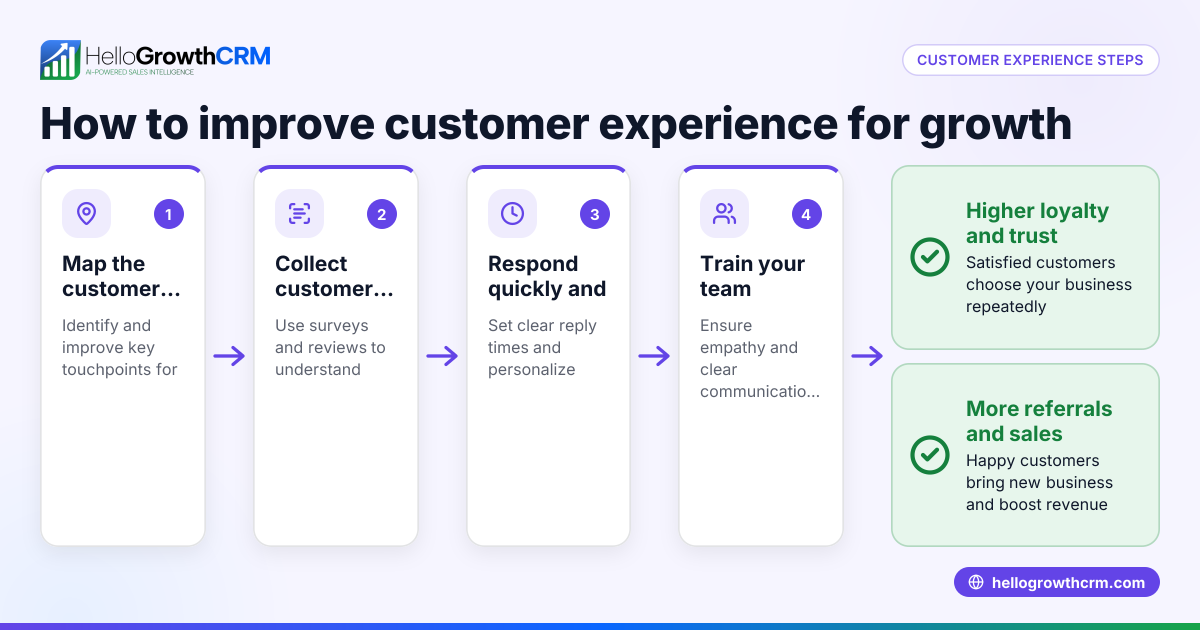
Customer experience management (CEM) is the practice of overseeing every interaction a customer has with your business to increase satisfaction, loyalty, and revenue. By managing inquiries, follow-ups, and service requests in an organized way, small businesses can improve sales conversions, reduce lost leads, and keep customers returning.
Why this comes up / what goes wrong
Small and mid-sized business owners often juggle multiple communication channels like calls, emails, WhatsApp, and web forms without a clear system. Leads end up scattered in notebooks, text messages, or spreadsheets. Follow-ups get missed or delayed, and service requests are tracked separately from sales data. This disorganization frustrates customers, wastes time, and causes lost revenue.
Owners want to understand how managing customer experience can directly improve their business performance by increasing sales, reducing churn, and encouraging referrals. They also look for practical ways to implement CEM with tools suited for small teams.
Step-by-step
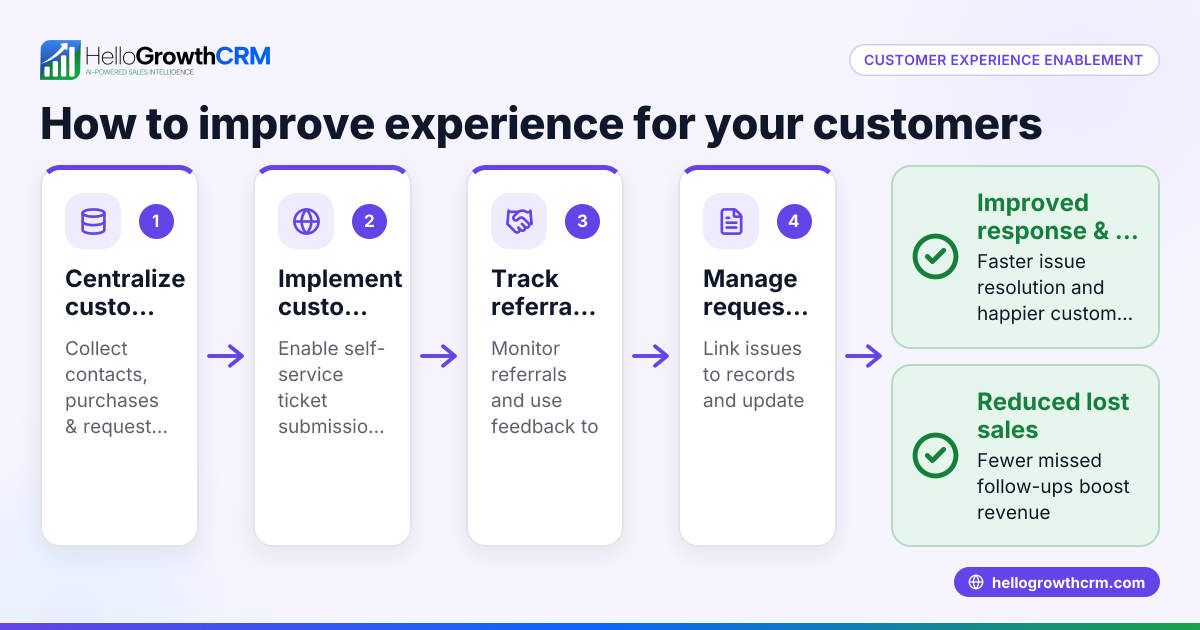
- Capture every lead centrally with ownership and next steps. Make sure every inquiry from a web form, phone call, or WhatsApp message is logged as a lead with an assigned owner and a clear next action. This keeps leads from getting lost or forgotten. See WhatsApp and SMS CRM.
- Use task boards to schedule and track follow-ups. Turn each follow-up into a task with a due date. This keeps your team accountable and prevents missed contacts. Visualize daily calls and activities on boards instead of relying on memory. Learn more about activities and task boards.
- Link service requests to the same customer record as sales. After closing a deal, keep support tickets, service requests, and knowledge base articles connected to the customer’s profile. This ensures consistent service and avoids repeating questions.
- Implement a branded customer portal and referral tracking. A self-service portal lets customers submit requests and find information easily. Tracking referrals helps you leverage satisfied customers for new leads and measure referral impact.
- Monitor customer health to spot risks and growth opportunities. Use customer health scores to identify accounts needing attention or upselling. See customer health score.
Example (fictional figures)
Austin Plumbing Co., a small plumbing business in Austin, Texas, wants to improve customer experience management to boost revenue.
- Current monthly leads: 100
- Lead conversion rate: 20% (20 sales)
- Average sale value: $1,500
- Monthly revenue: 20 × $1,500 = $30,000
They implement systematic lead capture and follow-up tasks, improving conversion to 30%.
- New sales: 100 × 30% = 30
- New monthly revenue: 30 × $1,500 = $45,000
Revenue increase: $45,000 - $30,000 = $15,000 monthly
By managing service tickets on the same customer record, they reduce repeat visits by 10%, saving $2,000 monthly in costs.
Total monthly benefit = $15,000 + $2,000 = $17,000
Common mistakes
- Ignoring lead organization: Leads scattered in notebooks or text messages get lost. Prevent this by capturing leads automatically with assigned owners. See WhatsApp and SMS CRM.
- No follow-up tracking: Without task boards, follow-ups are forgotten. Use activities and task boards to schedule and visualize calls and tasks.
- Separating sales and service data: Service requests disconnected from sales records cause poor customer experiences. Keep service tickets on the same customer record.
- Failing to use customer portals: Customers struggle to get support if no self-service portal exists. Implement a branded portal to reduce support friction.
- Neglecting referral tracking: Missing referral opportunities wastes potential growth. Track referrals systematically.
Doing this in HelloGrowthCRM
HelloGrowthCRM helps small businesses manage customer experience by capturing every enquiry from forms, calls, or WhatsApp as leads with owners and next steps. Follow-ups become tasks with due dates, and daily calls are organized in task boards, reducing memory reliance. After the sale, service requests like tickets and knowledge base articles stay linked on the same customer record as the deal. The platform also supports referrals and a branded customer portal for self-service. This integrated approach keeps customer data centralized and actionable. Learn more at HelloGrowthCRM for the United States.
Frequently asked questions
What is customer experience management (CEM)? CEM is the practice of managing every interaction a customer has with your business to improve satisfaction and loyalty. It involves organizing leads, follow-ups, service, and feedback systematically.
How does CEM improve business performance? By ensuring timely responses, consistent service, and easy issue resolution, CEM increases customer retention, boosts referrals, and drives higher sales conversions.
What tools help with CEM for small businesses? Tools that centralize leads, track tasks and calls, manage service tickets, and offer customer portals help small businesses deliver better customer experiences. HelloGrowthCRM includes these features.
Why track referrals as part of CEM? Referrals come from satisfied customers and are valuable for growth. Tracking them helps you reward referrers and measure impact.
How can task boards improve sales follow-up? Task boards visualize all follow-ups and calls due each day, preventing missed contacts and improving team accountability. See activities and task boards.
Key takeaways
- Customer experience management directly affects sales and retention by organizing all customer interactions.
- Capture every lead with an assigned owner and next step to prevent lost opportunities.
- Use task boards to schedule and track follow-ups efficiently.
- Keep service tickets linked to customer records for consistent post-sale support.
- A customer portal and referral tracking enhance service and growth.
Start improving your customer experience management today. Start on the Free Forever plan (200 leads, no credit card).
Ready to put this into practice?
Set up your pipeline, WhatsApp follow-ups, and AI lead scoring in minutes — free, no credit card.
Try HelloGrowthCRM freeGet CRM tips in your inbox
Join thousands of sales professionals who get weekly insights on CRM strategy, AI automation, and pipeline optimization.

The HelloGrowthCRM team publishes guides on CRM strategy, AI sales tools, and revenue operations for small business sales teams.