HelloGrowthCRM software
Built for real small-business sales teams
HelloGrowthCRM helps reps qualify faster, follow up on time, and close more deals—with practical automation in one place.
- AI lead scoring and pipeline visibility
- Built-in dialer, WhatsApp, and email automation
- Sales forecasting and RevOps-ready reporting
Performance email marketing means concentrating on measurable outcomes from your email campaigns. These outcomes include how many people open your emails, click on links, or take desired actions such as making a purchase or booking a service. Instead of sending generic emails without tracking results, performance email marketing uses data to optimize your campaigns and increase your return on investment.
This article covers why small business owners need to focus on performance, step-by-step instructions to run and measure campaigns, a fictional example with realistic figures, common mistakes and how to avoid them, and how HelloGrowthCRM’s features can help you manage your email marketing effectively.
Why this comes up / what goes wrong
Small business owners often rely on email to reach customers and prospects but struggle to know if their emails are working. Many send emails irregularly without tracking opens, clicks, or replies. This lack of tracking leads to missed opportunities because owners do not know which emails engage their audience or generate sales. Managing email outreach manually through personal inboxes or spreadsheets can cause lost replies, duplicated efforts, and slow follow-up. These problems make it hard to grow sales consistently.
Performance email marketing comes up because business owners want to understand if their email campaigns produce real results and how to improve them efficiently. They need a systematic way to track email engagement and automate follow-ups to avoid losing leads.
Step-by-step
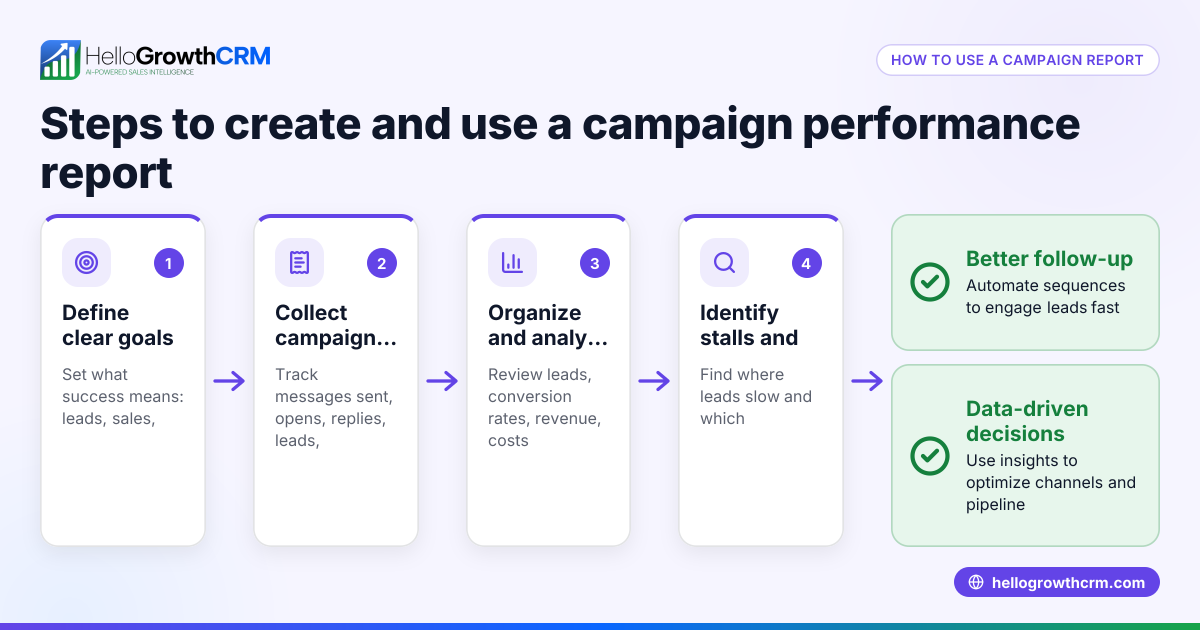
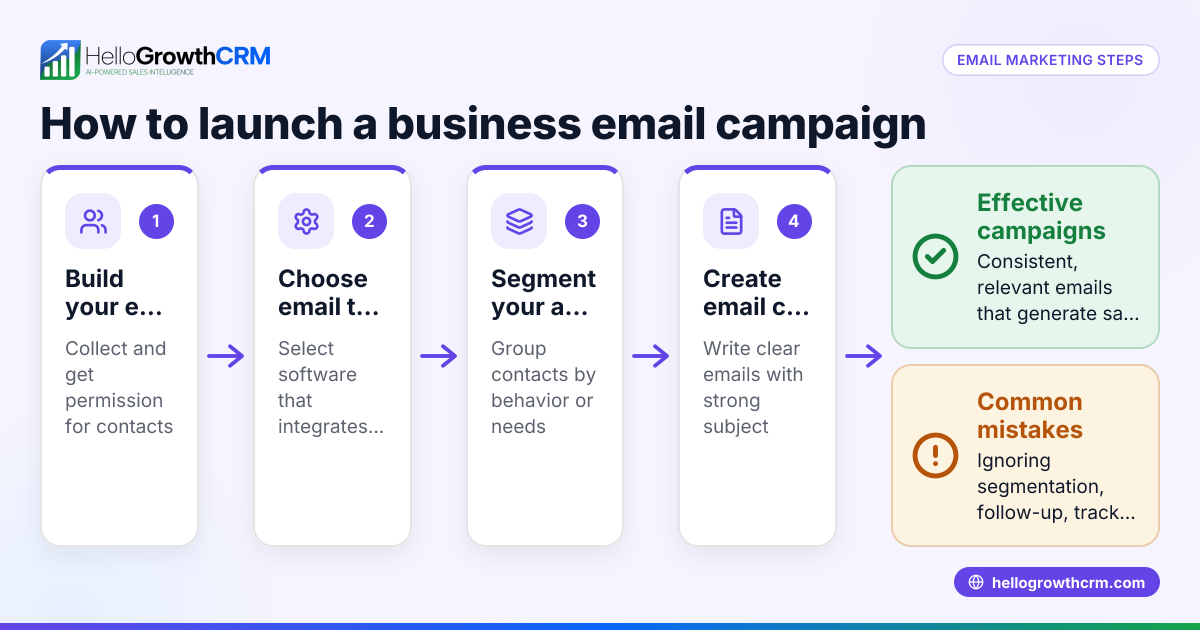
- Define your goal clearly. Decide what you want your email campaign to achieve, such as increasing sales, getting more bookings, or growing newsletter sign-ups. Define what success looks like in measurable terms.
- Build a targeted email list. Collect email addresses from people who have opted in or shown interest. Avoid buying email lists, as they often reduce engagement.
- Craft your email content. Write a compelling subject line and message tailored to your audience and goal. Include a clear call to action that tells recipients what to do next.
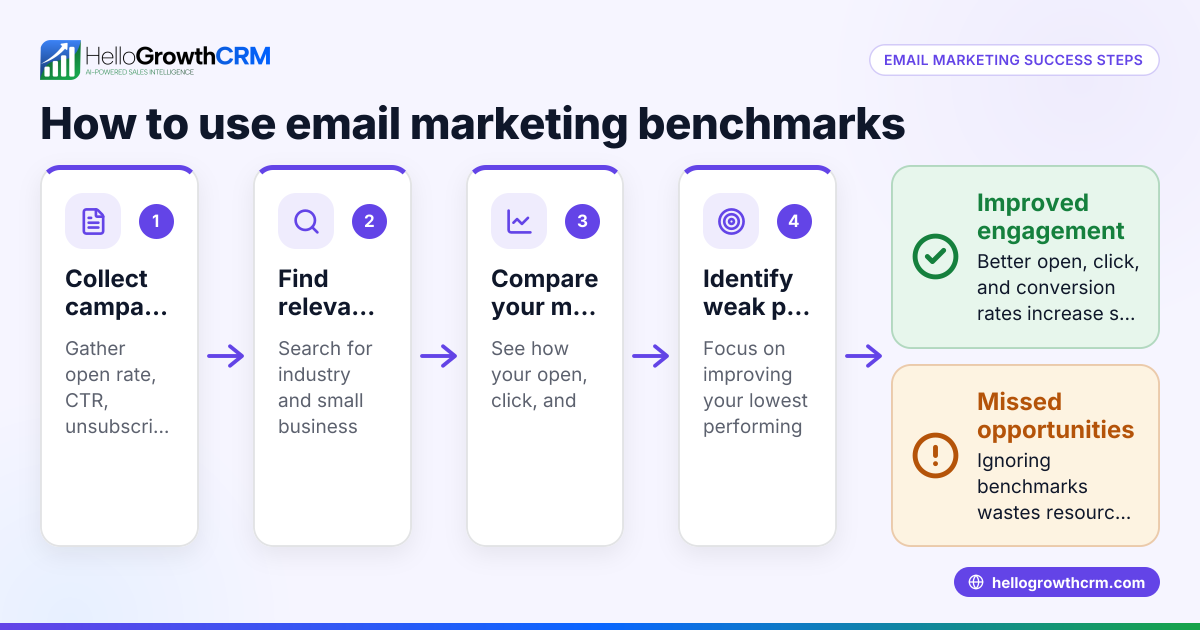
- Set up tracking. Use tools or CRM features to monitor open rates, click-through rates, and replies. This data shows how well your email performs.
- Send your email campaign. Schedule your emails or use automated sequences to send follow-ups at planned intervals.
- Measure results. Review your campaign metrics against your goals. Look at how many people opened your email, clicked links, and converted.
- Analyze and optimize. Use your data to improve subject lines, email content, sending times, or follow-up steps.
- Repeat and scale. Apply what you learn to future campaigns to increase your email marketing effectiveness.
Automation helps save time and maintain consistency. Learn more about email automation and sequences to improve your follow-ups.
Example (fictional figures)
A residential real-estate team in Phoenix, Arizona, sends an email campaign on 06/01/2026 to 1,000 prospects offering a free home valuation.
- Sent emails: 1,000
- Open rate: 25% → 1,000 × 0.25 = 250 opens
- Click-through rate: 150 clicks (assumed realistic figure)
- Conversion rate (booked valuation): 45 bookings (assumed realistic figure)
Revenue per booking: $500 (average commission)
Total revenue = 45 bookings × $500 = $22,500
Cost of campaign: $200 for email software
Net revenue = $22,500 - $200 = $22,300
Tracking each step helps the team understand the campaign’s impact and where to improve.
Common mistakes
- Not tracking key metrics. Without tracking opens, clicks, and replies, you won’t know what works. Prevent this by using tools or CRM features to measure.
- Sending irrelevant emails. Generic messages to the wrong audience lower engagement. Segment your list and personalize content based on interests.
- Ignoring follow-up. Many sales happen after multiple contacts. Use automated sequences to follow up consistently and avoid lost leads.
- Overloading recipients. Sending too many emails can annoy recipients and cause unsubscribes. Space out campaigns thoughtfully.
- Using personal inboxes only. Managing leads through personal email risks lost replies and poor team visibility. Use a shared inbox to keep everyone informed.
See how WhatsApp and SMS CRM can help you avoid these mistakes and improve follow-up.
Doing this in HelloGrowthCRM
HelloGrowthCRM offers the HelloMail shared inbox where your team can manage inbound emails together, so replies to quotation emails are visible on the deal to everyone involved. This prevents missed or duplicated responses. You can also set up sequences and campaigns that run automated five-step follow-ups over two weeks, stopping immediately when a prospect replies. These features improve follow-up consistency and save time. Learn more about these capabilities at email automation and sequences.
Frequently asked questions
What is a good open rate for performance email marketing? Open rates can vary by industry, so it's helpful to track your own metrics to understand typical performance. Higher open rates mean your subject lines and sender reputation are effective. Test different subject lines and sending times to improve open rates.
How often should I send marketing emails? The frequency depends on your audience and goals. Many small businesses send one to two campaigns per month. Avoid overwhelming recipients by using automated sequences for timely follow-ups instead of frequent mass emails.
Can I use the same email for all my prospects? No. Personalizing emails based on recipient interests or past interactions improves engagement. Segment your list and tailor your content for better results.
How do I measure if my email marketing is profitable? Calculate the revenue generated from leads acquired through your emails minus the costs of your email tools and time. Use tracking to link email campaigns to sales conversions.
What tools can help me automate email follow-up? CRMs with email automation and sequences, like HelloGrowthCRM, allow you to schedule multi-step follow-ups that stop when a prospect replies, reducing manual work and increasing response rates.
Learn more about WhatsApp and SMS CRM to enhance your outreach.
Key takeaways
- Performance email marketing focuses on tracking and optimizing campaigns based on measurable results.
- Set clear goals and track open, click, and conversion rates to measure success.
- Use targeted, personalized email lists to improve engagement.
- Automate follow-ups with sequences to avoid missed opportunities.
- Use a shared inbox to keep your team aligned on email replies.
Start improving your email marketing performance with HelloGrowthCRM. Start on the Free Forever plan (200 leads, no credit card).
Ready to put this into practice?
Set up your pipeline, WhatsApp follow-ups, and AI lead scoring in minutes — free, no credit card.
Try HelloGrowthCRM freeGet CRM tips in your inbox
Join thousands of sales professionals who get weekly insights on CRM strategy, AI automation, and pipeline optimization.

The HelloGrowthCRM team publishes guides on CRM strategy, AI sales tools, and revenue operations for small business sales teams.