HelloGrowthCRM software
Built for real small-business sales teams
HelloGrowthCRM helps reps qualify faster, follow up on time, and close more deals—with practical automation in one place.
- AI lead scoring and pipeline visibility
- Built-in dialer, WhatsApp, and email automation
- Sales forecasting and RevOps-ready reporting
Customer follow-up is essential for turning leads into sales and maintaining client relationships. Many small businesses in the United States face the choice between managing follow-up using spreadsheets or adopting specialized tools. While spreadsheets can store contact data, they fall short in managing tasks, reminders, and communication history, which are critical for timely and effective follow-up.
Why this comes up / what goes wrong
Small-business owners often start with spreadsheets because they are familiar and free. However, as the number of leads grows, spreadsheets become cumbersome and error-prone. Without automated reminders or task management, follow-up can be missed or delayed, causing lost sales opportunities. Teams using text messages, emails, and phone calls across different tools find it hard to keep track of interactions and next steps. This leads to slow responses and poor customer experience.
Step-by-step
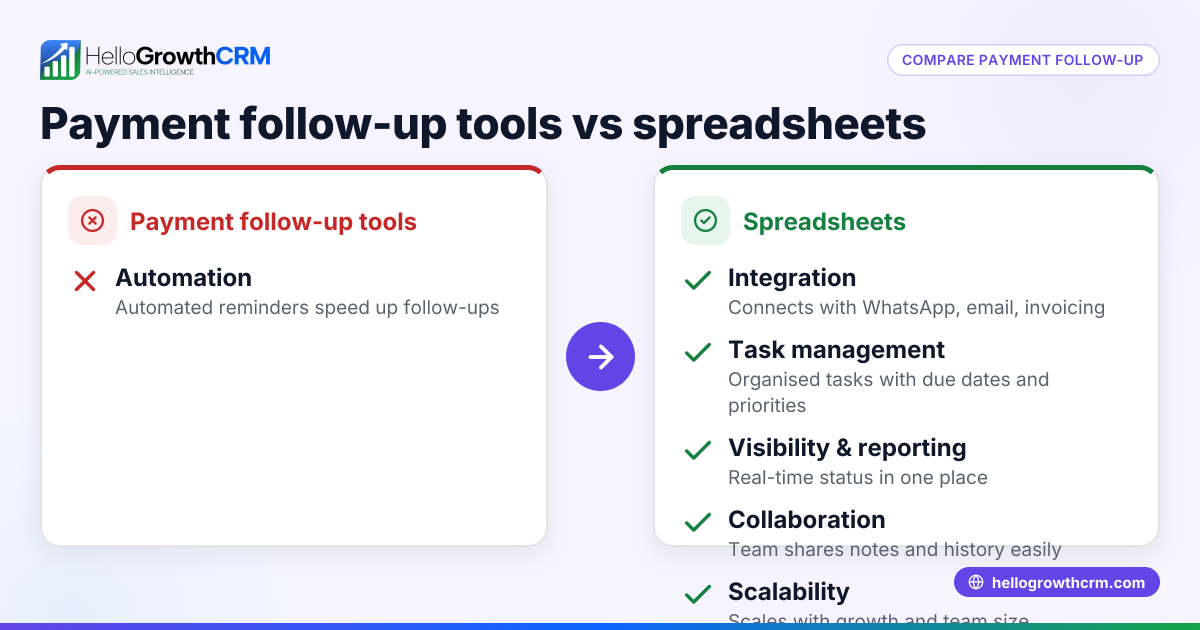
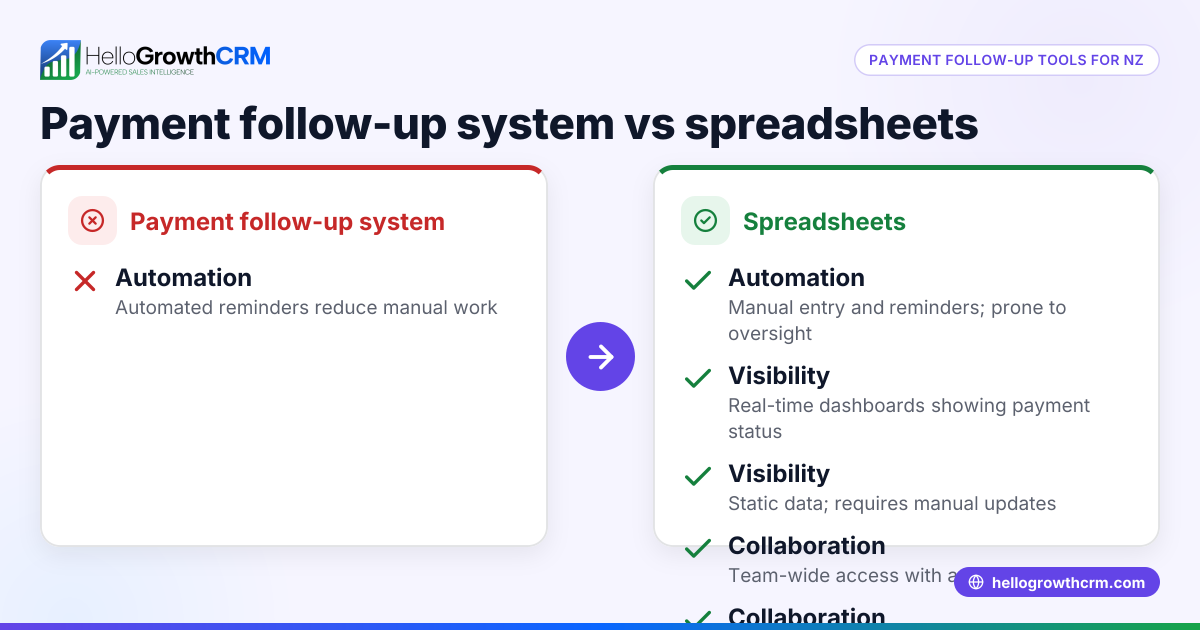
| Criteria | Spreadsheets | Customer Follow-Up Tools |
|---|---|---|
| Organization | Manual entry; easy to lose track | Centralized records with interaction logs |
| Reminders & Tasks | None; requires manual calendar or notes | Automated tasks with due dates and alerts |
| Communication | Separate apps for email, SMS, calls | Integrated email, WhatsApp, SMS sequences |
| Team Collaboration | Difficult; no real-time updates | Shared pipelines and task boards |
| Lead Scoring & Prioritization | Manual or none | AI lead scoring to focus efforts |
| Reporting & Forecasting | Must build manually from data | Built-in sales forecasting and reports |
| Customer Service | Separate tools needed | Service tickets linked to customer records |
Who should choose spreadsheets? Small businesses with very few leads, simple sales processes, and limited budget may start with spreadsheets. It requires discipline to update and track follow-ups manually.
Who should choose customer follow-up tools? Growing teams or businesses with multiple communication channels, needing reminders, collaboration, and reporting should use dedicated tools. These improve speed, consistency, and sales outcomes.
Example (fictional figures)
A residential real-estate team in Phoenix, Arizona, has 200 active leads in a quarter. They track follow-up with spreadsheets and manual calendars.
- Average value per closed deal: $350,000
- Conversion rate with spreadsheets: 10% (20 deals closed)
- Average follow-up delay: 3 days
If they switch to a follow-up tool that reduces delay to 1 day and improves conversion to 15%:
Leads × Conversion rate = Deals closed 200 × 10% = 20 (spreadsheets) 200 × 15% = 30 (follow-up tool)
Revenue increase: 30 deals − 20 deals = 10 additional deals 10 deals × $350,000 = $3,500,000 additional revenue
This shows how faster, organized follow-up can significantly boost sales.
Common mistakes
- Relying on memory instead of reminders: Use task boards or calendar alerts to prevent missed follow-ups.
- Using spreadsheets without updating regularly: Set a routine to update lead status daily.
- Scattering communication across apps: Centralize calls, emails, and messages in one system.
- Ignoring team collaboration: Share pipelines and tasks so everyone knows the follow-up status.
- Not tracking customer service requests with sales data: Link service tickets to deals for a full customer view.
Prevention involves adopting tools or disciplined processes that enforce these best practices, such as email automation and sequences and customer health score.
Doing this in HelloGrowthCRM
HelloGrowthCRM helps small and mid-sized US businesses manage customer follow-up efficiently. Each follow-up becomes a task with a due date on the activity and task boards, so the day's calls and reminders appear as a list instead of relying on memory. After a sale, service requests stay linked on the same customer record as the deal through the customer portal, referrals, tickets, and knowledge base features. This keeps all communications and tasks organized in one place. Learn more about HelloGrowthCRM for the United States here.
Frequently asked questions
Is a spreadsheet enough for managing customer follow-up? Spreadsheets can work for very small businesses with few leads, but they lack automation and integration needed for timely follow-up. As your business grows, dedicated tools provide reminders, communication tracking, and reporting.
How does task management improve follow-up? Task management systems create reminders with due dates for each follow-up, reducing the chance of missed calls or emails. They also help prioritize leads and coordinate team efforts.
Can I integrate communication channels with follow-up tools? Yes. Many CRMs integrate email, SMS, and WhatsApp sequences, allowing you to send and log messages directly from the system, improving response times and tracking.
What are common pitfalls when using spreadsheets for sales? Common mistakes include inconsistent data entry, no follow-up reminders, lack of collaboration, and separate communication tracking. These lead to missed opportunities and disorganized sales processes.
How do I decide between spreadsheets and a CRM? Consider your lead volume, team size, communication complexity, and need for automation. If you find follow-up is slow or leads slip through, a CRM is likely a better fit. Compare features at compare CRMs.
Key takeaways
- Spreadsheets are simple but lack automation, reminders, and communication integration.
- Customer follow-up tools improve organization, speed, and collaboration.
- Use task boards to create due dates and reduce missed follow-ups.
- Centralize communication to track all interactions in one place.
- Linking service tickets to customer records enhances post-sale support.
- Evaluate your business size and sales process complexity to choose the right method.
Start managing your customer follow-up more effectively today. You can Start on the Free Forever plan (200 leads, no credit card) with HelloGrowthCRM and see how task boards and integrated communication help your team stay on top of every lead.
Ready to put this into practice?
Set up your pipeline, WhatsApp follow-ups, and AI lead scoring in minutes — free, no credit card.
Try HelloGrowthCRM freeGet CRM tips in your inbox
Join thousands of sales professionals who get weekly insights on CRM strategy, AI automation, and pipeline optimization.

The HelloGrowthCRM team publishes guides on CRM strategy, AI sales tools, and revenue operations for small business sales teams.