HelloGrowthCRM software
Built for real small-business sales teams
HelloGrowthCRM helps reps qualify faster, follow up on time, and close more deals—with practical automation in one place.
- AI lead scoring and pipeline visibility
- Built-in dialer, WhatsApp, and email automation
- Sales forecasting and RevOps-ready reporting
Customer forecasting is the process of predicting your business’s future sales revenue based on the deals you currently have and the likelihood each will close. By estimating which customers will buy and when, you can make better decisions about inventory, staffing, and cash flow.
Why this comes up / what goes wrong
Small-business owners often face challenges in forecasting because their sales data is scattered across emails, text messages, and spreadsheets, making it hard to get a clear picture. Many rely on gut feelings or incomplete information to guess future revenue, which can cause problems like overestimating income, running out of stock, or missing timely follow-ups on leads. Without an accurate forecast, businesses risk cash shortages, lost sales, or failing to meet growth goals.
Step-by-step
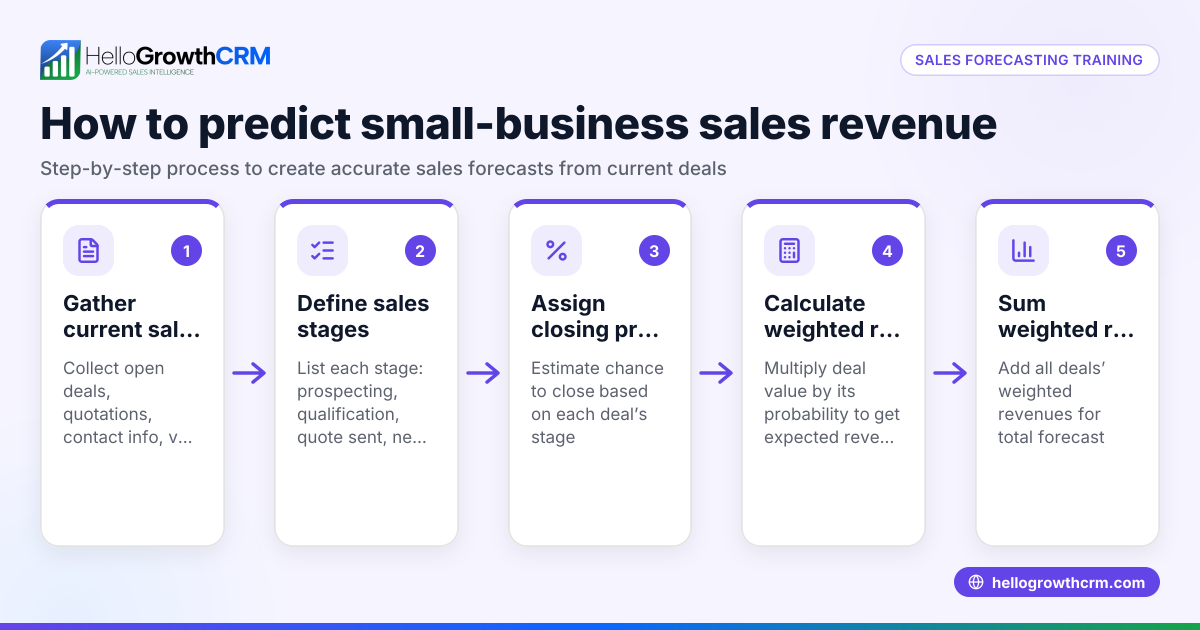
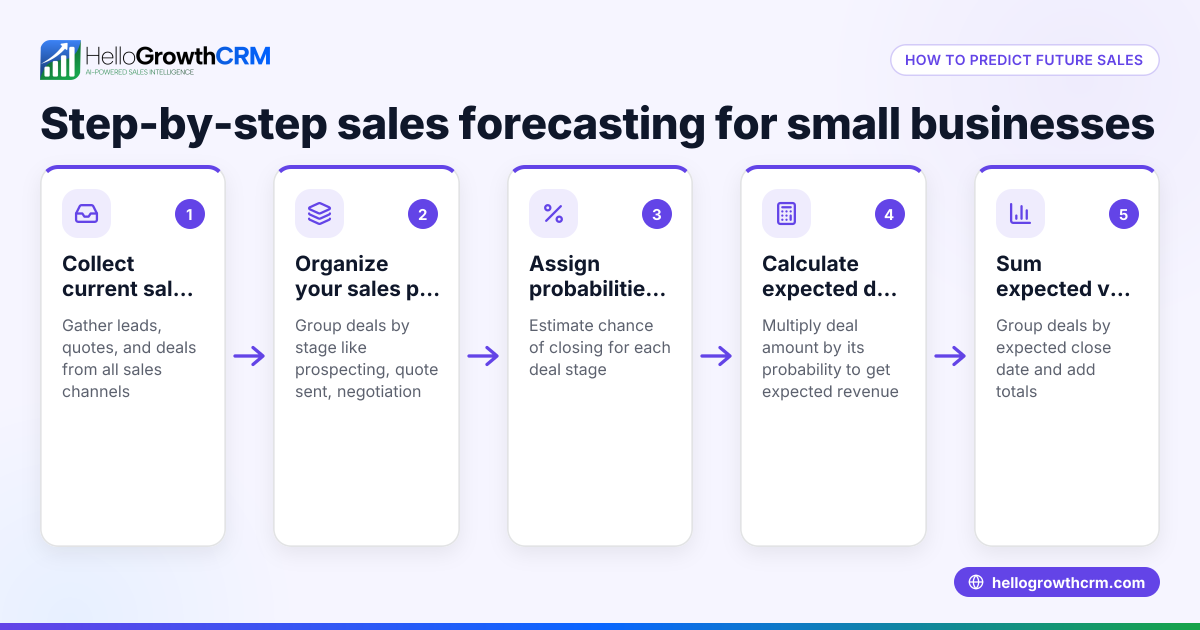
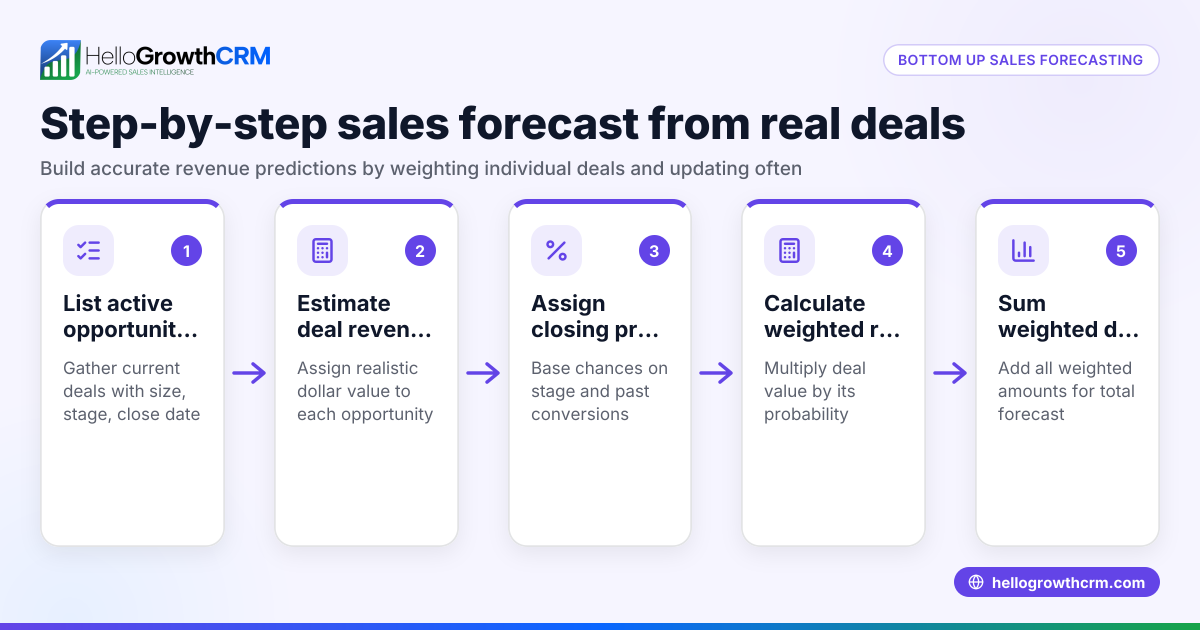
- Gather your sales data: Create a list of all active deals including customer names, deal amounts, and current sales stages. Check that this data is up to date.
- Assign probabilities to deals: Estimate the chance each deal will close based on how far it is in your sales process. For example, a deal in negotiation might have a higher probability than one in the initial contact stage.
- Calculate weighted revenue: Multiply each deal’s value by its probability to find the expected revenue from that deal.
- Sum weighted values: Add all weighted revenues to get your total forecasted revenue.
- Check pipeline health: Identify deals that have stalled or show no recent activity. These deals may need extra attention or follow-up.
- Update your forecast regularly: Refresh your data weekly or monthly to include new deals and changes in deal status.
- Take action based on the forecast: Prioritize follow-ups on stalled deals or adjust your sales strategies to improve results.
Example (fictional figures)
A plumbing company in Austin, Texas, forecasts sales for the month starting 06/01/2026.
- Deal 1: $15,000 with 80% chance to close
- Deal 2: $10,000 with 50% chance to close
- Deal 3: $5,000 with 30% chance to close
Calculations:
$15,000 × 80% = $12,000 $10,000 × 50% = $5,000 $5,000 × 30% = $1,500
Total forecasted revenue = $12,000 + $5,000 + $1,500 = $18,500
This forecast helps the company plan how many plumbers to schedule and how much material to buy for June.
Common mistakes
- Treating all deals the same: Always assign probabilities based on the sales stage to avoid overestimating revenue. Check that your probabilities reflect deal progress.
- Not updating forecasts regularly: Old data leads to inaccurate predictions; update your forecast frequently to reflect current information.
- Ignoring stalled deals: Identify and act on deals stuck too long to improve pipeline health and avoid missing sales opportunities.
- Using only spreadsheets: Manual tracking is slow and prone to errors; consider tools that automate forecasting and pipeline tracking.
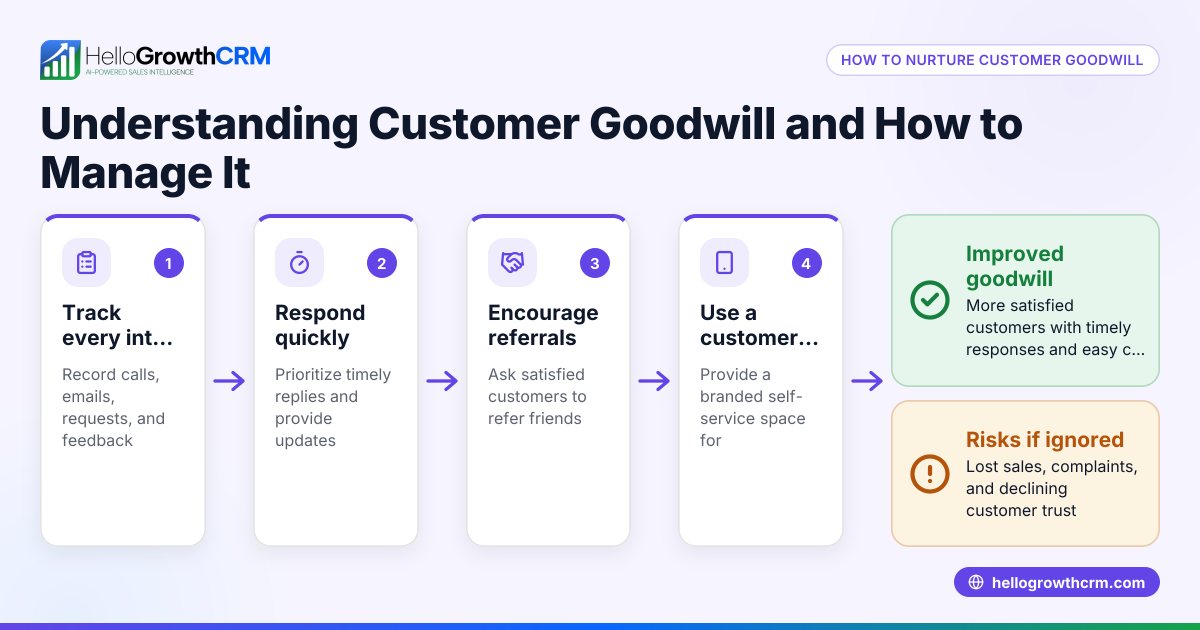
- Separating sales and service data: Post-sale service impacts future revenue; keep service requests linked to customer records to maintain a full view.
- Overlooking customer feedback: Customer concerns or satisfaction can affect deal closure and upsell chances; include this in your forecasting considerations.
Doing this in HelloGrowthCRM
HelloGrowthCRM offers pipeline forecast and AI insights that project expected revenue based on deal stages, sales velocity, and historical conversion patterns without building spreadsheets. This helps you see which stage deals are stalling in and gives analysis of pipeline health and sales rep performance. After closing sales, service requests, referrals, and tickets stay linked on the same customer record, making it easier to manage ongoing customer needs. Learn more about sales forecasting and the customer portal, referrals, tickets and knowledge base.
Frequently asked questions
What is the difference between customer forecasting and sales forecasting? Customer forecasting predicts revenue from individual customer deals and their likelihood to close. Sales forecasting is broader, including overall market trends and team goals. Tools that combine these views help you understand both deal-level and overall sales expectations. See more on sales forecasting.
How often should I update my customer forecast? Updating your forecast weekly or monthly keeps predictions accurate by reflecting new deals, status changes, and customer interactions.
Can customer forecasting help with resource planning? Yes. Knowing expected revenue helps you plan inventory, staffing, and marketing budgets to meet demand without overspending.
How do I manage deals that have stalled in the pipeline? Use pipeline health insights to find stalled deals, then prioritize follow-ups or reassess their viability. AI insights in HelloGrowthCRM can highlight these automatically.
Does customer forecasting include post-sale service tracking? Yes. Tracking service requests and tickets linked to customer records helps maintain satisfaction and spot upsell opportunities. HelloGrowthCRM keeps service data on the same customer record as the deal.
How can AI insights improve forecasting accuracy? AI analyzes patterns in your sales pipeline, such as deal velocity and historical conversion rates, to provide more accurate revenue predictions and highlight risks or opportunities. These insights help you focus your sales efforts effectively.
Key takeaways
- Customer forecasting estimates future revenue by weighting deals based on their sales stage and likelihood to close.
- Regular updates and pipeline health checks improve forecast accuracy.
- Avoid mistakes like ignoring stalled deals or relying only on spreadsheets.
- AI-assisted forecasting tools show where deals stall and analyze pipeline health.
- Keeping service requests linked to customers supports ongoing revenue opportunities.
- Use forecasts to plan resources and prioritize sales efforts effectively.
Start forecasting your customer revenue more confidently today. Start on the Free Forever plan (200 leads, no credit card).
Ready to put this into practice?
Set up your pipeline, WhatsApp follow-ups, and AI lead scoring in minutes — free, no credit card.
Try HelloGrowthCRM freeGet CRM tips in your inbox
Join thousands of sales professionals who get weekly insights on CRM strategy, AI automation, and pipeline optimization.

The HelloGrowthCRM team publishes guides on CRM strategy, AI sales tools, and revenue operations for small business sales teams.