HelloGrowthCRM software
Built for real small-business sales teams
HelloGrowthCRM helps reps qualify faster, follow up on time, and close more deals—with practical automation in one place.
- AI lead scoring and pipeline visibility
- Built-in dialer, WhatsApp, and email automation
- Sales forecasting and RevOps-ready reporting
Customer intelligence is the process of collecting and analyzing data about your customers to understand their needs, preferences, and behaviors. For a small business owner, this means having clear insights into who your customers are, what they want, and how they interact with your business. This knowledge helps you personalize communication, prioritize leads, and improve sales and customer service.
Why this comes up / what goes wrong
Small and mid-sized business owners often lose leads or miss sales opportunities because they rely on scattered tools like text messages, emails, and spreadsheets. Without organized customer insights, sales teams may waste time on unqualified prospects or fail to follow up promptly. Customer intelligence provides a structured way to gather and use customer data, turning it into actionable insights that improve follow-up, sales effectiveness, and customer satisfaction.
Step-by-step
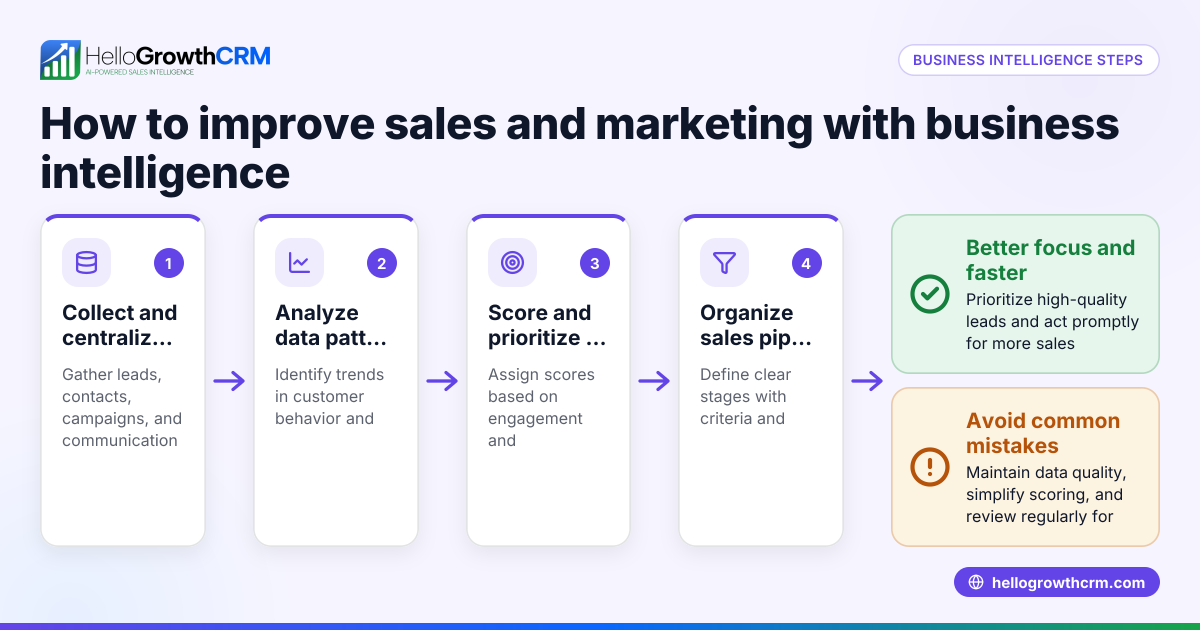
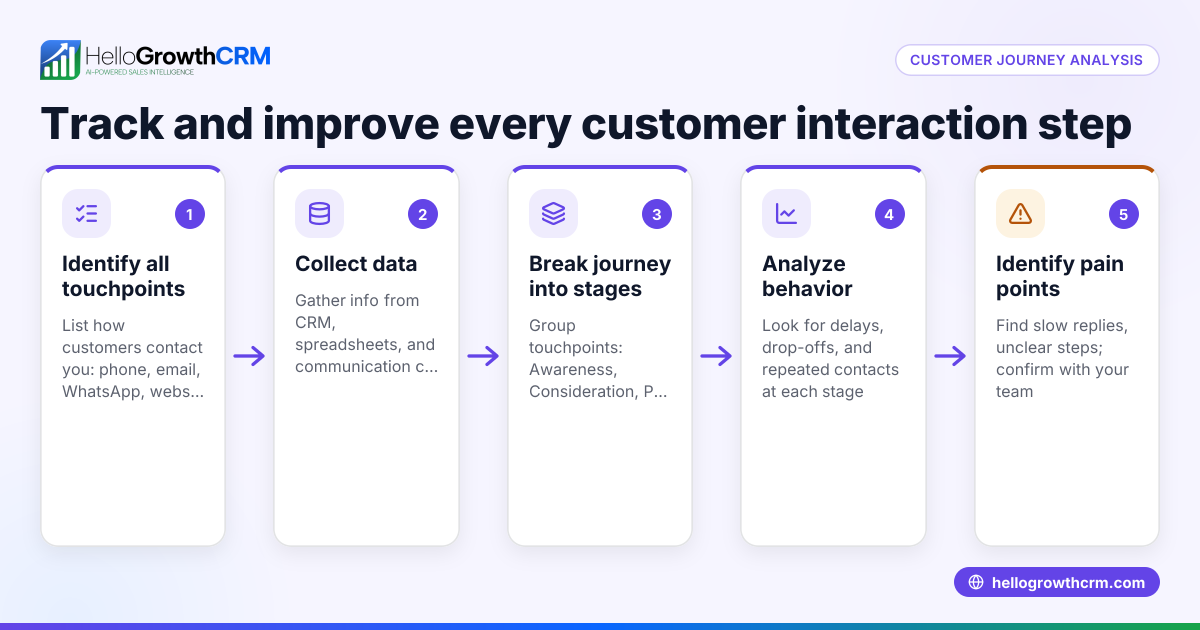
- Collect customer data: Start by gathering customer contact details, purchase history, communication records, and preferences from all your channels, including web forms, emails, phone calls, and messaging apps like WhatsApp. Check that the data is accurate and complete.
- Centralize data storage: Store all customer information in one place, such as a CRM system, to avoid losing details in spreadsheets or disconnected tools. Confirm the system supports communication across email, WhatsApp, and SMS.
- Analyze customer behavior: Look for patterns such as frequent purchases, preferred products, and response times to your outreach. Check for signs of customer satisfaction or risk of churn.
- Segment customers: Group customers based on shared characteristics like industry, purchase size, or engagement level. Verify that these segments are meaningful for targeted sales and marketing efforts.
- Score leads and customers: Assign scores based on criteria such as recent interactions and purchase potential to prioritize follow-up efforts. Ensure scoring aligns with your business goals.
- Act on insights: Use the customer segments and scores to tailor your communication sequences, offers, and service. Monitor results and adjust your approach as needed.
- Maintain data quality: Regularly update customer records after sales or support interactions and clean your data to keep it accurate. Track customer feedback to improve your processes.
Example (fictional figures)
A B2B software reseller in Denver, Colorado, wants to improve its sales follow-up using customer intelligence.
- They collect data from web form leads and past sales totaling $1,000,000 in the last year.
- They segment customers into "high-value" (annual spend over $50,000) and "low-value".
- They score leads by combining recent interaction dates and purchase potential.
Calculations:
Total sales = $1,000,000
Number of high-value customers = 20
Average high-value customer spend = $1,000,000 ÷ 20 = $50,000
Lead score example:
Recent interaction score = 70
Purchase potential score = 80
Total lead score = 70 + 80 = 150
They decide to prioritize leads with scores above 120 for immediate follow-up.
Common mistakes
- Ignoring data quality: Prevent this by regularly verifying and cleaning your customer data to avoid mistakes and outdated information.
- Using multiple disconnected tools: Prevent by centralizing customer data and communications in one system that supports email, WhatsApp, and SMS channels, reducing lost information and inefficiencies. See how a WhatsApp and SMS CRM can help.
- Not segmenting customers: Prevent by grouping customers to tailor your marketing and sales efforts, improving relevance and conversion rates. Learn about customer health score for effective segmentation.
- Overlooking ongoing updates: Prevent by scheduling regular reviews to update customer records after sales or support interactions.
- Failing to act on insights: Prevent by creating clear, actionable plans based on your customer intelligence data.
- Neglecting post-sale service data: Prevent by keeping service requests linked to customer records to maintain a full view of customer relationships.
Doing this in HelloGrowthCRM
HelloGrowthCRM supports customer intelligence by keeping service requests, referrals, and support tickets on the same customer record as the deal. Its branded customer portal and knowledge base allow customers to access self-service support, improving engagement after the sale. This centralization helps you track all interactions and service requests without losing context. Learn more about HelloGrowthCRM for the United States.
Frequently asked questions
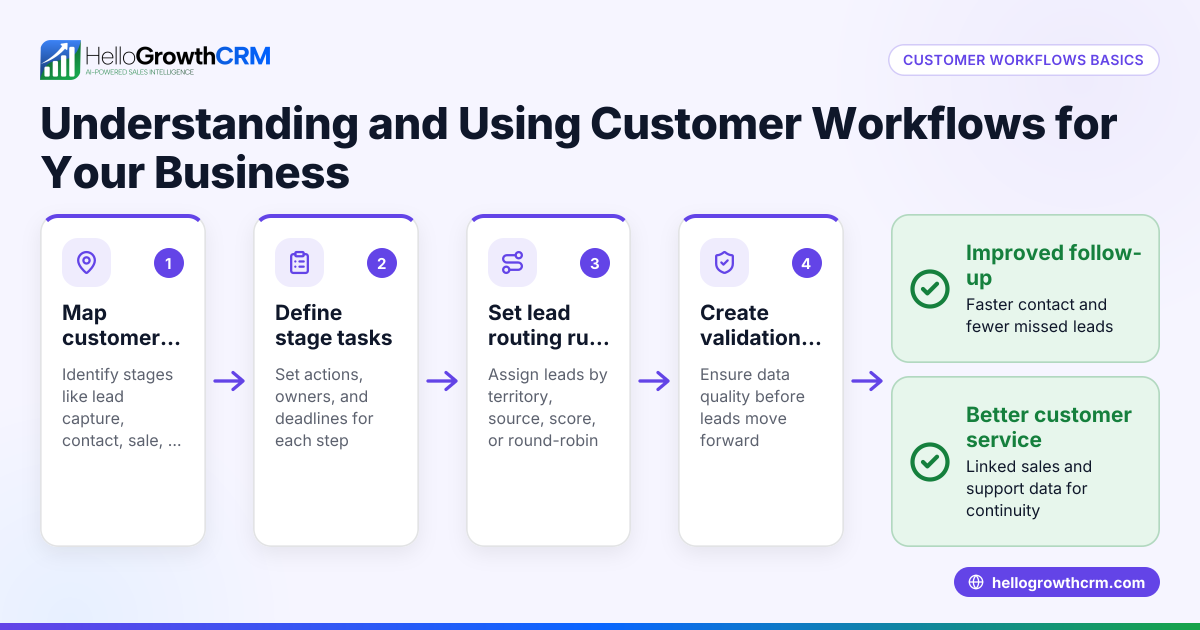
What is the difference between customer intelligence and customer data? Customer data is raw information about customers such as contact details and purchase history. Customer intelligence is the process of analyzing and organizing this data to generate actionable insights that improve sales and marketing effectiveness.
How can small businesses collect customer intelligence without complex software? Start by gathering data from existing channels like emails, phone calls, and web forms. Organize this data using spreadsheets or simple CRM tools. Over time, consider systems that integrate communication channels like WhatsApp and SMS for better efficiency, such as a WhatsApp and SMS CRM.
Why is customer segmentation important in customer intelligence? Segmentation groups customers with similar traits, enabling tailored marketing and sales efforts. This increases the relevance of your communication, improves customer experience, and boosts conversion rates. Tools like customer health score can help with effective segmentation.
How does customer intelligence improve sales follow-up? It helps prioritize leads based on behavior and potential, allowing sales teams to focus on the most promising prospects. It also provides context for personalized communication, making follow-ups more effective.
Can customer intelligence help with customer support? Yes, by linking support tickets and service requests to customer records, you can track issues and resolutions, which improves service quality and customer satisfaction.
Key takeaways
- Customer intelligence is about collecting and analyzing customer data to guide sales and marketing.
- Centralize all customer information in one system to avoid losing valuable insights.
- Segment and score customers to prioritize follow-up and tailor communication.
- Regularly update and clean your data to maintain accuracy.
- Use tools like HelloGrowthCRM to keep service requests linked to customers and support ongoing engagement.
Start building your customer intelligence today. Start on the Free Forever plan (200 leads, no credit card) and see how organized data can grow your business.
Ready to put this into practice?
Set up your pipeline, WhatsApp follow-ups, and AI lead scoring in minutes — free, no credit card.
Try HelloGrowthCRM freeGet CRM tips in your inbox
Join thousands of sales professionals who get weekly insights on CRM strategy, AI automation, and pipeline optimization.

The HelloGrowthCRM team publishes guides on CRM strategy, AI sales tools, and revenue operations for small business sales teams.