HelloGrowthCRM software
Built for real small-business sales teams
HelloGrowthCRM helps reps qualify faster, follow up on time, and close more deals—with practical automation in one place.
- AI lead scoring and pipeline visibility
- Built-in dialer, WhatsApp, and email automation
- Sales forecasting and RevOps-ready reporting
Customer intimacy means deeply understanding your customers and serving them in ways that feel personal and relevant. Examples include sending personalized messages using customers’ names, offering products or services based on their past purchases, proactively checking in after a sale, and keeping detailed records of preferences and interactions.
Why this comes up / what goes wrong
Many small-business owners lose sales and repeat customers because they treat all clients the same or rely on generic communication. Without customer intimacy, you may miss opportunities to upsell, cross-sell, or provide timely service. For instance, a local plumbing company might fail to remind customers about seasonal maintenance or neglect to follow up after a repair, resulting in lost revenue and weaker customer loyalty. This often happens because customer information is scattered across spreadsheets, texts, and emails, making it hard to personalize communication or track service history.
Step-by-step
- Collect detailed customer information: Record each customer’s preferences, past purchases, and communication history. Check if your system allows you to easily access and update this data.
- Segment your customers: Group your customers by common needs or behaviors to tailor your marketing and service efforts.
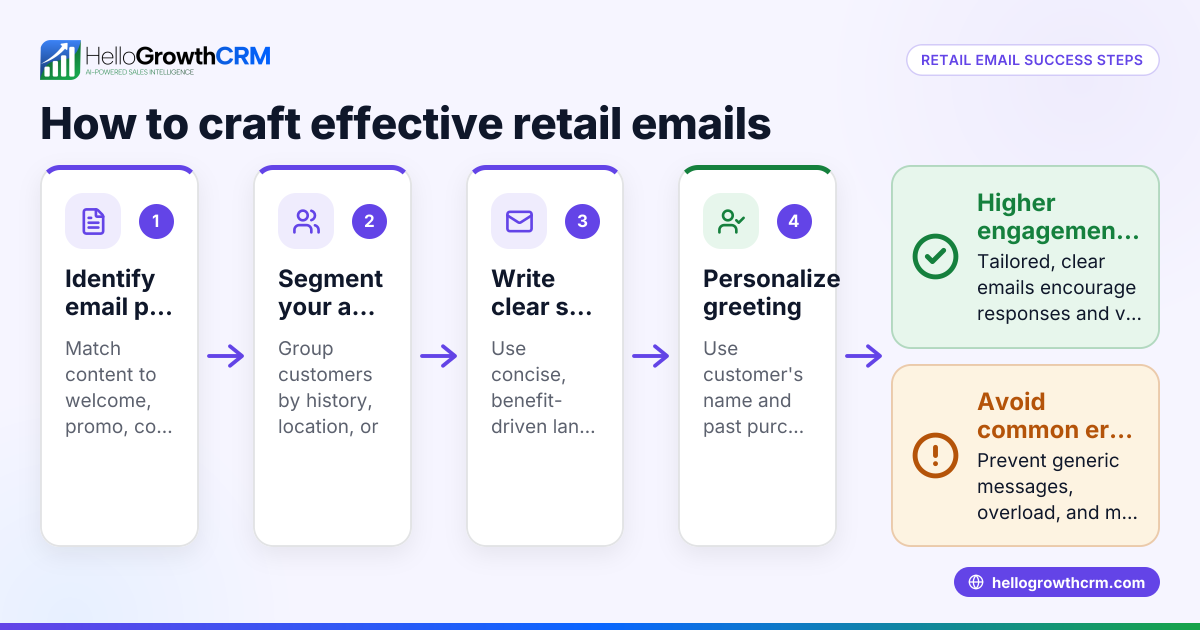
- Personalize communication: Use customers’ names and reference previous interactions in your emails, WhatsApp, or SMS messages. Confirm your messaging platform supports this.
- Offer tailored recommendations: Suggest products or services based on the customer’s history and preferences.
- Follow up proactively: Contact customers after a sale to ask about satisfaction or offer additional support.
- Track service requests and feedback: Keep all customer interactions, including support tickets, in one place to identify patterns and improve service.
- Encourage referrals: Ask satisfied customers to recommend your business to others and track these referrals.
Each step builds trust and shows customers that you understand and value them, increasing loyalty and repeat business. For more on customer insights, see the customer health score feature.
Example (fictional figures)
Consider "Austin Flow Plumbing," a small plumbing business in Austin, Texas, with $1,000,000 annual revenue as of 04/15/2026.
- Austin Flow tracks each customer’s service history and preferences in their CRM.
- They segment customers into residential and commercial groups.
- For residential customers, they send personalized WhatsApp messages reminding them of seasonal maintenance.
- They offer tailored discounts on water heater replacements to customers who had repairs in the last year.
- They follow up with a service satisfaction ticket after each job.
- Referral requests are sent via SMS to customers with high satisfaction scores.
This approach leads to an estimated 15% increase in repeat business and a 10% increase in referrals.
Calculations:
Current annual revenue = $1,000,000
Increase from repeat business: $1,000,000 × 15% = $150,000
Increase from referrals: $1,000,000 × 10% = $100,000
Total revenue increase: $150,000 + $100,000 = $250,000
New annual revenue: $1,000,000 + $250,000 = $1,250,000
This example shows how customer intimacy can significantly grow revenue without increasing marketing spend.
Common mistakes
- Not updating customer data regularly: Prevent this by scheduling regular reviews and updates of customer profiles.
- Using generic messages for all customers: Prevent by segmenting your database and customizing communication.
- Ignoring post-sale service requests: Prevent by integrating tickets and knowledge base into your CRM for quick issue resolution.
- Failing to track referrals properly: Prevent by using referral programme tracking to measure and reward referrals.
- Overloading customers with too many messages: Prevent by setting messaging frequency limits and monitoring engagement.
- Scattered customer information across tools: Prevent by consolidating data in one CRM to maintain a clear customer record.
Avoiding these mistakes keeps your customer intimacy efforts effective and appreciated.
Doing this in HelloGrowthCRM
HelloGrowthCRM supports customer intimacy by keeping service requests, referrals, and support tickets linked to the same customer record as the deal. The branded self-service customer portal and knowledge base let customers find answers quickly, while referral programme tracking helps grow your business through word-of-mouth. For more details on customer insights, see the customer health score feature. Learn more about HelloGrowthCRM for the United States and its WhatsApp and SMS CRM capabilities.
Frequently asked questions
What is customer intimacy in simple terms? Customer intimacy means understanding your customers’ specific needs and preferences to deliver personalized service and products that build loyalty.
How can small businesses practice customer intimacy? Small businesses can collect detailed customer data, personalize communication, follow up after sales, and track service requests all in one system.
Why is customer intimacy important for sales? It helps close deals faster by making customers feel understood and valued, increasing repeat business and referrals.
How does HelloGrowthCRM help with customer intimacy? It keeps all customer interactions, service tickets, and referrals linked to one record, making it easier to provide personalized, timely service.
Can customer intimacy improve customer retention? Yes, by consistently meeting individual needs and offering tailored support, customers are more likely to stay loyal.
What is the difference between customer intimacy and customer service? Customer intimacy is a deeper, ongoing relationship focused on personalized understanding, while customer service often refers to reactive help and support.
Key takeaways
- Customer intimacy involves personalized communication and tailored service.
- Collect and update detailed customer information regularly.
- Use segmentation and follow-up to deepen customer relationships.
- Avoid generic messaging and neglecting post-sale service.
- Keep all customer data centralized to improve service quality.
- HelloGrowthCRM links service requests and referrals to customer records for better intimacy.
Start building stronger customer relationships today with practical steps and tools.
Start on the Free Forever plan (200 leads, no credit card) at HelloGrowthCRM.
Ready to put this into practice?
Set up your pipeline, WhatsApp follow-ups, and AI lead scoring in minutes — free, no credit card.
Try HelloGrowthCRM freeGet CRM tips in your inbox
Join thousands of sales professionals who get weekly insights on CRM strategy, AI automation, and pipeline optimization.

The HelloGrowthCRM team publishes guides on CRM strategy, AI sales tools, and revenue operations for small business sales teams.