HelloGrowthCRM software
Built for real small-business sales teams
HelloGrowthCRM helps reps qualify faster, follow up on time, and close more deals—with practical automation in one place.
- AI lead scoring and pipeline visibility
- Built-in dialer, WhatsApp, and email automation
- Sales forecasting and RevOps-ready reporting
Customer oriented companies put their customers at the center of every business decision and interaction. This means understanding customer needs, preferences, and pain points deeply and designing products, services, and support accordingly. For US small-business owners, adopting a customer oriented approach can improve customer retention, increase referrals, and grow revenue.
Why this comes up / what goes wrong
Many small-business owners face challenges balancing day-to-day operations with rising customer expectations. Leads and sales are often lost due to slow or inconsistent follow-up. Managing sales and customer data across text messages, emails, and spreadsheets makes it difficult to maintain a clear, unified view of each customer’s history and needs. Without a customer oriented mindset, businesses risk frustrating customers, losing repeat business, and missing upsell or referral opportunities.
Step-by-step
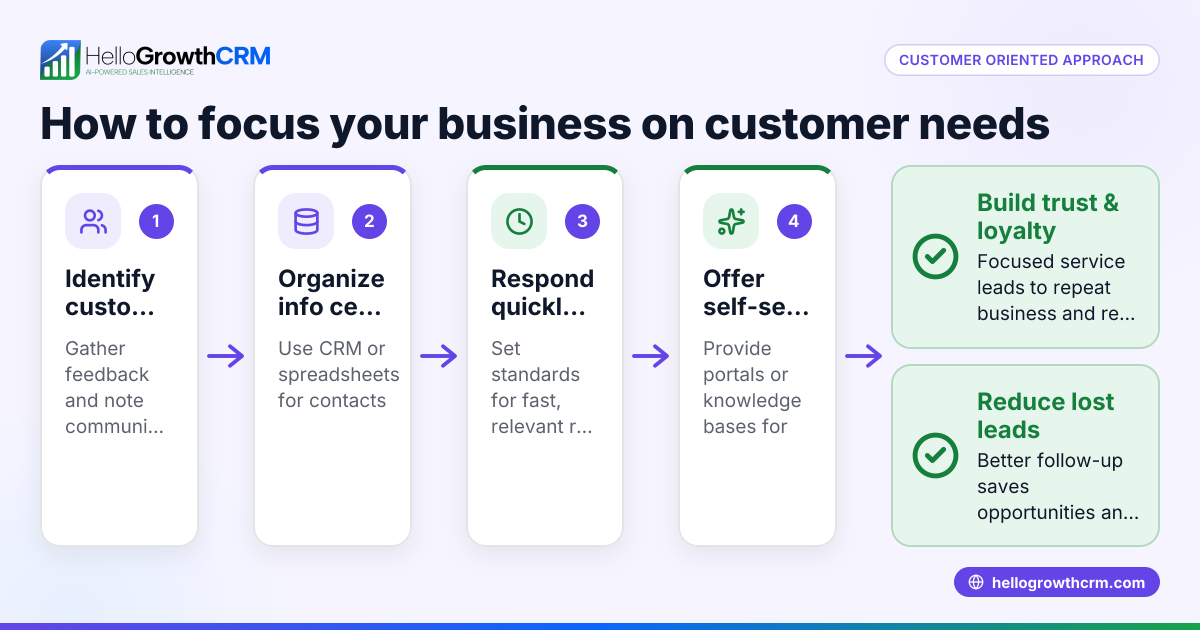
- Understand your customers deeply.
- Collect feedback regularly through surveys, calls, and direct conversations.
- Check for common pain points, preferences, and unmet needs.
- Map the customer journey.
- Identify every touchpoint from first contact through post-sale support.
- Check if each step adds value or creates friction for customers.
- Train your team on customer focus.
- Teach active listening, empathy, and clear communication.
- Check that everyone knows how to handle inquiries and complaints promptly.
- Use tools that centralize customer information.
- Implement a CRM that tracks leads, conversations, and service requests in one place.
- Check that customer data is accessible to all relevant team members.
- Follow up quickly and personally.
- Respond to inquiries within hours, not days.
- Check that follow-ups reference prior conversations to show attention.
- Offer self-service options and support resources.
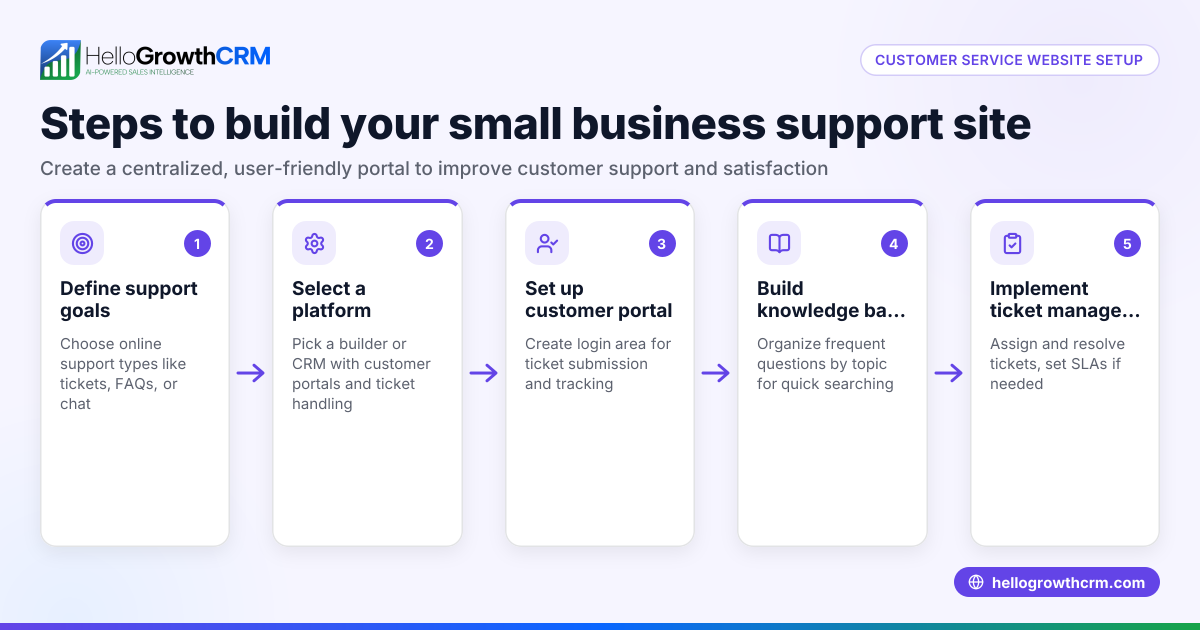
- Provide a customer portal with FAQs and ticket submission.
- Check that customers can easily find answers and request help.
- Encourage referrals and reward loyal customers.
- Set up referral programs with clear tracking.
- Check that rewards are meaningful and communicated.
- Measure customer satisfaction and act on it.
- Use customer health score metrics to track engagement and happiness customer health score.
- Check for patterns and address negative feedback promptly.
Example (fictional figures)
A B2B software reseller in Denver, Colorado, wants to become more customer oriented starting 01/15/2026.
- They survey 100 customers and find 40% want faster support.
- They invest $12,000 in a CRM with customer portal and referral tracking.
- Within 3 months, follow-up times drop from 48 hours to 6 hours.
- Customer retention improves from 70% to 85%, increasing annual revenue:
$1,000,000 × 15% = $150,000 additional revenue
- Referral program generates 20 new customers worth $50,000 each:
20 × $50,000 = $1,000,000 new revenue
- Total revenue increase:
$150,000 + $1,000,000 = $1,150,000
This example shows how focusing on customer needs and streamlining support can drive significant growth.
Common mistakes
- Ignoring customer feedback. Prevent by scheduling regular reviews and acting on insights.
- Using multiple disconnected tools. Prevent by centralizing customer data in one CRM WhatsApp and SMS CRM.
- Slow response times. Prevent by setting clear team SLAs and tracking ticket status.
- Lack of team training on customer focus. Prevent by holding regular training sessions.
- Not measuring customer satisfaction. Prevent by implementing customer health scores and monitoring trends.
How to Know if Your Customer Orientation is Working
You want to make sure your efforts actually benefit your customers and your business. Here are some signs to watch for:
- Customers reach out less with the same issues, meaning your solutions are effective.
- Your team handles inquiries faster and with fewer escalations.
- You see more repeat business and referrals without extra pushing.
- Feedback trends show improvements in satisfaction and fewer complaints.
- Your team feels confident and equipped to support customers.
Regularly review customer feedback and business results together. If you notice negative trends or stagnant growth, revisit your customer journey and training. Being customer oriented is an ongoing process—keep checking in to ensure you’re truly meeting your customers’ needs.
Doing this in HelloGrowthCRM
HelloGrowthCRM helps customer oriented companies by keeping service requests, referrals, and support tickets linked to the same customer record as the original deal. It offers a branded self-service customer portal where customers can find answers or submit tickets. This keeps all communication and history in one place, making it easier to provide timely, personalized service after the sale. Learn more about how HelloGrowthCRM supports customer focus HelloGrowthCRM for the United States.
Frequently asked questions
What does it mean to be a customer oriented company? A customer oriented company prioritizes customer needs and satisfaction in all business decisions. It listens to feedback, personalizes interactions, and ensures prompt support to build trust and loyalty.
How can small businesses start becoming customer oriented? Start by understanding your customers through feedback, mapping their journey, training your team, and using tools like CRM to keep customer information organized and accessible.
Why is customer orientation important for sales teams? Customer orientation helps sales teams respond quickly and personally, increasing conversion rates and customer retention. It also uncovers upsell and referral opportunities.
How does a CRM help with customer orientation? A CRM centralizes customer data, tracks communication, automates follow-ups, and provides tools like customer portals and ticketing to improve service efficiency and consistency.
What are common pitfalls when trying to be customer oriented? Common pitfalls include ignoring feedback, using disconnected tools, slow responses, lack of training, and not measuring customer satisfaction. Avoid these by following structured steps and using appropriate technology.
Key takeaways
- Customer oriented companies focus on understanding and meeting customer needs.
- Centralizing customer data and communication improves follow-up and service.
- Training your team and measuring satisfaction are essential steps.
- Avoid common mistakes like slow responses and ignoring feedback.
- HelloGrowthCRM supports customer orientation with integrated customer portals and ticketing.
Start building a customer oriented company today. Start on the Free Forever plan (200 leads, no credit card).
Ready to put this into practice?
Set up your pipeline, WhatsApp follow-ups, and AI lead scoring in minutes — free, no credit card.
Try HelloGrowthCRM freeGet CRM tips in your inbox
Join thousands of sales professionals who get weekly insights on CRM strategy, AI automation, and pipeline optimization.

The HelloGrowthCRM team publishes guides on CRM strategy, AI sales tools, and revenue operations for small business sales teams.