HelloGrowthCRM software
Built for real small-business sales teams
HelloGrowthCRM helps reps qualify faster, follow up on time, and close more deals—with practical automation in one place.
- AI lead scoring and pipeline visibility
- Built-in dialer, WhatsApp, and email automation
- Sales forecasting and RevOps-ready reporting
Customer oriented selling means focusing your sales process on the specific needs, preferences, and problems of your customers rather than just pushing products. It involves listening closely, customizing your approach, and building trust to help customers make the right buying decision. This article covers why customer oriented selling matters, step-by-step instructions to implement it, a detailed example with calculations, common mistakes, and how HelloGrowthCRM features support it.
Why this comes up / what goes wrong
Many small business owners and sales teams struggle because they treat all leads and prospects the same, focusing on quick sales rather than understanding what customers really want. This leads to lost deals, slow follow-up, and unhappy customers. When selling is product-centered instead of customer-centered, buyers feel ignored or pressured, which reduces trust and repeat business. For businesses using text messages, email, and spreadsheets to track sales, disorganized follow-up and lack of customer insight make customer oriented selling hard to do well.
Step-by-step
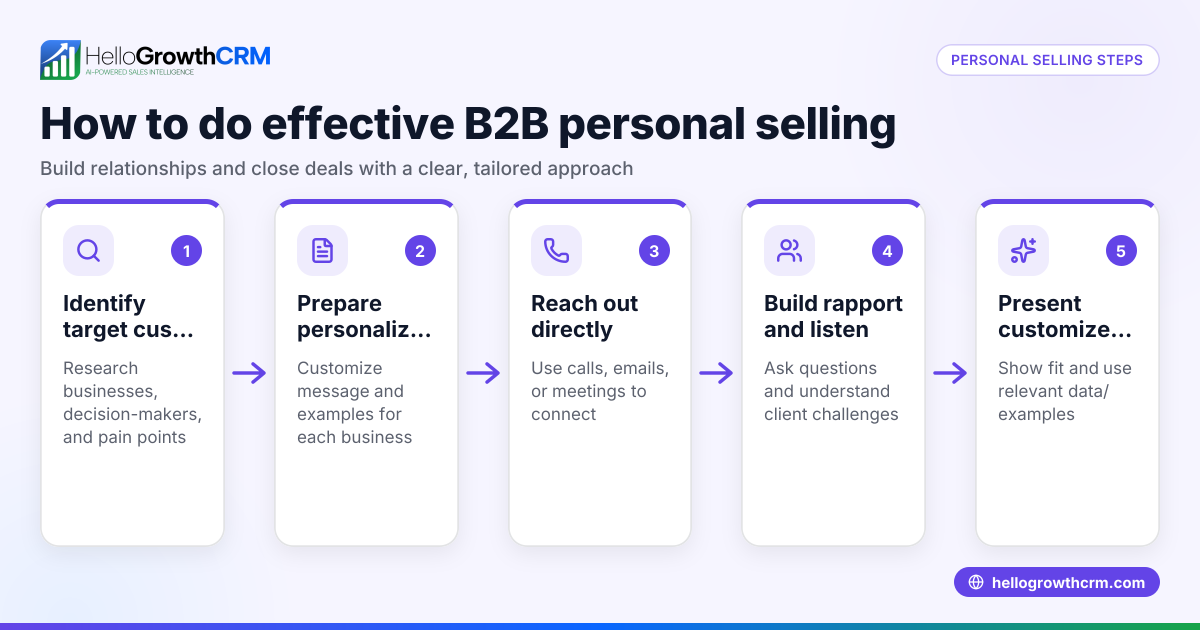
- Research your customer before contact: Use any information you have—website visits, past purchases, or referral sources—to understand their likely needs. Check your CRM for notes or past interactions.
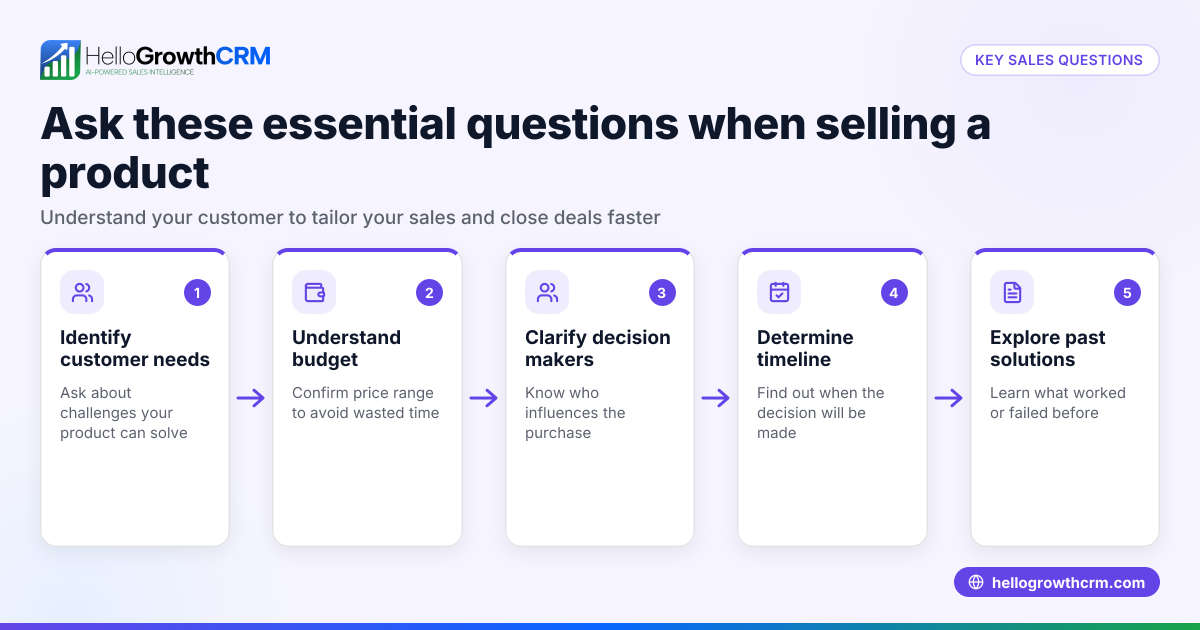
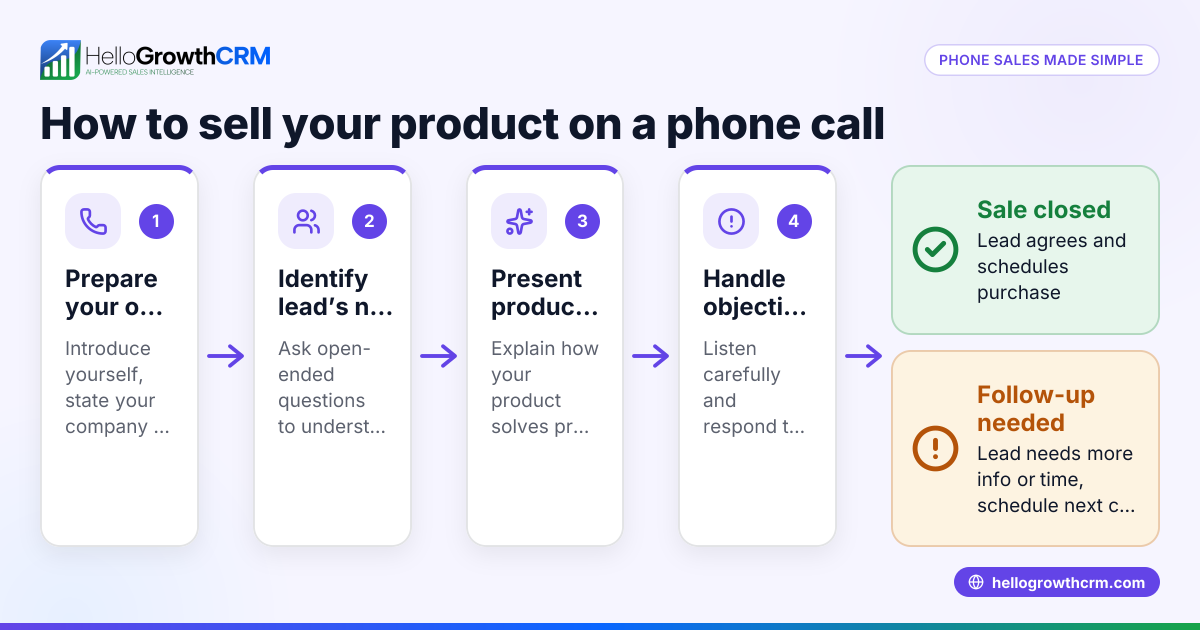
- Ask open-ended questions early: When you first speak or message a lead, ask about their challenges, goals, and preferences instead of jumping into product features.
- Listen and record key details: Take notes on what matters most to the customer. Confirm you understand by summarizing their points back to them.
- Tailor your solution to their needs: Present your product or service focusing on how it solves their specific problems or meets their goals.
- Use multiple communication channels thoughtfully: Combine WhatsApp, SMS, and email sequences to keep the conversation going without overwhelming the customer. Adjust the frequency based on their responses.
- Track follow-up tasks and pipeline stages: Use a CRM to set reminders and keep the deal moving forward without delay.
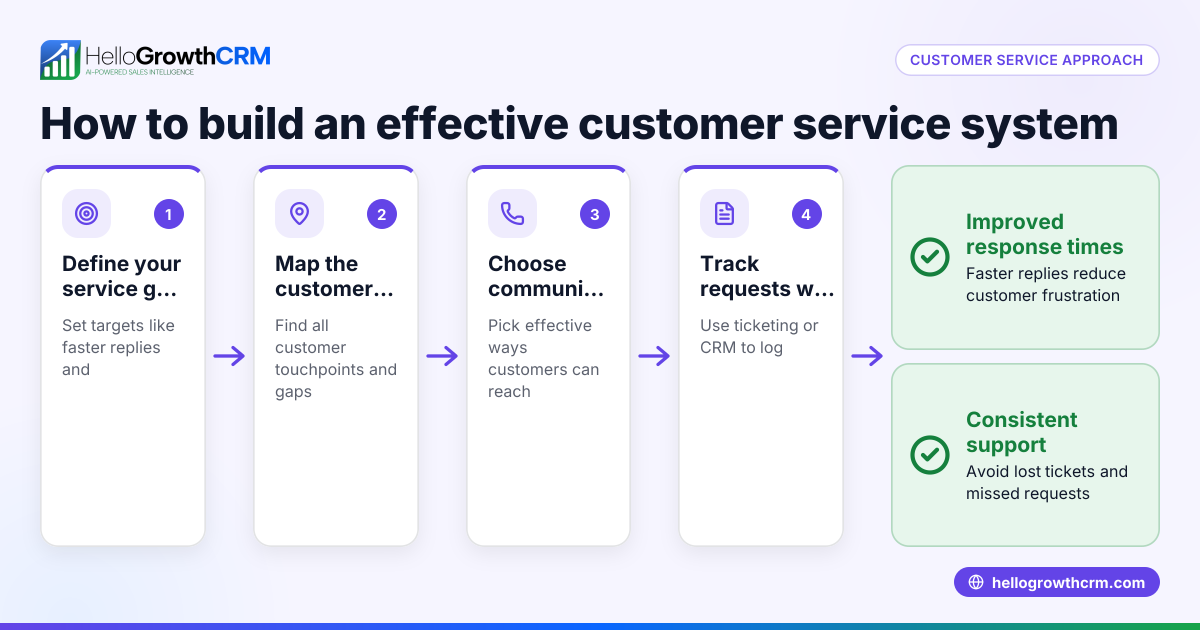
- After the sale, maintain service and support: Keep all service requests and tickets linked to the same customer record to provide consistent support.
- Ask for referrals and feedback: Satisfied customers can bring in more leads. Track referrals to reward or acknowledge them.
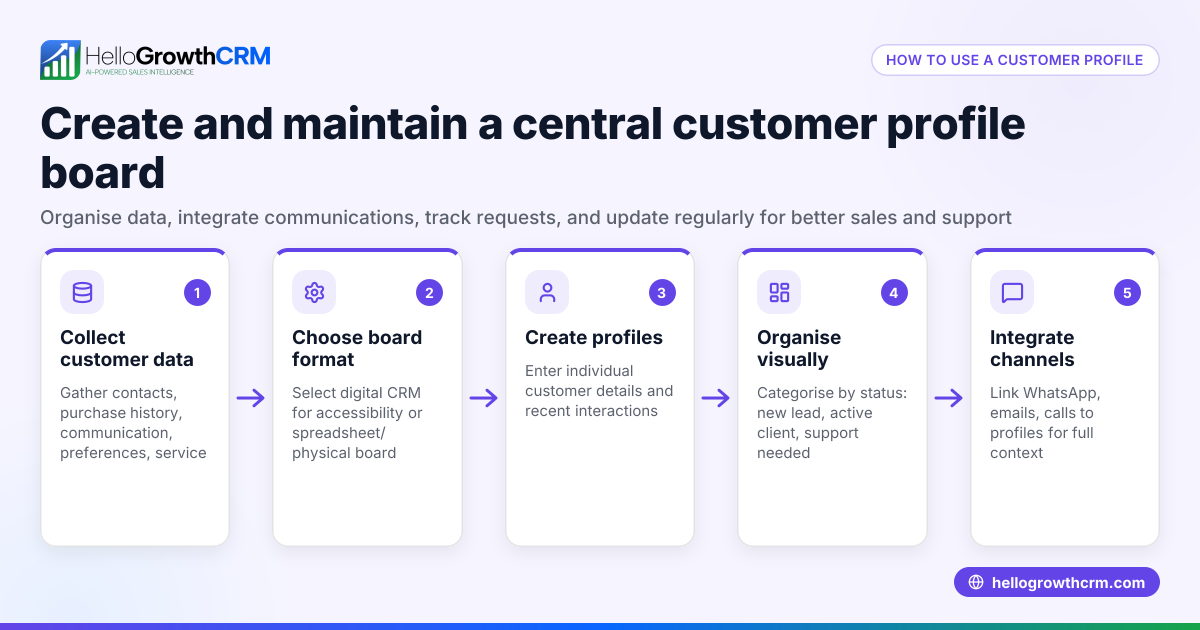
For more on managing customer information and health, see customer health score.
Example (fictional figures)
Consider "Austin Plumbing Co.", a small plumbing business in Austin, Texas, using customer oriented selling starting 04/01/2026.
- They identify a lead from a web form: a homeowner needing a new water heater installation.
- Step 1: Research shows the customer values energy efficiency and budget.
- Step 2: Sales rep asks, “What’s your main priority for the new water heater?”
- Step 3: Customer says, “I want something reliable but affordable.”
- Step 4: Sales rep offers a mid-range energy-efficient model priced at $1,200.
- Step 5: They follow up with a WhatsApp message explaining benefits and a payment plan.
- Step 6: CRM reminder set for follow-up call in 3 days.
- Step 7: Customer agrees and the deal closes.
- Step 8: After installation, customer submits a support ticket for maintenance questions.
Calculations for expected revenue from this sale:
$1,200 (sale price) + $150 (installation fee) = $1,350 (total revenue)
Assuming a 10% profit margin:
$1,350 × 10% = $135 (profit)
This approach helps Austin Plumbing Co. close deals faster and build trust.
Common mistakes
- Ignoring customer needs and pushing products: Prevent by always asking questions before pitching.
- Failing to track follow-ups: Use CRM task boards to avoid losing leads.
- Overloading customers with messages: Check responses and adjust communication frequency.
- Separating sales and service records: Keep all interactions on one customer record to avoid confusion.
- Not asking for referrals: Create a referral tracking system to encourage word-of-mouth.
Learn more about managing WhatsApp and SMS communications in WhatsApp and SMS CRM.
Doing this in HelloGrowthCRM
HelloGrowthCRM helps with customer oriented selling by keeping service requests and support tickets linked to the same customer record as the deal. It provides a branded self-service customer portal where customers can access support and a knowledge base, improving service consistency. The platform also supports referral program tracking to help grow your business. See how it works for HelloGrowthCRM for the United States.
Frequently asked questions
What is the difference between customer oriented selling and traditional selling? Customer oriented selling focuses on understanding and meeting the buyer’s specific needs, while traditional selling often emphasizes pushing product features and closing quickly. The customer oriented approach builds longer-term relationships.
How can I start customer oriented selling if I have a small team? Begin by training your team to ask open questions and listen carefully. Use simple tools like CRM task boards to track follow-ups and keep customer details organized.
Does customer oriented selling work with digital channels like WhatsApp and SMS? Yes, combining WhatsApp, SMS, and email sequences allows you to communicate in the customer’s preferred way, keeping the conversation personal and timely.
How do I measure success in customer oriented selling? Track metrics like lead response time, conversion rates, repeat business, and customer referrals. Tools like the customer health score can help.
Can I handle customer service requests without losing sales context? Yes, using a CRM that keeps service tickets linked to the original deal and customer record ensures your team has full information.
Key takeaways
- Customer oriented selling means focusing on the buyer’s needs, not just your products.
- Ask open questions, listen carefully, and tailor your sales approach.
- Use a CRM to track leads, follow-ups, and keep sales and service records unified.
- Avoid common pitfalls like ignoring customer preferences or losing follow-up opportunities.
- After the sale, maintain service and encourage referrals to grow your business.
Start improving your sales process today. Start on the Free Forever plan (200 leads, no credit card) to try customer oriented selling with HelloGrowthCRM.
Ready to put this into practice?
Set up your pipeline, WhatsApp follow-ups, and AI lead scoring in minutes — free, no credit card.
Try HelloGrowthCRM freeGet CRM tips in your inbox
Join thousands of sales professionals who get weekly insights on CRM strategy, AI automation, and pipeline optimization.

The HelloGrowthCRM team publishes guides on CRM strategy, AI sales tools, and revenue operations for small business sales teams.