HelloGrowthCRM software
Built for real small-business sales teams
HelloGrowthCRM helps reps qualify faster, follow up on time, and close more deals—with practical automation in one place.
- AI lead scoring and pipeline visibility
- Built-in dialer, WhatsApp, and email automation
- Sales forecasting and RevOps-ready reporting
Customer satisfaction factors are the main elements that determine how pleased your customers are with your business. These typically include the quality of your product or service, clear and timely communication, responsiveness to questions or problems, and effective after-sale support. Understanding these factors helps you keep customers happy, encourage repeat business, and gain referrals.
Why this comes up / what goes wrong
Small-business owners often face challenges with customer satisfaction because communication is spread across text messages, emails, and spreadsheets. This fragmentation causes slow follow-up, missed service requests, or inconsistent customer interactions. When customers feel ignored or confused, satisfaction drops, leading to lost repeat sales and fewer referrals. Knowing the main customer satisfaction factors helps you focus on what truly impacts your customers’ happiness and prevents these issues.
Step-by-step
- Assess product or service quality. Regularly check if your offering meets or exceeds customer expectations. Collect feedback through direct conversations, surveys, or online reviews. Look for patterns in complaints or praise.
- Improve communication clarity and speed. Make sure customers get timely, clear answers to their questions. Avoid vague responses and delays. Use consistent messaging across channels.
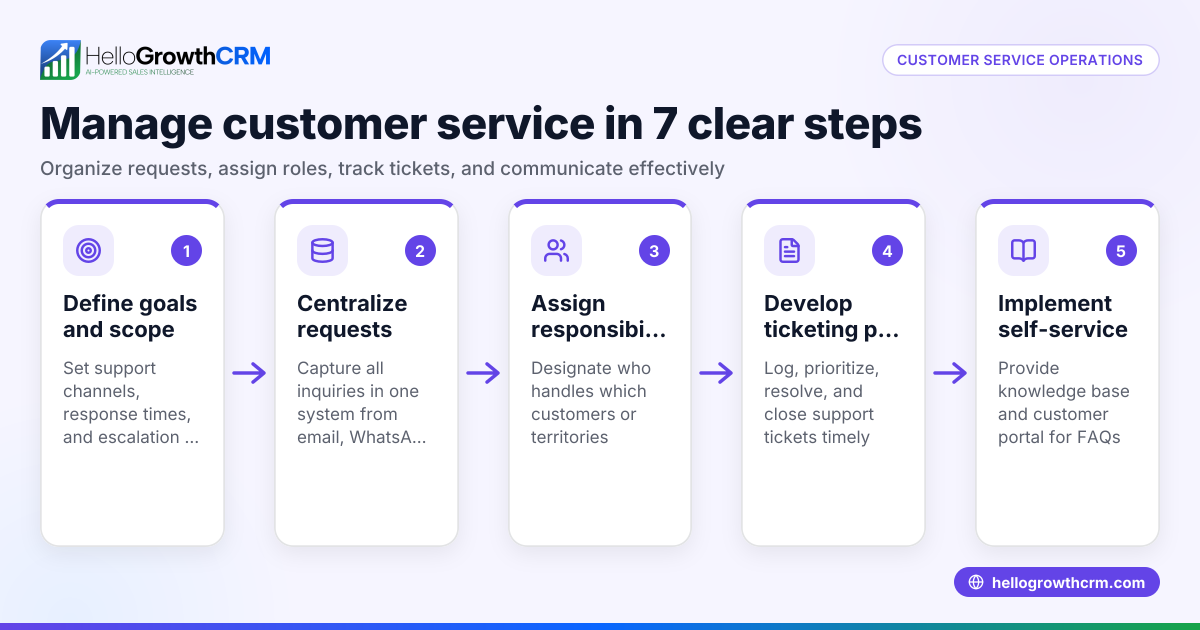
- Track responsiveness to issues. Set up a system to log service requests or complaints. Respond quickly and keep customers updated on progress until resolution.
- Follow up after the sale. Contact customers to confirm they are satisfied and offer additional support or products. This shows you care and can catch problems early.
- Encourage and manage referrals. Satisfied customers often bring new business. Create a referral program, track referrals, and reward customers who recommend you.
- Use a CRM to organize customer data and history. A CRM helps your team stay coordinated and informed about each customer’s status, improving communication and service. Features like customer health score tracking can indicate satisfaction trends over time. See how customer health scores work in HelloGrowthCRM for the United States.
Example (fictional figures)
A plumbing company in Austin, Texas, handles about 100 service calls monthly, each generating an average revenue of $50.
They estimate that improving communication and follow-up could retain 10 additional customers monthly who might otherwise be lost.
Additional monthly revenue from retained customers: $50 × 10 = $500
Annual additional revenue: $500 × 12 = $6,000
This example shows how improving customer satisfaction factors like responsiveness and follow-up can directly increase revenue by retaining more customers.
Common mistakes
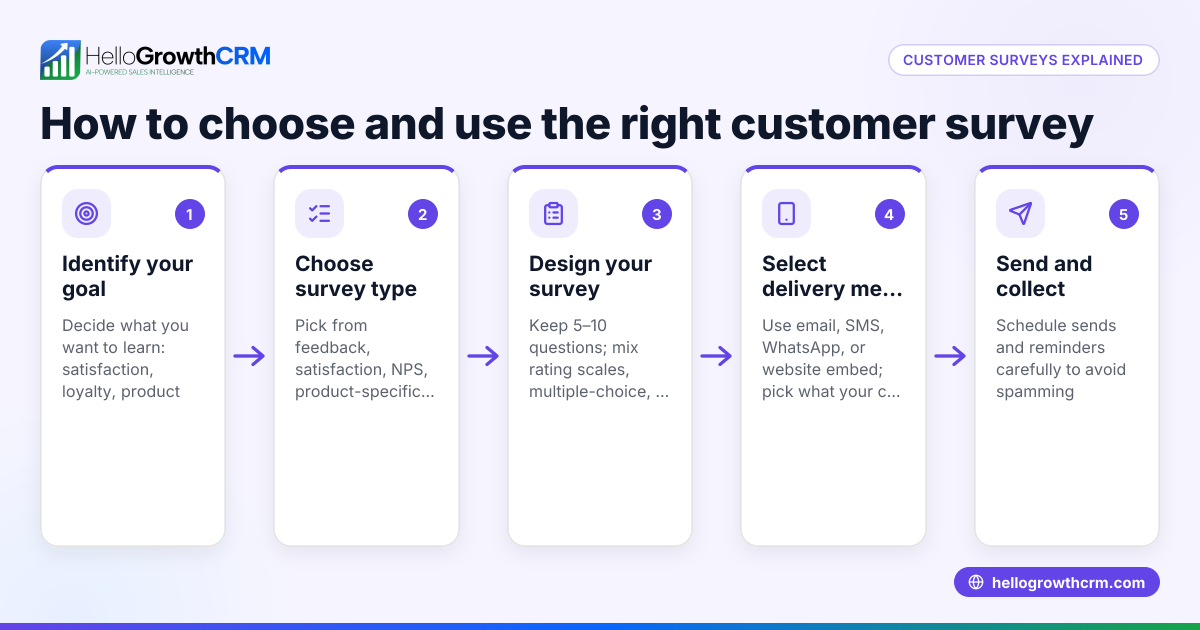
- Ignoring customer feedback. Prevent this by regularly asking for feedback through surveys or conversations and acting on it.
- Slow or inconsistent follow-up. Set clear response time goals and use tools to track service requests and follow-ups.
- Not linking service requests to customer records. Use a CRM that keeps all information in one place to prevent lost or duplicated communications.
- Failing to encourage referrals. Implement and track a referral program to reward loyal customers and grow your business.
- Relying on scattered communication channels. Consolidate messages using a WhatsApp and SMS CRM to keep communication organized and reduce missed follow-ups.
- Overlooking after-sale support. Follow up with customers post-sale to ensure satisfaction and address any concerns promptly.
Doing this in HelloGrowthCRM
HelloGrowthCRM offers a branded self-service customer portal, referral program tracking, support tickets, and a knowledge base. These features help small businesses keep service requests and communication organized on the same customer record as the deal. This ensures your team can respond quickly to issues and follow up effectively, improving customer satisfaction. Learn more about HelloGrowthCRM for the United States and its WhatsApp and SMS CRM features that streamline communication and referrals.
Frequently asked questions
What are the most important factors that affect customer satisfaction? The key factors include product or service quality, clear communication, quick responsiveness to issues, and good after-sale support. These influence how customers perceive your business and their likelihood to return or recommend you.
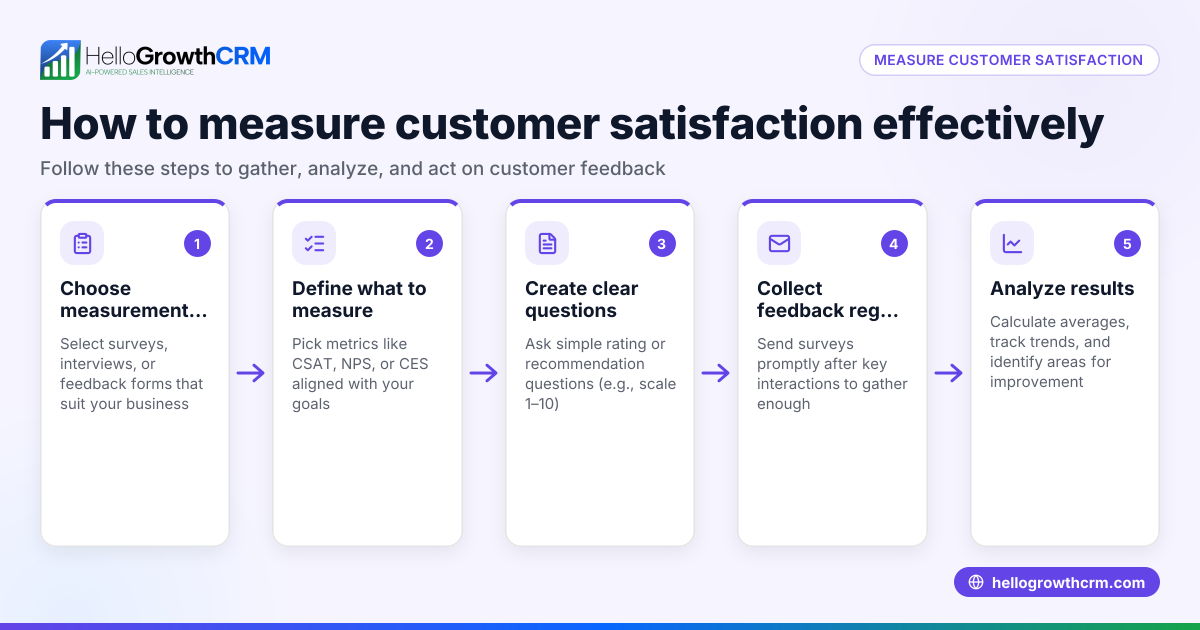
How can I measure customer satisfaction effectively? Use surveys, direct feedback, and track repeat business or referral rates. A CRM with customer health score features can help you monitor satisfaction trends over time. See customer health score for details.
Why is follow-up important for customer satisfaction? Following up shows customers you care about their experience and helps resolve any problems quickly. It builds trust and encourages loyalty.
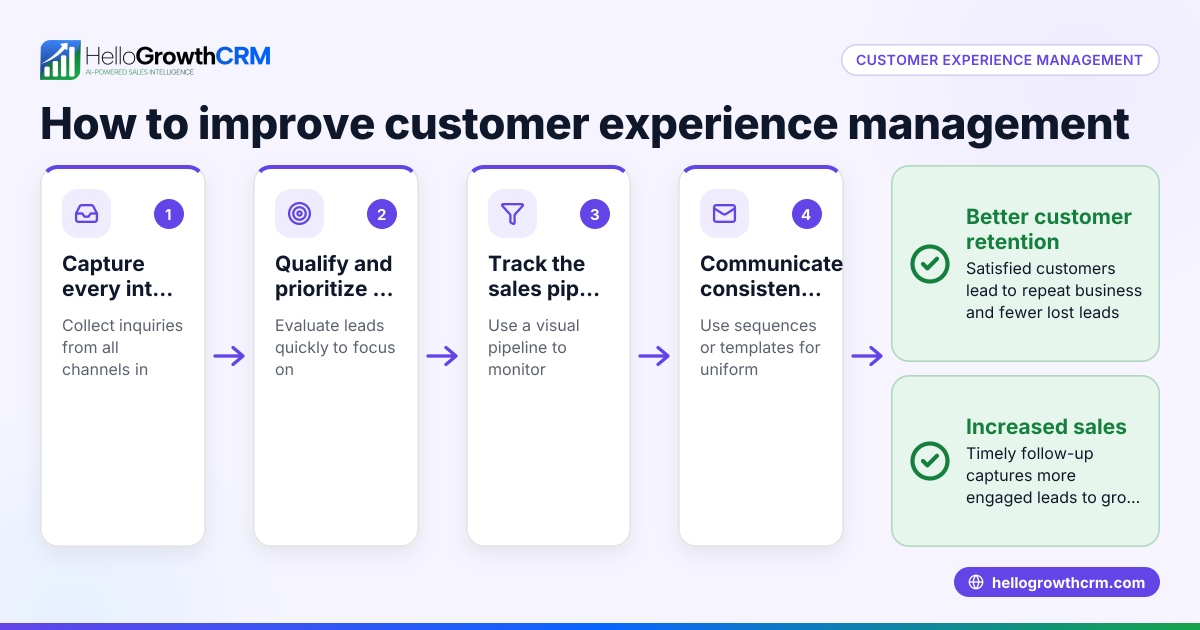
Can a CRM improve customer satisfaction? Yes, a CRM organizes customer interactions, tracks service requests, and automates communication sequences. This ensures timely responses and better service management.
How do referrals relate to customer satisfaction? Satisfied customers are more likely to recommend your business. Tracking referrals helps you reward loyal customers and grow your business through word-of-mouth.
What is the role of communication channels like WhatsApp and SMS in customer satisfaction? Using communication channels like WhatsApp and SMS allows faster, more direct contact with customers. A CRM that supports these channels helps keep all messages organized, reducing missed follow-ups or confusion. Learn more about WhatsApp and SMS CRM.
Key takeaways
- Customer satisfaction depends on product quality, communication, responsiveness, and after-sale support.
- Assess and improve each factor step-by-step with clear processes.
- Avoid common mistakes like ignoring feedback or slow follow-up by using organized systems.
- A CRM like HelloGrowthCRM helps keep all customer information and service requests in one place.
- Tracking referrals and encouraging them boosts customer satisfaction and business growth.
- Using WhatsApp and SMS CRM features consolidates communication and speeds up responses.
Start improving your customer satisfaction today. Start on the Free Forever plan (200 leads, no credit card).
Ready to put this into practice?
Set up your pipeline, WhatsApp follow-ups, and AI lead scoring in minutes — free, no credit card.
Try HelloGrowthCRM freeGet CRM tips in your inbox
Join thousands of sales professionals who get weekly insights on CRM strategy, AI automation, and pipeline optimization.

The HelloGrowthCRM team publishes guides on CRM strategy, AI sales tools, and revenue operations for small business sales teams.