HelloGrowthCRM software
Built for real small-business sales teams
HelloGrowthCRM helps reps qualify faster, follow up on time, and close more deals—with practical automation in one place.
- AI lead scoring and pipeline visibility
- Built-in dialer, WhatsApp, and email automation
- Sales forecasting and RevOps-ready reporting
Customer service recovery is the process of addressing and resolving a customer's complaint or problem after a service failure. It aims to restore customer satisfaction and loyalty by promptly fixing issues and communicating effectively. This article covers why customer service recovery matters for small businesses, clear steps to follow, a detailed example with figures, common recovery mistakes, and how HelloGrowthCRM supports recovery management.
Why this comes up / what goes wrong
Small business owners often face customer service recovery when a product or service does not meet customer expectations. This can happen due to delayed responses, errors in orders, poor communication, or technical issues. For example, a local plumbing company might miss a scheduled appointment or deliver incomplete work. Customers who experience such problems may feel frustrated and consider switching to competitors. Without a clear recovery process, these businesses risk losing repeat sales and damaging their reputation.
Step-by-step
- Listen carefully and acknowledge the problem
- When a customer complains, listen without interrupting.
- Confirm you understand the issue by repeating it back.
- Apologize sincerely
- Offer a genuine apology for the inconvenience caused.
- Avoid blaming the customer or external factors.
- Assess the situation and decide on a solution
- Check what went wrong and how it can be fixed.
- Decide if a refund, replacement, discount, or service redo is appropriate.
- Communicate the solution clearly
- Explain what you will do and the timeline.
- Ensure the customer agrees with the plan.
- Take action promptly
- Implement the agreed solution quickly.
- Keep the customer updated if there are any delays.
- Follow up to confirm satisfaction
- Contact the customer after resolution to ensure they are happy.
- Ask for feedback or referrals if appropriate.
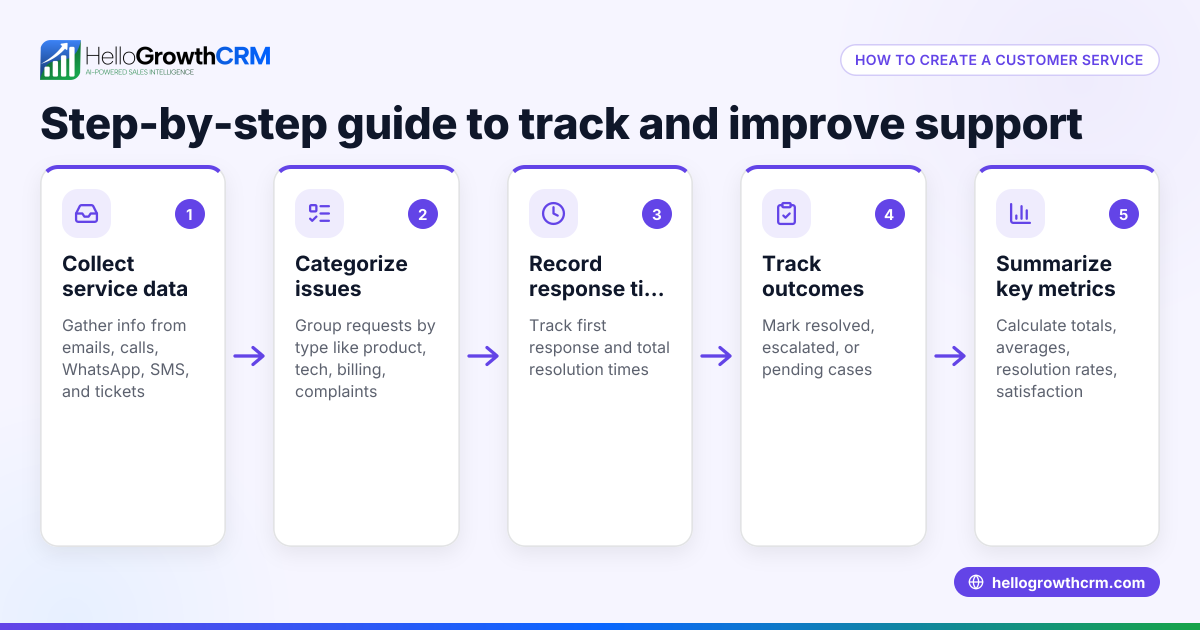
- Record the issue and resolution
- Document the complaint and how it was handled for future reference.
- Use this data to improve your service processes.
This step-by-step approach helps small businesses recover customers effectively and build trust. Using tools like HelloGrowthCRM can help track these steps and customer interactions.
Example (fictional figures)
A plumbing company in Austin, Texas, received a complaint on 05/10/2026 that a recent job was incomplete. The customer paid $1,200 for a kitchen sink installation but found the faucet leaking.
Step 1: Listen and acknowledge
- Customer calls to report the leak.
Step 2: Apologize
- Company apologizes sincerely for the inconvenience.
Step 3: Assess and decide solution
- Technician inspects the faucet and finds a faulty part.
- Company offers to fix the leak at no extra cost.
Step 4: Communicate solution
- Customer is told the technician will return within 48 hours.
Step 5: Take action
- Technician returns on 05/12/2026 and replaces the faulty part.
Step 6: Follow up
- On 05/15/2026, company calls to confirm the leak is fixed and customer is satisfied.
Step 7: Record the issue
- Complaint and resolution details saved in company records for quality control.
Financial impact:
- Original job payment: $1,200
- Cost of replacement part: $50
- Technician labor for fix: $150
- Total recovery cost = $50 + $150 = $200
- Net revenue retained = $1,200 - $200 = $1,000
This quick recovery protects most of the $1,200 sale and keeps the customer loyal.
Common mistakes
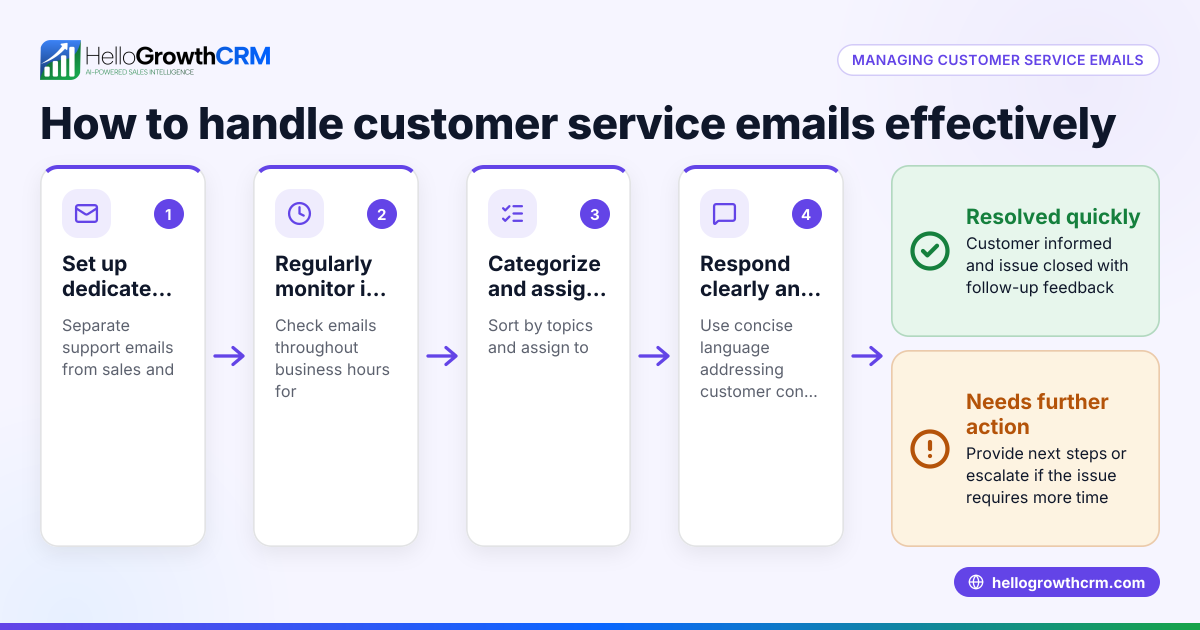
- Ignoring or delaying responses: Prevent by setting clear response times and monitoring complaints regularly.
- Offering excuses instead of apologies: Prevent by training staff to apologize sincerely and take responsibility.
- Failing to follow up: Prevent by scheduling follow-ups as part of the recovery process.
- Not documenting complaints: Prevent by using a system to log issues and their resolutions, which helps improve service.
- Overpromising and underdelivering: Prevent by setting realistic expectations and communicating clearly.
Using a customer health score can help identify unhappy customers early and avoid bigger recovery issues. Learn more about customer health score.
Doing this in HelloGrowthCRM
HelloGrowthCRM helps small businesses manage customer service recovery by keeping all service requests, tickets, and customer interactions on the same customer record as the deal. Its branded customer portal allows customers to submit support tickets easily. The built-in knowledge base helps customers find answers quickly, reducing repetitive issues. Referral tracking encourages happy customers to bring in new business. This centralized approach simplifies managing recovery and maintaining customer satisfaction. Learn more about HelloGrowthCRM for the United States and its WhatsApp and SMS CRM features.
Frequently asked questions
What is customer service recovery? Customer service recovery is the process a business uses to fix problems after a customer experiences a service failure. It involves acknowledging the issue, apologizing, offering a solution, and following up to restore satisfaction.
Why is customer service recovery important for small businesses? It helps retain customers who might otherwise leave due to a bad experience. Effective recovery can turn unhappy customers into loyal ones and protect your business reputation.
How quickly should I respond to a customer complaint? Respond as soon as possible, ideally within 24 hours. Quick responses show you value the customer and are committed to fixing the problem.
Can technology help with customer service recovery? Yes, HelloGrowthCRM keeps all service requests, tickets, and customer interactions on the same customer record as the deal, making recovery more organized and efficient.
What if the customer is still unhappy after recovery efforts? Listen carefully to their concerns again, offer alternative solutions if possible, and consider involving a manager or escalation process to find a resolution.
Key takeaways
- Customer service recovery fixes problems after a service failure to keep customers.
- The process includes listening, apologizing, deciding on a solution, acting, and following up.
- Common mistakes include ignoring complaints, not apologizing, and failing to follow up.
- Recording issues helps improve service and avoid repeat problems.
- HelloGrowthCRM centralizes service requests and customer data to streamline recovery.
Start improving your customer service recovery today. Start on the Free Forever plan (200 leads, no credit card).
Ready to put this into practice?
Set up your pipeline, WhatsApp follow-ups, and AI lead scoring in minutes — free, no credit card.
Try HelloGrowthCRM freeGet CRM tips in your inbox
Join thousands of sales professionals who get weekly insights on CRM strategy, AI automation, and pipeline optimization.

The HelloGrowthCRM team publishes guides on CRM strategy, AI sales tools, and revenue operations for small business sales teams.