HelloGrowthCRM software
Built for real small-business sales teams
HelloGrowthCRM helps reps qualify faster, follow up on time, and close more deals—with practical automation in one place.
- AI lead scoring and pipeline visibility
- Built-in dialer, WhatsApp, and email automation
- Sales forecasting and RevOps-ready reporting
An effective sales plan is a clear, actionable roadmap that outlines your sales goals, target customers, strategies, and timelines to close deals and grow revenue. It helps your team focus efforts, prioritize leads, and track progress. This article explains why a sales plan matters, provides step-by-step instructions to build one, offers a practical example, highlights common mistakes, and shows how HelloGrowthCRM supports your sales process.
Why this comes up / what goes wrong
Small-business owners often struggle with inconsistent sales results, missed follow-ups, and unclear priorities. Without a sales plan, it’s easy to lose leads, waste time chasing unqualified prospects, or fail to measure progress. Many small teams run sales on scattered tools like text messages, email, and spreadsheets, which leads to disorganization and slow response times. This results in lost revenue and frustration for founders and sales teams alike.
Step-by-step
- Set clear sales goals. Define specific revenue targets, number of deals, or new customers you want to acquire within a time frame. Check that goals are realistic and measurable.
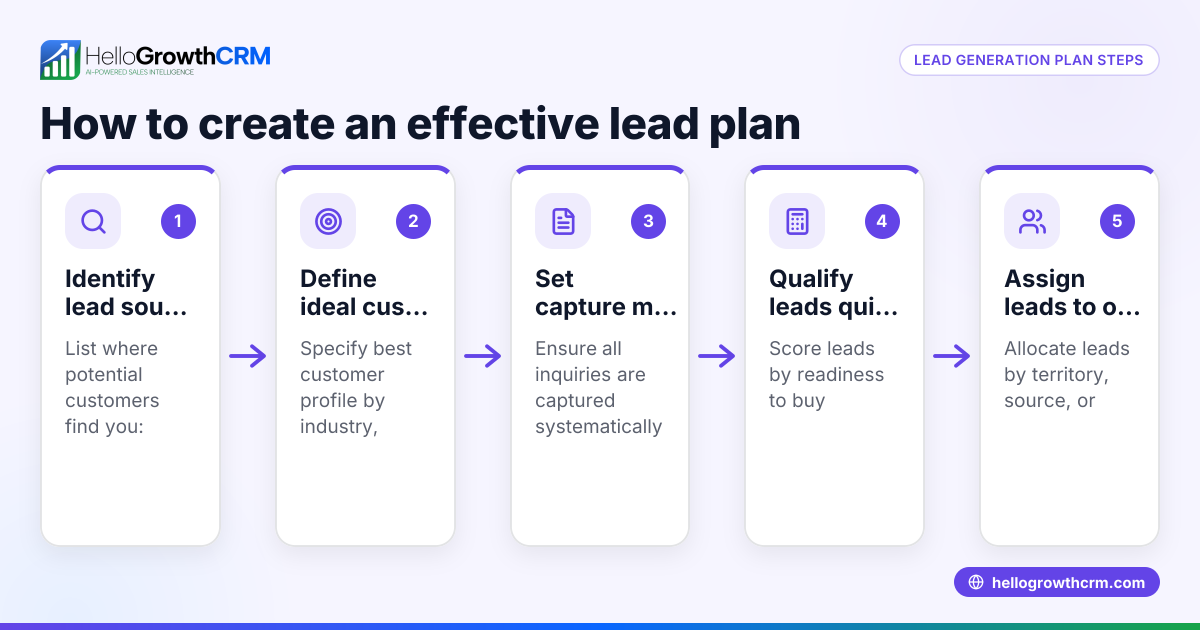
- Identify your target customers. Describe who your ideal buyers are by industry, company size, location, or other relevant factors. Check that this matches your best current customers.
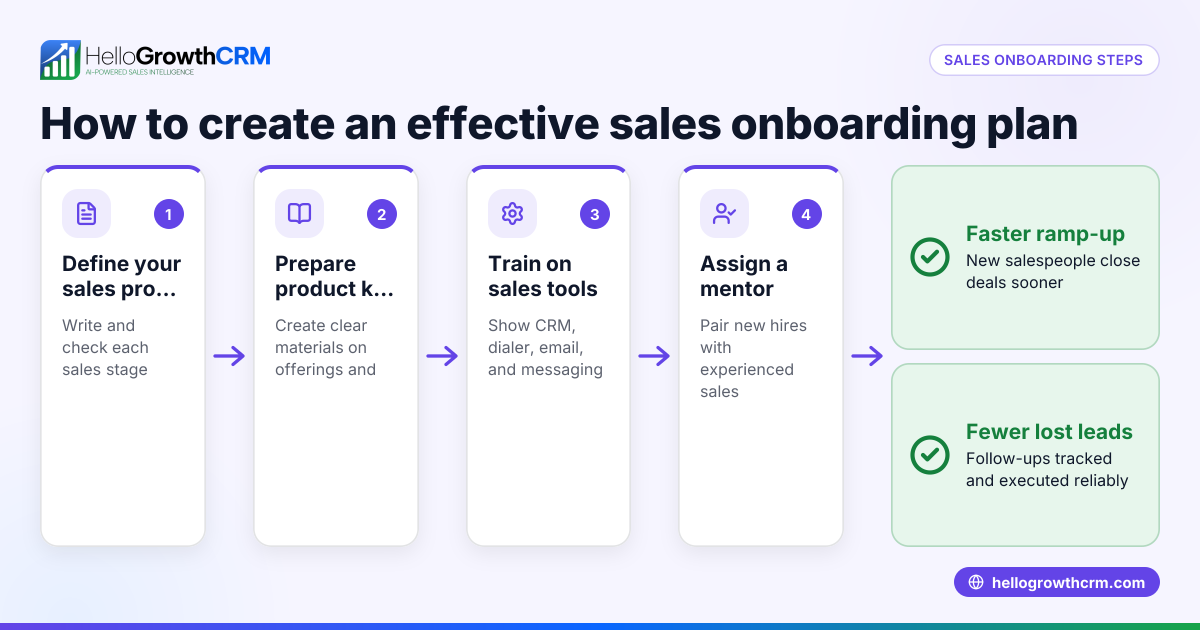
- Outline your sales process stages. Map out the key steps from first contact to closing the deal, such as lead qualification, needs analysis, proposal, and negotiation. Check that each stage has specific actions and expected outcomes.
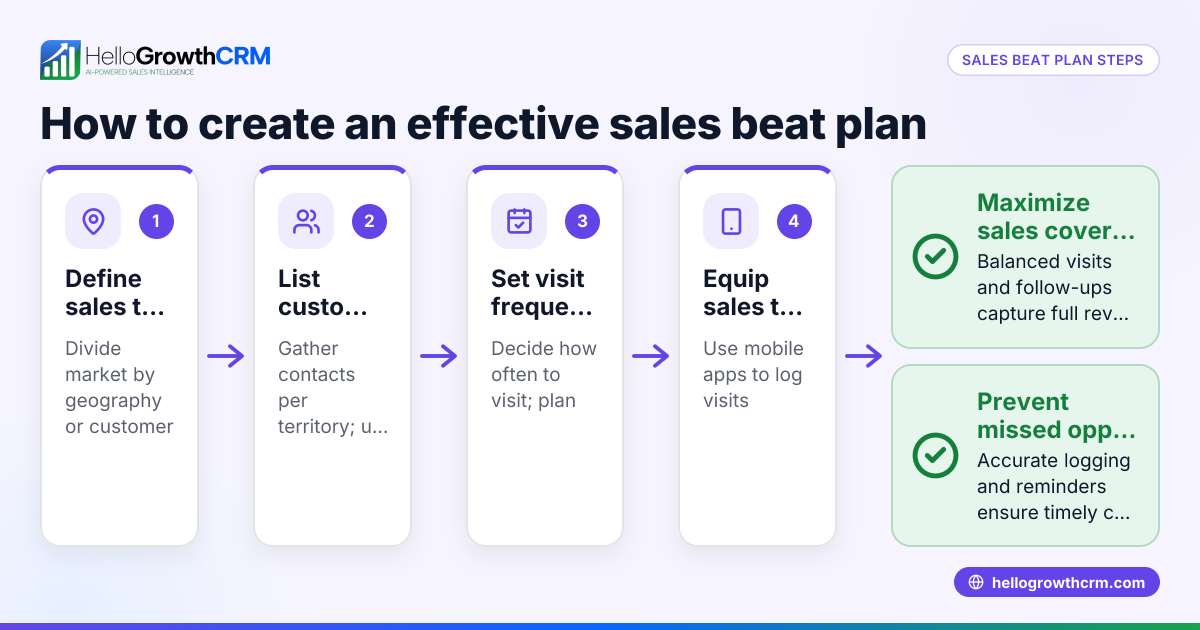
- Assign responsibilities and territories. Decide who on your team handles which leads or regions. Check that workload is balanced and coverage complete.
- Develop lead generation and outreach strategies. Choose how you will find and contact prospects—email campaigns, calls, WhatsApp messages, or events. Check that messaging aligns with customer needs.
- Set timelines and follow-up schedules. Define when and how often to contact leads at each stage. Check that follow-ups are timely to avoid losing interest.
- Track progress and adjust. Use a CRM or tracking tool to monitor deals, pipeline stages, and sales activities. Regularly review results and tweak your plan as needed.
Example (fictional figures)
A two-location dental practice in Columbus, Ohio, wants to increase new patient revenue by $120,000 in the next 6 months (by 12/31/2026).
- Goal: $120,000 additional revenue by 12/31/2026
- Target customers: Adults aged 25-55 in Columbus metro area
- Sales process stages:
- Lead inquiry
- Consultation booked
- Treatment plan proposed
- Treatment accepted
- Responsibilities: Receptionist handles lead intake, dentist consults, office manager follows up on proposals
- Outreach: Email reminders, WhatsApp messages for appointment confirmations
- Follow-up schedule: Contact leads within 24 hours, follow up 3 days after consultation if no decision
- Tracking: Use pipeline to monitor leads and set follow-up dates
Calculation:
Assume average new patient treatment revenue = $1,500
Required new patients = $120,000 ÷ $1,500 = 80 patients
If conversion rate from inquiry to treatment accepted is 40%, then needed inquiries = 80 ÷ 0.4 = 200 inquiries
Therefore, the practice must generate and follow up on at least 200 new inquiries over 6 months.
Common mistakes
- No clear goals: Without measurable targets, it’s impossible to track success. Prevent by setting specific revenue or deal goals.
- Ignoring follow-up timing: Delayed contact loses leads. Prevent by scheduling follow-ups immediately using tools like HelloGrowthCRM’s deals pipeline with follow-up dates.
- Unbalanced workload: Some team members overwhelmed, others idle. Prevent by defining territories and responsibilities clearly, using territory management features.
- Lack of tracking: Running sales on spreadsheets or texts causes lost data. Prevent by adopting a CRM to track deals and tasks.
- Not reviewing plan regularly: Sticking to a failing plan wastes effort. Prevent by scheduling weekly reviews and adjusting based on results.
Doing this in HelloGrowthCRM
HelloGrowthCRM helps you build and execute your sales plan with features like Deals (pipeline) that track open opportunities from first contact through close. For example, a quotation sent last week appears as a deal at the 'quote sent' stage with a follow-up date, ensuring no lead is forgotten. If your business has field sales reps, territories and field operations tools let reps log visits from their phones while managers see daily activity. For founders without a sales manager, Managed RevOps provides weekly follow-up execution and pipeline hygiene support. Learn more about these features at HelloGrowthCRM for the United States, WhatsApp and SMS CRM, and the built-in CRM dialer.
Frequently asked questions
What is the difference between a sales plan and a sales strategy? A sales plan is a detailed roadmap with specific goals, timelines, and actions to reach sales targets. A sales strategy is the broader approach or method you use to sell, like focusing on inbound leads or enterprise clients. The plan puts the strategy into actionable steps.
How often should I update my sales plan? Review your sales plan at least monthly to track progress and make adjustments based on results, market changes, or team feedback. Regular updates keep your plan realistic and effective.
Can a small business use HelloGrowthCRM without a sales manager? Yes. HelloGrowthCRM offers Managed RevOps, which provides done-for-you revenue operations support including weekly follow-up execution and pipeline cleanup, helping founders manage sales activities without a dedicated sales manager.
How do I measure if my sales plan is working? Track key performance indicators like number of leads generated, conversion rates at each pipeline stage, revenue growth, and follow-up completion rates. Use a CRM pipeline to visualize and monitor these metrics.
What role does follow-up play in an effective sales plan? Follow-up ensures leads don’t fall through the cracks. Timely, consistent follow-up increases conversion rates. Scheduling follow-ups in a CRM with reminders helps maintain momentum.
Key takeaways
- An effective sales plan sets clear, measurable goals and defines your target customers.
- Mapping your sales process and assigning responsibilities keeps your team aligned.
- Timely follow-up and tracking progress prevent lost leads and wasted effort.
- Avoid common mistakes like unclear goals, poor workload balance, and lack of tracking.
- HelloGrowthCRM features like Deals pipeline, territories, and Managed RevOps support executing your sales plan.
Start building your sales plan today and manage it easily with HelloGrowthCRM. Start on the Free Forever plan (200 leads, no credit card).
Ready to put this into practice?
Set up your pipeline, WhatsApp follow-ups, and AI lead scoring in minutes — free, no credit card.
Try HelloGrowthCRM freeGet CRM tips in your inbox
Join thousands of sales professionals who get weekly insights on CRM strategy, AI automation, and pipeline optimization.

The HelloGrowthCRM team publishes guides on CRM strategy, AI sales tools, and revenue operations for small business sales teams.