HelloGrowthCRM software
Built for real small-business sales teams
HelloGrowthCRM helps reps qualify faster, follow up on time, and close more deals—with practical automation in one place.
- AI lead scoring and pipeline visibility
- Built-in dialer, WhatsApp, and email automation
- Sales forecasting and RevOps-ready reporting
A sales onboarding plan is a structured process designed to train new sales team members on your products, sales methods, tools, and company expectations. The goal is to equip them to generate leads, follow up effectively, and close deals quickly. A good onboarding plan reduces ramp-up time and improves early sales performance.
Why this comes up / what goes wrong
Many small businesses struggle with sales onboarding because they hire new salespeople but lack a clear plan to train and integrate them. Without a plan, new hires often feel overwhelmed, miss important product details, or fail to learn the sales process properly. This leads to slow follow-up, lost leads, and wasted time. Small-business owners may also handle sales themselves or use scattered tools like spreadsheets, texts, and emails, which makes onboarding inconsistent and inefficient.
Step-by-step
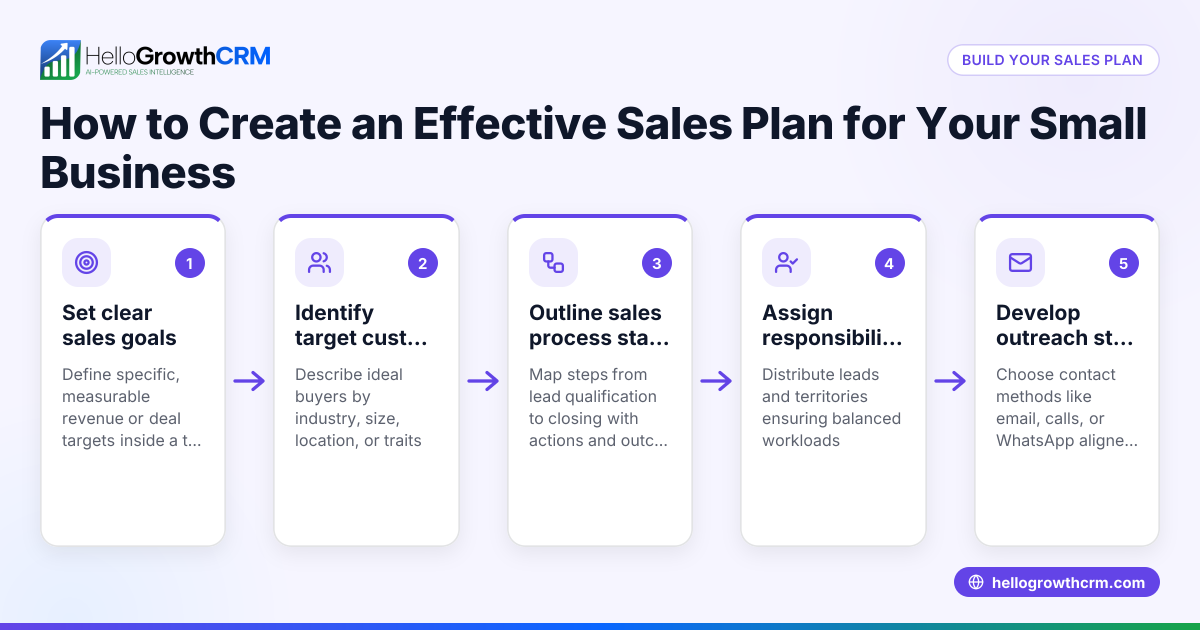
- Define your sales process clearly: Write down each stage your sales typically goes through, from lead capture to closing. Check that it matches how your team actually sells.
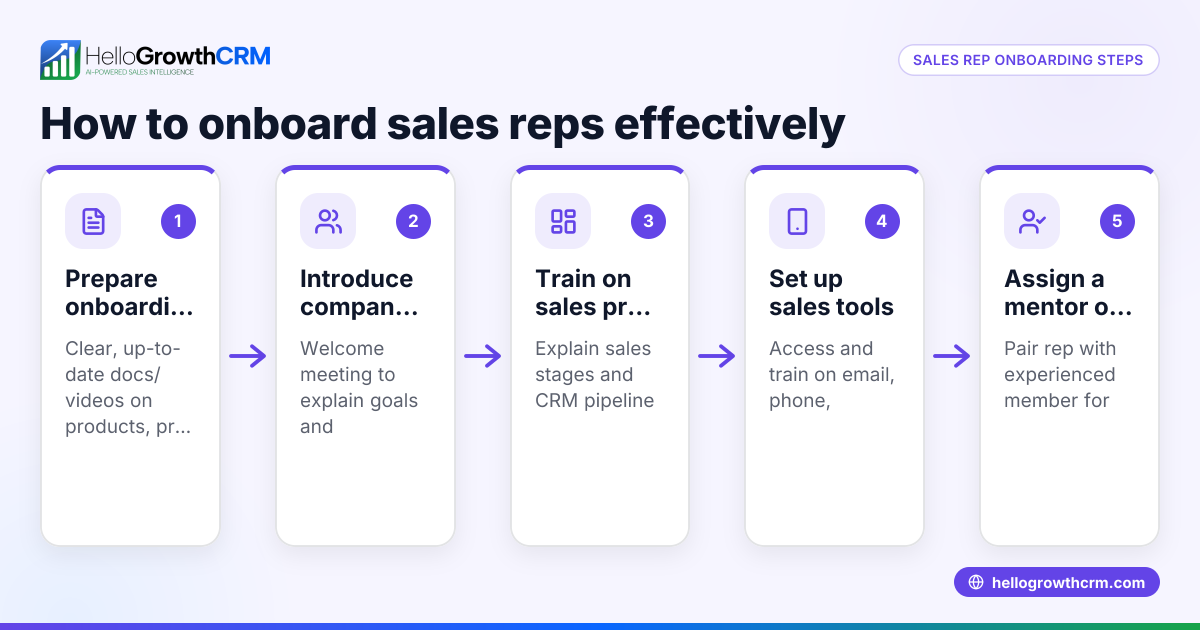
- Gather product and service knowledge: Prepare concise materials or sessions that explain your offerings, key features, and common customer questions.
- Introduce your sales tools: Show new hires how to use your CRM, email sequences, dialer, and messaging apps. Check they can log activities and update deals accurately.
- Assign a mentor or buddy: Pair the new salesperson with an experienced team member who can answer questions and model good sales behavior.
- Set measurable goals and timelines: Define what success looks like at 30, 60, and 90 days, such as number of calls made or deals moved to the next stage.
- Schedule regular check-ins: Meet weekly to review progress, address challenges, and adjust the plan as needed.
- Provide practical sales scenarios: Role-play common objections, follow-up calls, and closing conversations.
- Track onboarding progress in your CRM: Use deal stages and task boards to monitor activities and deadlines.
- Collect feedback from new hires: Ask what parts of onboarding worked well and what needs improvement.
- Update and refine your onboarding plan regularly: Keep it aligned with your evolving sales strategy and tools.
For more on managing deals and pipeline stages, see HelloGrowthCRM's Deals (pipeline).
Example (fictional figures)
A plumbing company in Austin, Texas hires a new salesperson on 03/01/2026. They want the new hire to close $50,000 in deals by 06/01/2026 (90 days).
- Month 1 goal: $10,000 in deals
- Month 2 goal: $15,000 in deals
- Month 3 goal: $25,000 in deals
The onboarding plan includes:
- Week 1-2: Product training and CRM setup
- Week 3-4: Shadowing calls and role-playing
- Month 2: Independent calls with mentor support
- Month 3: Full sales cycle responsibility
Calculations:
$10,000 (Month 1) + $15,000 (Month 2) = $25,000 $25,000 + $25,000 (Month 3) = $50,000 total target
By tracking deal stages in the CRM, the manager sees which deals are at "quote sent" and sets follow-up reminders to avoid losing leads.
Common mistakes
- No clear sales process documented: Prevent by writing down each sales stage and sharing it.
- Skipping tool training: Prevent by scheduling dedicated sessions on CRM, dialer, and messaging apps like WhatsApp and SMS. See WhatsApp and SMS CRM.
- Lack of follow-up structure: Prevent by setting follow-up dates in the CRM pipeline so leads don’t slip through. See built-in CRM dialer.
- No measurable goals or feedback: Prevent by defining targets and collecting new hire input regularly.
- Trying to onboard without a mentor: Prevent by assigning a buddy to guide the new salesperson.
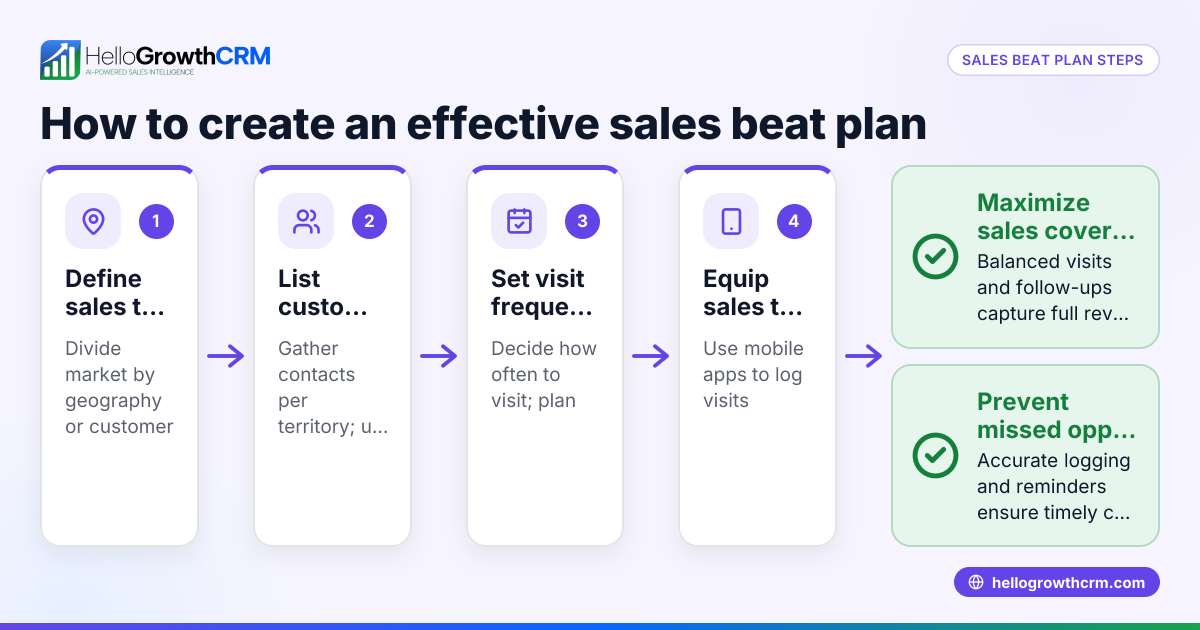
- Ignoring field sales tracking: For businesses with field reps, prevent by using territory and visit logging tools to monitor activity. See Territories, field operations and commissions.
Doing this in HelloGrowthCRM
HelloGrowthCRM supports sales onboarding by providing a Deals (pipeline) feature that tracks open opportunities from first contact through close. For example, a quotation sent last week appears at the 'quote sent' stage with a follow-up date, so it’s not forgotten. Field sales teams can log visits from their phones, letting managers see the day’s activity through Territories, field operations and commissions tools. Founders without sales managers can use Managed RevOps to have a specialist work the follow-up queue weekly, ensuring leads are nurtured consistently.
Frequently asked questions
What is the typical length of a sales onboarding plan? Most sales onboarding plans last between 30 and 90 days. The length depends on your product complexity and sales cycle. Shorter plans focus on basics and quick wins; longer plans include deeper training and full sales cycle responsibility.
How do I measure if my sales onboarding plan is effective? Track key metrics like number of calls made, deals moved through pipeline stages, and revenue closed within set timeframes. Also gather feedback from new hires about their confidence and knowledge.
Can I onboard salespeople remotely? Yes. Use video calls for training, share digital materials, and rely on CRM tools to monitor progress and keep communication clear.
What tools should be included in sales onboarding? Include your CRM system, dialer, email and messaging platforms (like WhatsApp and SMS), and any product demo tools. Make sure new hires can use these confidently.
How does HelloGrowthCRM help with sales onboarding? HelloGrowthCRM’s Deals (pipeline) helps track and follow up on leads, Territories tools log field visits, and Managed RevOps provides expert follow-up support. These features keep onboarding organized and effective.
Key takeaways
- A sales onboarding plan is essential to get new hires productive quickly.
- Define your sales process, product knowledge, tools, and goals clearly.
- Use CRM tools to track deals, follow-ups, and onboarding progress.
- Assign mentors and schedule regular check-ins for support.
- Avoid common mistakes like skipping tool training or lacking measurable goals.
- HelloGrowthCRM features support pipeline tracking, field sales, and follow-up management.
Start your sales onboarding plan today to reduce lost leads and speed up sales success. To try tools that help manage deals and follow-ups, Start on the Free Forever plan (200 leads, no credit card).
Ready to put this into practice?
Set up your pipeline, WhatsApp follow-ups, and AI lead scoring in minutes — free, no credit card.
Try HelloGrowthCRM freeGet CRM tips in your inbox
Join thousands of sales professionals who get weekly insights on CRM strategy, AI automation, and pipeline optimization.

The HelloGrowthCRM team publishes guides on CRM strategy, AI sales tools, and revenue operations for small business sales teams.