HelloGrowthCRM software
Built for real small-business sales teams
HelloGrowthCRM helps reps qualify faster, follow up on time, and close more deals—with practical automation in one place.
- AI lead scoring and pipeline visibility
- Built-in dialer, WhatsApp, and email automation
- Sales forecasting and RevOps-ready reporting
A customer service plan is a documented approach your business uses to manage customer interactions and support. It ensures your team knows how to handle inquiries, resolve problems, and maintain customer satisfaction consistently. This plan covers communication channels, response times, escalation procedures, and feedback collection.
Why this comes up / what goes wrong
Small business owners often face inconsistent customer service because they lack a formal plan. Without clear guidelines, service can be slow, incomplete, or vary widely between team members. This can cause lost sales, unhappy customers, and damage to your business reputation. Many small businesses handle customer support informally, mixing sales, service, and follow-up in emails, texts, or spreadsheets, which is inefficient and prone to errors.
A customer service plan helps your team deliver reliable, timely support, turning customers into repeat buyers and referrals. It clarifies roles and expectations so everyone knows how to respond and when to escalate issues.
Step-by-step
- Define your customer service goals. Decide what you want to achieve—faster response times, higher satisfaction, more referrals, or fewer complaints. Check these goals align with your overall business objectives.
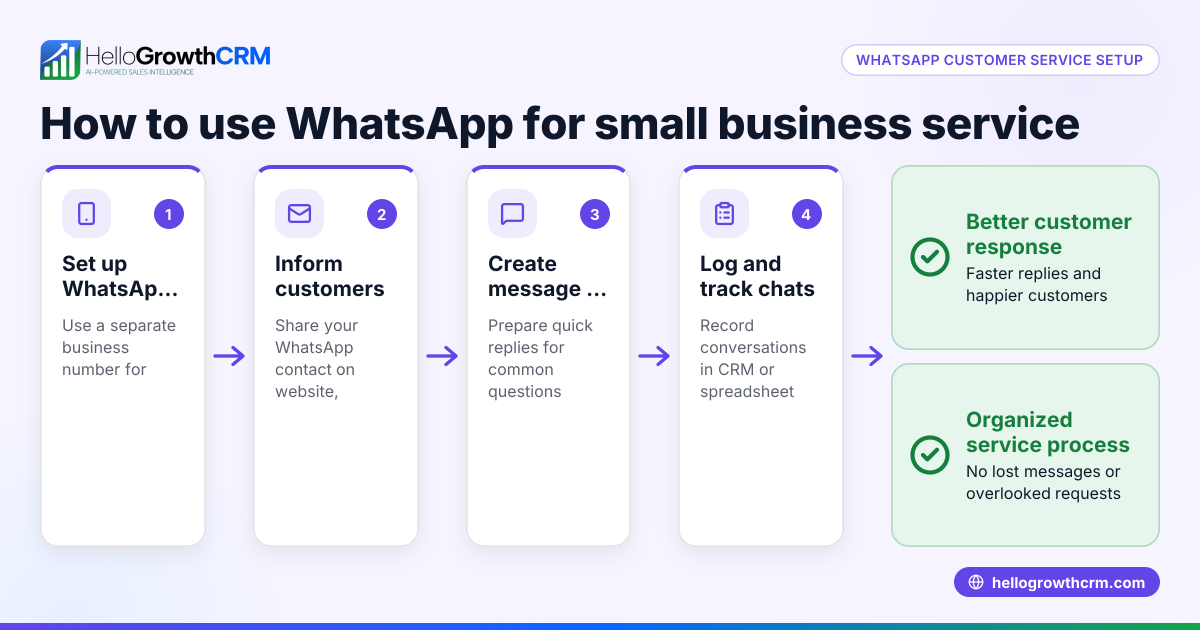
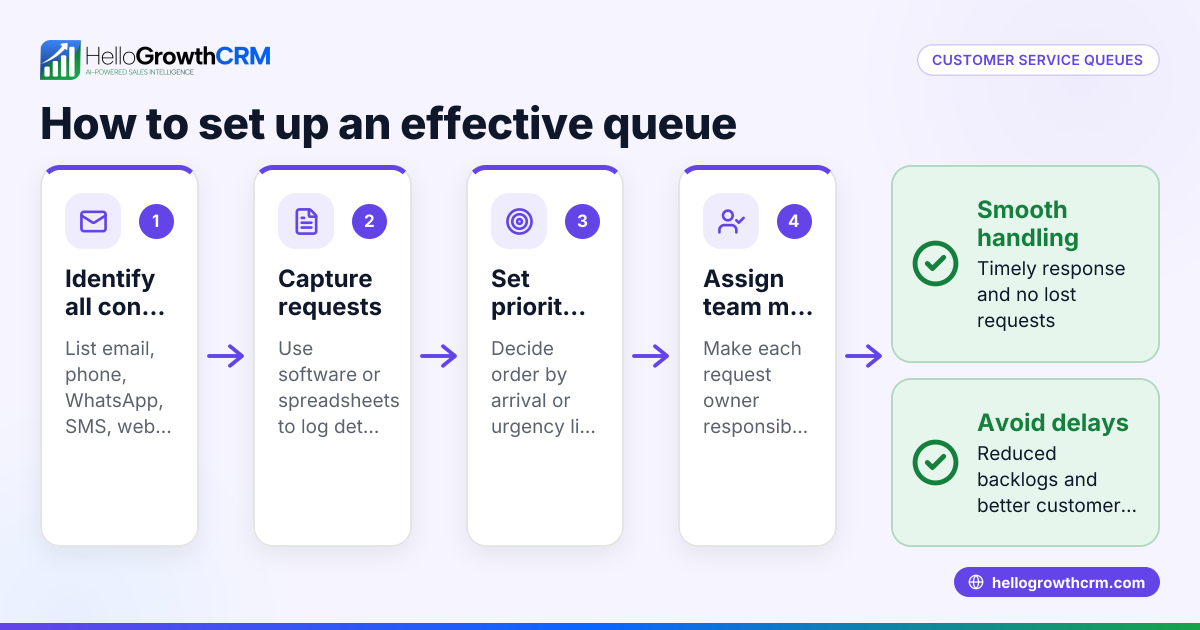
- Identify customer touchpoints. List every point where customers interact with your business—website, phone, WhatsApp, email, or in-person visits. Check which channels your customers prefer.
- Set service standards. For each touchpoint, define expected response times, tone of communication, and resolution steps. For example, "Answer all WhatsApp inquiries within 1 hour during business hours."
- Assign roles and responsibilities. Decide who handles each type of inquiry or issue. Check that your team has the skills and resources needed.
- Create escalation procedures. Define when and how to escalate issues that cannot be resolved immediately. Check that everyone knows the process.
- Develop a knowledge base and FAQs. Prepare answers to common questions and troubleshooting guides. Check that this is easily accessible to your team and customers.
- Implement tools for tracking and managing service. Use a CRM or ticketing system to log customer interactions and track service requests. Check that all customer information stays in one place for easy reference.
- Train your team. Provide training on your customer service plan, tools, and communication standards. Check understanding through role-playing or quizzes.
- Collect and analyze feedback. Regularly survey customers and review service metrics to identify improvement areas. Check that feedback leads to actionable changes.
- Review and update the plan regularly. Customer needs and business conditions change. Schedule periodic reviews to keep the plan effective.
For more on tracking customer engagement, see customer health score.
Example (fictional figures)
A residential real-estate team in Phoenix, Arizona, wants to improve its customer service by responding faster and resolving issues more effectively.
They set these goals:
- Respond to all inquiries within 2 hours during business hours.
- Resolve most issues within 24 hours.
They identify channels: phone, email, WhatsApp.
They assign roles:
- Agent A handles phone and WhatsApp.
- Agent B manages email.
They create a knowledge base with answers to common buyer questions.
In January 2026, they received 300 inquiries.
They calculate needed response capacity:
- 300 inquiries × 2 hours max response = 600 hours of response capacity needed.
They have 3 agents, each working 160 hours in the month:
- 3 agents × 160 hours = 480 hours available.
They see a gap:
- 600 hours needed - 480 hours available = 120 hours shortfall.
They train agents on the knowledge base and escalation procedures.
By 02/28/2026, they reduce average response time to about 1.5 hours and resolve more issues promptly.
Common mistakes
- No clear goals. Without measurable objectives, it’s hard to improve. Prevent by defining specific, realistic goals.
- Ignoring customer preferences. Using channels customers don’t use wastes effort. Prevent by surveying customers about their preferred contact methods.
- Overloading team members. Assigning too many tasks causes delays. Prevent by balancing workloads and considering automation.
- Not documenting procedures. Inconsistent service happens when there’s no written plan. Prevent by creating and sharing a clear, accessible plan.
- Failing to track issues. Without tracking, problems can be forgotten. Prevent by using a CRM or ticket system.
- Neglecting feedback. Ignoring customer input misses improvement opportunities. Prevent by regularly collecting and acting on feedback.
Learn more about managing customer conversations with WhatsApp and SMS CRM.
Doing this in HelloGrowthCRM
HelloGrowthCRM helps you manage customer service requests alongside sales with features like a customer portal, referrals, tickets, and a knowledge base. After the sale, all service requests stay linked to the same customer record as the deal, simplifying follow-up and history tracking. Small teams can start on the Free Forever plan, running a full pipeline at no cost until they need calling or WhatsApp automation. See HelloGrowthCRM for the United States for details.
Frequently asked questions
What is the difference between a customer service plan and a customer support policy? A customer service plan is a broader strategy covering all customer interactions and support processes. A customer support policy usually focuses on specific rules about what support is offered and under what conditions.
How often should I update my customer service plan? Review your plan at least twice a year or whenever you notice recurring issues or changes in customer expectations. Regular updates keep your service relevant and effective.
Can a small business manage customer service without software? Yes, but it’s harder to stay organized and consistent. Using a CRM or ticket system helps keep all customer information and requests in one place, improving response times and follow-up.
How do I measure if my customer service plan is working? Track metrics like response time, resolution time, customer satisfaction surveys, and repeat business. Tools like a customer health score can help monitor engagement.
What role does customer feedback play in a service plan? Feedback identifies pain points and improvement areas. Your plan should include ways to collect, analyze, and act on feedback to enhance service quality.
Key takeaways
- A customer service plan defines how your business supports customers consistently.
- Set clear goals, assign roles, document procedures, and track all interactions.
- Use customer-preferred channels and regularly collect feedback.
- Avoid common mistakes like unclear goals and lack of tracking.
- Tools like HelloGrowthCRM help manage service requests and customer history in one place.
Start improving your customer service today. Start on the Free Forever plan (200 leads, no credit card) and manage your pipeline and customer service efficiently.
Ready to put this into practice?
Set up your pipeline, WhatsApp follow-ups, and AI lead scoring in minutes — free, no credit card.
Try HelloGrowthCRM freeGet CRM tips in your inbox
Join thousands of sales professionals who get weekly insights on CRM strategy, AI automation, and pipeline optimization.

The HelloGrowthCRM team publishes guides on CRM strategy, AI sales tools, and revenue operations for small business sales teams.