HelloGrowthCRM software
Built for real small-business sales teams
HelloGrowthCRM helps reps qualify faster, follow up on time, and close more deals—with practical automation in one place.
- AI lead scoring and pipeline visibility
- Built-in dialer, WhatsApp, and email automation
- Sales forecasting and RevOps-ready reporting
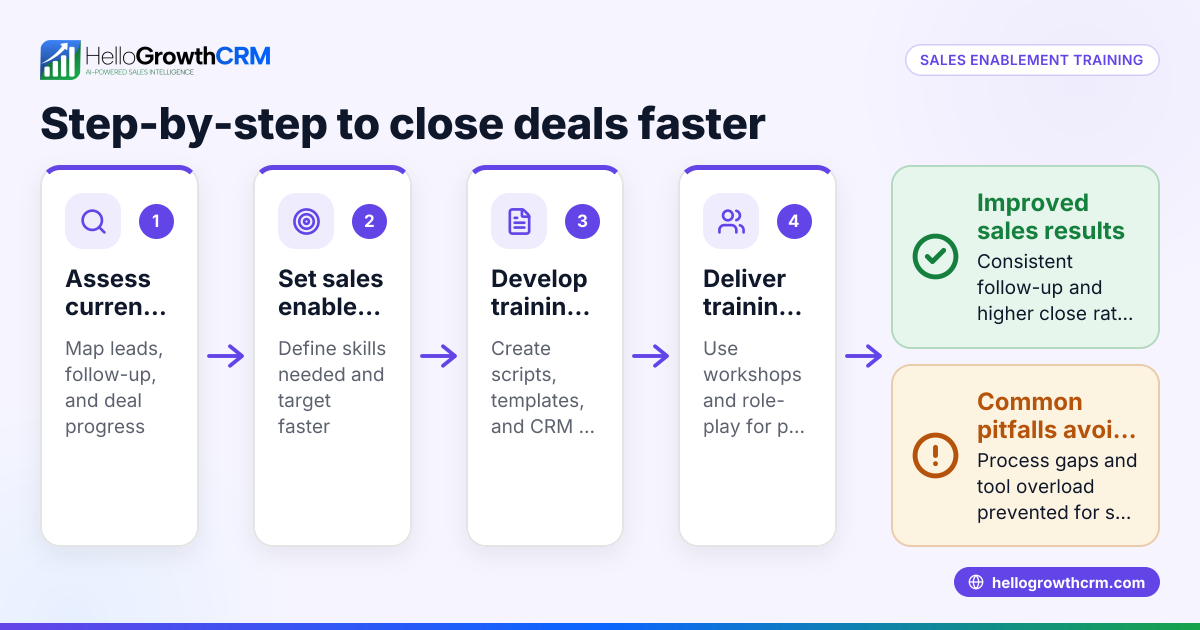
Effective sales training methods focus on hands-on techniques that empower your sales team to capture leads quickly, follow up consistently, and close deals efficiently. This article covers why sales training is critical for small businesses, practical steps to build a training program, common pitfalls to avoid, and how HelloGrowthCRM’s features support your sales efforts.
Why this comes up / what goes wrong
Many small-business owners struggle with inconsistent sales results because their teams lack structured training. Sales often run on informal messages, emails, and spreadsheets, leading to lost leads and missed opportunities. Without clear training, salespeople may not know how to prioritize leads, follow up effectively, or track progress. This causes slow response times, forgotten quotes, and a pipeline that lacks visibility. Effective sales training methods help fix these issues by teaching repeatable skills and workflows that boost team confidence and sales outcomes.
Step-by-step
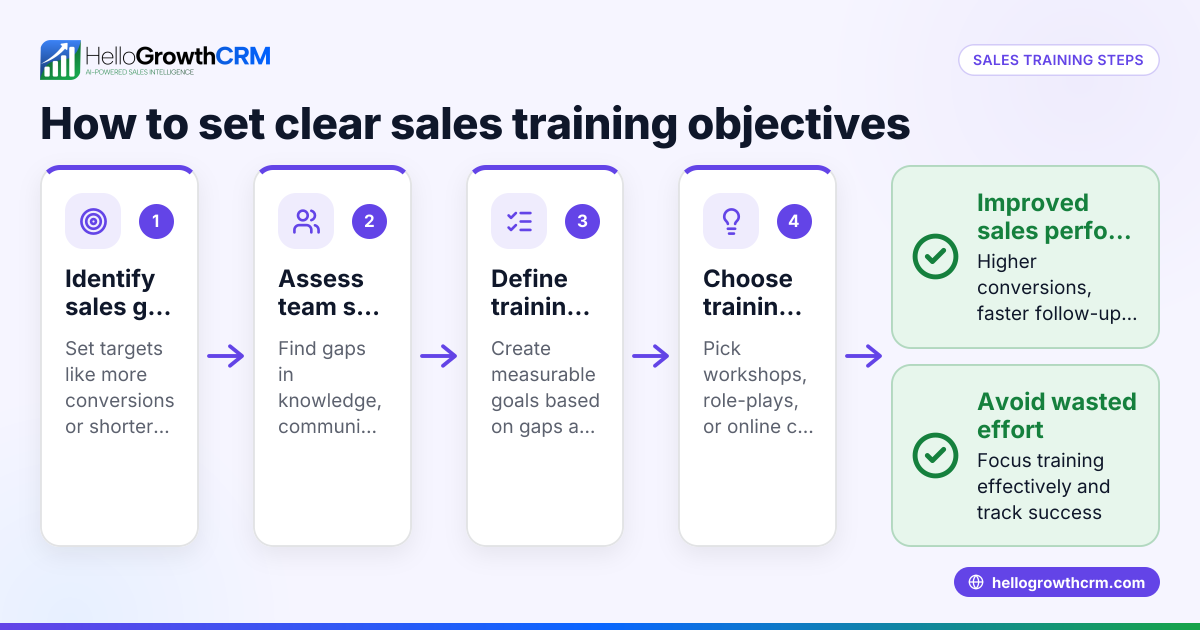
- Assess your current sales process and gaps
- Review how your team finds, contacts, and follows up with leads.
- Identify where leads get lost or delayed.
- Check if salespeople have clear stages and follow-up tasks.
- Define clear sales stages and workflows
- Break your sales cycle into stages (e.g., lead captured, qualified, quote sent, negotiation, closed).
- Specify what actions and criteria move a deal from one stage to the next.
- Create training content focused on skills and tools
- Teach how to use your CRM or sales tools to track leads and set reminders.
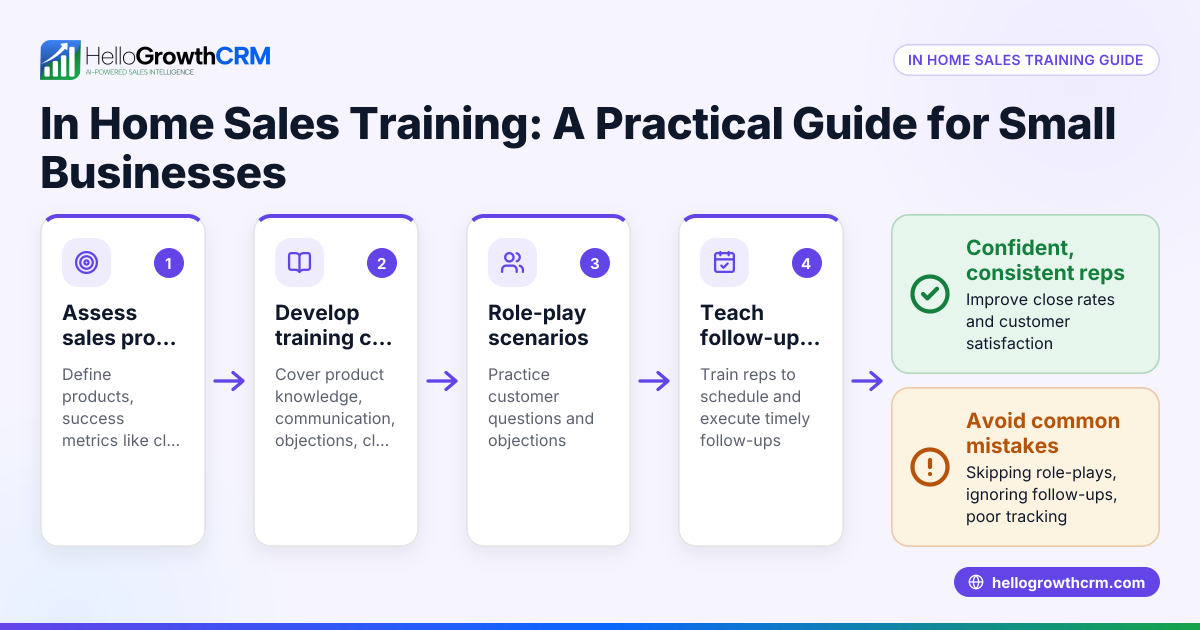
- Role-play common sales conversations and objection handling.
- Train on timely follow-up and personalization.
- Implement regular practice and coaching
- Schedule weekly team meetings to review pipeline status.
- Use real deals as examples to coach improvement.
- Provide feedback on calls, emails, and follow-ups.
- Monitor results and adjust training
- Track metrics like lead response time, deal progression, and close rates.
- Identify weak points and update training accordingly.
- Use technology to reinforce training
- Integrate your CRM with communication channels like WhatsApp and SMS.
- Automate reminders for follow-ups and task assignments.
- Use AI lead scoring to prioritize high-potential leads.
Check that your training includes hands-on use of your sales system and that every salesperson knows how to update and move deals through the pipeline. For more resources, visit our CRM academy.
Example (fictional figures)
Acme Software Resellers in Denver, Colorado, wants to improve its sales training. They have 100 new leads in January 2026 and want to increase timely quotes and closed deals.
Assuming before training, 50 leads received quotes within 7 days. After training, they aim for 80 leads to receive quotes within 7 days.
Leads receiving timely quotes before training: 50 leads
Leads receiving timely quotes after training: 80 leads
Increase in timely quotes: 80 - 50 = 30 more leads
Assuming a 20% close rate on timely quotes and an average deal value of $5,000:
Additional deals closed: 30 × 20% = 6 deals
Additional revenue: 6 × $5,000 = $30,000
This example shows how improving sales training to increase timely follow-ups can add $30,000 in monthly revenue.
Common mistakes
- Skipping structured follow-up training: Prevent by teaching clear timelines and follow-up steps.
- Ignoring pipeline visibility: Prevent by using a CRM pipeline to track deals and stages.
- Overloading salespeople with theory: Prevent by focusing training on practical skills and tools.
- Failing to coach regularly: Prevent by scheduling weekly reviews and feedback sessions.
- Neglecting technology adoption: Prevent by integrating sales tools like WhatsApp and SMS CRM to streamline communication.
Doing this in HelloGrowthCRM
HelloGrowthCRM helps small businesses maintain sales discipline through its Deals (pipeline) feature, where quotations sent last week appear as deals at the 'quote sent' stage with follow-up dates to prevent forgetting. For businesses with field sales, Territories and field operations tools let reps log visits from their phones while managers monitor daily activity. Founders without dedicated sales managers can benefit from Managed RevOps, where a revenue specialist handles weekly follow-up queues and pipeline hygiene, ensuring consistent sales progress. Learn more about WhatsApp and SMS CRM and HelloGrowthCRM for the United States.
Frequently asked questions
What are the most effective sales training methods for small businesses? Effective methods combine clear sales process definition, hands-on tool training, role-playing sales conversations, and regular coaching. Using a CRM system to track leads and automate follow-ups enhances these methods.
How often should sales training be conducted? Sales training should be ongoing with an initial intensive phase followed by weekly coaching or team meetings to review progress and address challenges. Continuous learning helps maintain skills and adapt to market changes.
How can I measure if my sales training is effective? Track metrics like lead response time, percentage of quotes sent within target timeframes, deal conversion rates, and overall sales revenue. Improvements in these areas indicate effective training.
Can technology improve sales training outcomes? Yes, technology like HelloGrowthCRM integrates communication channels and pipeline management, automates follow-up reminders, and provides visibility into sales activities, making training easier to apply and sustain.
What common sales training mistakes should I avoid? Avoid neglecting follow-up discipline, ignoring pipeline visibility, overloading your team with theory, skipping regular coaching, and failing to adopt supportive sales technology. Each can undermine training effectiveness.
For more resources, visit our CRM academy.
Key takeaways
- Effective sales training focuses on clear processes, practical skills, and consistent follow-up.
- Use a CRM pipeline to track leads and prevent lost opportunities.
- Regular coaching and feedback improve sales team performance.
- Integrating communication tools like WhatsApp and SMS enhances sales outreach.
- Avoid common mistakes such as skipping follow-up training and neglecting technology.
- HelloGrowthCRM supports sales training with pipeline management, field operations, and managed RevOps.
Start improving your sales training today. Start on the Free Forever plan (200 leads, no credit card) with HelloGrowthCRM and see how it helps your team stay on top of leads and deals.
Ready to put this into practice?
Set up your pipeline, WhatsApp follow-ups, and AI lead scoring in minutes — free, no credit card.
Try HelloGrowthCRM freeGet CRM tips in your inbox
Join thousands of sales professionals who get weekly insights on CRM strategy, AI automation, and pipeline optimization.

The HelloGrowthCRM team publishes guides on CRM strategy, AI sales tools, and revenue operations for small business sales teams.