HelloGrowthCRM software
Built for real small-business sales teams
HelloGrowthCRM helps reps qualify faster, follow up on time, and close more deals—with practical automation in one place.
- AI lead scoring and pipeline visibility
- Built-in dialer, WhatsApp, and email automation
- Sales forecasting and RevOps-ready reporting
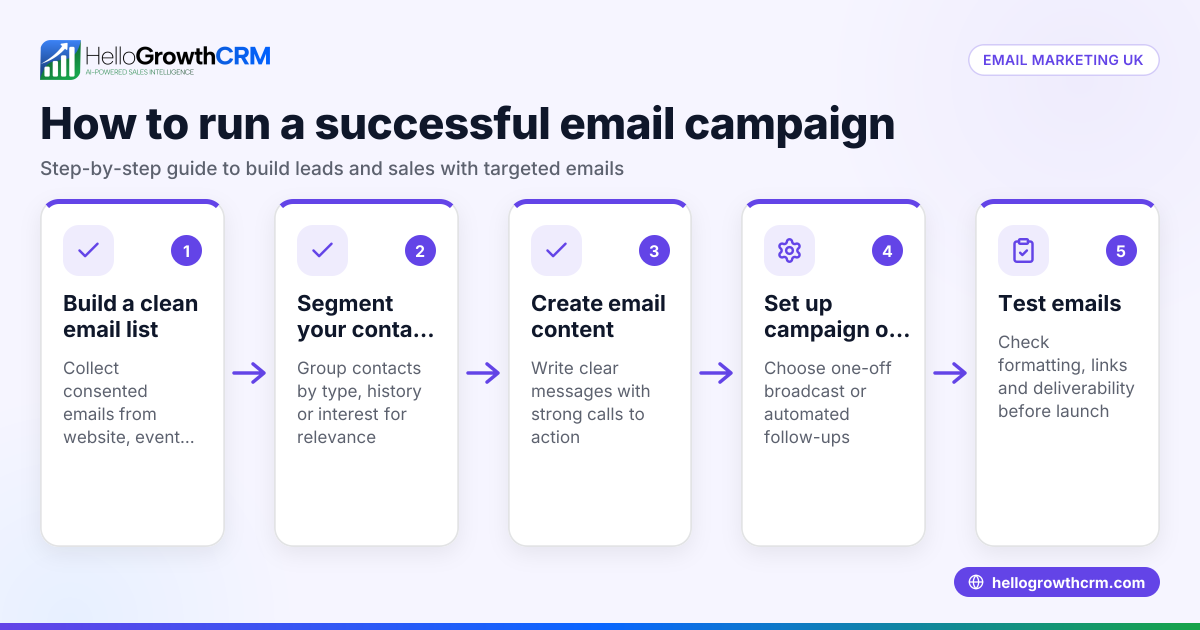
Email marketing case studies are real-world examples detailing how businesses design and run email campaigns to achieve goals such as increasing sales, generating leads, or improving customer retention. These case studies describe the campaign setup, message sequence, timing, results, and lessons learned, giving small business owners practical insights to improve their own email marketing.
Why this comes up / what goes wrong
Small business owners search for email marketing case studies because they want proven, actionable examples to guide their campaigns. Many struggle with inconsistent follow-up, unclear messaging, or low engagement because they run email outreach manually or with basic tools. Without seeing what works in practice, it’s difficult to know how to structure emails, time follow-ups, or measure success. They may also miss opportunities to automate follow-up or coordinate team responses efficiently.
Step-by-step
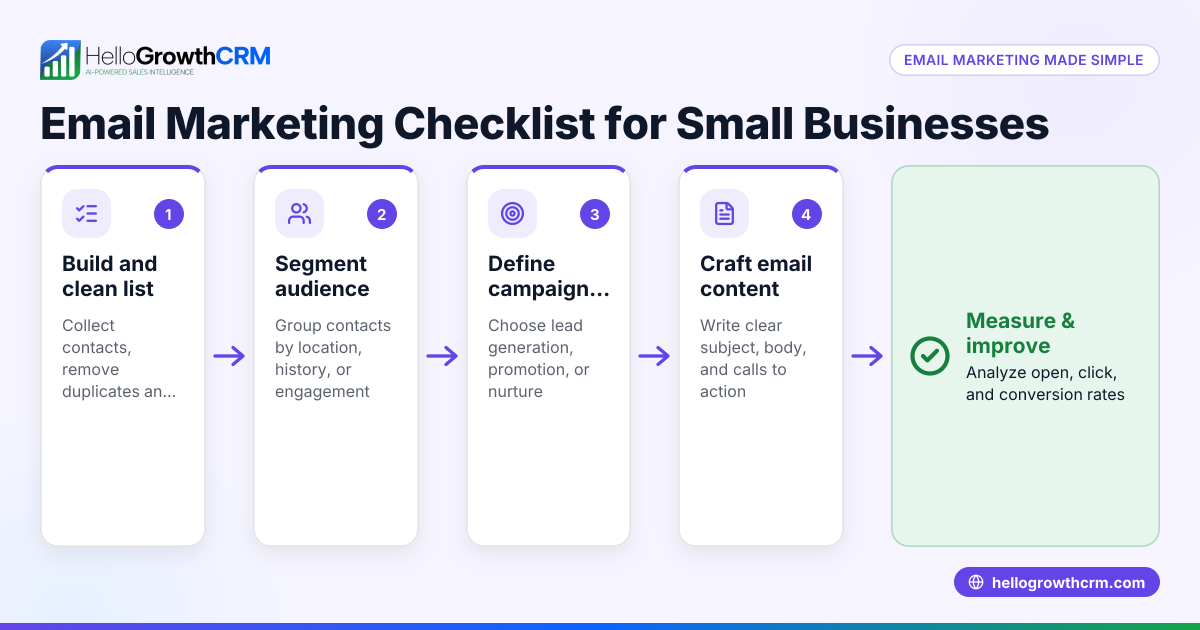
- Define your campaign goal: Identify what you want your emails to achieve, such as lead generation, sales, or event sign-ups. Check that the case study’s goal matches or is relevant.
- Examine the email sequence: Look at how many emails were sent, their timing, and content style. Note if the campaign used automated sequences or single emails.
- Review campaign results: Focus on metrics like open rates, click-through rates, conversions, or revenue impact. Confirm these results apply to your business context.
- Assess follow-up handling: See if the case study describes automated follow-ups or manual outreach, and how replies were managed.
- Identify tools and software used: Understand what CRM or email automation tools supported the campaign.
- Plan your own campaign: Use insights from the case study to create your email sequence, timing, and follow-up approach.
- Test and optimize: Run a small-scale test, track performance, and adjust your campaign accordingly.
For effective outreach, consider how email automation and sequences can streamline your emails and follow-ups. Managing inbound replies in a shared team inbox also prevents missed leads, as described below.
Example (fictional figures)
A residential real-estate team in Phoenix, Arizona, ran an email campaign to attract leads for new home listings.
- They sent 5 emails over 14 days to 1,000 prospects.
- Open rate: 25%, so 1,000 × 25% = 250 opens.
- Click-through rate on opens: 10%, so 250 × 10% = 25 clicks.
- Conversion rate from clicks to appointments: 40%, so 25 × 40% = 10 appointments.
- Appointment to sales conversion: 50%, so 10 × 50% = 5 sales.
- Average commission per sale: $8,000.
- Total commission earned = 5 × $8,000 = $40,000.
This example shows how tracking each step helps measure campaign effectiveness and return on investment.
Common mistakes
- Sending too many emails too quickly: This annoys recipients and increases unsubscribes. Prevent by spacing emails over days or weeks.
- Ignoring replies: Not responding wastes leads. Use shared inbox tools to keep the team aware of incoming replies.
- Unclear goals: Without defined objectives, measuring success is difficult. Set specific, measurable goals before starting.
- Skipping testing: Not testing subject lines or content misses chances to improve open and click rates. Use tools that support A/B testing.
- Manual follow-up delays: Relying on manual outreach slows responses. Automate follow-ups with sequences as explained in email automation and sequences.
- Using disconnected tools: Managing emails, texts, and leads in separate apps causes errors. Use a unified CRM with multi-channel support like WhatsApp and SMS CRM.
Doing this in HelloGrowthCRM
HelloGrowthCRM offers a HelloMail shared inbox where replies to quotation or follow-up emails are visible to the entire sales team on the deal, preventing missed responses. It also supports Sequences and campaigns that automate a five-step follow-up over two weeks, running automatically and stopping immediately when the prospect replies. This helps small businesses keep outreach consistent without extra manual effort. Learn more at email automation and sequences.
Frequently asked questions
What makes a good email marketing case study? A good case study clearly states the campaign goal, describes the email sequence and timing, reports measurable results like open and conversion rates, and shares lessons learned or adjustments made.
How can I apply case study insights to my business? Match the case study’s business type and goals to yours, then adapt the email frequency, messaging style, and follow-up steps to your audience. Test on a small scale before a full rollout.
How important is follow-up in email marketing? Follow-up is critical. Many sales happen after multiple touches. Automated sequences that stop when a prospect replies ensure timely outreach without over-contacting.
Can I run email marketing and reply management in one tool? Yes, tools like HelloGrowthCRM combine email sequences with a shared inbox so your team can manage replies without switching apps, keeping communication organized and timely.
How do I measure success from email campaigns? Track metrics such as open rate, click-through rate, conversion rate, and revenue generated. Compare these to your goals to evaluate effectiveness.
What are common pitfalls to avoid in email marketing? Avoid sending too many emails too quickly, neglecting replies, unclear goals, skipping testing, and using too many disconnected tools.
Key takeaways
- Email marketing case studies provide real examples of campaign structure, results, and lessons.
- Define clear goals and analyze case study metrics before applying strategies.
- Use automated sequences to maintain consistent follow-up and stop when prospects reply.
- Manage replies efficiently with shared inboxes to avoid missed opportunities.
- Avoid common mistakes like over-emailing, ignoring replies, and lack of testing.
- HelloGrowthCRM supports email marketing with shared inbox and automation features.
Start your own email campaigns confidently by learning from case studies and using tools that keep your team aligned. To get started, Start on the Free Forever plan (200 leads, no credit card).
Ready to put this into practice?
Set up your pipeline, WhatsApp follow-ups, and AI lead scoring in minutes — free, no credit card.
Try HelloGrowthCRM freeGet CRM tips in your inbox
Join thousands of sales professionals who get weekly insights on CRM strategy, AI automation, and pipeline optimization.

The HelloGrowthCRM team publishes guides on CRM strategy, AI sales tools, and revenue operations for small business sales teams.