HelloGrowthCRM software
Built for real small-business sales teams
HelloGrowthCRM helps reps qualify faster, follow up on time, and close more deals—with practical automation in one place.
- AI lead scoring and pipeline visibility
- Built-in dialer, WhatsApp, and email automation
- Sales forecasting and RevOps-ready reporting
SMS use cases cover a range of practical business needs such as sending appointment reminders, following up on sales leads, running promotional campaigns, providing order or delivery updates, and offering customer support. These uses allow small businesses to connect with customers directly and quickly on their mobile devices, where messages are typically read within minutes.
Why this comes up / what goes wrong
Small-business owners often face challenges with slow or ineffective communication that results in lost sales and unsatisfied customers. Phone calls can go unanswered, emails may be ignored, and manual follow-ups can be time-consuming and inconsistent. SMS messaging provides a direct and immediate way to reach customers on their phones, increasing the chances of engagement.
However, many businesses struggle to use SMS effectively because they lack a clear strategy, do not obtain proper customer consent, or fail to integrate SMS into their sales workflow. This can lead to missed opportunities, customer annoyance, or compliance issues with regulations like the Telephone Consumer Protection Act (TCPA). Understanding common SMS use cases helps businesses apply SMS strategically and avoid these pitfalls.
Step-by-step
- Identify your SMS goals: Decide which use cases fit your business needs, such as appointment reminders, sales follow-ups, promotional offers, or order updates.
- Collect customer mobile numbers legally: Obtain explicit consent from customers to receive SMS messages, ensuring compliance with regulations. This can be done during sign-up, purchase, or through clear opt-in forms.
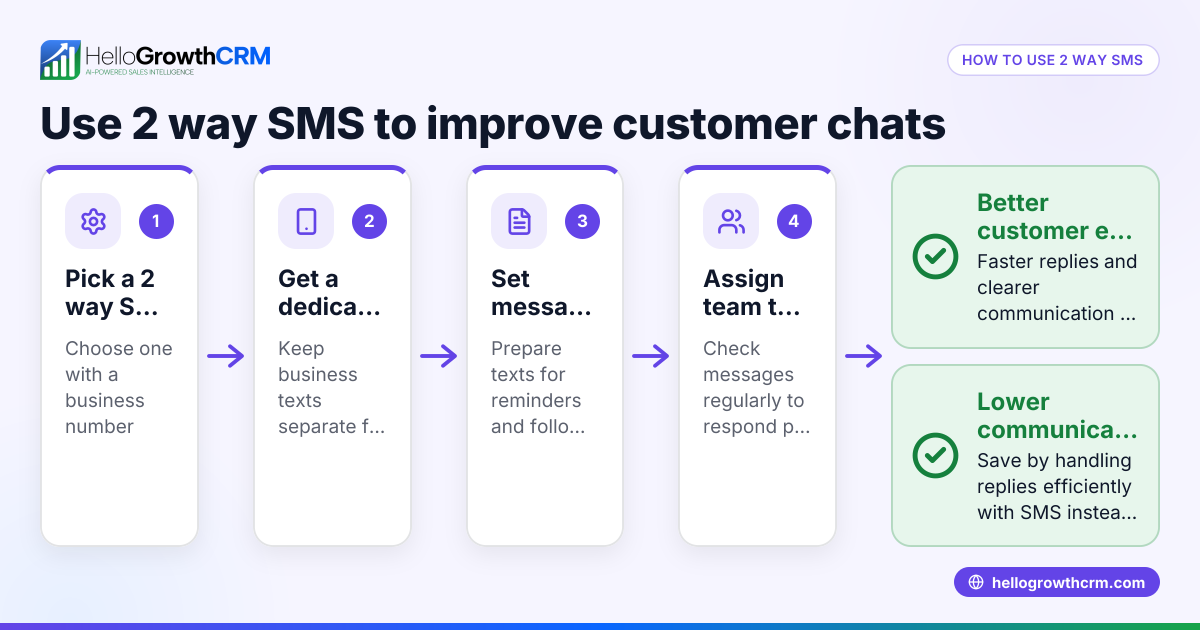
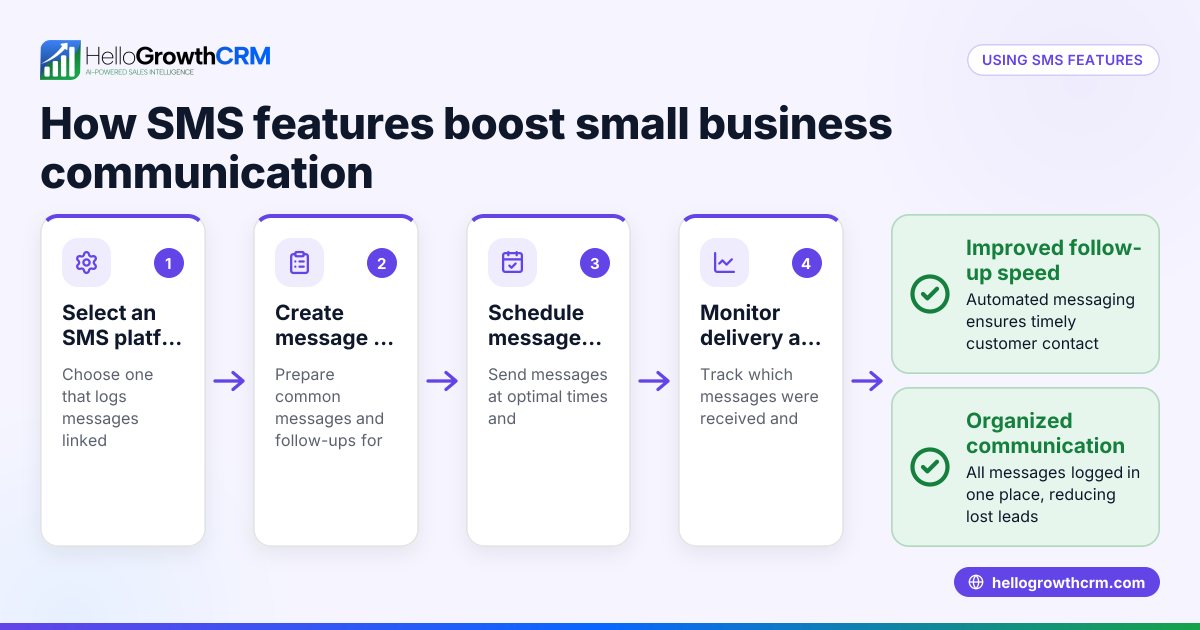
- Choose an SMS platform or CRM that supports messaging workflows: Use a system that can send, track, and log SMS messages, and integrate with your sales process.
- Create clear and concise SMS templates: Write messages that are brief, personalized, and include a clear call to action. For example, appointment reminders should state the date, time, and any preparation needed.
- Schedule or trigger messages based on customer actions: Automate SMS sending based on events like appointment dates, purchase confirmation, or delivery status.
- Monitor customer responses and follow up promptly: Track replies and engage with customers quickly to maintain interest and trust.
- Measure SMS effectiveness and adjust as needed: Use metrics such as delivery rates, open rates, response rates, and conversion rates to refine your messaging strategy.
Check that your SMS messages comply with legal requirements like the TCPA. Always include clear opt-out instructions to respect customer preferences.
Example (fictional figures)
A plumbing company in Austin, Texas wants to reduce no-shows and increase service upsells using SMS.
- They send appointment reminders 24 hours before scheduled visits.
- They follow up with a sales offer after service completion.
Assuming they handle 1,000 appointments per month with an average service fee of $150:
No-show rate before SMS = 10% No-show rate after SMS = 5%
Appointments kept increase = 1,000 × (10% - 5%) = 50 Additional revenue from kept appointments = 50 × $150 = $7,500
Upsell conversion rate after SMS follow-up = 20% Upsell average value = $50 Upsell revenue = 1,000 × 20% × $50 = $10,000
Total additional monthly revenue = $7,500 + $10,000 = $17,500
This example shows how SMS can directly increase revenue by improving appointment attendance and encouraging additional sales.
Common mistakes
- Sending messages without customer consent: Always get explicit opt-in to avoid legal issues and customer complaints.
- Over-messaging customers: Limit message frequency to avoid annoying customers; respect opt-out requests.
- Using generic or unclear messages: Personalize messages and include clear calls to action to increase engagement.
- Ignoring customer replies: Monitor SMS responses and follow up promptly to maintain good relationships.
- Not integrating SMS with sales workflows: Use a CRM that logs SMS conversations and schedules follow-ups, like HelloGrowthCRM’s WhatsApp and SMS CRM features (/product/whatsapp-sms-crm), to keep communication organized.
- Failing to track SMS performance: Measure key metrics to understand what works and improve your SMS campaigns.
Doing this in HelloGrowthCRM
HelloGrowthCRM supports WhatsApp and SMS messaging workflows that help teams engage leads and customers on the channels where they already respond. WhatsApp conversations with a lead are logged on the lead record, and follow-ups can go out as messages. This integration helps sales teams keep track of communication and follow through efficiently. Learn more about HelloGrowthCRM’s WhatsApp and SMS CRM (/product/whatsapp-sms-crm) and its built-in CRM dialer (/product/crm-dialer) for streamlined outreach.
Frequently asked questions
What are the best SMS use cases for small businesses? The most effective SMS use cases include appointment reminders, sales follow-ups, promotional campaigns, order updates, and customer support. These help businesses engage customers quickly and personally.
How do I get customer consent for SMS? You should clearly ask customers to opt in to receive SMS messages, typically during sign-up or purchase. Always provide an easy way for customers to opt out to comply with regulations like the TCPA.
Can SMS replace emails or phone calls? SMS complements calls and emails rather than replacing them. It is best suited for short, timely messages that require quick attention, such as reminders or alerts.
How often should I send SMS messages? Avoid over-messaging by limiting SMS frequency to what customers expect, such as one reminder per appointment or a few promotional messages per month. Respect opt-out requests to maintain trust.
How do I track SMS effectiveness? Track delivery rates, open rates, response rates, appointment attendance, and sales conversions. Using a CRM like HelloGrowthCRM helps automate tracking and follow-up.
Is SMS marketing legal in the US? SMS marketing must comply with US laws requiring prior consent and clear opt-out options. Consult legal advice to ensure compliance.
Key takeaways
- SMS is effective for appointment reminders, sales follow-ups, promotions, order updates, and customer support.
- Always obtain explicit customer opt-in and provide easy opt-out options.
- Use clear, personalized, and concise messages with a clear call to action.
- Integrate SMS messaging into your sales workflow using a CRM for best results.
- Monitor customer responses and adjust messaging frequency to avoid over-messaging.
- HelloGrowthCRM supports WhatsApp and SMS messaging logged on lead records to simplify follow-up and tracking.
Start improving your customer communication today. Start on the Free Forever plan (200 leads, no credit card).
Ready to put this into practice?
Set up your pipeline, WhatsApp follow-ups, and AI lead scoring in minutes — free, no credit card.
Try HelloGrowthCRM freeGet CRM tips in your inbox
Join thousands of sales professionals who get weekly insights on CRM strategy, AI automation, and pipeline optimization.

The HelloGrowthCRM team publishes guides on CRM strategy, AI sales tools, and revenue operations for small business sales teams.