HelloGrowthCRM software
Built for real small-business sales teams
HelloGrowthCRM helps reps qualify faster, follow up on time, and close more deals—with practical automation in one place.
- AI lead scoring and pipeline visibility
- Built-in dialer, WhatsApp, and email automation
- Sales forecasting and RevOps-ready reporting
Negotiation skills at work are the abilities that help you reach agreements beneficial to all parties involved. Examples include active listening to understand the other party’s needs, clear communication of your goals, problem-solving to find mutually beneficial solutions, strategic compromise, and managing emotions to keep discussions constructive.
Why this comes up / what goes wrong
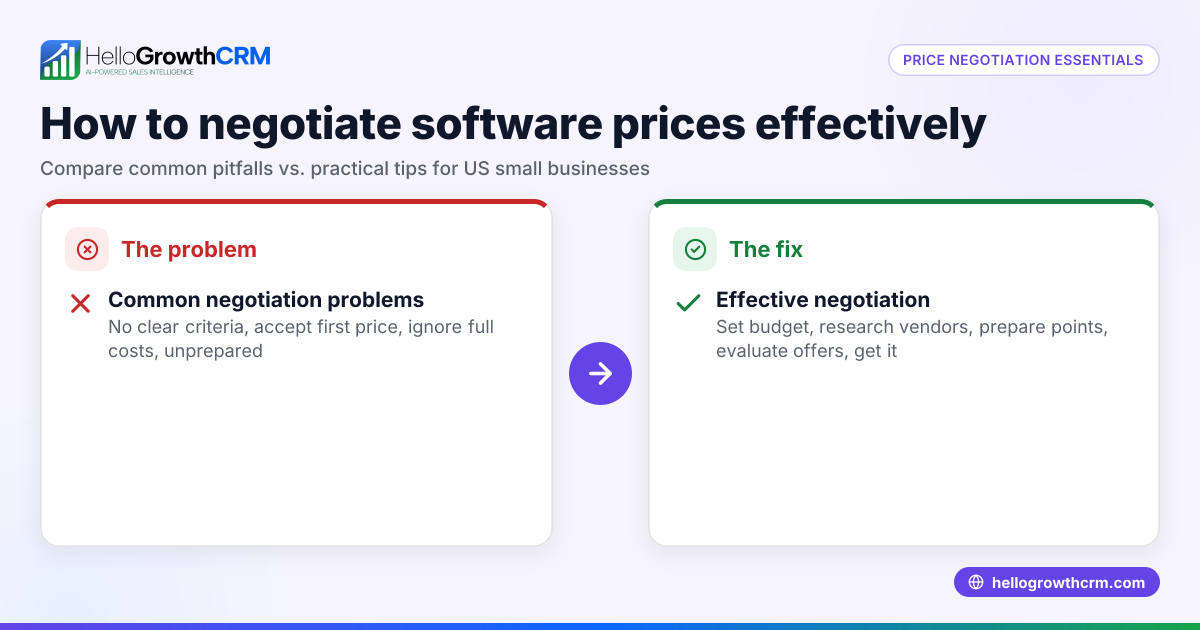
Small-business owners regularly face negotiation situations such as setting prices with suppliers, agreeing on contract terms with clients, or resolving internal team conflicts. Without strong negotiation skills, you risk losing deals, accepting unfavorable terms, or damaging important relationships. For example, a business owner might accept a low price just to close quickly or fail to listen carefully, missing key concerns from the other party. This can lead to lost revenue, frustration, and missed growth opportunities.
Step-by-step
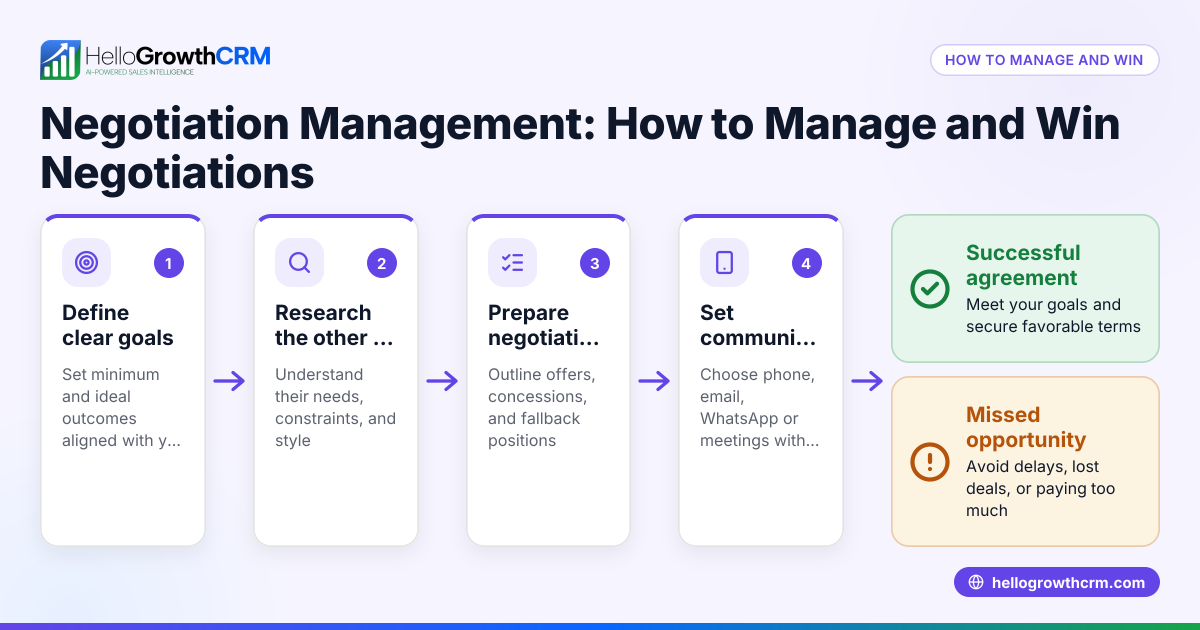
- Prepare thoroughly: Research the other party’s needs, market rates, and your own bottom line. Check your priorities and identify what you can and cannot concede.
- Start with rapport: Build trust by greeting warmly and showing respect. This sets a positive tone for the negotiation.
- Listen actively: Pay close attention to the other party’s words, ask clarifying questions, and confirm your understanding.
- State your position clearly: Communicate your goals and reasoning without ambiguity.
- Explore options together: Brainstorm solutions that meet both parties’ interests. Check for creative alternatives that satisfy everyone.
- Make concessions wisely: Trade smaller concessions for bigger gains. Check that each concession is meaningful and strategic.
- Manage emotions: Stay calm and professional, even if discussions become tense.
- Summarize agreements: Review what you have agreed on clearly before concluding.
- Follow up in writing: Confirm the deal or next steps by email or contract to avoid misunderstandings.
Tools like a built-in CRM dialer help keep communication organized during negotiations. A WhatsApp and SMS CRM supports quick, documented messaging with prospects or partners. For US businesses, see HelloGrowthCRM for the United States to understand compatible tools.
Example (fictional figures)
A two-location dental practice in Columbus, Ohio, wants to negotiate a new supply contract for dental materials.
- Current annual spend: $120,000
- Supplier offers a 5% discount for a 3-year contract
- Practice wants at least a 10% discount and better delivery terms
Step 1: The practice researches market prices and supplier alternatives.
Step 2: They start the negotiation by acknowledging the supplier’s reliability and past service.
Step 3: The practice listens carefully to the supplier’s constraints on pricing and delivery.
Step 4: The practice states they need a 10% discount and faster delivery to justify a long-term deal.
Step 5: The supplier counters with a 7% discount and agrees to biweekly deliveries instead of monthly.
Step 6: The practice agrees to the 7% discount if delivery improves and payment terms extend from 30 to 45 days.
Step 7: Both parties summarize the deal clearly.
Calculation of savings:
$120,000 × 7% = $8,400 annual savings
Savings over 3 years:
$8,400 × 3 = $25,200 total savings
This negotiation improved costs and service, benefiting both the dental practice and the supplier.
Common mistakes
- Not preparing enough: Prevent by thoroughly researching before negotiations.
- Talking too much, not listening: Prevent by practicing active listening and asking clarifying questions.
- Accepting the first offer too quickly: Prevent by pausing to evaluate and consider counteroffers.
- Letting emotions drive decisions: Prevent by staying calm and taking breaks if discussions become tense.
- Failing to confirm agreements in writing: Prevent by always sending a written summary of the deal.
- Ignoring relationship building: Prevent by showing respect and maintaining professionalism throughout.
Frequently asked questions
What are the most important negotiation skills at work? Active listening, clear communication, problem-solving, emotional control, and the ability to make strategic concessions are key skills. These help you understand the other party’s needs and find solutions that benefit everyone.
How can small businesses improve negotiation outcomes? Preparation is critical. Research the other party, set clear goals, and practice your negotiation points. Using structured communication tools like a CRM helps track contacts and follow-ups, maintaining clarity and professionalism during negotiations. Tools such as a built-in CRM dialer and a WhatsApp and SMS CRM make this easier.
When should I compromise in a negotiation? Compromise is best when it helps you gain something more valuable or builds a stronger relationship. Avoid compromising on your core needs but be flexible on less critical points.
Can technology help with negotiation? Yes. Tools like a built-in CRM dialer and a WhatsApp and SMS CRM help keep track of conversations and follow-ups, making negotiations more organized and efficient.
How do I follow up after a negotiation? Send a clear written summary of what was agreed upon, including deadlines or next steps. This reduces misunderstandings and keeps both parties accountable.
Key takeaways
- Negotiation skills include active listening, clear communication, and strategic compromise.
- Preparation and understanding both sides’ needs improve negotiation outcomes.
- Managing emotions and building rapport are essential.
- Always confirm agreements in writing to avoid confusion.
- Use CRM tools like a built-in CRM dialer and WhatsApp and SMS CRM to organize negotiations.
Start improving your negotiation skills today by organizing your contacts and communications efficiently. Start on the Free Forever plan (200 leads, no credit card) to keep your business deals on track.
Ready to put this into practice?
Set up your pipeline, WhatsApp follow-ups, and AI lead scoring in minutes — free, no credit card.
Try HelloGrowthCRM freeGet CRM tips in your inbox
Join thousands of sales professionals who get weekly insights on CRM strategy, AI automation, and pipeline optimization.

The HelloGrowthCRM team publishes guides on CRM strategy, AI sales tools, and revenue operations for small business sales teams.