HelloGrowthCRM software
Built for real small-business sales teams
HelloGrowthCRM helps reps qualify faster, follow up on time, and close more deals—with practical automation in one place.
- AI lead scoring and pipeline visibility
- Built-in dialer, WhatsApp, and email automation
- Sales forecasting and RevOps-ready reporting
Price negotiation is essential for small-business owners in the US who want to get the best value for their money when buying software or services. It involves clear communication about pricing, terms, and expectations to find a mutually acceptable agreement. This article explains why price negotiation comes up, how to approach it step-by-step, a practical example with numbers, common mistakes to avoid, and answers to frequent questions.
Why this comes up / what goes wrong
Small-business owners often face price negotiation when they start evaluating software or services because budgets are tight and every dollar counts. They want to avoid paying more than necessary but also need solutions that meet their needs without hidden costs. Problems arise when:
- The business lacks clear criteria for what they need versus what they want.
- They accept the first price offered without exploring options.
- They don’t understand the full cost structure, including fees, support, or upgrades.
- They fail to prepare questions or comparison points before talking to vendors.
This can lead to overpaying, getting locked into unsuitable contracts, or wasting time on vendors that don’t fit.
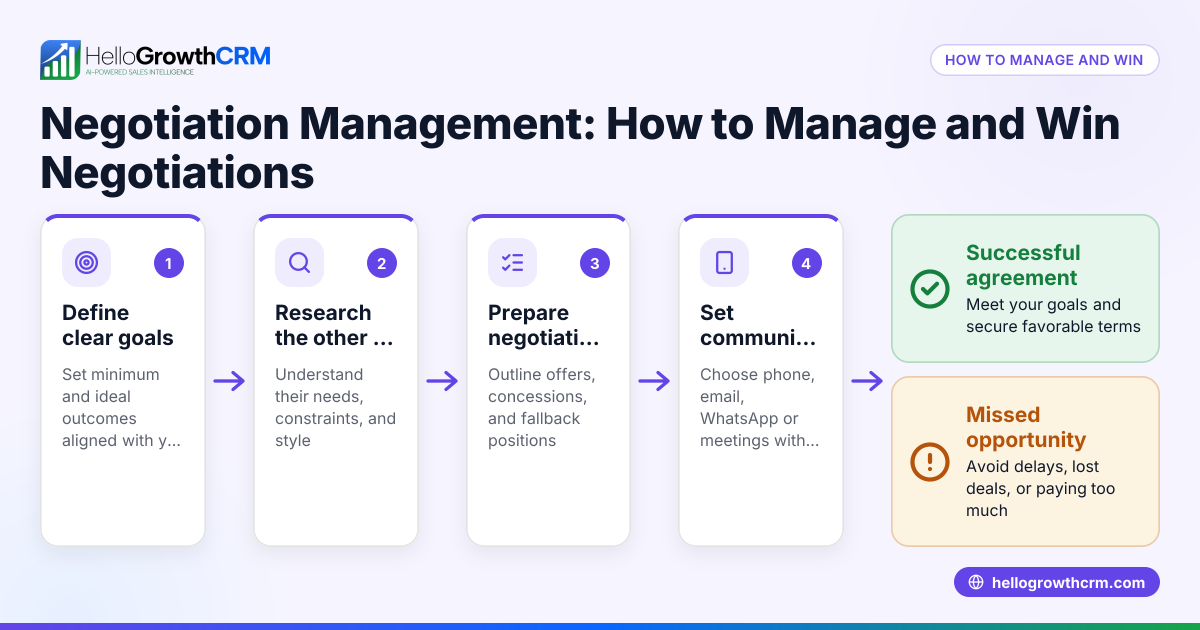
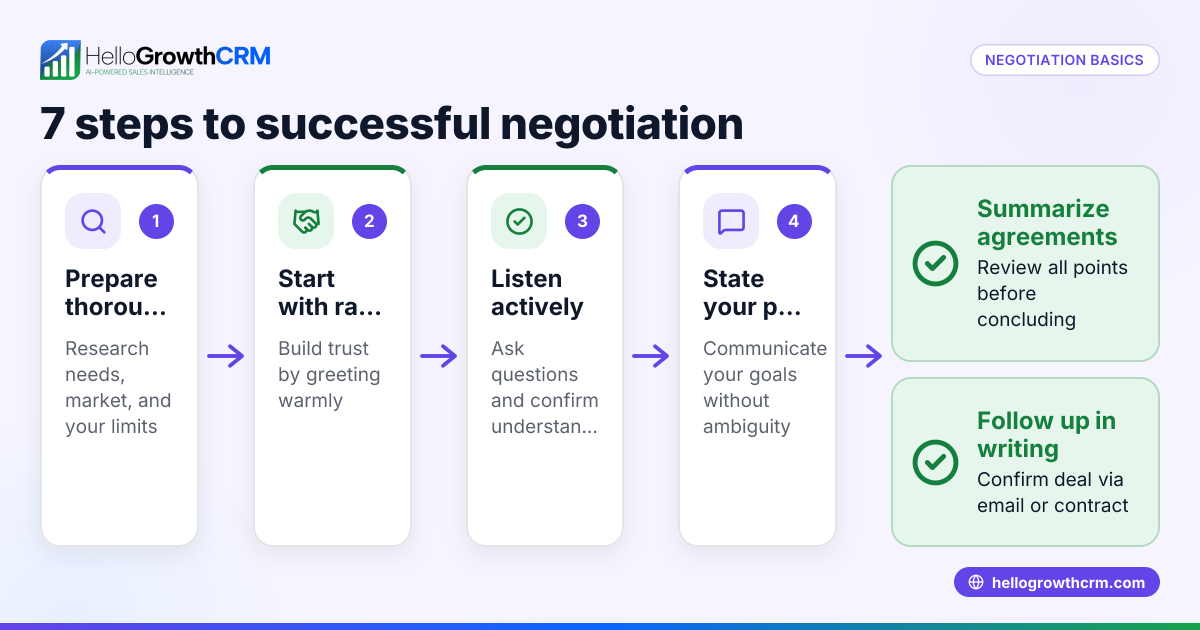
Step-by-step
- Define your budget and needs clearly
- List must-have features and nice-to-haves.
- Determine your maximum spend limit.
- Understand your usage volume or team size that affects pricing.
- Research multiple vendors and pricing models
- Compare pricing structures (subscription, one-time fee, per user).
- Check what’s included (support, updates, integrations).
- Use resources like HelloGrowthCRM for the United States to understand options.
- Prepare your negotiation points
- Identify where you can ask for discounts (volume, contract length).
- Note any competitor offers you can mention.
- Decide your non-negotiables and areas where you can be flexible.
- Initiate the conversation professionally
- Contact sales with clear questions about pricing and terms.
- Ask for a detailed quote or proposal.
- Request explanations for any unclear fees.
- Evaluate the offers received
- Compare total cost of ownership, not just sticker price.
- Consider payment terms, cancellation policies, and extra costs.
- Make a counteroffer if needed
- Suggest a price or terms that fit your budget.
- Ask for added value if price reduction isn’t possible (extra training, extended support).
- Get the final agreement in writing
- Review the contract carefully.
- Confirm all negotiated points are included.
Example (fictional figures)
A landscaping contractor in Charlotte, North Carolina, wants to buy CRM software to manage customer leads and follow-ups. Their budget is $5,000 per year.
- Vendor A offers a subscription at $500 per month.
- Vendor B offers $50 per user per month; the team has 8 users.
Calculations:
Vendor A: $500 × 12 months = $6,000 per year
Vendor B: $50 × 8 users = $400 per month $400 × 12 months = $4,800 per year
The contractor contacts Vendor A to negotiate:
- Points out Vendor B’s lower price.
- Requests a discount to $450 per month.
Vendor A counters:
- Agrees to $475 per month if the contractor signs a 2-year contract.
Calculations:
$475 × 12 months = $5,700 per year
The contractor decides to accept Vendor A’s offer because of better features and support, and the price is close to their budget.
Common mistakes
- Not researching alternatives
- Prevent by comparing at least 3 vendors and pricing models.
- Failing to set a clear budget
- Prevent by defining your maximum spend before negotiation.
- Accepting the first offer without questions
- Prevent by preparing questions and asking for detailed quotes.
- Ignoring contract terms and hidden fees
- Prevent by reviewing contracts carefully and asking about all costs.
- Being inflexible on terms
- Prevent by identifying negotiable points and being open to trade-offs.
- Not getting agreements in writing
- Prevent by ensuring all negotiated terms are included in the contract.
For more on managing sales and customer relationships, see WhatsApp and SMS CRM.
Frequently asked questions
What is the best way to start a price negotiation? Start by clearly stating your needs and budget, then ask for a detailed pricing breakdown. This shows you are informed and serious, which encourages the vendor to work with you.
How can I leverage competitor prices in negotiations? Mentioning competitor offers can motivate the vendor to improve their price or terms. Be honest and specific about what you were offered elsewhere.
Should I always ask for a discount? Yes, it is common to ask. Vendors expect negotiations, and even a small discount or added value can improve your deal.
What if the vendor refuses to negotiate? Consider if the product or service justifies the price. If not, be prepared to walk away and explore other options.
Are longer contracts better for price negotiation? Vendors often give discounts for longer commitments. Decide if you can commit upfront to save money, but weigh the risk of being locked in.
How do I avoid hidden fees? Ask vendors to explain all fees and get them in writing. Check for charges on setup, support, upgrades, or usage limits.
For more details on pricing options, check CRM pricing in the United States.
Key takeaways
- Define your budget and needs before negotiating.
- Research multiple vendors and pricing models.
- Prepare clear questions and negotiation points.
- Compare total costs and contract terms carefully.
- Ask for discounts or added value politely.
- Get all agreements documented in writing.
Negotiating price can save your business money and ensure you get the best fit for your needs. To explore pricing for CRM software tailored to US small businesses, See US pricing.
Ready to put this into practice?
Set up your pipeline, WhatsApp follow-ups, and AI lead scoring in minutes — free, no credit card.
Try HelloGrowthCRM freeGet CRM tips in your inbox
Join thousands of sales professionals who get weekly insights on CRM strategy, AI automation, and pipeline optimization.

The HelloGrowthCRM team publishes guides on CRM strategy, AI sales tools, and revenue operations for small business sales teams.