HelloGrowthCRM software
Built for real small-business sales teams
HelloGrowthCRM helps reps qualify faster, follow up on time, and close more deals—with practical automation in one place.
- AI lead scoring and pipeline visibility
- Built-in dialer, WhatsApp, and email automation
- Sales forecasting and RevOps-ready reporting
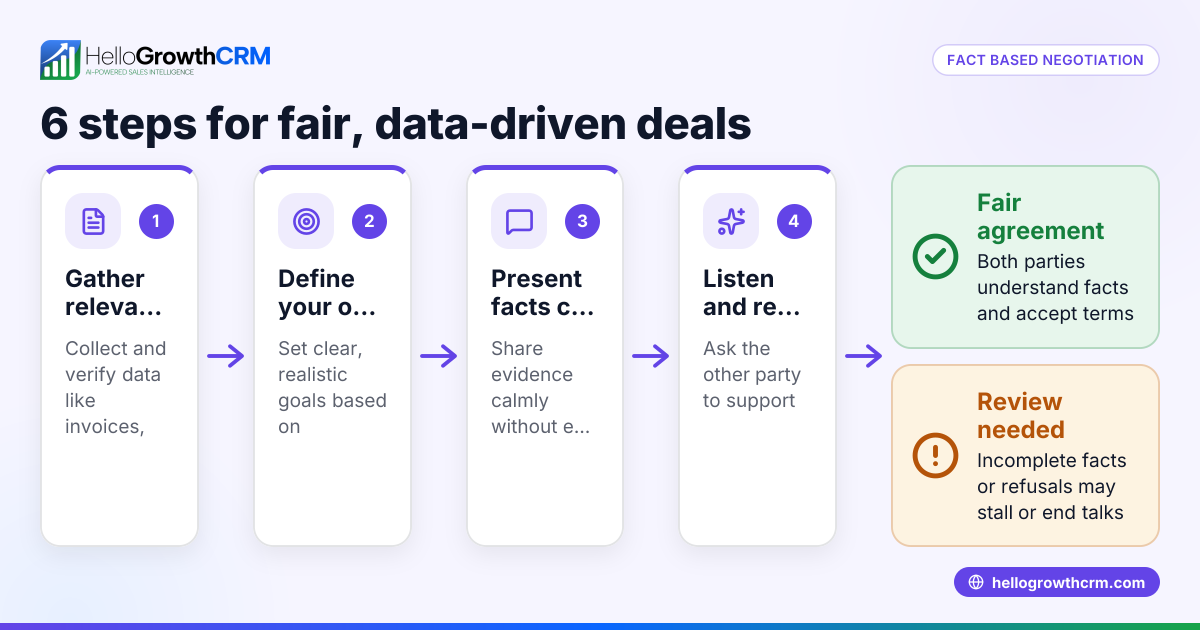
Negotiation management is the process of planning, organizing, and controlling negotiations to reach favorable agreements. It involves setting clear goals, understanding the other party, communicating effectively, and tracking progress. This article explains why negotiation management matters for small businesses, provides step-by-step guidance, a practical example, common mistakes to avoid, and how to keep negotiation leads organized for better results.
Why this comes up / what goes wrong
Small-business owners often handle sales, purchasing, and contracts without a formal system. They might rely on notes, text messages, emails, or spreadsheets to track negotiations. This scattered approach causes delays, missed follow-ups, or lost deals because critical terms and deadlines get overlooked. Without negotiation management, you can lose track of who you’re negotiating with or forget important offers and counteroffers. This slows decision-making, risks paying more than necessary, or losing business opportunities.
Step-by-step
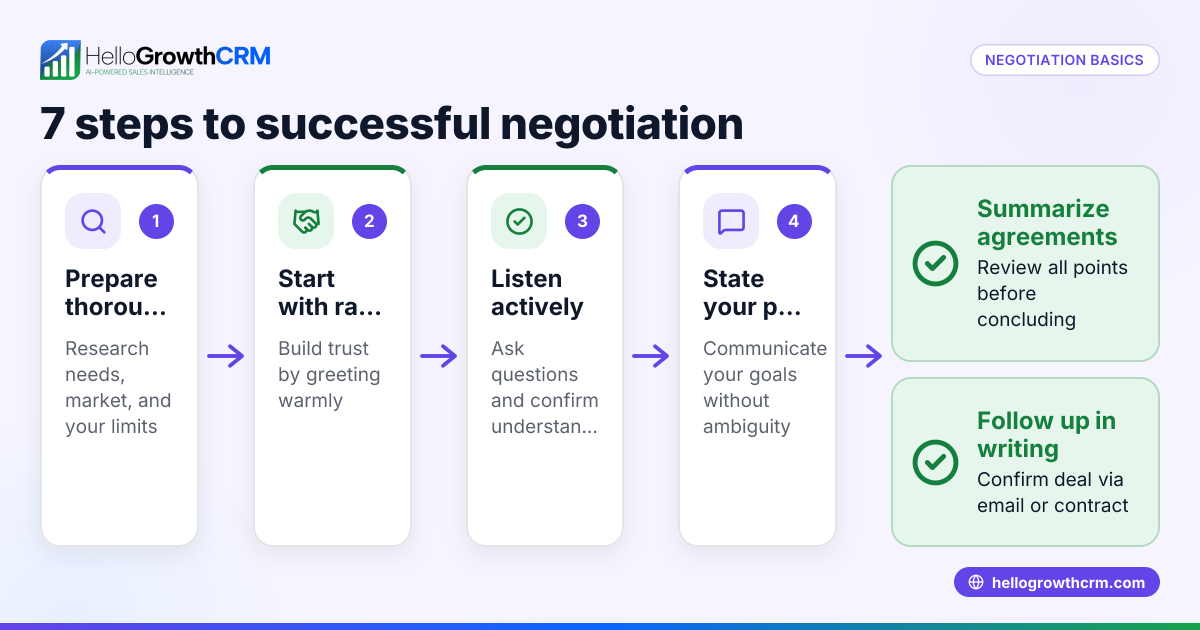
- Define your negotiation goals: Decide exactly what you want from the negotiation. Include your minimum acceptable terms and your ideal outcomes. Check that these goals align with your overall business strategy and financial limits.
- Research the other party: Gather information about the other side’s needs, constraints, and negotiation style. Check any past interactions or public information to anticipate their priorities.
- Prepare your negotiation plan: Outline your opening offer, concessions you’re willing to make, and fallback positions. Check that your plan is realistic and allows room to adjust during talks.
- Set up communication channels: Choose how you will negotiate—phone calls, email, WhatsApp messages, or in-person meetings. Check that all involved team members have access and clear roles in the process.
- Track negotiation progress: Record every offer, counteroffer, and agreement clearly. Check that you update all relevant details after each interaction to avoid confusion.
- Follow up promptly: After each negotiation step, confirm agreements and next actions in writing. Check deadlines and assign responsibilities to team members.
- Review and finalize agreements: Ensure all terms are documented and understood before signing contracts. Check for any overlooked details or risks that could cause issues later.
Example (fictional figures)
A landscaping contractor in Charlotte, North Carolina, is negotiating a lawn maintenance contract starting 07/01/2026.
- Goal: Secure a 12-month contract at $3,500 per month minimum.
- Opening offer: $4,000 per month.
- Concession: Willing to reduce to $3,500 per month if the client agrees to a 12-month term.
Negotiation steps:
- Contractor offers $4,000 per month.
- Client counters with $3,000 per month.
- Contractor counters with $3,750 per month and a 12-month term.
- Client agrees to $3,750 per month but wants a 6-month contract.
- Contractor agrees to $3,500 per month for 12 months.
Calculations:
$3,500 × 12 = $42,000 total contract value
The contractor secures a contract worth $42,000 over a year, meeting the minimum goal.
Common mistakes
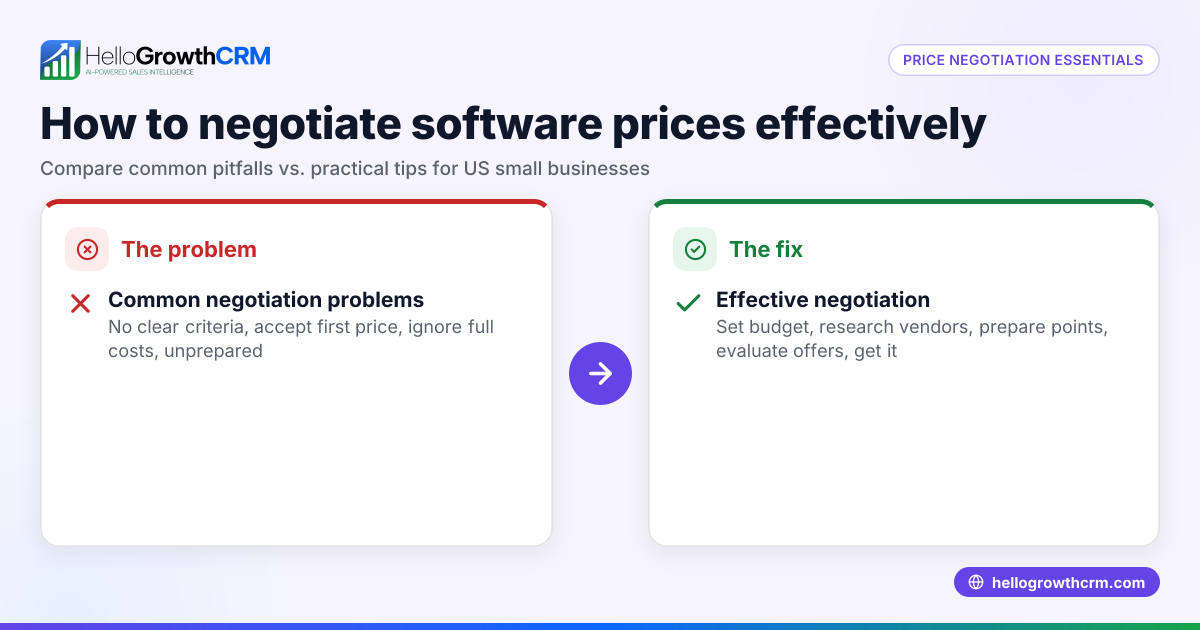
- Not preparing clearly: Leads to weak negotiation positions. Prevent by setting clear goals and fallback plans before talks.
- Poor communication tracking: Causes confusion and lost deals. Prevent by recording every offer, counteroffer, and next step.
- Ignoring deadlines: Missed follow-ups delay or lose deals. Prevent by setting reminders and assigning accountability.
- Overconceding too early: Weakens your position and reduces profit. Prevent by sticking to your negotiation plan and resisting pressure.
- Using scattered tools: Leads to lost information and missed opportunities. Prevent by using a system that organizes leads and communication.
- Failing to confirm agreements in writing: Causes misunderstandings and disputes later. Prevent by promptly documenting all agreed terms.
Doing this in HelloGrowthCRM
Every inquiry from a form, call, or WhatsApp lands as a lead with an owner and a next step, instead of being lost in notebooks or spreadsheets. This keeps negotiation details organized and visible to your team, so follow-ups and progress are clear. Learn more about managing leads and communications on HelloGrowthCRM for the United States and its WhatsApp and SMS CRM features. Using a built-in CRM dialer helps manage calls efficiently during negotiations. See how the built-in CRM dialer can support your negotiation calls.
Frequently asked questions
What is negotiation management? Negotiation management is the process of planning and controlling negotiations to reach agreements that meet your goals. It involves preparation, communication, tracking offers, and follow-ups.
Why is negotiation management important for small businesses? Small businesses often juggle many roles and lack formal systems. Managing negotiations helps avoid losing deals or paying too much by keeping details organized and deadlines met.
How can I track negotiations efficiently? Use a system that captures every lead and communication with assigned owners and next steps. This way, you can see all negotiations in one place and avoid missing follow-ups.
What communication methods work best in negotiation? Phone, email, and WhatsApp are common channels. Choose what fits your business and client preferences, and keep communications recorded and accessible.
How do I manage multiple negotiations at once? Track each negotiation as a separate lead with an owner and next step. This prevents confusion and missed deadlines.
Can negotiation management improve sales results? Yes. Organizing negotiations systematically increases your chances to close deals by preventing lost leads and ensuring timely follow-up.
Key takeaways
- Negotiation management means planning, tracking, and controlling negotiation steps.
- Clear goals and research on the other party improve negotiation outcomes.
- Use a system to record offers, counteroffers, and next actions.
- Avoid common mistakes like poor tracking, missed deadlines, and overconceding.
- Organizing leads and communication keeps negotiations visible and manageable.
- Using tools like HelloGrowthCRM helps keep negotiation details organized and follow-ups timely.
Start managing your negotiations better today. Start on the Free Forever plan (200 leads, no credit card).
Ready to put this into practice?
Set up your pipeline, WhatsApp follow-ups, and AI lead scoring in minutes — free, no credit card.
Try HelloGrowthCRM freeGet CRM tips in your inbox
Join thousands of sales professionals who get weekly insights on CRM strategy, AI automation, and pipeline optimization.

The HelloGrowthCRM team publishes guides on CRM strategy, AI sales tools, and revenue operations for small business sales teams.