HelloGrowthCRM software
Built for real small-business sales teams
HelloGrowthCRM helps reps qualify faster, follow up on time, and close more deals—with practical automation in one place.
- AI lead scoring and pipeline visibility
- Built-in dialer, WhatsApp, and email automation
- Sales forecasting and RevOps-ready reporting
Skills based routing assigns customer leads or inquiries to team members based on their specific skills or expertise. This method ensures customers get the right help quickly from the best-qualified person. This article covers why skills based routing matters, how to implement it step-by-step, a detailed example with USD figures, common mistakes to avoid, and how HelloGrowthCRM can automate this process for your business.
Why this comes up / what goes wrong
Small business owners often find their sales or customer support teams handle leads unevenly. For example, some team members might excel at technical questions while others are better at closing deals or handling billing inquiries. Without skills based routing, leads may be assigned randomly or simply to whoever is available, which can cause delays, repeated explanations to customers, or lost sales opportunities. As the business grows, this problem tends to worsen, frustrating customers and wasting valuable team effort.
Step-by-step
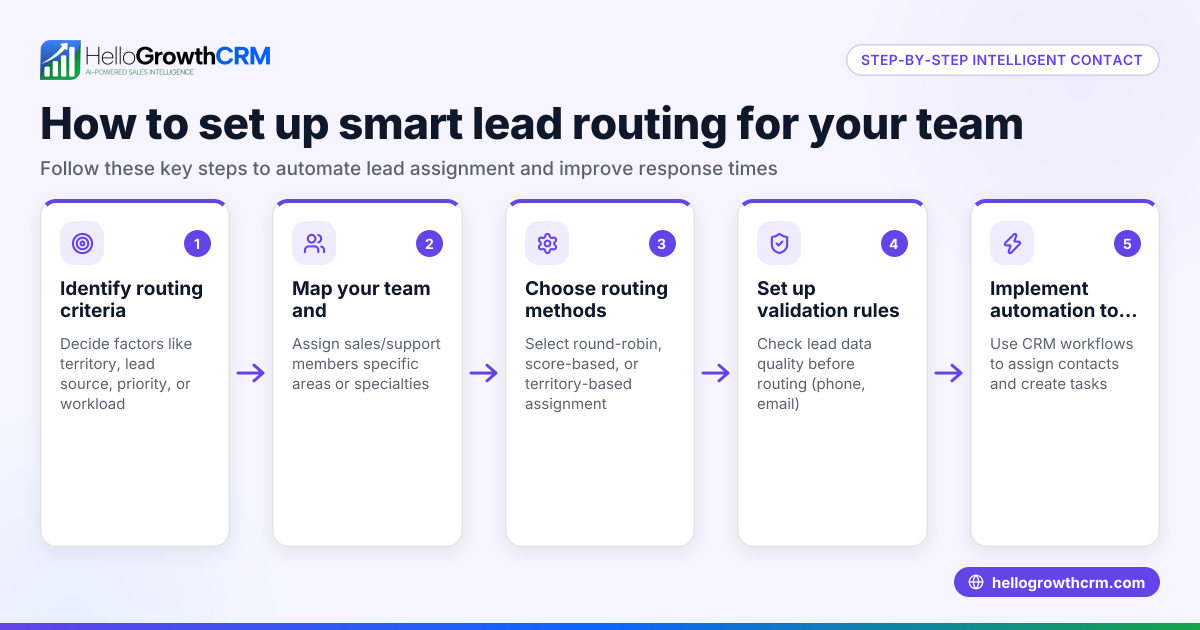
- Identify key skills your team has: List the specific skills or expertise your team members possess. Examples include product knowledge, technical support, language fluency, or negotiation skills. Make sure each skill clearly links to a customer need.
- Classify incoming leads or requests by skill needs: Decide how you will categorize incoming leads. For example, a software company might separate leads needing technical demos from those wanting pricing info.
- Map skills to team members: Assign each team member to the skill categories they excel in. Confirm their proficiency and availability to handle leads.
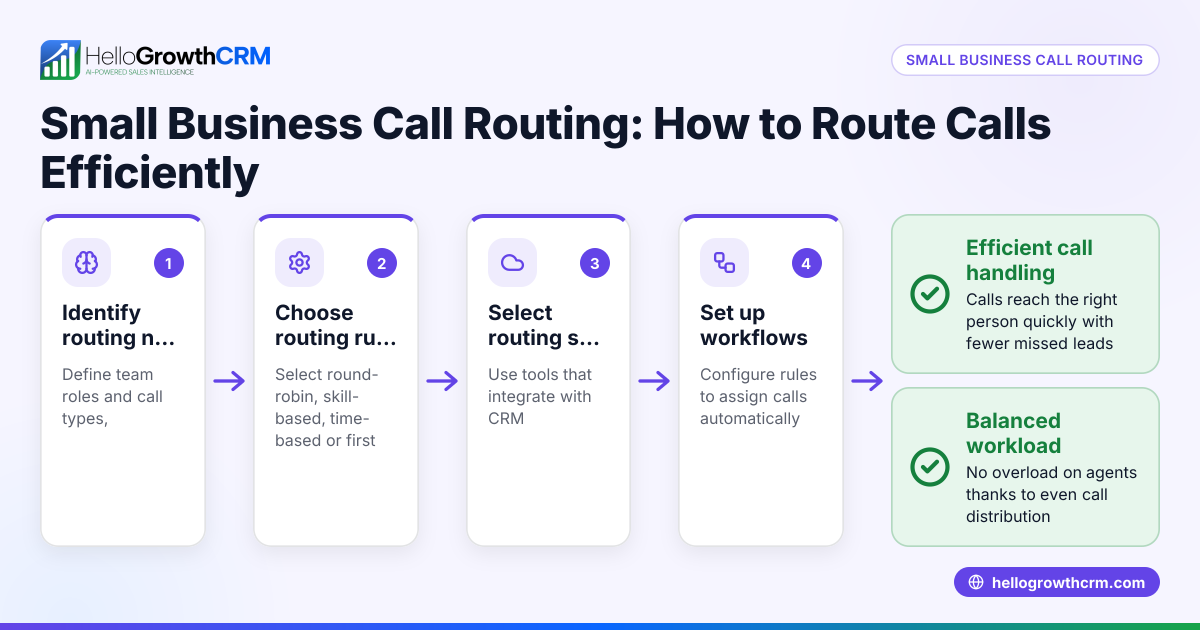
- Create routing rules based on skills: Define rules that send leads to the right person based on the required skill. You can use round-robin within skill groups or prioritize by who is free.
- Test your routing setup: Send test leads to verify they reach the correct team member with the matching skill.
- Monitor and adjust regularly: Track how leads are assigned and handled. Update skills and routing rules as your team or customer needs change.
For automating lead assignment and workflows, explore HelloGrowthCRM's workflows, lead routing and validation rules.
Example (fictional figures)
A plumbing company in Austin, Texas, "Austin Flow Plumbing," wants to improve lead handling by using skills based routing. They receive 100 leads each month.
- 60% (60 leads) are emergency repair requests.
- 40% (40 leads) are new installation inquiries.
They have three plumbers:
- Alice specializes in emergency repairs.
- Bob focuses on new installations.
- Carol handles both skills.
Step 1: Assign skills
- Alice: emergency repairs
- Bob: new installations
- Carol: both skills
Step 2: Routing rules
- Emergency repair leads go first to Alice; if she is busy, they go to Carol.
- Installation leads go first to Bob; if he is busy, they go to Carol.
Step 3: Lead distribution for emergency repairs (60 leads)
- Alice handles 40 leads
- Carol handles 20 leads
Step 4: Lead distribution for installations (40 leads)
- Bob handles 30 leads
- Carol handles 10 leads
Step 5: Revenue impact calculation
Assume:
- Average revenue per emergency repair lead = $500
- Average revenue per installation lead = $1,200
Calculate revenue from emergency repairs:
40 leads × $500 = $20,000 20 leads × $500 = $10,000 Total emergency repair revenue = $20,000 + $10,000 = $30,000
Calculate revenue from installations:
30 leads × $1,200 = $36,000 10 leads × $1,200 = $12,000 Total installation revenue = $36,000 + $12,000 = $48,000
Total monthly revenue = $30,000 + $48,000 = $78,000
This example shows how skills based routing directs leads efficiently to specialists, improving customer satisfaction and sales.
Common mistakes
- Not defining skills clearly: Vague or overlapping skill categories cause confusion. Prevent this by making distinct, well-defined skills.
- Ignoring team workload: Assigning too many leads to one skilled person causes delays. Monitor workloads and set backup routing to others.
- Skipping testing: Not testing routing rules before going live can misroute leads. Always test with sample leads.
- Not updating skills or rules: Skills and customer needs change over time. Schedule regular reviews to keep routing accurate.
- Overcomplicating rules: Too many complex routing rules slow down lead assignment. Keep rules simple and focused.
For managing tasks and calls efficiently, check HelloGrowthCRM’s built-in CRM dialer and WhatsApp and SMS CRM.
Doing this in HelloGrowthCRM
HelloGrowthCRM supports workflows, lead routing, and validation rules that automate skills based routing. For example, a new web-form inquiry can be assigned round-robin among team members with the right skills, and a first-call task is created automatically. This saves time and ensures leads reach the best person quickly. Learn more at HelloGrowthCRM for the United States.
Frequently asked questions
What is skills based routing? Skills based routing is a system that directs customer leads or inquiries to team members based on their specific skills or expertise, ensuring customers get the best help quickly.
How is skills based routing different from round-robin routing? Round-robin routing assigns leads evenly to team members without considering skills, while skills based routing matches leads to the most qualified person. Combining both can balance workload and expertise.
Can small businesses benefit from skills based routing? Yes. Even small teams can improve lead handling and customer satisfaction by assigning leads based on skills.
Is setting up skills based routing complicated? It requires defining skills and routing rules but can be simplified with CRM tools like HelloGrowthCRM that automate lead assignment.
How do I identify the right skills for routing? Review common customer questions and sales challenges. Talk to your team about their strengths and match those to customer needs.
Key takeaways
- Skills based routing assigns leads to team members by their expertise, improving response quality.
- Define clear, distinct skills and map them to your team.
- Create simple routing rules and test them before full deployment.
- Monitor workloads and update skills and rules regularly.
- HelloGrowthCRM automates lead routing and task creation to simplify this process.
Start improving your lead handling today. Start on the Free Forever plan (200 leads, no credit card).
Ready to put this into practice?
Set up your pipeline, WhatsApp follow-ups, and AI lead scoring in minutes — free, no credit card.
Try HelloGrowthCRM freeGet CRM tips in your inbox
Join thousands of sales professionals who get weekly insights on CRM strategy, AI automation, and pipeline optimization.

The HelloGrowthCRM team publishes guides on CRM strategy, AI sales tools, and revenue operations for small business sales teams.