HelloGrowthCRM software
Built for real small-business sales teams
HelloGrowthCRM helps reps qualify faster, follow up on time, and close more deals—with practical automation in one place.
- AI lead scoring and pipeline visibility
- Built-in dialer, WhatsApp, and email automation
- Sales forecasting and RevOps-ready reporting
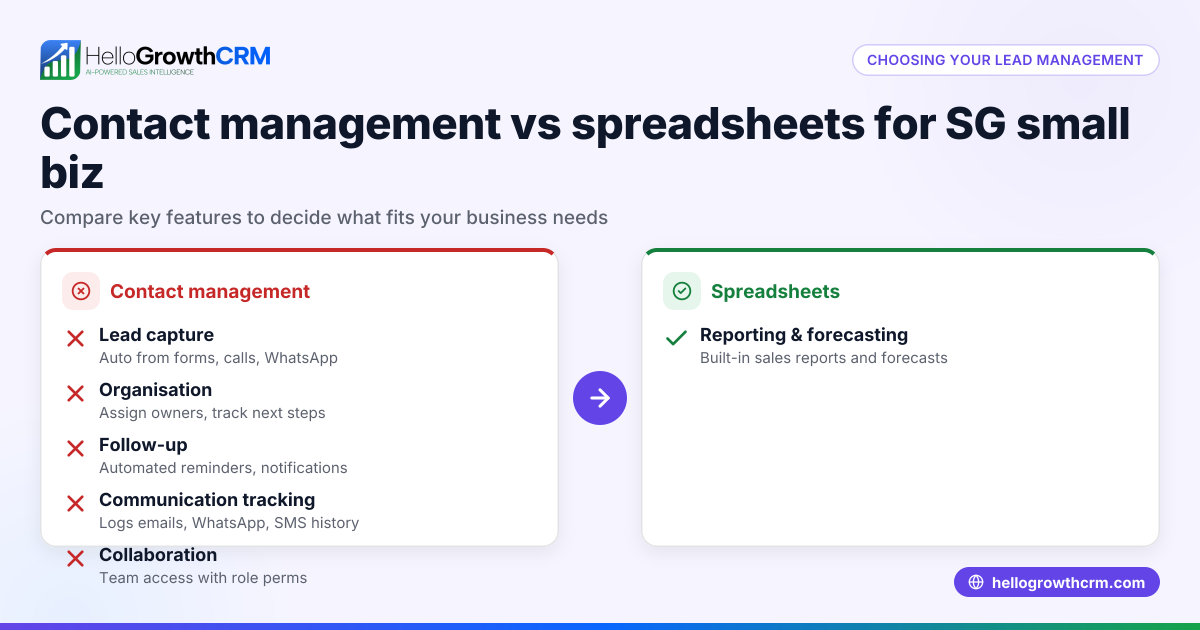
For many small businesses in Singapore, choosing between a field sales CRM and spreadsheets is a common dilemma. Spreadsheets are familiar and low-cost but can become cumbersome and error-prone as your field sales team grows. A field sales CRM is designed to organise leads, visits, communications, and sales pipelines with tools tailored for on-the-go teams.
Why this comes up / what goes wrong
Small business owners often start managing sales leads and customer data in spreadsheets because they are simple and require no new software learning. But when sales happen outside the office — at customer sites, events, or multiple territories — spreadsheets quickly show limitations. Data entry delays, lost follow-up tasks, and lack of real-time visibility cause leads to slip through the cracks. This slows down sales cycles and frustrates sales reps and managers alike.
Singapore businesses with 5 to 200 employees often face these challenges as they expand their field sales teams. They need tools that work on mobile devices, update in real time, and integrate communications like WhatsApp and SMS, which are popular in local business conversations.
Step-by-step
| Criteria | Field Sales CRM | Spreadsheets |
|---|---|---|
| Ease of use in field | Mobile apps with visit logging, route planning | Manual data entry; no mobile optimised features |
| Lead tracking | Automated lead capture, pipeline stages | Manual updates; prone to missing follow-ups |
| Communication | WhatsApp and SMS logged and sent from CRM | Separate apps; no central record |
| Collaboration | Real-time updates visible to team and managers | Version control issues; risk of conflicting data |
| Sales forecasting | Built-in pipeline and probability tracking | Manual calculations; error-prone |
| Territory management | Assign territories and track field visits | No native support; requires manual filtering |
| Cost and setup | Subscription fees; learning curve | Low or no cost; familiar interface |
Who should pick which?
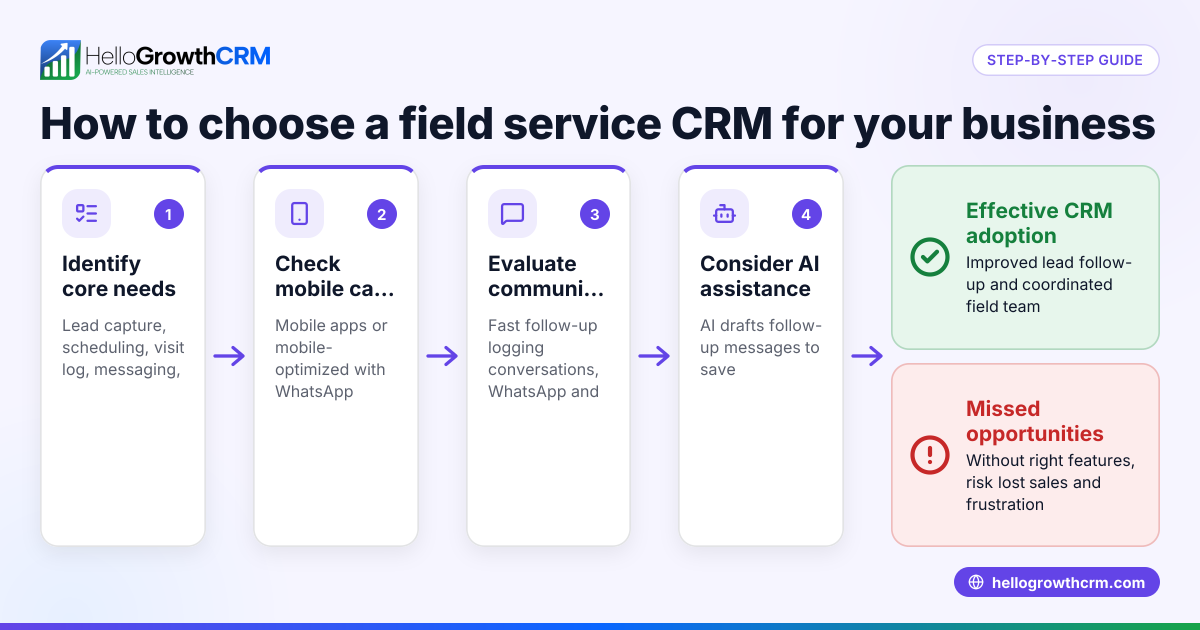
- Choose a field sales CRM if your team needs mobile-friendly tools, automated lead follow-ups, and integrated messaging like WhatsApp, especially if you manage multiple territories or want better sales forecasting.
- Stick with spreadsheets if your sales process is simple, your team is small, and you prefer a no-cost solution without needing mobile or communication integration.
Example (fictional figures)
A renovation contractor in Jurong has 5 field sales reps visiting clients daily. They currently use spreadsheets but find it hard to keep track of leads and follow-ups, resulting in lost sales opportunities.
- Total leads per month: 200
- Average sales conversion rate with spreadsheets: 20% (40 sales)
- Average sale value: S$15,000
If the contractor improves follow-up and lead tracking with a field sales CRM, they increase their conversion rate to 25% (50 sales):
- Additional sales = 50 - 40 = 10 sales
- Additional revenue = 10 sales × S$15,000 = S$150,000
This extra revenue can offset CRM subscription costs by improving sales efficiency and reducing lost opportunities.
Common mistakes
- Underestimating data entry effort: Relying on manual spreadsheet updates delays information sharing. Prevent by adopting mobile CRM tools that capture data in real time.
- Ignoring communication integration: Managing WhatsApp or SMS outside the sales record causes information loss. Use CRM with built-in messaging to log conversations.
- Overcomplicating spreadsheets: Adding too many formulas or sheets leads to errors. Simplify or switch to CRM designed for sales workflows.
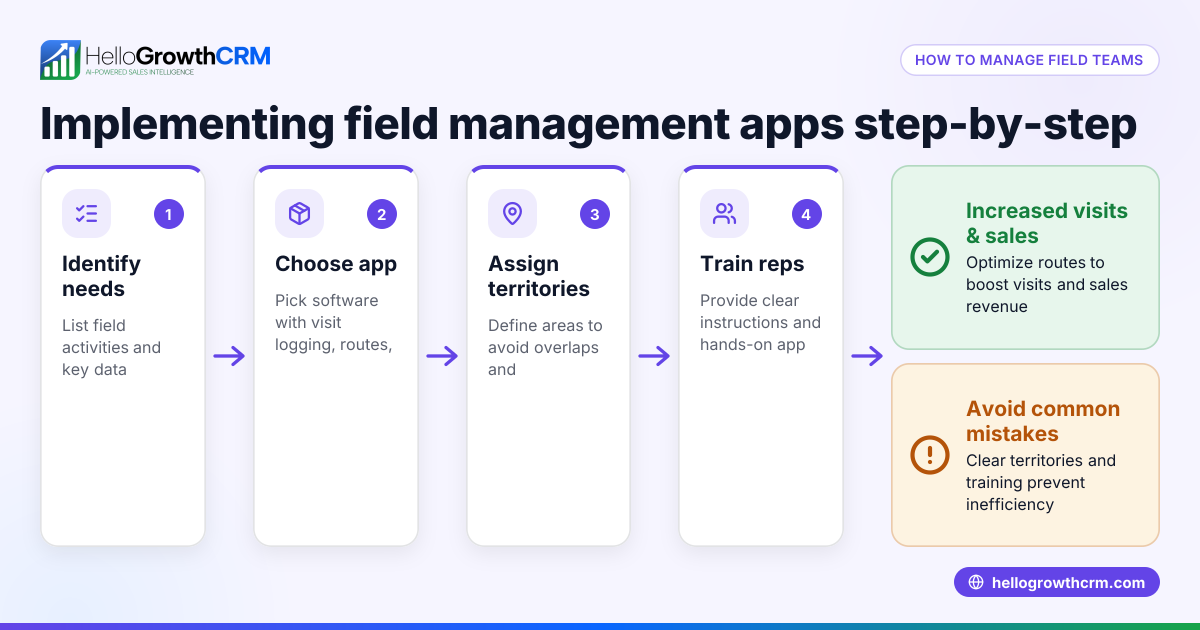
- Not assigning territories clearly: Without territory management, reps may overlap or miss areas. Use CRM territory features to assign and track visits.
- Neglecting follow-up tasks: Spreadsheets lack reminders, so leads get forgotten. CRM pipelines with task boards prevent this.
Learn more about territory management and pipeline deals in CRMs at territory management and compare CRMs.
Doing this in HelloGrowthCRM
HelloGrowthCRM offers features designed for Singapore field sales teams:
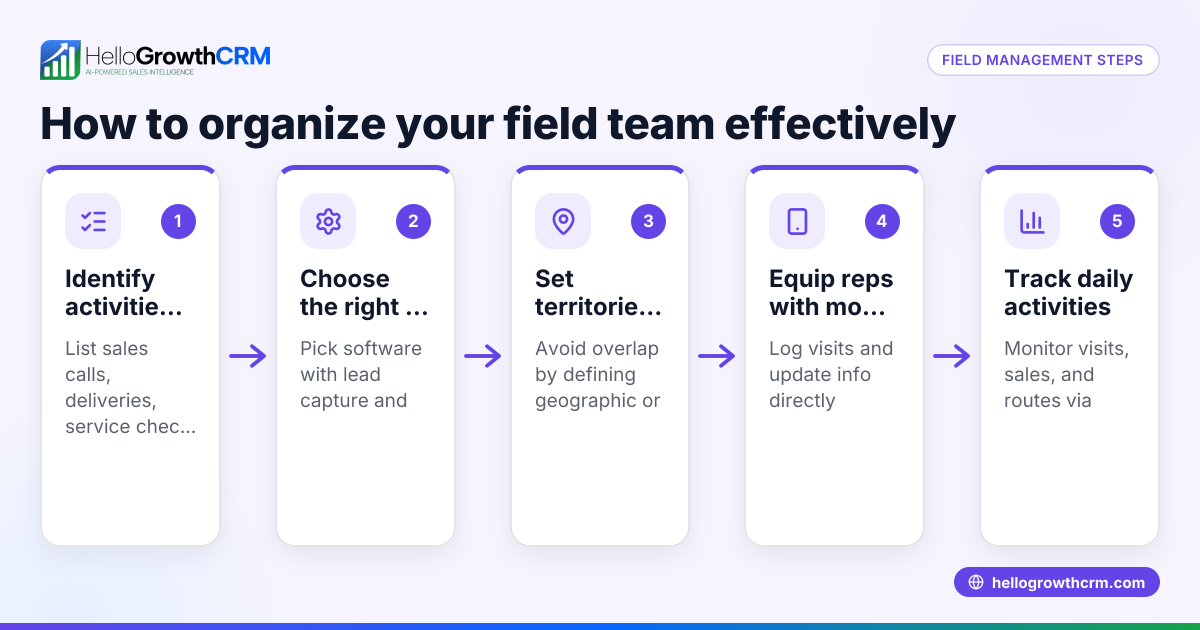
- Territories, field operations and commissions: Field reps log visits from their phones, and managers see the day's beat to coordinate efficiently.
- Deals (pipeline): Track quotations as deals with follow-up dates to avoid missed opportunities.
- WhatsApp and SMS: Conversations with leads are logged on their records, and follow-ups can be sent as messages directly from the CRM.
Discover how HelloGrowthCRM supports your field sales at HelloGrowthCRM for Singapore.
Frequently asked questions
Is a CRM necessary for a small field sales team? If your team is small and sales processes are simple, spreadsheets might suffice initially. But as you grow or need mobile access and communication integration, a CRM improves efficiency and reduces missed leads.
Can I use WhatsApp with spreadsheets? WhatsApp conversations are separate from spreadsheets, making it hard to track communications. A CRM that integrates WhatsApp logs messages on lead records, improving follow-up and team visibility.
How does territory management help field sales? Territory management assigns sales reps to specific areas, preventing overlaps and ensuring coverage. It also helps managers track field visits and plan routes efficiently.
Are CRMs expensive compared to spreadsheets? CRMs have subscription costs, but they save time and increase sales by automating tasks and improving follow-up. Spreadsheets are free but can cost more in lost sales and inefficiencies.
Can I switch from spreadsheets to a CRM easily? Many CRMs allow importing spreadsheet data. Training your team on CRM features ensures a smooth transition and better adoption.
Learn more about CRM options at compare CRMs.
Key takeaways
- Field sales CRMs offer mobile-friendly tools, pipeline tracking, and integrated messaging suited for Singapore field teams.
- Spreadsheets are low-cost but risk errors, missed follow-ups, and lack real-time collaboration.
- Territory management and visit logging improve field sales coordination.
- WhatsApp and SMS integration in CRM centralise communication and boost response rates.
- Small businesses should choose based on team size, sales complexity, and need for mobile and messaging features.
Start managing your field sales more effectively by trying HelloGrowthCRM. Start on the Free Forever plan (200 leads, no credit card).
Ready to put this into practice?
Set up your pipeline, WhatsApp follow-ups, and AI lead scoring in minutes — free, no credit card.
Try HelloGrowthCRM freeGet CRM tips in your inbox
Join thousands of sales professionals who get weekly insights on CRM strategy, AI automation, and pipeline optimization.

The HelloGrowthCRM team publishes guides on CRM strategy, AI sales tools, and revenue operations for small business sales teams.