HelloGrowthCRM software
Built for real small-business sales teams
HelloGrowthCRM helps reps qualify faster, follow up on time, and close more deals—with practical automation in one place.
- AI lead scoring and pipeline visibility
- Built-in dialer, WhatsApp, and email automation
- Sales forecasting and RevOps-ready reporting
Gastroenterologists CRM Builder: How to Choose the Right CRM
Gastroenterologists need a CRM builder tailored to their practice's specific communication and lead management needs. The right CRM should organize patient inquiries, support secure and timely follow-ups, and integrate channels such as WhatsApp and SMS that patients prefer. This article explains why gastroenterologists seek such CRM solutions, outlines clear steps to evaluate and select one, presents a practical example from a US-based builder business, highlights common mistakes to avoid, and details how HelloGrowthCRM can assist your team.
Why this comes up / what goes wrong
Gastroenterology practices often lose potential patients due to slow or disorganized follow-up. Unlike general sales, patient leads require sensitive handling and quick responses to secure appointments and referrals. Many practices rely on text messages, emails, or spreadsheets, which can cause data loss, missed messages, or inconsistent communication. Builders or accountants managing gastroenterology practices may struggle with CRMs designed for generic sales teams, lacking integration with mobile messaging apps or AI-driven follow-up assistance. This leads to inefficiencies and fewer booked patient consultations.
Step-by-step
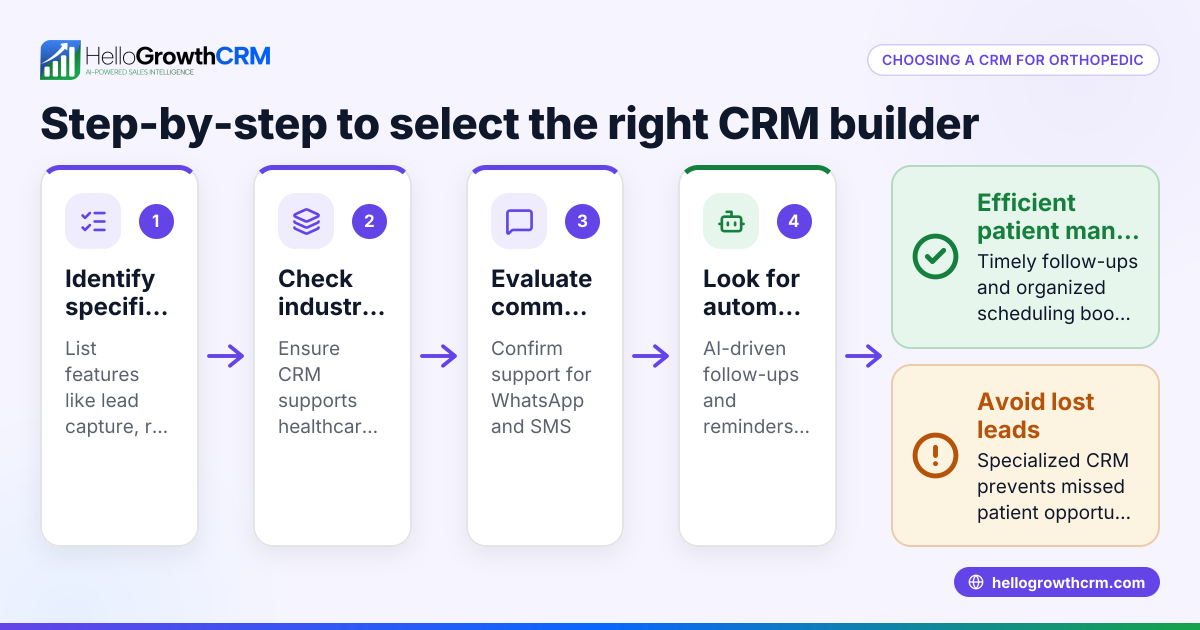
- Identify your communication channels: Confirm if your practice uses WhatsApp, SMS, or email predominantly. Check if the CRM builder supports these channels natively to avoid switching apps.
- Evaluate lead capture methods: Ensure the CRM can integrate with your website forms or referral sources to capture patient leads automatically.
- Check follow-up automation: Look for AI or workflow automation features that draft or schedule follow-up messages to reduce manual workload.
- Assess pipeline management: The CRM should allow you to track patient leads through stages—initial inquiry, consultation scheduled, follow-up needed—to avoid losing prospects.
- Review data logging and compliance: Confirm that all patient communications are logged securely for reference and compliance needs.
- Consider team size and costs: If you have a small team, a free or low-cost plan with core features might suffice initially.
- Test user experience: Choose a CRM that your team finds intuitive to ensure consistent use and data accuracy.
- Look for industry-specific support: While general CRMs work, builders servicing gastroenterology clients benefit from features tailored to medical lead sensitivity.
For more on industry-specific CRM needs, see Real estate and builders.
Example (fictional figures)
Consider a gastroenterology practice in Austin, Texas, managed by a small builder business owner. They receive 300 patient inquiries annually and want to improve their follow-up rate.
- Current booked consultations: 60
- Goal booked consultations: 90
Calculations:
Annual inquiries = 300
Additional consultations needed = 90 - 60 = 30
Assuming average revenue per consultation = $500
Additional revenue = 30 × $500 = $15,000
By choosing a CRM builder that automates follow-up and logs WhatsApp/SMS conversations, the practice can realistically aim to increase booked consultations by 30, generating $15,000 more annually.
Common mistakes
- Ignoring communication channels your patients use: Avoid CRMs that don’t support WhatsApp or SMS natively; patients respond better on familiar platforms. Prevent this by verifying channel support early.
- Overlooking lead capture automation: Manually entering leads leads to errors and delays. Choose a CRM with web form integration to capture leads instantly.
- Not testing user experience with your team: A complicated CRM results in inconsistent use and lost data. Prevent this by trialing the CRM with your team before committing.
- Neglecting follow-up automation: Relying solely on manual follow-up causes delays. Use AI agents or sequences to draft and schedule messages.
- Choosing expensive plans before assessing needs: Small teams may not need advanced features. Start with a free or basic plan and upgrade as needed.
- Missing compliance and data logging features: Patient data must be logged securely. Confirm CRM meets your compliance requirements.
Learn more about WhatsApp and SMS CRM benefits at WhatsApp and SMS CRM.
Doing this in HelloGrowthCRM
HelloGrowthCRM offers WhatsApp and SMS support where conversations with leads are logged on each lead record, and follow-ups can be sent as messages. Its AI agents (currently in Beta on Growth plans) draft follow-up messages after calls, so reps only review and send, reducing manual work. For small teams, the Free Forever plan allows managing up to 200 leads and running a pipeline at no cost until you need calling or WhatsApp automation. This makes HelloGrowthCRM a practical choice for gastroenterologists seeking a CRM builder that aligns with their communication and follow-up needs.
Frequently asked questions
What features should a gastroenterologist CRM builder have? A CRM for gastroenterologists should support secure, timely communication channels like WhatsApp and SMS, automate follow-ups, capture leads from referral or web forms, and log all patient interactions for compliance. Pipeline tracking to manage patient appointment stages is also key.
Can a CRM builder help small gastroenterology practices? Yes. Small practices benefit from CRMs that automate lead capture and follow-up, reducing lost leads and improving patient booking rates. Free or low-cost plans can support small teams effectively.
How does WhatsApp integration improve patient follow-up? WhatsApp is widely used and preferred by many patients. Integration means messages are logged and can be sent directly from the CRM, ensuring consistent, timely communication without switching apps.
Are AI agents reliable for follow-up messages? AI agents can draft follow-up messages based on call notes, saving time. However, reps should review messages before sending to ensure accuracy and appropriateness.
What should I avoid when choosing a CRM builder? Avoid CRMs that don’t support your main communication channels, lack lead capture automation, have complex interfaces, or don’t log patient communications securely. Also, avoid costly plans before confirming your needs.
For more on HelloGrowthCRM’s US-specific features, visit HelloGrowthCRM for the United States.
Key takeaways
- Choose a CRM builder that natively supports WhatsApp and SMS for patient communication.
- Automate lead capture and follow-ups to reduce lost gastroenterology patient leads.
- Test the CRM’s ease of use with your team before committing.
- Start with a free or basic plan suited to your team size and scale up when needed.
- Use AI agents to draft follow-ups but review before sending.
- Ensure the CRM logs all patient communications securely for compliance.
Start managing your gastroenterology leads efficiently today with HelloGrowthCRM. Start on the Free Forever plan (200 leads, no credit card).
Ready to put this into practice?
Set up your pipeline, WhatsApp follow-ups, and AI lead scoring in minutes — free, no credit card.
Try HelloGrowthCRM freeGet CRM tips in your inbox
Join thousands of sales professionals who get weekly insights on CRM strategy, AI automation, and pipeline optimization.

The HelloGrowthCRM team publishes guides on CRM strategy, AI sales tools, and revenue operations for small business sales teams.