HelloGrowthCRM software
Built for real small-business sales teams
HelloGrowthCRM helps reps qualify faster, follow up on time, and close more deals—with practical automation in one place.
- AI lead scoring and pipeline visibility
- Built-in dialer, WhatsApp, and email automation
- Sales forecasting and RevOps-ready reporting
Healthcare call center metrics are critical for clinics, labs, and healthcare providers to ensure timely patient communication, reduce missed appointments, and improve overall service quality. Tracking these metrics helps healthcare businesses identify bottlenecks, improve patient satisfaction, and manage operational costs effectively.
Why this comes up / what goes wrong
Healthcare business owners and accountants often face challenges such as slow call responses, lost patient leads, and inefficient appointment scheduling. Healthcare call centers must handle sensitive patient information, comply with privacy regulations, and manage fluctuating call volumes. Without clear metrics, it is difficult to pinpoint issues like long wait times, high call abandonment rates, or ineffective follow-up. These problems can lead to lost revenue, patient dissatisfaction, and operational inefficiencies.
Step-by-step
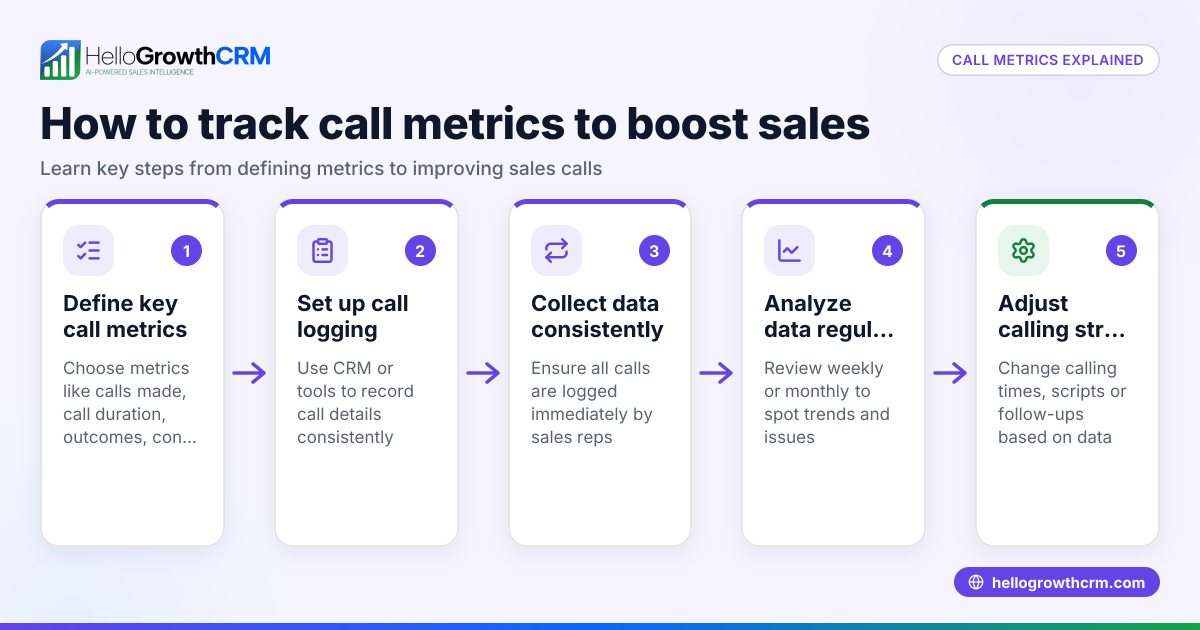
- Define key healthcare call center metrics to track: Focus on metrics relevant to healthcare call centers such as:
- Average Speed to Answer (ASA): The average time it takes for a call to be answered.
- Call Abandonment Rate: The percentage of callers who hang up before reaching an agent.
- First Call Resolution (FCR): The percentage of calls resolved without the need for a follow-up.
- Patient Satisfaction Score (PSS): Ratings collected from patients after calls.
- Calls per Agent: The number of calls handled by each rep.
- Set up call tracking tools: Use call management software or a CRM with call logging features to capture these metrics automatically.
- Collect data consistently: Monitor call logs daily or weekly to gather sufficient data for analysis.
- Analyze the data for bottlenecks and trends: Identify issues such as long wait times, frequent abandoned calls, or low FCR.
- Take corrective actions based on insights: Adjust staffing levels, provide additional training to agents, or optimize call scripts.
- Review patient feedback regularly: Use satisfaction scores to improve communication quality and patient experience.
- Repeat measurement and improvements: Make tracking these metrics an ongoing process to continuously enhance call center performance.
Example (fictional figures)
A mid-sized diagnostic lab in Phoenix, Arizona, with 15 call center agents, tracked these metrics for April 2026:
- Total calls received: 12,000
- Calls answered within 30 seconds: 9,600
- Calls abandoned before answer: 2,400
- Calls resolved on first contact: 7,200
- Patient satisfaction survey responses: 1,200 with an average score of 4.2 out of 5
Calculations:
Call Abandonment Rate: 2,400 ÷ 12,000 = 0.20 (20%)
Average Speed to Answer (assumed average): 25 seconds
First Call Resolution Rate: 7,200 ÷ 12,000 = 0.60 (60%)
Patient Satisfaction Score: 4.2 out of 5 indicates generally positive feedback
This lab identified a high abandonment rate and moderate FCR. They decided to add two more agents and improve call scripts to increase resolution on the first call. This example shows how tracking metrics with real USD business figures helps make informed staffing and training decisions.
Common mistakes
- Ignoring call abandonment rates: Not monitoring this metric can hide patient frustration and lost opportunities. Prevent this by setting realistic targets and staffing accordingly.
- Not measuring first call resolution: Without FCR data, inefficiencies remain hidden. Prevent this by training agents to resolve patient issues fully during the first call.
- Overlooking patient satisfaction feedback: Patient experience is crucial in healthcare. Prevent this by regularly surveying callers and acting on their feedback.
- Tracking too many irrelevant metrics: This dilutes focus and wastes resources. Prevent this by selecting only healthcare-specific call center metrics that impact patient outcomes.
- Using separate tools for calls and CRM: This causes data gaps and inefficiencies. Prevent this by using integrated solutions like HelloGrowthCRM.
- Failing to review metrics regularly: Metrics lose value if not acted upon. Prevent this by scheduling routine reviews and continuous improvements.
Doing this in HelloGrowthCRM
HelloGrowthCRM offers a built-in dialer that lets reps work through call lists directly inside the CRM. Each call outcome is logged on the lead record, keeping full call history tied to contacts and deals. This integration helps healthcare teams track call volumes, response times, and follow-ups without switching platforms. Learn more about the built-in CRM dialer and how it supports Clinics, labs and healthcare in the US at HelloGrowthCRM for the United States.
Frequently asked questions
What are the most important call center metrics for healthcare? The key metrics are average speed to answer, call abandonment rate, first call resolution, and patient satisfaction scores. These metrics directly affect patient experience and operational efficiency.
How can I reduce call abandonment rates in my healthcare call center? You can reduce abandonment by staffing adequately during peak hours, training agents to handle calls efficiently, and offering callback options. Regular monitoring helps identify problem times to allocate resources better.
Why is first call resolution critical in healthcare? Resolving patient inquiries on the first call reduces follow-ups, improves patient satisfaction, and lowers operational costs by minimizing repeat calls.
Can call center metrics help with regulatory compliance? While metrics alone don’t guarantee compliance, tracking call outcomes and logs helps demonstrate proper patient communication and follow-up procedures.
How often should healthcare call center metrics be reviewed? Metrics should be reviewed at least weekly to catch and address issues promptly, with monthly summaries to guide strategic decisions.
Key takeaways
- Focus on healthcare-specific metrics like ASA, call abandonment rate, FCR, and patient satisfaction.
- Use integrated tools to capture and analyze call data efficiently.
- Regularly review metrics and act on insights to improve patient communication and service.
- Avoid tracking irrelevant metrics that do not impact healthcare outcomes.
- Use patient feedback to enhance call quality and overall experience.
- HelloGrowthCRM’s built-in dialer simplifies call tracking and logging for healthcare teams.
Start improving your healthcare call center metrics today with HelloGrowthCRM. Start on the Free Forever plan (200 leads, no credit card).
Ready to put this into practice?
Set up your pipeline, WhatsApp follow-ups, and AI lead scoring in minutes — free, no credit card.
Try HelloGrowthCRM freeGet CRM tips in your inbox
Join thousands of sales professionals who get weekly insights on CRM strategy, AI automation, and pipeline optimization.

The HelloGrowthCRM team publishes guides on CRM strategy, AI sales tools, and revenue operations for small business sales teams.