HelloGrowthCRM software
Built for real small-business sales teams
HelloGrowthCRM helps reps qualify faster, follow up on time, and close more deals—with practical automation in one place.
- AI lead scoring and pipeline visibility
- Built-in dialer, WhatsApp, and email automation
- Sales forecasting and RevOps-ready reporting
High volume customer service means managing a large number of customer interactions—such as support tickets, inquiries, or service requests—efficiently and effectively. Small businesses face this challenge when their customer base grows or during peak times. Handling high volume well keeps customers satisfied and loyal.
Why this comes up / what goes wrong
Small-business owners often encounter high volume customer service when demand for their products or services spikes or their customer base grows quickly. Without proper systems, customer requests pile up, causing slow responses, lost leads, and frustrated customers. For example, a local retail store might suddenly get many online orders with questions about shipping or returns. If the owner uses spreadsheets or scattered emails to track requests, it becomes overwhelming and inefficient.
This situation leads to missed opportunities, poor customer experience, and increased stress for the team. Without a clear process, requests fall through the cracks, and follow-up is inconsistent. Many small businesses run sales and service on text messages, email, and spreadsheets, which do not scale well.
Step-by-step
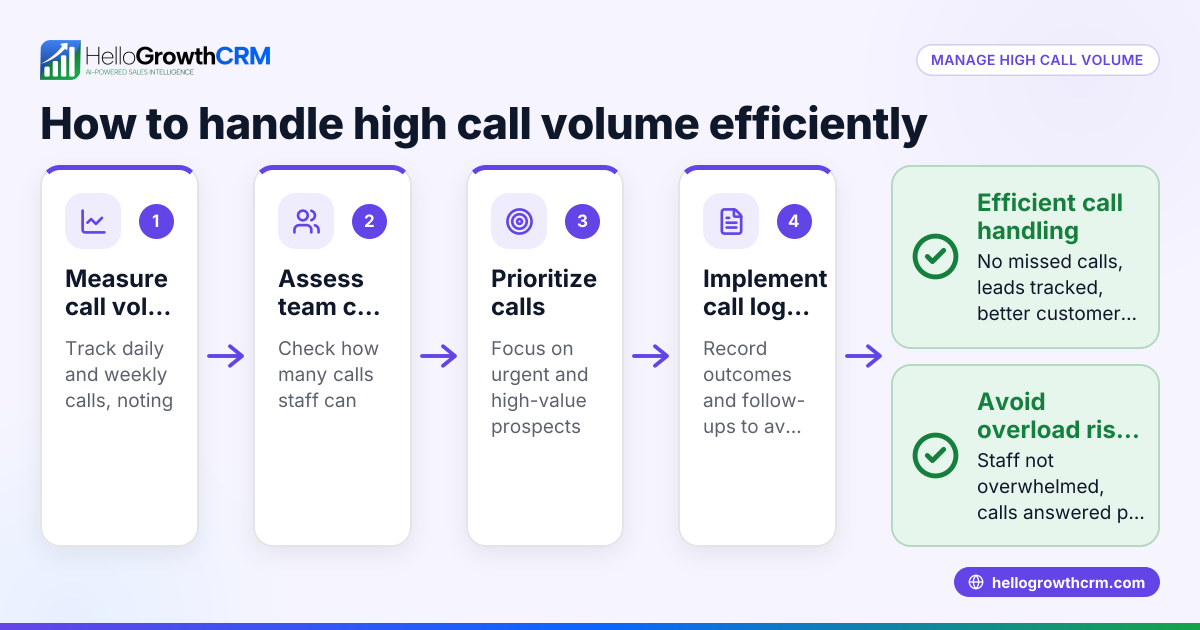
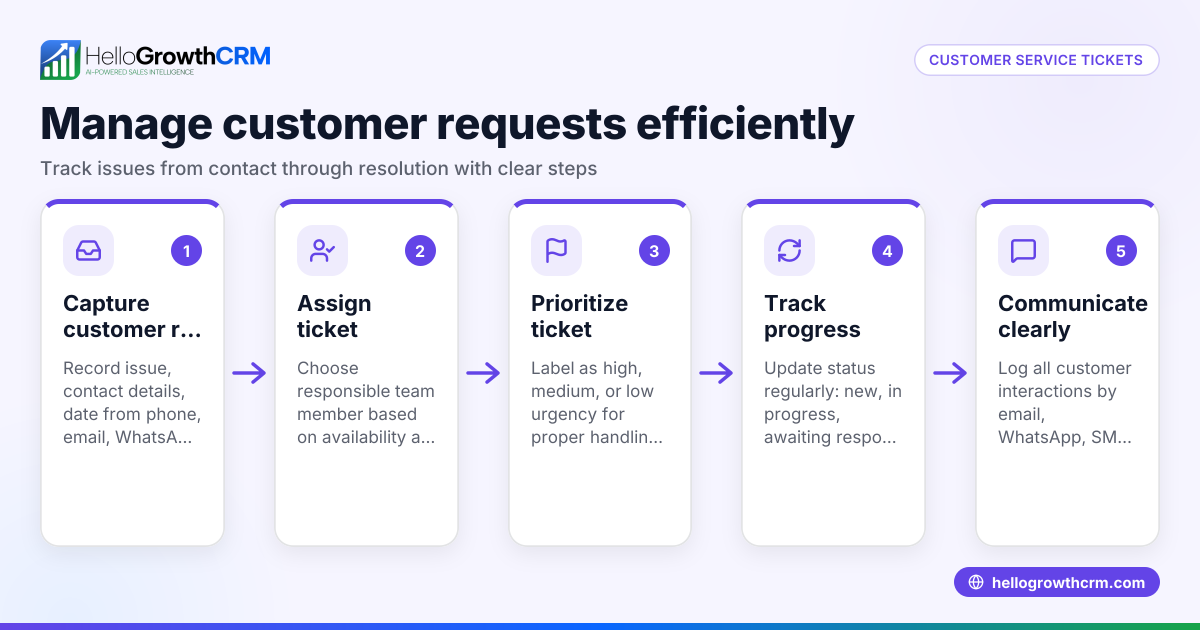
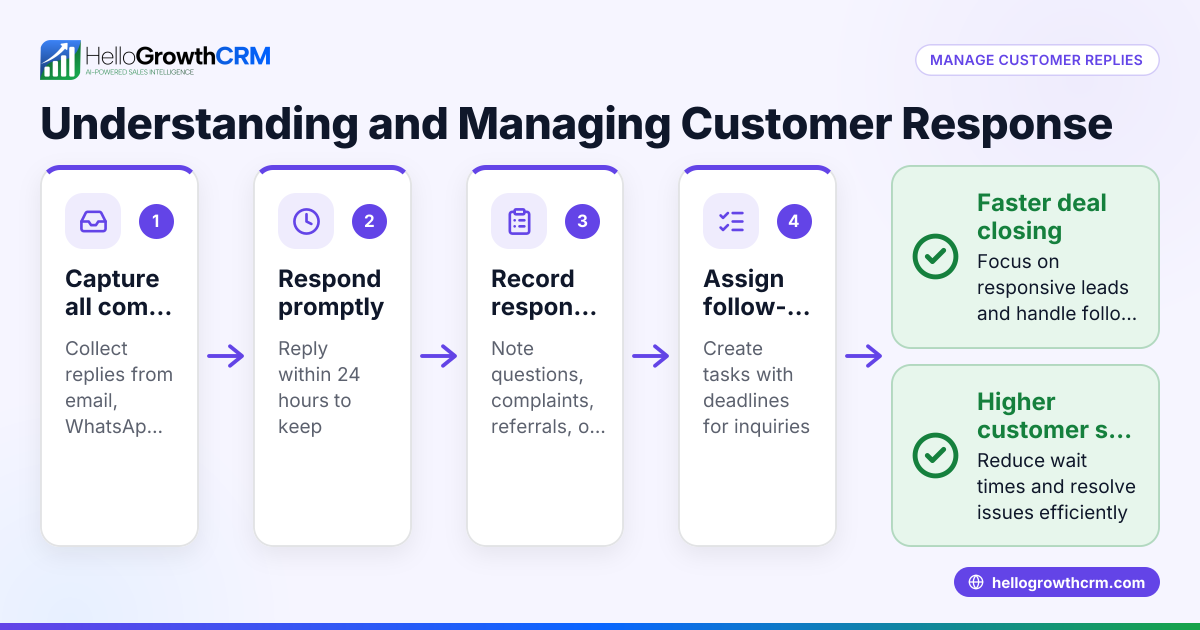
- Centralize customer requests: Collect all service inquiries in one place, whether via email, WhatsApp, SMS, or web forms. Check that your system captures every request without manual copying.
- Categorize and prioritize tickets: Assign categories like "technical support," "billing," or "returns." Use priority levels to handle urgent issues first. Regularly review categories for accuracy.
- Set up a self-service customer portal: Allow customers to find answers and track their requests independently. Check that the portal is easy to use and updated with helpful resources.
- Use a ticketing system with SLA policies: Track each service request as a ticket with deadlines for responses. Check that your team meets these deadlines to maintain service quality.
- Assign tickets to team members: Distribute workload evenly based on expertise and availability. Monitor ticket status and reassign if needed.
- Automate follow-up sequences: Use email, WhatsApp, or SMS sequences to remind customers about pending requests or collect feedback. Check that messages are timely and relevant.
- Track referrals and feedback: Encourage satisfied customers to refer others. Review feedback regularly to improve service.
- Maintain a knowledge base: Develop a library of common questions and solutions. Ensure it is accessible and updated frequently.
- Monitor customer health scores: Use metrics to spot customers needing extra attention. Check these scores regularly to prevent churn.
- Review and improve processes: Analyze ticket volumes, response times, and customer satisfaction monthly. Adjust staffing or workflows as needed.
Example (fictional figures)
Phoenix Home Realty, a residential real estate team in Phoenix, Arizona, handles high volume customer service during spring home-buying season. On 04/15/2026, they received 1,200 service requests in one month.
They implemented a ticketing system and categorized requests as follows:
- 600 general inquiries
- 400 appointment scheduling
- 200 contract questions
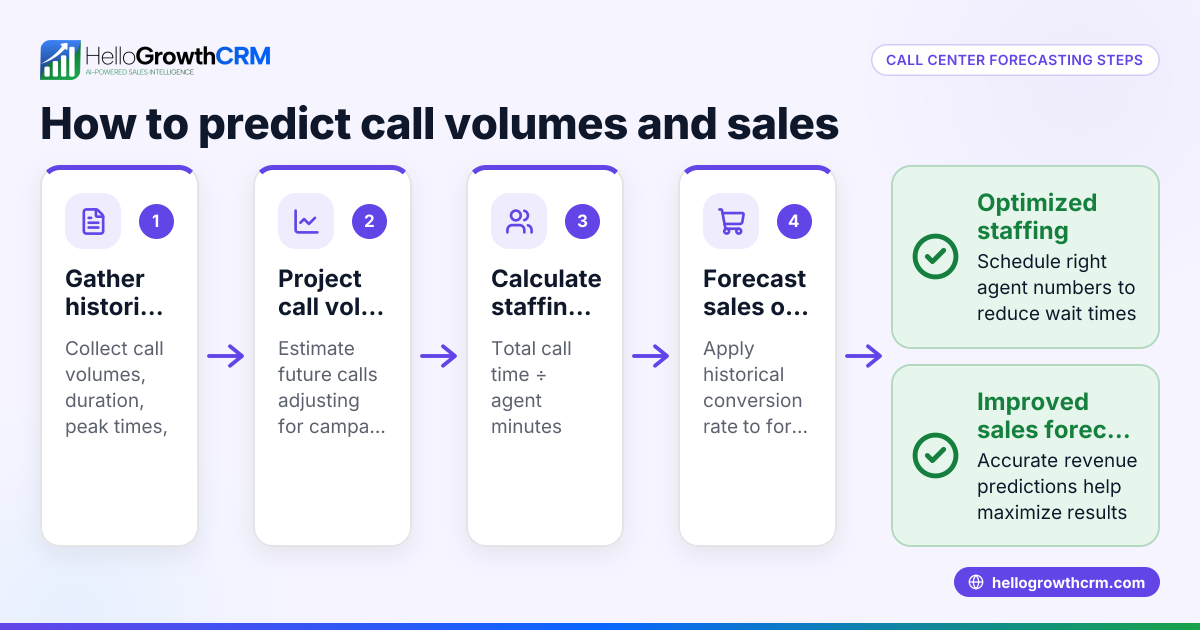
Their team of 5 agents worked 160 hours each in the month, totaling 800 hours.
Average time per ticket:
1,200 tickets ÷ 800 hours = 1.5 tickets per hour per agent
They set SLA to respond within 24 hours. With automation and a knowledge base, they reduced average response time from 48 hours to 18 hours.
This improved customer satisfaction and increased referrals by 15% (measured via referral tracking).
Common mistakes
- Ignoring ticket centralization: Using multiple channels without a unified system causes lost requests. Prevent by consolidating all inquiries into one platform.
- No prioritization: Treating all requests equally leads to delays on urgent issues. Prevent by categorizing and setting priorities.
- Lack of self-service options: Customers repeatedly ask simple questions that could be answered in a knowledge base. Prevent by building and maintaining a customer portal.
- Manual follow-up: Forgetting to follow up causes unresolved tickets. Prevent by automating reminder sequences.
- Overloading team members: Uneven ticket assignment leads to burnout. Prevent by monitoring workloads and reassigning tickets.
- Neglecting feedback and referrals: Missing chances to improve or grow. Prevent by tracking and acting on customer input.
Doing this in HelloGrowthCRM
HelloGrowthCRM supports high volume customer service with a branded self-service customer portal where customers can find answers and track requests. It includes referral program tracking and a knowledge base to reduce repetitive questions. Support tickets stay linked to the same customer record as the deal, making it easy to see the full customer history. SLA policies help you meet response deadlines. Learn more about customer health score and how to manage service efficiently.
Frequently asked questions
What is the best way to handle many customer service requests at once? Centralizing requests in a ticketing system with categories and priorities is key. Automating follow-ups and offering a self-service portal also help manage volume without losing quality.
How can I reduce repetitive customer questions? Create and maintain a knowledge base accessible through a customer portal. This lets customers find answers independently and reduces the number of tickets your team handles.
Why is tracking referrals important in customer service? Satisfied customers who get good service are more likely to refer others. Tracking referrals helps you measure customer satisfaction and grow your business.
Can WhatsApp and SMS be used for customer service? Yes, using WhatsApp and SMS sequences for follow-ups and updates can improve communication speed and customer satisfaction. HelloGrowthCRM supports these channels in its CRM.
How do I know if my team is handling high volume well? Monitor metrics like response times, ticket backlog, and customer health scores. Regular review helps you spot issues early and adjust resources or processes.
Key takeaways
- Centralize and categorize all customer service requests to avoid lost tickets.
- Use a self-service customer portal and knowledge base to reduce repetitive questions.
- Automate follow-ups with WhatsApp, SMS, and email sequences.
- Track referrals and customer health scores to improve service and grow your business.
- Monitor team workload and SLA compliance to maintain quality under high volume.
- Regularly review service metrics and adjust processes accordingly.
Managing high volume customer service is challenging but essential for growing small businesses. Start by organizing your requests and providing customers with self-service options. Automate what you can and track performance to keep improving.
Start managing your customer service more effectively today. Start on the Free Forever plan (200 leads, no credit card).
Ready to put this into practice?
Set up your pipeline, WhatsApp follow-ups, and AI lead scoring in minutes — free, no credit card.
Try HelloGrowthCRM freeGet CRM tips in your inbox
Join thousands of sales professionals who get weekly insights on CRM strategy, AI automation, and pipeline optimization.

The HelloGrowthCRM team publishes guides on CRM strategy, AI sales tools, and revenue operations for small business sales teams.