HelloGrowthCRM software
Built for real small-business sales teams
HelloGrowthCRM helps reps qualify faster, follow up on time, and close more deals—with practical automation in one place.
- AI lead scoring and pipeline visibility
- Built-in dialer, WhatsApp, and email automation
- Sales forecasting and RevOps-ready reporting
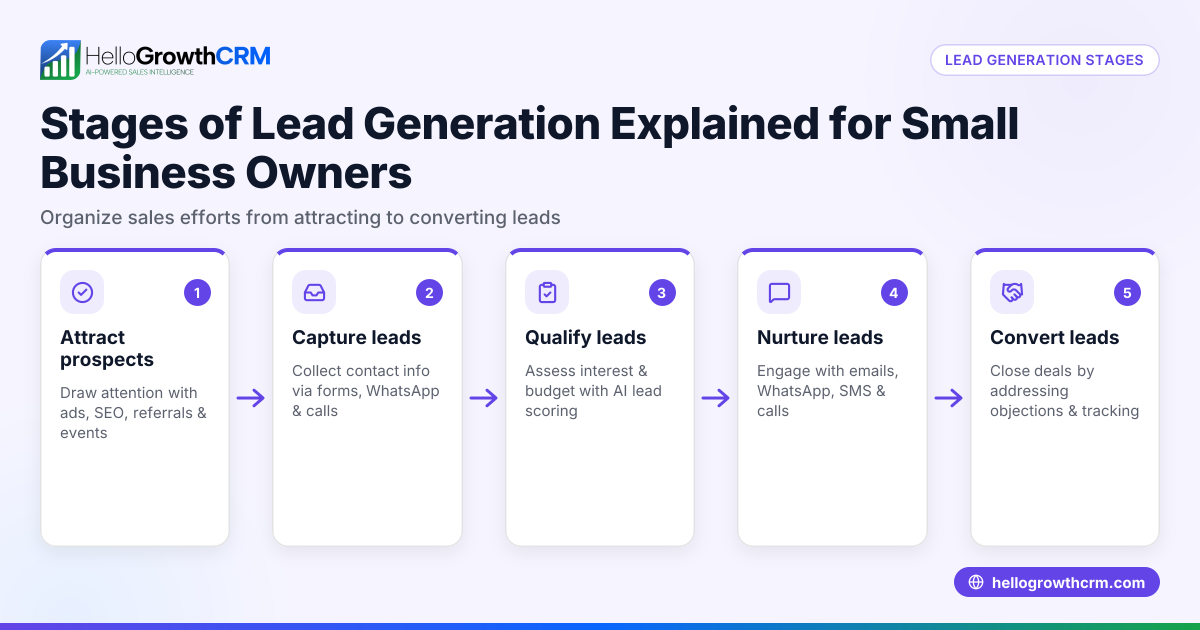
To create sales stages for a business in the UK, start by mapping out the main phases your sales leads go through, from initial contact to final sale. Assign clear names and conditions for each stage so your team knows exactly when a lead moves forward. This article explains why sales stages are important, provides step-by-step instructions, a worked UK example, common pitfalls, and how HelloGrowthCRM can help manage your sales pipeline effectively.
Why this comes up / what goes wrong
Small UK businesses often struggle to track leads because their sales process is informal or inconsistent. Without defined sales stages, leads get lost or forgotten, follow-ups happen late, and sales forecasting becomes guesswork. Business owners and sales teams may use WhatsApp, email, or spreadsheets to manage sales, which makes it hard to see which leads need attention or how close a deal is to closing. Creating clear sales stages helps organise the process, improves follow-up speed, and increases conversion rates.
Step-by-step
- List your sales process steps: Write down each phase a lead passes through, for example: New Lead, Contacted, Qualification, Quote Sent, Negotiation, Won, Lost.
- Define criteria for each stage: Specify what action or information moves a lead to the next stage. For example, "Contacted" means first phone call made, "Quote Sent" means a formal proposal has been emailed.
- Assign stage names that everyone understands: Use simple, clear terms your team can remember and use consistently.
- Decide on stage order and progression rules: Stages should flow logically without skipping steps unless justified.
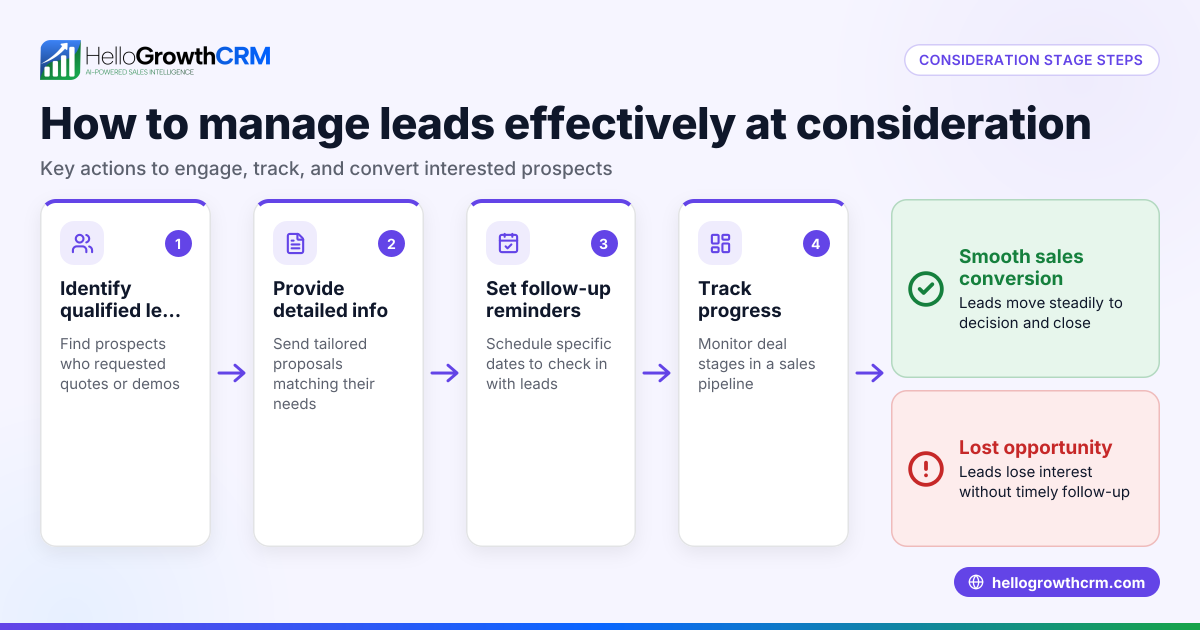
- Set follow-up tasks and reminders per stage: For example, after "Quote Sent", schedule a follow-up call in 3 days.
- Review and adjust stages regularly: As your business evolves, update stages to reflect new sales methods or customer behaviour.
- Use a CRM to track and visualise stages: Tools like HelloGrowthCRM show deals in each stage and remind you of follow-ups, making sure no lead is forgotten.
- Train your team on using the stages: Make sure everyone understands the criteria and uses the system daily.
Example (fictional figures)
An accountancy practice in Birmingham sets these sales stages:
- New Lead: Lead captured from website form
- Contacted: Called lead to discuss needs
- Qualified: Lead confirms interest and budget
- Quote Sent: Sent formal quote
- Negotiation: Discussed terms and price
- Won: Signed contract received
- Lost: Lead decided not to proceed
On 01/05/2024, they have 10 leads at various stages with expected deal values:
| Stage | Number of Leads | Average Deal Value | Expected Value Calculation | Total Expected Value |
|---|---|---|---|---|
| New Lead | 3 | £2,000 | 3 × £2,000 = £6,000 | £6,000 |
| Contacted | 2 | £5,000 | 2 × £5,000 = £10,000 | £10,000 |
| Qualified | 2 | £8,000 | 2 × £8,000 = £16,000 | £16,000 |
| Quote Sent | 2 | £10,000 | 2 × £10,000 = £20,000 | £20,000 |
| Negotiation | 1 | £12,000 | 1 × £12,000 = £12,000 | £12,000 |
Total expected value in pipeline = £6,000 + £10,000 + £16,000 + £20,000 + £12,000 = £64,000
This clear breakdown helps the practice prioritise follow-ups and forecast revenue accurately.
Common mistakes
- Too many stages: Having excessive stages confuses the team. Keep stages focused and meaningful to prevent complexity.
- Vague criteria: Not defining when a lead moves stages causes inconsistency. Always specify clear conditions.
- Ignoring follow-up tasks: Without scheduled follow-ups per stage, leads stall. Use reminders to keep deals moving.
- Not reviewing stages regularly: Sales processes change; failing to update stages leads to outdated tracking.
- Using multiple tools without integration: Managing sales across WhatsApp, email and spreadsheets leads to lost data. Consider a CRM that unifies channels.
- Lack of team training: If the sales team isn’t trained to use stages properly, the system fails. Regular coaching is essential.
Learn more about using a built-in CRM dialer and WhatsApp and SMS CRM to streamline your sales process.
Doing this in HelloGrowthCRM
HelloGrowthCRM helps UK businesses manage sales stages with its Deals (pipeline) feature. A quotation sent last week appears as a deal at the "quote sent" stage with a follow-up date, so it is not forgotten. For founders without a sales manager, Managed RevOps provides a revenue specialist who works the follow-up queue weekly, ensuring no lead slips through. For businesses with field sales, Territories and field operations let reps log visits from their phone while managers see daily activity, improving sales coverage and commission tracking. Explore more at HelloGrowthCRM for the United Kingdom.
Frequently asked questions
What are the most common sales stages for UK small businesses? Common stages include New Lead, Contacted, Qualified, Quote Sent, Negotiation, Won, and Lost. These cover the typical journey from first contact to closing a deal.
How often should I review and update my sales stages? Review your sales stages at least quarterly to ensure they match your current sales process and customer behaviour. Adjust as needed to improve tracking and conversion.
Can I use WhatsApp to manage sales stages? Yes, many UK businesses use WhatsApp for sales communication. Using a CRM with WhatsApp integration, like HelloGrowthCRM, helps track conversations alongside your sales pipeline.
How do sales stages improve forecasting? Defined sales stages assign probabilities to deals at each phase, helping you estimate expected revenue and plan resources more accurately.
What if my sales process is simple? Do I still need stages? Even a simple process benefits from at least three stages: New Lead, Quote Sent, and Won/Lost. This ensures leads are followed up and tracked properly.
How do I train my team to use sales stages effectively? Provide clear documentation, run training sessions, and use a CRM that makes stage updates easy. Regularly review usage and provide feedback.
Key takeaways
- Define clear, simple sales stages reflecting your typical sales steps.
- Specify exact criteria for moving leads between stages.
- Use follow-up tasks and reminders to keep deals progressing.
- Regularly review and update stages to match your evolving sales process.
- Avoid managing sales across disconnected tools; unify with a CRM.
- Train your team to use the stages consistently every day.
Start organising your sales process now and track every lead with confidence. You can Start on the Free Forever plan (200 leads, no credit card) today.
Ready to put this into practice?
Set up your pipeline, WhatsApp follow-ups, and AI lead scoring in minutes — free, no credit card.
Try HelloGrowthCRM freeGet CRM tips in your inbox
Join thousands of sales professionals who get weekly insights on CRM strategy, AI automation, and pipeline optimization.

The HelloGrowthCRM team publishes guides on CRM strategy, AI sales tools, and revenue operations for small business sales teams.