HelloGrowthCRM software
Built for real small-business sales teams
HelloGrowthCRM helps reps qualify faster, follow up on time, and close more deals—with practical automation in one place.
- AI lead scoring and pipeline visibility
- Built-in dialer, WhatsApp, and email automation
- Sales forecasting and RevOps-ready reporting
Improving your B2B sales pipeline efficiency with software tools means organising and automating your sales process so no opportunities are lost and your team follows up promptly. This article explains why pipeline inefficiencies happen, provides a clear set of steps to improve efficiency, offers a worked example from a Canadian business, highlights common mistakes, and shows how HelloGrowthCRM’s features support these improvements.
Why this comes up / what goes wrong
Many small and mid-sized Canadian businesses struggle with pipeline efficiency because they manage leads and deals across multiple disconnected tools like email, text messages, and spreadsheets. This causes slow follow-up, lost leads, and unclear deal status. For example, a quotation sent last week may be forgotten if no system tracks it with a follow-up reminder. Sales teams often lack visibility into which deals are stalling or which stage needs attention. Without a structured process and software support, it’s hard to prioritise tasks and forecast revenue accurately.
Step-by-step
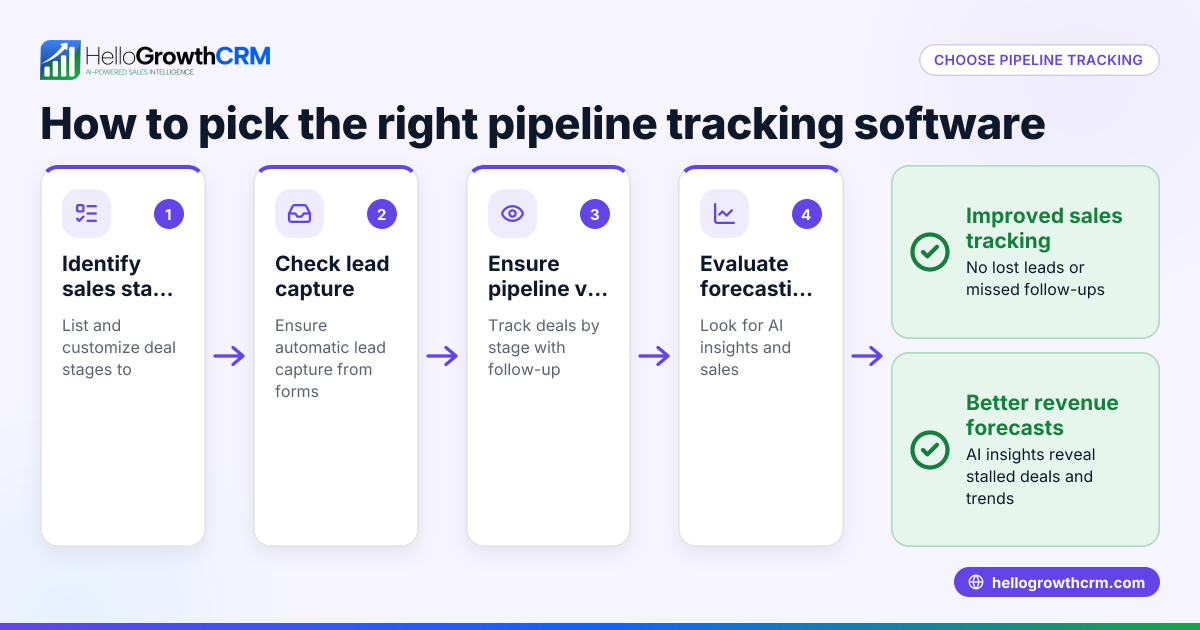
- Centralise lead capture: Use software tools that collect leads from web forms or integrations into one system. Check that every lead is logged automatically to avoid missing contacts.
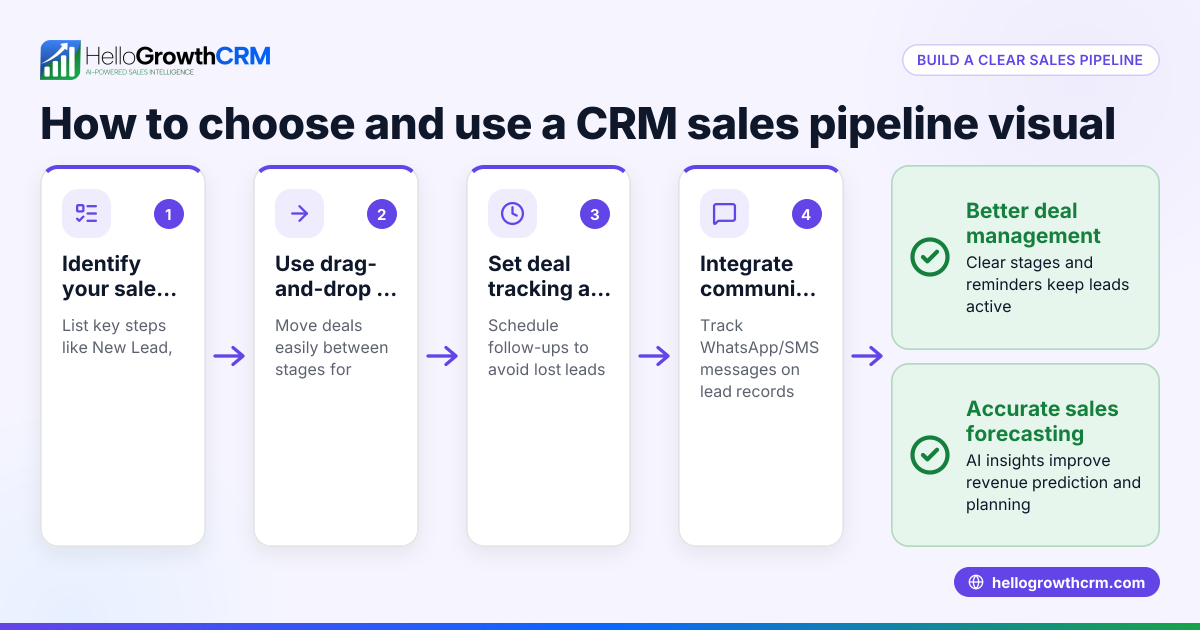
- Define pipeline stages clearly: Set up distinct sales stages (e.g., Lead, Contacted, Quote Sent, Negotiation, Closed Won/Lost). Check that each deal moves through these stages logically.
- Create follow-up tasks and reminders: Assign follow-up dates for each deal stage, especially after sending a quotation. Check daily task lists to ensure no deal is forgotten.
- Use templates and sequences: Employ email, WhatsApp, or SMS templates for consistent follow-up communication. Check that your team uses these to save time and maintain professionalism.
- Track deal value and probability: Attach expected values and conversion probabilities to each deal stage to prioritise high-value opportunities.
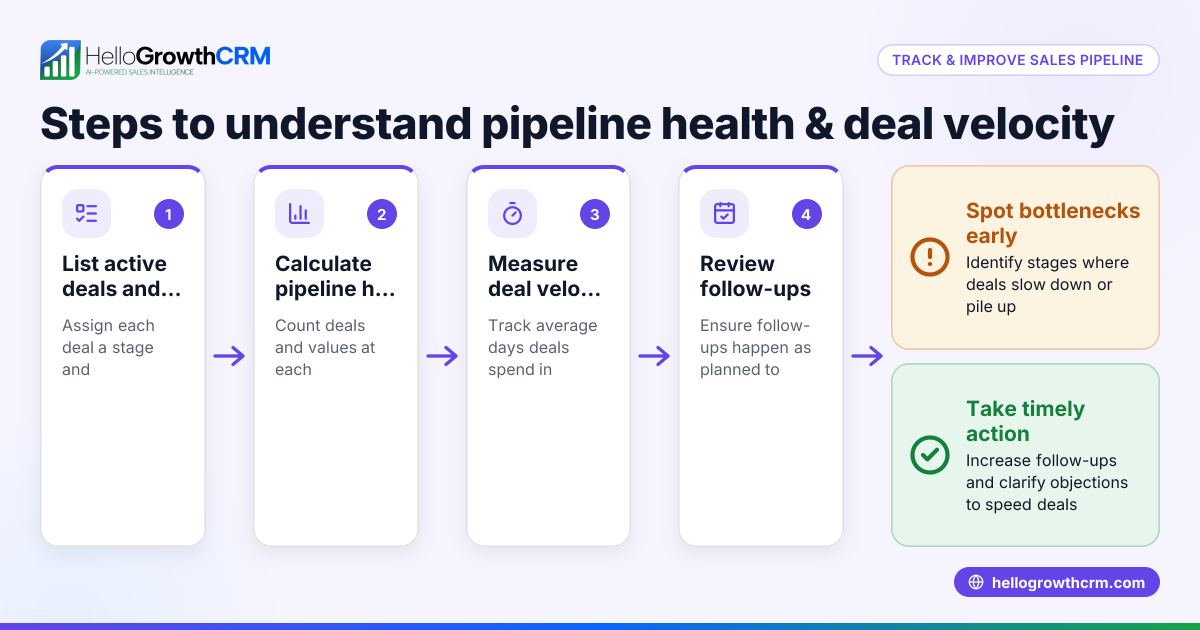
- Review pipeline health regularly: Use pipeline scorecards or dashboards to identify stalled deals or stages where deals drop off. Check for bottlenecks weekly.
- Forecast revenue with AI insights: Use AI-assisted forecasting tools to project expected revenue based on current pipeline data. Check forecast accuracy against actual results monthly.
- Iterate and improve: Adjust your stages, follow-up cadences, and templates based on what works best. Check team adoption and pipeline velocity metrics.
- Download free templates and tools: Use available sales pipeline templates and follow-up cadence guides to structure your process. Check that these templates fit your sales cycle.
Example (fictional figures)
An HVAC company in Surrey, British Columbia, wants to improve its B2B sales pipeline efficiency.
- Current open deals total C$150,000.
- Deals are at these stages:
- Contacted: 3 deals worth C$30,000 each
- Quote Sent: 2 deals worth C$25,000 each
- Negotiation: 1 deal worth C$10,000
They assign probabilities: Contacted 30%, Quote Sent 60%, Negotiation 80%.
Calculate expected value:
C$30,000 × 3 deals = C$90,000 C$90,000 × 30% = C$27,000 expected from Contacted stage
C$25,000 × 2 deals = C$50,000 C$50,000 × 60% = C$30,000 expected from Quote Sent stage
C$10,000 × 1 deal = C$10,000 C$10,000 × 80% = C$8,000 expected from Negotiation stage
Total expected revenue = C$27,000 + C$30,000 + C$8,000 = C$65,000
They set follow-up tasks for the Quote Sent deals to avoid losing them and use pipeline health scorecards to monitor deal progress weekly.
Common mistakes
- Not tracking follow-ups: Deals stall when no follow-up date is set. Prevent by scheduling tasks for every deal stage.
- Using multiple disconnected tools: Leads and deals scattered across email and spreadsheets cause lost data. Prevent by centralising pipeline management.
- Ignoring pipeline stages: Without clear stages, deals lack structure and visibility. Prevent by defining and enforcing pipeline stages.
- Failing to prioritise deals: Treating all deals equally wastes effort. Prevent by assigning deal values and probabilities.
- Not reviewing pipeline regularly: Bottlenecks go unnoticed. Prevent by weekly pipeline health checks.
- Lack of standardised communication: Inconsistent messaging confuses prospects. Prevent by using templates and sequences.
Doing this in HelloGrowthCRM
HelloGrowthCRM offers a pipeline management layer where deals appear at their current stage with follow-up dates, so quotations sent last week are not forgotten. You can download free sales tools, templates, and calculators without an account, including follow-up cadence and pipeline templates to organise your process. For Growth plan users and above, AI-assisted sales forecasting and pipeline insights highlight stalled deals and help prioritise efforts without building spreadsheets. Learn more about HelloGrowthCRM for Canada and its AI CRM features at HelloGrowthCRM for Canada and AI CRM. Download free sales tools and calculators at free sales tools and calculators.
Frequently asked questions
How can software tools speed up B2B sales follow-up? Software tools automate lead capture and set reminders for follow-ups. This ensures timely contact without manual tracking, reducing lost opportunities.
What is the benefit of defining sales pipeline stages? Clear stages help track where each deal stands, making it easier to prioritise and manage the sales process systematically.
How does AI forecasting improve pipeline efficiency? AI forecasting uses historical data and current pipeline status to predict revenue, helping owners focus on deals most likely to close.
Can I use free templates to improve my sales pipeline? Yes, many CRM providers offer free pipeline templates and follow-up cadences, which help standardise your process without upfront cost.
What common mistakes should I avoid when using sales software? Avoid neglecting follow-ups, using disconnected tools, ignoring pipeline stages, and failing to review pipeline health regularly.
Key takeaways
- Centralise lead capture and pipeline tracking to avoid lost deals.
- Define clear sales pipeline stages and assign follow-up tasks.
- Use deal values and probabilities to prioritise sales efforts.
- Review pipeline health regularly to identify bottlenecks.
- Use templates and sequences for consistent communication.
- Leverage AI forecasting to predict revenue and improve focus.
Start improving your B2B sales pipeline efficiency today with free templates and AI insights. Start on the Free Forever plan (200 leads, no credit card).
Ready to put this into practice?
Set up your pipeline, WhatsApp follow-ups, and AI lead scoring in minutes — free, no credit card.
Try HelloGrowthCRM freeGet CRM tips in your inbox
Join thousands of sales professionals who get weekly insights on CRM strategy, AI automation, and pipeline optimization.

The HelloGrowthCRM team publishes guides on CRM strategy, AI sales tools, and revenue operations for small business sales teams.