HelloGrowthCRM software
Built for real small-business sales teams
HelloGrowthCRM helps reps qualify faster, follow up on time, and close more deals—with practical automation in one place.
- AI lead scoring and pipeline visibility
- Built-in dialer, WhatsApp, and email automation
- Sales forecasting and RevOps-ready reporting
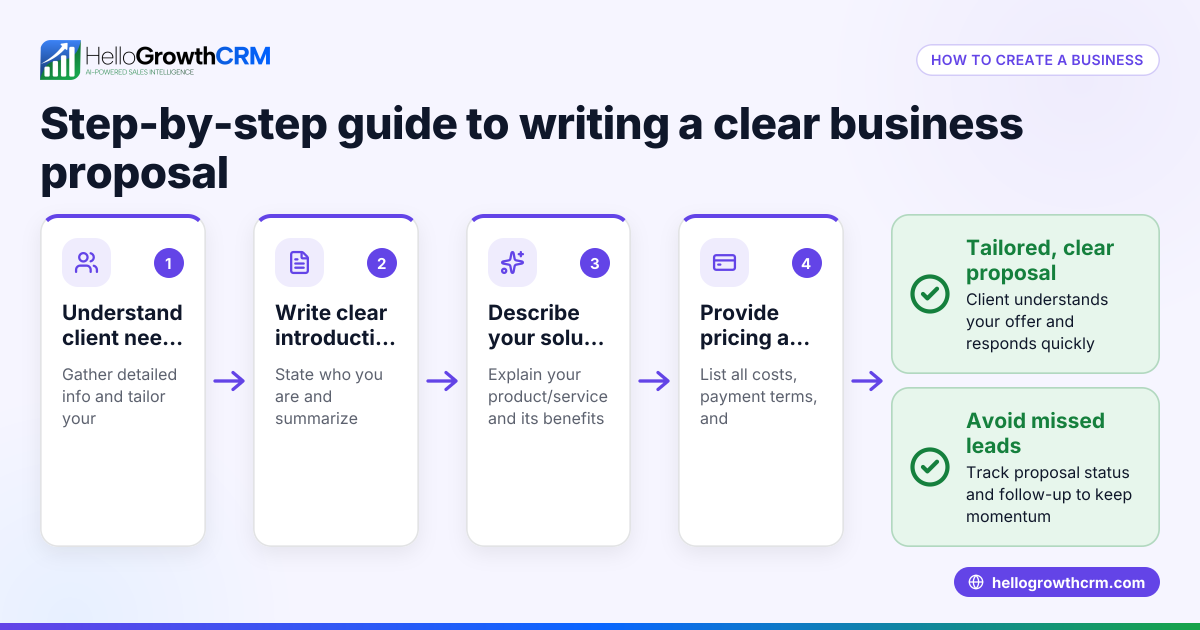
To make a contract proposal, write a clear document defining your offer, terms, pricing, and deadlines to ensure mutual understanding and prevent misunderstandings. This article explains why proposals matter, provides a step-by-step guide, a US-based example, common mistakes to avoid, and how HelloGrowthCRM can help manage proposals and follow-ups.
Why this comes up / what goes wrong
Small-business owners often need to send contract proposals when negotiating with clients or partners. Without a clear proposal, misunderstandings about pricing, deliverables, or timelines can cause delays, lost deals, or disputes. Many lose leads because their proposals are unclear, incomplete, or slow to reach the client. A well-made contract proposal streamlines negotiations and sets expectations clearly.
Step-by-step
- Identify the parties involved: Write the full legal names and addresses of your business and the client. This clarifies who is responsible and who will benefit from the contract.
- Write a clear project description: Summarize the work or products you will deliver. Avoid vague language; be specific about what you offer.
- Specify deliverables and scope: Detail exactly what you will provide, including quantities, features, or services. This prevents scope creep and misunderstandings.
- Set timelines and milestones: Include start dates, deadlines, and any phases or checkpoints. Clear timing helps both sides plan and manage expectations.
- Define payment terms: State the total price, payment schedule, accepted payment methods, and any late fees or penalties. Be explicit to avoid payment delays.
- Include terms and conditions: Add clauses on confidentiality, cancellation, warranties, or dispute resolution. These protect your business and clarify legal responsibilities.
- Add signature lines: Provide space for both parties to sign and date, making the proposal a binding contract once accepted.
- Review and proofread: Check for clarity, completeness, and correctness. Errors or omissions can cause confusion or legal issues.
- Send the proposal professionally: Deliver it via email or a CRM tool, tracking when the client views and accepts it. Prompt follow-up is essential.
Check each section for accuracy and ensure the proposal reflects your business policies and client agreements. Using a CRM like HelloGrowthCRM can help you track the proposal status and follow-up tasks efficiently. See its WhatsApp and SMS CRM and built-in CRM dialer features.
Example (fictional figures)
A B2B software reseller in Denver, Colorado, prepares a contract proposal for a client on 07/15/2026.
- Parties: Reseller LLC, 123 Main St, Denver, CO 80202; Client Corp, 456 Market Ave, Denver, CO 80203.
- Project: Supply and install software licenses.
- Deliverables: 50 software licenses, installation, and 1 year support.
- Timeline: Start 08/01/2026, complete installation by 08/15/2026.
- Pricing: $1,000 per license × 50 licenses = $50,000
- Support fee: $5,000 flat for 1 year
- Total contract value: $50,000 + $5,000 = $55,000
- Payment terms: 50% deposit ($27,500) due on signing; 50% ($27,500) due on completion.
Calculation: $1,000 × 50 = $50,000 $50,000 + $5,000 = $55,000 $55,000 × 50% = $27,500 deposit $55,000 - $27,500 = $27,500 balance
The proposal includes terms on support scope, cancellation policy, and dispute resolution, with signature lines for both parties.
Common mistakes
- Vague scope and deliverables: Leads to disputes. Prevent by detailing every item or service clearly.
- Unclear payment terms: Causes payment delays. Specify amounts, due dates, and accepted methods explicitly.
- Missing signatures or dates: Makes the contract non-binding. Always include signature lines for both parties.
- Ignoring legal terms: Risks liability. Include confidentiality, cancellation, and dispute resolution clauses.
- Sending proposals without tracking: You won’t know if clients read them. Use tools that show proposal status.
- Delaying proposal delivery: Lose leads to faster competitors. Prepare templates and send promptly.
Using HelloGrowthCRM’s quoting and proposal features helps prevent these mistakes by centralizing documents and follow-ups. Learn more about its WhatsApp and SMS CRM and built-in CRM dialer.
Doing this in HelloGrowthCRM
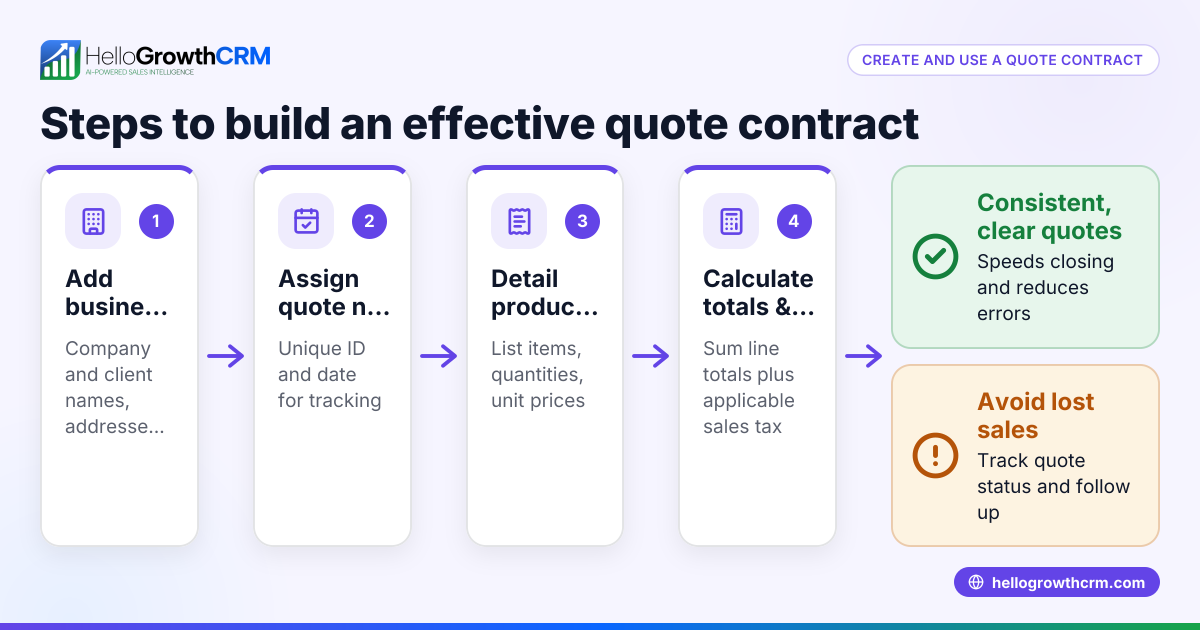
HelloGrowthCRM lets you create and send quotes and proposals directly from a deal record. You can track the proposal's status—whether it’s sent, viewed, or accepted—on the same screen as your follow-up tasks. This helps you manage your sales pipeline efficiently and never lose sight of your contract proposals. Learn more about these features in HelloGrowthCRM’s WhatsApp and SMS CRM and its built-in CRM dialer.
Frequently asked questions
What should a contract proposal include? A contract proposal should include the parties’ names, a detailed description of the work or products, deliverables, timelines, pricing, payment terms, legal conditions, and signature lines. This ensures clear expectations and legal protection.
How formal does a contract proposal need to be? It should be professional and clear but doesn’t require legal jargon unless your business or client demands it. The key is clarity and completeness so both parties agree on terms.
Can I update a contract proposal after sending it? Yes, but do so with a formal amendment or a new proposal document. Always get client agreement on any changes to avoid confusion.
How do I follow up on a contract proposal? Send a polite reminder if you don’t get a response within a few days. Using a CRM like HelloGrowthCRM helps track proposal views and schedule follow-ups efficiently.
Is a signed contract proposal legally binding? Yes, once both parties sign, it becomes a legally binding agreement enforceable in court, provided it meets contract law requirements.
Key takeaways
- Clearly define parties, scope, pricing, timelines, and terms in your contract proposal.
- Use numbered steps to organize your proposal and avoid ambiguity.
- Include signature lines to make the proposal legally binding.
- Avoid common mistakes like vague deliverables and unclear payment terms.
- Use tools like HelloGrowthCRM to create, send, and track proposals efficiently from deal records.
Start making your contract proposals today with confidence. To streamline sending and tracking your proposals, start on the Free Forever plan (200 leads, no credit card).
Ready to put this into practice?
Set up your pipeline, WhatsApp follow-ups, and AI lead scoring in minutes — free, no credit card.
Try HelloGrowthCRM freeGet CRM tips in your inbox
Join thousands of sales professionals who get weekly insights on CRM strategy, AI automation, and pipeline optimization.

The HelloGrowthCRM team publishes guides on CRM strategy, AI sales tools, and revenue operations for small business sales teams.