HelloGrowthCRM software
Built for real small-business sales teams
HelloGrowthCRM helps reps qualify faster, follow up on time, and close more deals—with practical automation in one place.
- AI lead scoring and pipeline visibility
- Built-in dialer, WhatsApp, and email automation
- Sales forecasting and RevOps-ready reporting
Customer service escalations happen when a customer issue cannot be resolved at the first point of contact and requires higher-level attention. For small businesses in Singapore, managing these escalations efficiently is crucial to keep customers satisfied and protect your reputation. Many small business owners struggle with slow responses, unclear responsibility, and poor follow-up, which worsen escalations.
Why this comes up / what goes wrong
Small businesses in Singapore often handle customer service through WhatsApp, email, or spreadsheets, which can lead to lost or delayed responses. When a customer complaint escalates, the business may not have a clear process or designated staff to handle it. This causes frustration for both customers and staff, risking lost sales and damage to the brand. Without proper documentation, recurring issues are harder to spot and fix.
Step-by-step
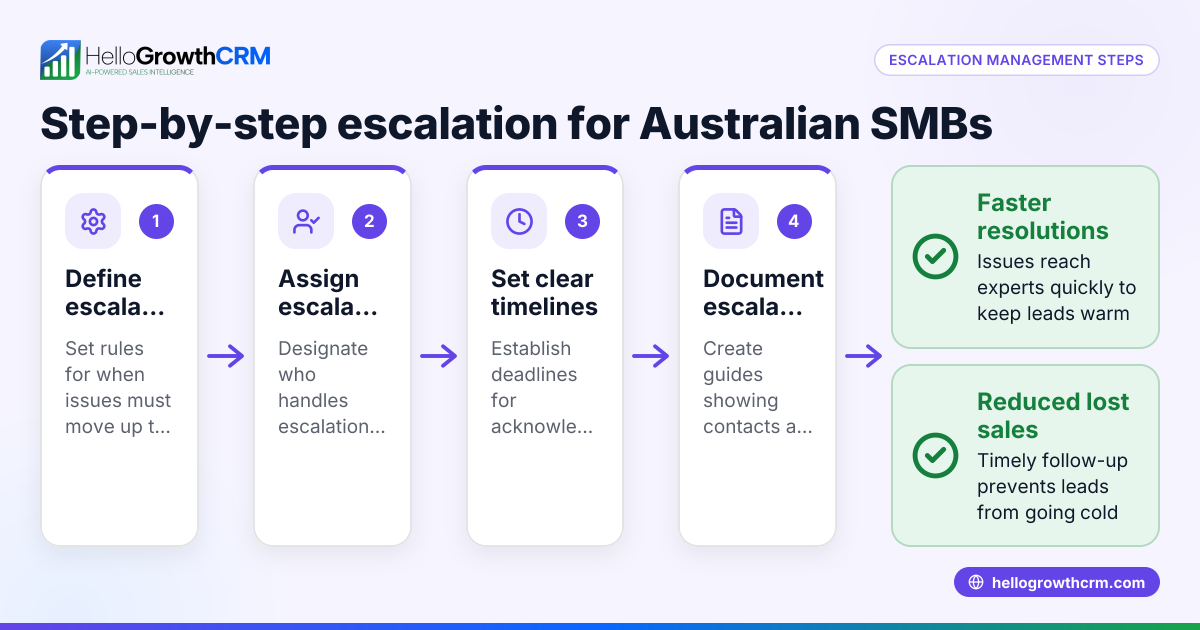
- Acknowledge the escalation immediately
- Respond to the customer within a few hours to confirm you received their concern.
- Check all communication channels (WhatsApp, email, phone) to ensure no messages are missed.
- Gather all relevant information
- Collect details about the issue, customer history, previous interactions, and any supporting documents.
- Verify facts before proceeding.
- Assign the escalation to the right team member
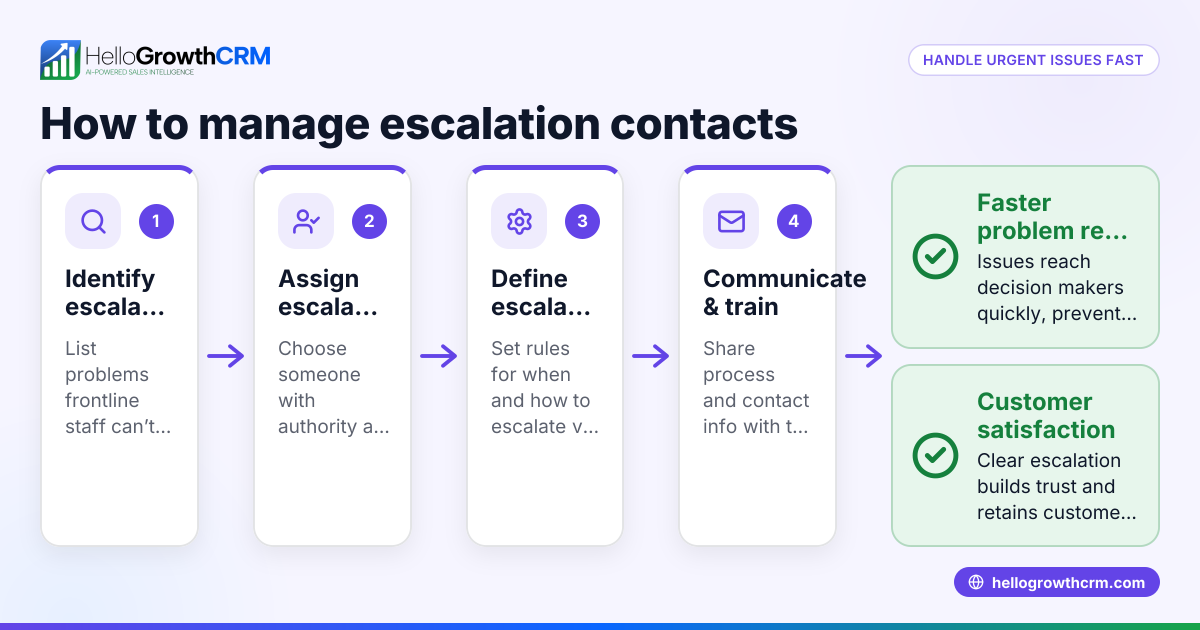
- Identify who has the expertise or authority to resolve the problem.
- Clearly communicate the task and expected resolution time.
- Communicate transparently with the customer
- Keep the customer informed about progress and expected timelines.
- Use their preferred channel (e.g., WhatsApp or email) for updates.
- Resolve the issue promptly
- Work on the solution efficiently and check with the customer if it meets their expectations.
- Document the escalation and resolution
- Record the case details, actions taken, and feedback in a central system.
- Use this data to identify patterns and improve processes.
- Follow up after resolution
- Contact the customer to ensure satisfaction and offer further assistance.
- Review and improve your escalation process regularly
- Train staff, update procedures, and use tools to track performance.
Example (fictional figures)
A Woodlands-based F&B supplier receives a complaint on 10/04/2024 from a customer about a delayed delivery worth S$12,000. The customer messages on WhatsApp but gets no reply for 24 hours, causing frustration.
Step 1: Acknowledge the escalation
- On 11/04/2024, the service team replies: “We received your message and are investigating.”
Step 2: Gather information
- Check order records and delivery schedules.
Step 3: Assign escalation
- The customer service manager is tasked with resolving the issue by 13/04/2024.
Step 4: Communicate transparently
- The manager updates the customer daily via WhatsApp.
Step 5: Resolve the issue
- Delivery is expedited and completed on 13/04/2024.
Step 6: Document the case
- The escalation and resolution details are logged in the customer record.
Step 7: Follow up
- On 15/04/2024, the manager calls the customer to confirm satisfaction.
Step 8: Review process
- The team notes the delay was due to a logistics error and adjusts procedures.
Common mistakes
- Ignoring or delaying acknowledgment: Always respond quickly to prevent frustration.
- Poor information gathering: Check all available data to avoid miscommunication.
- Unclear responsibility: Assign specific team members to avoid confusion.
- Lack of updates to customers: Regular communication builds trust.
- No documentation: Record all escalations to identify trends and improve.
- Not following up: Confirming customer satisfaction prevents repeat issues.
Prevent these by standardising your escalation workflow and training your team.
Doing this in HelloGrowthCRM
HelloGrowthCRM offers a customer portal, referrals, tickets and a knowledge base to streamline service requests. After the sale, service requests stay on the same customer record as the deal, making it easy to track escalations and history in one place. This helps your team respond faster and maintain clear communication. Learn more about the customer health score and how HelloGrowthCRM supports Singapore businesses at HelloGrowthCRM for Singapore.
Frequently asked questions
What is the best way to prioritise customer service escalations? Prioritise escalations based on urgency and impact on the customer. Critical issues affecting safety or large orders should be handled first. Using a ticketing system helps classify and assign priorities efficiently.
How can I keep customers informed without overwhelming them? Provide regular but concise updates on the status and next steps. Use the customer's preferred communication channel, such as WhatsApp or email. Avoid technical jargon and invite questions.
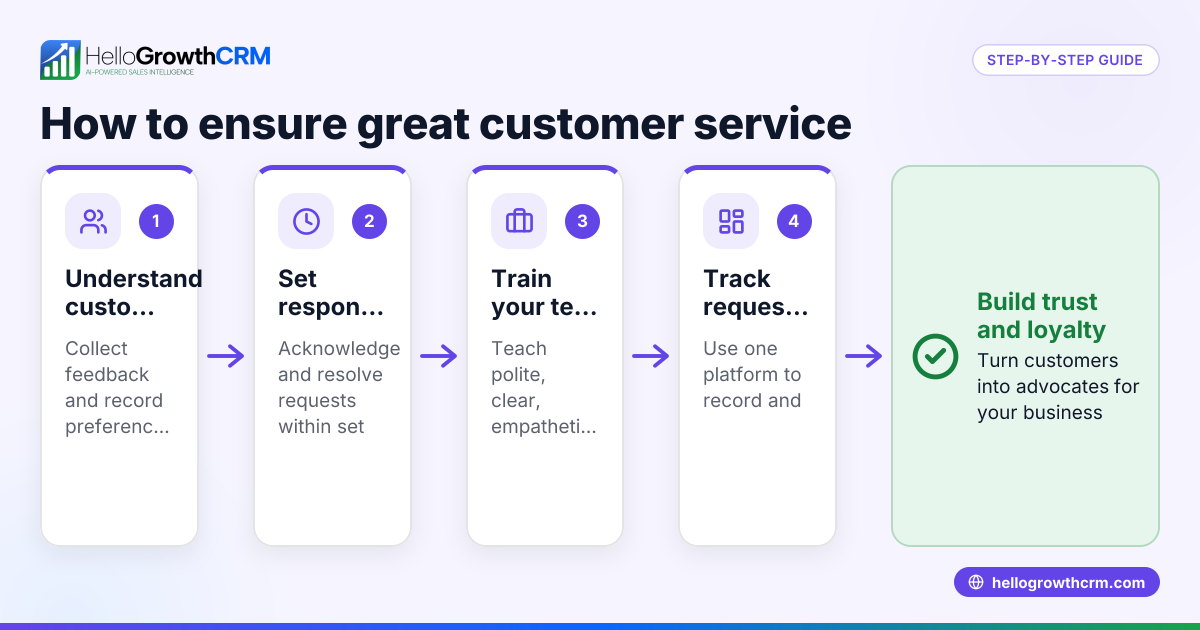
How do I train my team to handle escalations better? Create clear escalation procedures and role definitions. Conduct regular training sessions with real scenarios. Use tools like HelloGrowthCRM’s ticket and knowledge base features to support consistent responses.
Can I use WhatsApp for escalation management? Yes, WhatsApp is widely used in Singapore for customer communication. HelloGrowthCRM integrates WhatsApp and SMS CRM features to manage conversations and escalate issues without losing context.
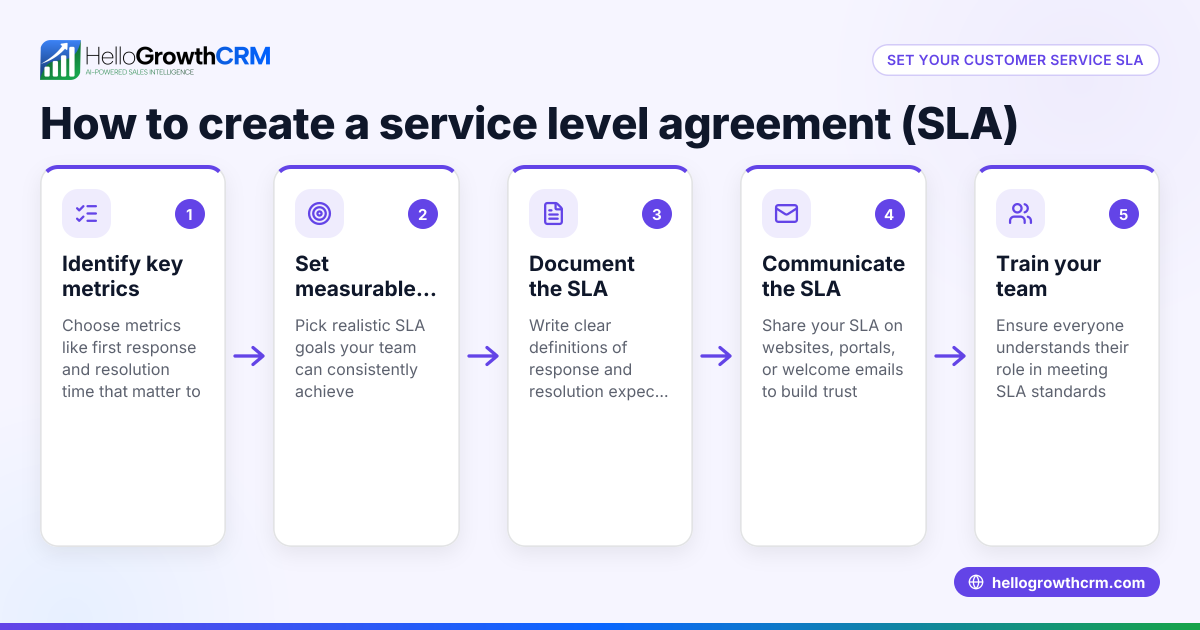
How do I measure if my escalation process is working? Track metrics like response time, resolution time, customer satisfaction, and repeat escalations. HelloGrowthCRM’s reporting tools can help you monitor these KPIs.
Key takeaways
- Respond quickly and acknowledge escalations within hours.
- Assign clear responsibility and keep customers informed.
- Document every escalation and resolution for future improvement.
- Avoid common mistakes like delays, poor communication, and lack of follow-up.
- Use tools like HelloGrowthCRM to track tickets, customer history and communication.
- Regularly review and improve your escalation process based on data.
Managing customer service escalations well protects your brand and keeps customers happy. Start on the Free Forever plan (200 leads, no credit card) at HelloGrowthCRM to organise your customer service and sales workflows.
Ready to put this into practice?
Set up your pipeline, WhatsApp follow-ups, and AI lead scoring in minutes — free, no credit card.
Try HelloGrowthCRM freeGet CRM tips in your inbox
Join thousands of sales professionals who get weekly insights on CRM strategy, AI automation, and pipeline optimization.

The HelloGrowthCRM team publishes guides on CRM strategy, AI sales tools, and revenue operations for small business sales teams.