HelloGrowthCRM software
Built for real small-business sales teams
HelloGrowthCRM helps reps qualify faster, follow up on time, and close more deals—with practical automation in one place.
- AI lead scoring and pipeline visibility
- Built-in dialer, WhatsApp, and email automation
- Sales forecasting and RevOps-ready reporting
To organise customer contact information in Singapore, start by collecting key details like name, phone number, email, address, and purchase history in a central location. Use consistent formats for each field and regularly update the data to avoid duplicates and errors. This article explains why organising contacts is important, provides a step-by-step guide, a worked example with realistic figures, common mistakes to avoid, and how HelloGrowthCRM supports managing customer data.
Why this comes up / what goes wrong
Small business owners in Singapore often struggle to keep customer contact information organised because data comes from multiple sources: WhatsApp chats, emails, Excel sheets, and paper notes. This scattered data leads to missed follow-ups, lost sales, and poor customer service. Without a clear system, duplicates and outdated information multiply, causing confusion and inefficiency. Organising contacts properly helps sales teams follow up faster, track customer history, and improve service quality.
Step-by-step
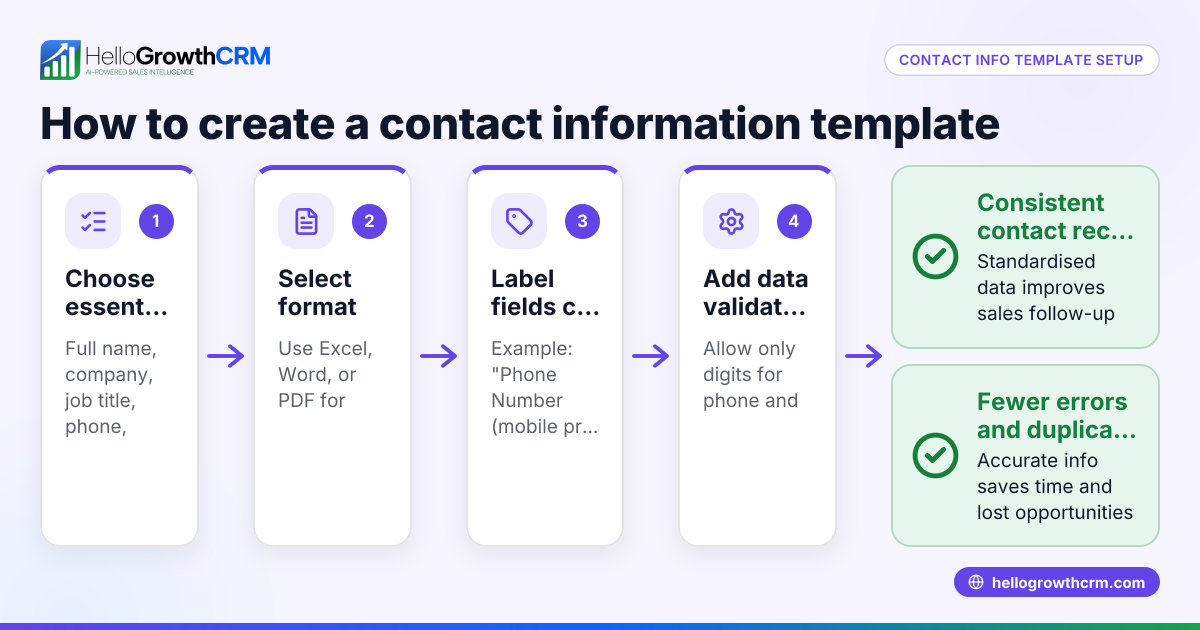
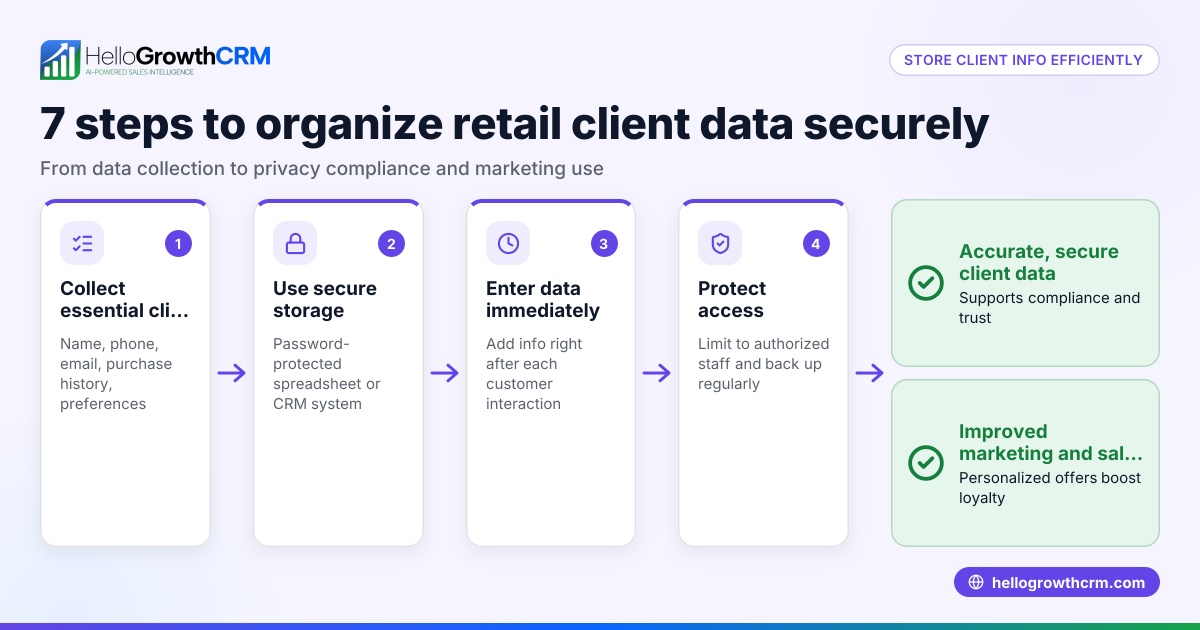
- Decide what customer information to collect
- Include full name, phone number (with country code +65), email address, postal address, company name (if B2B), and purchase history.
- Optional: preferred contact method, birthday, or notes on customer preferences.
- Check that fields are relevant to your business needs.
- Choose a central storage method
- Use a single Excel sheet, Google Sheet, or a CRM system.
- Ensure the system is accessible to your sales and support teams.
- Check for data security and backup options.
- Standardise data entry formats
- Phone numbers: always include "+65" and no spaces or dashes (e.g. +6591234567).
- Emails: use lowercase letters.
- Addresses: use consistent abbreviations (e.g. "St" for Street).
- Dates: use DD/MM/YYYY format.
- Check entries for typos and consistency.
- Import existing contacts carefully
- Consolidate contacts from WhatsApp chats, emails, and spreadsheets.
- Remove duplicates by matching phone numbers or emails.
- Check for incomplete or outdated entries.
- Update contacts regularly
- After each customer interaction, update notes and contact details.
- Schedule a monthly review to clean and verify data.
- Train your team
- Teach sales and support staff how to enter and update customer information correctly.
- Set rules for data privacy and sharing.
- Use tags or categories for easy filtering
- For example, tag customers by lead source, purchase status, or region.
- Check that tags are used consistently.
- Backup your data
- Export your contact list regularly.
- Store backups securely.
- Integrate with communication tools
- Connect your contact list with WhatsApp and email to streamline follow-ups.
- Check integration settings and permissions.
Example (fictional figures)
A renovation contractor in Jurong wants to organise 200 customer contacts collected over 2 years from WhatsApp, email, and phone calls.
- They decide to collect: full name, phone (+65), email, address, last project date, and notes.
- They choose an Excel sheet as central storage.
- They standardise phone numbers with +65 prefix, emails lowercase, and dates DD/MM/YYYY.
- They import 250 contacts from WhatsApp and email, remove 50 duplicates by matching phone numbers.
- They review contacts monthly and update project status.
This example shows the basic organisation steps any small business in Singapore can apply.
Common mistakes
- Not centralising data: Leads to scattered info and missed opportunities. Prevent by using one storage system.
- Inconsistent formats: Causes confusion and duplicate entries. Prevent by setting clear data entry rules.
- Ignoring duplicates: Wastes time and hurts customer experience. Prevent by regular deduplication.
- Not updating contacts: Leads to outdated info and lost leads. Prevent by scheduling regular reviews.
- Poor team training: Results in errors and data loss. Prevent by training staff on data management.
- Failing to back up data: Risks permanent loss. Prevent by regular secure backups.
Doing this in HelloGrowthCRM
HelloGrowthCRM helps small businesses organise customer contact information with a branded self-service customer portal, referrals tracking, support tickets, and a knowledge base. After the sale, service requests stay on the same customer record as the deal, keeping all information in one place. Learn more about HelloGrowthCRM for Singapore businesses at HelloGrowthCRM for Singapore.
Frequently asked questions
What is the best way to store customer contacts for a small business? A centralised CRM or spreadsheet with standardised fields is best. It ensures easy access, updates, and avoids duplicates.
How often should I update my customer contact list? Regular updates after each interaction and a monthly review help keep data accurate and useful.
Can I organise customer contacts from WhatsApp and email together? Yes, by consolidating data into one system and standardising formats. HelloGrowthCRM supports WhatsApp and SMS CRM features to streamline this process. See WhatsApp and SMS CRM.
How can I track customer referrals effectively? Using a CRM with referral tracking lets you monitor who referred whom and reward loyal customers. HelloGrowthCRM includes referral programme tracking.
Why is it important to standardise phone number formats? Standardisation avoids duplicates and ensures you can contact customers without errors, especially important with Singapore’s +65 country code.
Key takeaways
- Collect essential customer details consistently.
- Use a centralised storage system accessible to your team.
- Standardise data entry formats and regularly update contacts.
- Train your team and back up data securely.
- Use tags and integrate with communication tools.
- HelloGrowthCRM supports organised customer data with portals, referrals, tickets, and knowledge base.
Start organising your customer contacts today to improve sales follow-up and customer service. To try a CRM designed for Singapore businesses, Start on the Free Forever plan (200 leads, no credit card).
Ready to put this into practice?
Set up your pipeline, WhatsApp follow-ups, and AI lead scoring in minutes — free, no credit card.
Try HelloGrowthCRM freeGet CRM tips in your inbox
Join thousands of sales professionals who get weekly insights on CRM strategy, AI automation, and pipeline optimization.

The HelloGrowthCRM team publishes guides on CRM strategy, AI sales tools, and revenue operations for small business sales teams.