HelloGrowthCRM software
Built for real small-business sales teams
HelloGrowthCRM helps reps qualify faster, follow up on time, and close more deals—with practical automation in one place.
- AI lead scoring and pipeline visibility
- Built-in dialer, WhatsApp, and email automation
- Sales forecasting and RevOps-ready reporting
Personalizing customer email messages helps build stronger relationships and improves engagement by making each message relevant to the recipient. For Canadian small business owners, this means using customer information to customize greetings, content, and offers that fit their needs and preferences.
Why this comes up / what goes wrong
Many small businesses in Canada lose leads or sales because their email messages feel generic or irrelevant. They often send bulk emails without personal details, which customers ignore or mark as spam. Another common issue is slow follow-up or inconsistent messaging when using multiple tools like text messages, email, and spreadsheets. Personalizing emails ensures your communication stands out and feels genuine, increasing the chance of a response or sale.
Step-by-step
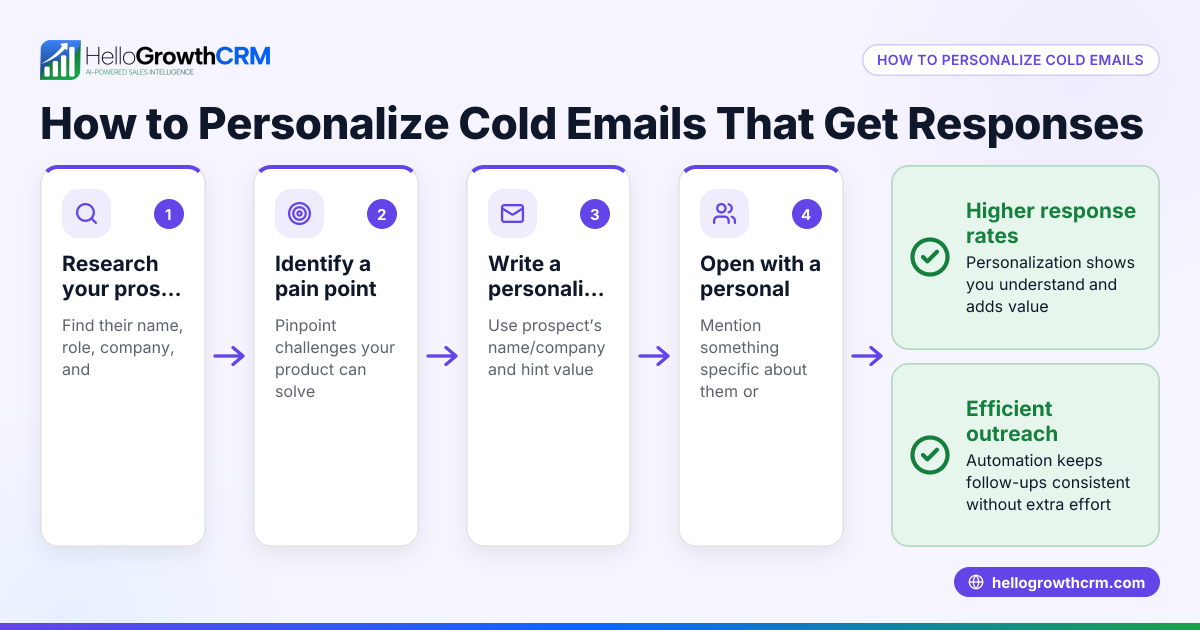
- Collect customer data: Gather essential details such as the customer’s full name, location (city or province), purchase history, and any preferences they have shared. Check your records or web forms to ensure these fields are complete.
- Segment your customers: Group your customers based on shared traits like location, buying behaviour, or product interest. This helps tailor the email content specifically for each segment.
- Create a personalized greeting: Use the customer’s first name in the greeting line. For example, "Hello Sarah," instead of "Dear Customer." Check spelling and proper capitalization.
- Tailor the email body: Reference the customer’s past purchase or inquiry. For example, "Thank you for choosing our Mississauga branch for your mortgage needs." Check that details match the customer’s profile.
- Include relevant offers or information: Based on the segment, add offers or content that suit their interests or location. For example, "We have new mortgage rates available for Ontario residents."
- Use a clear call to action (CTA): Tell the customer what to do next, such as "Reply to this email to schedule a free consultation." Make sure the CTA is easy to find.
- Test your email: Send a test email to yourself or a colleague to check that personalization fields populate correctly and the message looks professional.
- Schedule or send your email: Use an email tool or CRM to send your messages. Confirm the timing suits your audience’s time zone in Canada.
For more efficient follow-up and email automation, consider tools with email automation and sequences that can send multi-step outreach workflows tailored to your leads.
Example (fictional figures)
A mortgage brokerage in Mississauga, Ontario, wants to send a personalized email to a lead named Michael who inquired about home loans.
- Customer name: Michael Lee
- Location: Mississauga, Ontario
- Last inquiry date: 2024-05-10
- Offer: Special mortgage rates for Ontario residents
Email draft: "Hello Michael,
Thank you for your interest in our mortgage services at our Mississauga branch. Based on your inquiry on 2024-05-10, we wanted to let you know about our new special mortgage rates available exclusively for Ontario residents.
Please reply to this email to schedule a free consultation.
Best regards, Your Mortgage Team"
This email uses Michael’s name, location, and inquiry date to create a relevant message that increases the chance of engagement.
Common mistakes
- Using generic greetings like "Dear Customer": Always use the recipient’s name to make your email feel personal.
- Missing or incorrect customer data: Double-check your customer database for accuracy to avoid embarrassing mistakes.
- Ignoring customer preferences or purchase history: Tailor content to what you know about the customer.
- Sending emails at inappropriate times: Consider Canadian time zones to avoid sending emails during off-hours.
- Not testing emails before sending: Always preview and test to ensure personalization fields work correctly.
- Using multiple disconnected tools: This can cause slow follow-up and inconsistent messaging. Use a CRM that integrates email, SMS, and follow-ups.
Managing customer communication across channels is easier with a unified system like HelloGrowthCRM, which combines email sequences, WhatsApp, and SMS to keep your team coordinated. Learn more about WhatsApp and SMS CRM.
Doing this in HelloGrowthCRM
HelloGrowthCRM offers features that simplify personalized customer emails:
- HelloMail shared inbox: Your team can see all replies to quotation emails on the same deal record, avoiding lost messages.
- Sequences and campaigns: Set up automated five-step follow-ups over two weeks that stop as soon as the customer replies, ensuring timely and relevant contact.
- Customer portal, referrals, tickets and knowledge base: Keep service requests and customer history linked to the same record after the sale, helping personalize future emails.
These features help maintain consistent, personalised communication without juggling multiple tools. See more at HelloGrowthCRM for Canada.
Frequently asked questions
How do I start personalizing emails if I have limited customer data? Start with the basics like first name and location. Use web forms to collect more details gradually. Even small personal touches improve engagement.
What is the best way to handle email personalization for a large customer list? Segment your list into groups with shared traits and create email templates for each segment. Use email automation tools with sequences to send personalized messages at scale.
How often should I send personalized emails to my customers? Avoid overwhelming customers. A good rule is to send personalized follow-ups or offers when relevant, such as after an inquiry or purchase, or periodically with useful updates.
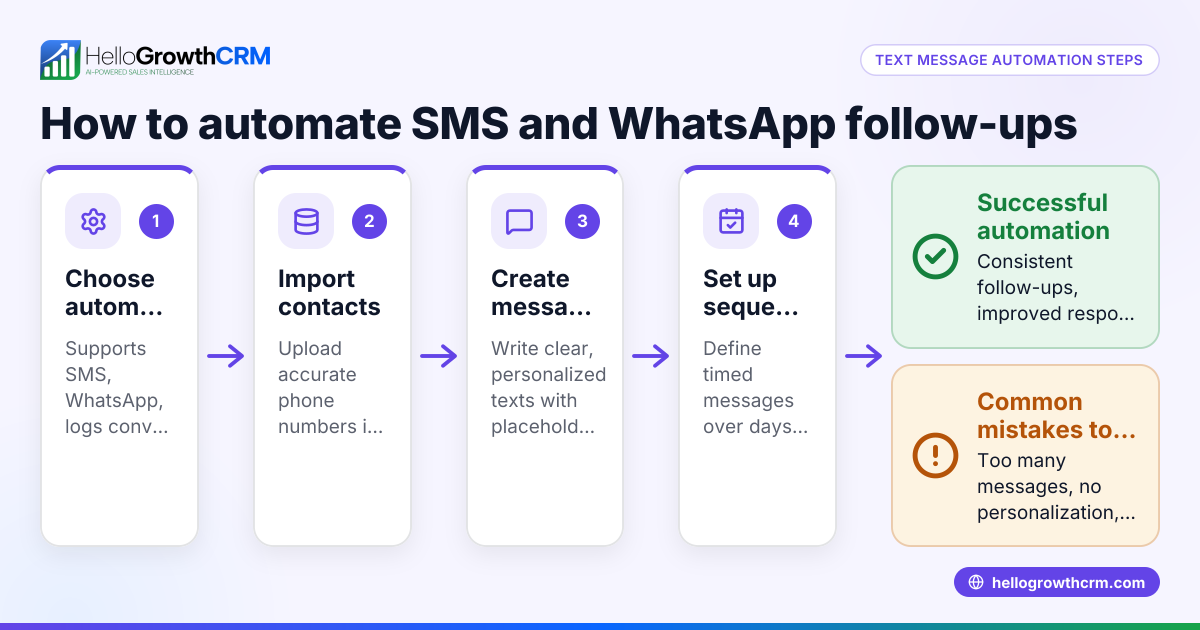
Can I personalize emails across different channels? Yes, combining email with SMS or WhatsApp messages can enhance personalization. HelloGrowthCRM supports sequences across these channels for coordinated outreach.
What mistakes should I avoid when personalizing emails? Avoid generic greetings, inaccurate data, ignoring preferences, poor timing, and skipping testing. These errors reduce trust and response rates.
Key takeaways
- Collect and verify key customer details before personalizing emails.
- Use customer name, location, and purchase history to tailor greetings and content.
- Segment customers for targeted messaging and relevant offers.
- Test emails before sending and consider timing for Canadian time zones.
- Avoid common mistakes like generic greetings and disconnected tools.
- Use HelloGrowthCRM features like shared inbox and sequences to automate and track personalized outreach.
Start personalizing your customer emails today and improve your engagement and sales. You can start on the Free Forever plan (200 leads, no credit card) to try HelloGrowthCRM’s personalized email and outreach features.
Ready to put this into practice?
Set up your pipeline, WhatsApp follow-ups, and AI lead scoring in minutes — free, no credit card.
Try HelloGrowthCRM freeGet CRM tips in your inbox
Join thousands of sales professionals who get weekly insights on CRM strategy, AI automation, and pipeline optimization.

The HelloGrowthCRM team publishes guides on CRM strategy, AI sales tools, and revenue operations for small business sales teams.