HelloGrowthCRM software
Built for real small-business sales teams
HelloGrowthCRM helps reps qualify faster, follow up on time, and close more deals—with practical automation in one place.
- AI lead scoring and pipeline visibility
- Built-in dialer, WhatsApp, and email automation
- Sales forecasting and RevOps-ready reporting
Personalising customer email messages in the UK means using information specific to each customer to make your emails feel relevant and engaging. This involves more than just adding a name; it includes referencing previous purchases, understanding customer needs, and timing your messages appropriately.
Why this comes up / what goes wrong
Small-business owners often send generic emails that fail to connect with customers. They might use a standard template without changes, leading to low response rates and lost sales. Many run sales using WhatsApp, email, and spreadsheets, which makes it hard to track customer details and personalise messages effectively. Without personalisation, emails can seem cold or irrelevant, causing prospects to ignore them or unsubscribe.
Step-by-step
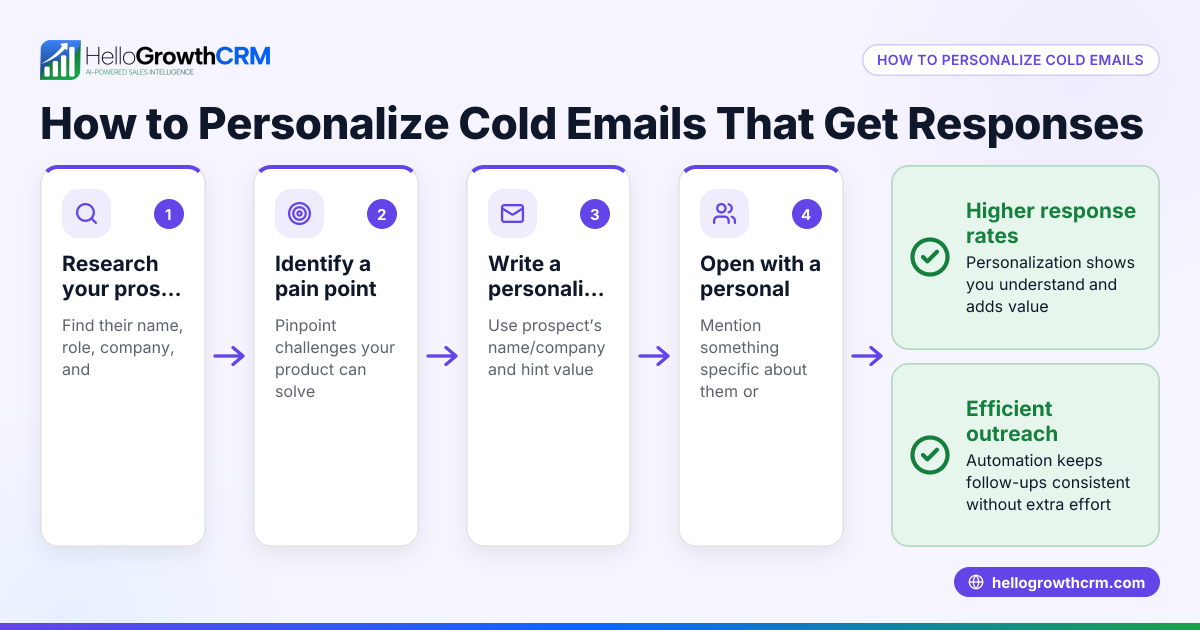
- Gather customer data: Collect basic details like name, company, job title, and purchase history. Check your records for any preferences or past communications.
- Segment your customers: Group customers by relevant criteria such as industry, purchase behaviour, or location. This helps tailor messages to each group's interests.
- Create a personal greeting: Use the customer's first name or full name depending on your relationship. For example, "Dear John" or "Hi Sarah".
- Reference previous interactions: Mention a recent purchase, enquiry, or meeting. This shows you remember them and value the relationship.
- Tailor the email content: Align your message with the customer's needs. For example, offer a kitchen fitting discount to a customer who recently requested a quote.
- Use a clear call to action (CTA): Make it specific and relevant, like "Schedule your free consultation" or "View your personalised quote".
- Check for tone and spelling: Ensure the email sounds natural and is free of errors.
- Send at the right time: Consider UK business hours and days to improve open rates.
- Track replies and follow up: Monitor responses and adjust your approach accordingly.
- Review and improve: Use feedback and data to refine your personalisation over time.
For managing email sequences and follow-ups, consider tools with email automation and sequences to save time and ensure no customer is missed.
Example (fictional figures)
A kitchen-fitting company in Leeds wants to send a personalised email to a lead named Emma Brown who requested a quote on 01/03/2024.
- Gather data:
- Name: Emma Brown
- Requested quote: £4,500 kitchen fitting
- Date: 01/03/2024
- Segment: Potential customer interested in kitchen services.
- Personal greeting:
"Dear Emma,"
- Reference interaction:
"Thank you for your interest in our kitchen fitting services on 01/03/2024."
- Tailored content:
"We have prepared a detailed quote of £4,500 based on your specifications. We believe this kitchen will transform your space beautifully."
- CTA:
"Please reply to this email to schedule a free consultation or ask any questions."
- Check tone and spelling: Confirm all details are correct.
- Send during UK business hours, say 10:00 on 05/03/2024.
- Track replies and follow up after 3 days if no response.
- Review:
If Emma replies, note her feedback; if not, send a polite reminder.
This approach makes Emma feel valued and more likely to engage.
Common mistakes
- Using generic greetings like "Dear Customer": Always use the customer's name to make the message feel personal.
- Ignoring previous interactions: Not mentioning past contact misses the chance to build rapport. Keep notes to prevent this.
- Overloading emails with too much information: Keep emails clear and focused on one main message.
- Failing to check spelling and tone: Errors reduce professionalism and trust. Use proofreading tools or get a colleague to review.
- Sending emails at inappropriate times: Avoid weekends or late evenings to increase open rates.
- Not tracking replies or follow-ups: Without follow-up, leads can go cold. Use tools that automate reminders and sequences, such as email automation and sequences.
Doing this in HelloGrowthCRM
HelloGrowthCRM offers features that help personalise and manage customer emails efficiently. The HelloMail shared inbox allows your team to see all replies to quotation emails on the same deal, avoiding missed responses. Its sequences and campaigns feature can run a five-step follow-up over two weeks that stops automatically when a prospect replies. After the sale, service requests stay linked on the same customer record through the customer portal, referrals, tickets, and knowledge base tools. Learn more about these capabilities at HelloGrowthCRM for the United Kingdom.
Frequently asked questions
How do I start personalising emails if I only have basic customer data? Start with the customer's name and any recent interaction you remember. Even simple personalisation like using their name and referencing their last enquiry can improve engagement. Gradually build your data by noting details from conversations.
What is the best way to keep track of personalised emails and replies? Using a CRM with a shared inbox like HelloMail lets your team see all email replies linked to each customer or deal, so no message is missed. This centralises communication and makes follow-ups easier.
Can I automate personalised follow-ups without sounding robotic? Yes. Tools like HelloGrowthCRM's sequences send timed, personalised messages that pause when a customer replies, maintaining a natural conversation flow without manual effort. Personalise templates with customer details to keep the tone friendly.
How often should I send follow-up emails to a customer? A typical approach is a sequence over two weeks with 3-5 messages spaced a few days apart. Stop the sequence immediately once the customer responds to avoid over-contacting.
What information should I never include in personalised emails? Avoid sensitive data like payment details, passwords, or personal identifiers beyond basic contact info. Always comply with data protection laws and keep emails professional.
Key takeaways
- Collect and use customer details like name and past interactions to personalise emails.
- Segment customers to tailor messages relevant to their needs.
- Use clear, personal greetings and reference previous contact.
- Automate follow-ups with tools that pause when customers respond.
- Avoid common mistakes like generic greetings and poor timing.
- HelloGrowthCRM features like HelloMail shared inbox and sequences help manage personalised emails effectively.
Personalising your customer emails is a practical way to build stronger relationships and improve sales outcomes. Start today by applying these steps and consider using HelloGrowthCRM to streamline your communication. You can Start on the Free Forever plan (200 leads, no credit card) to try these features yourself.
Ready to put this into practice?
Set up your pipeline, WhatsApp follow-ups, and AI lead scoring in minutes — free, no credit card.
Try HelloGrowthCRM freeGet CRM tips in your inbox
Join thousands of sales professionals who get weekly insights on CRM strategy, AI automation, and pipeline optimization.

The HelloGrowthCRM team publishes guides on CRM strategy, AI sales tools, and revenue operations for small business sales teams.