HelloGrowthCRM software
Built for real small-business sales teams
HelloGrowthCRM helps reps qualify faster, follow up on time, and close more deals—with practical automation in one place.
- AI lead scoring and pipeline visibility
- Built-in dialer, WhatsApp, and email automation
- Sales forecasting and RevOps-ready reporting
To report marketing effectively, start by collecting all marketing-related expenses and data on leads generated and sales closed from each campaign during your reporting period. Organize this data by campaign and date, then calculate key performance metrics such as total spend, number of leads, revenue attributed to each campaign, and return on investment (ROI). Summarize these findings clearly in a report to evaluate marketing effectiveness and guide your next steps.
Why this comes up / what goes wrong
Small business owners often need to report marketing results to understand if their spending is driving sales and leads. Without a clear marketing report, it’s difficult to see which campaigns are working or where efforts stall. Many owners rely on scattered data from emails, spreadsheets, and messaging apps, which leads to slow follow-up and lost insights. This scattered approach makes it hard to connect marketing spend to sales outcomes. A structured marketing report helps organize this information into actionable insights and improves decision-making.
Step-by-step
- Gather marketing data: Collect all marketing expenses for the reporting period, including advertising costs, content creation, software subscriptions, and labor related to marketing. Check invoices, receipts, and bank statements to confirm amounts.
- Collect lead and sales data: Obtain the number of leads generated and sales closed that originated from each marketing campaign or channel. Verify lead sources and sales records.
- Organize data by campaign and date: Sort your data so each campaign’s spend and results are grouped by the reporting period (for example, monthly or quarterly). Use a spreadsheet or simple table to keep this organized.
- Calculate key metrics:
- Total marketing spend per campaign
- Number of leads generated per campaign
- Revenue attributed to leads from each campaign
- Calculate ROI (Return on Investment):
- ROI = (Revenue from campaign – Cost of campaign) ÷ Cost of campaign
- Summarize results: Create a clear table or report highlighting spend, leads, revenue, and ROI by campaign. Use charts if helpful.
- Review pipeline health: Check sales pipeline data to see at which stages marketing leads are converting or stalling. This helps identify bottlenecks.
- Prepare insights and recommendations: Note which campaigns performed well and which may need adjustment or further investment.
Example (fictional figures)
A B2B software reseller in Denver, Colorado, reports marketing for Q1 2024 ending 03/31/2024.
- Campaign A spend: $15,000
- Leads generated: 120
- Revenue from Campaign A leads: $120,000
- Campaign B spend: $10,000
- Leads generated: 80
- Revenue from Campaign B leads: $60,000
Calculate ROI for Campaign A: $120,000 - $15,000 = $105,000 $105,000 ÷ $15,000 = 7.0 or 700%
Calculate ROI for Campaign B: $60,000 - $10,000 = $50,000 $50,000 ÷ $10,000 = 5.0 or 500%
Summary table:
| Campaign | Spend | Leads | Revenue | ROI |
|---|---|---|---|---|
| A | $15,000 | 120 | $120,000 | 700% |
| B | $10,000 | 80 | $60,000 | 500% |
Common mistakes
- Mixing data sources without verification: Always double-check your spend and lead data from each source before reporting to avoid errors. Cross-reference invoices and sales records.
- Ignoring pipeline stages: Reporting only leads without tracking where they stall misses key insights; use pipeline forecast to identify bottlenecks and improve follow-up.
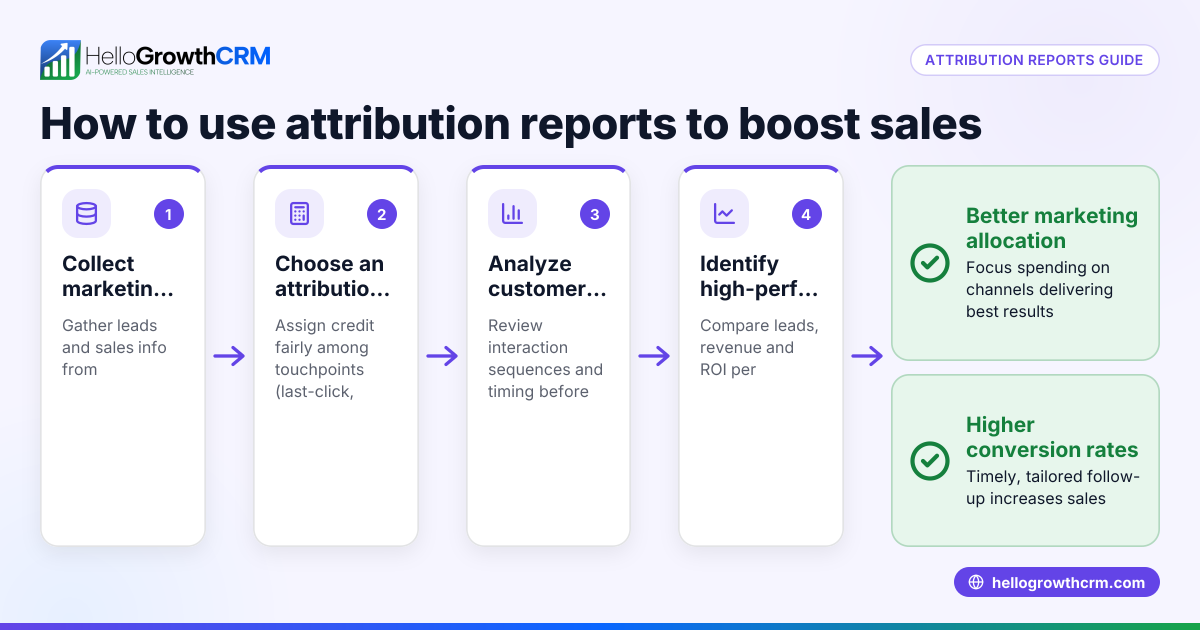
- Not attributing revenue correctly: Ensure sales revenue is linked to the correct marketing campaign to avoid skewed ROI calculations. Use lead source tagging.
- Using inconsistent reporting periods: Always compare consistent time frames (monthly or quarterly) to track trends accurately.
- Overlooking small campaigns: Even small campaigns should be reported to spot emerging opportunities or issues.
- Neglecting follow-up timing: Slow follow-up on leads can reduce conversion rates and distort marketing effectiveness.
Doing this in HelloGrowthCRM
HelloGrowthCRM offers pipeline forecast and AI insights that help you see which stage deals are stalling without building spreadsheets. This feature lets you quickly identify where marketing leads get stuck and which campaigns are driving revenue. Learn more about how this can help your marketing reporting at HelloGrowthCRM for the United States.
Frequently asked questions
How do I make a marketing report? Start by gathering all marketing expenses and results, organize by campaign and date, calculate key metrics like cost, leads, and revenue, then summarize in a clear format. Use pipeline data to track lead progress.
What metrics should I include in a marketing report? Include total spend, number of leads generated, revenue attributed to marketing, and ROI. Also review pipeline stages to see where leads convert or stall.
How often should I report marketing? Monthly reporting is common for small businesses to track ongoing performance and adjust campaigns promptly.
Can I track marketing impact without spreadsheets? Yes, tools like HelloGrowthCRM provide pipeline forecast and AI insights to track lead progress and revenue impact without manual spreadsheets. See WhatsApp and SMS CRM for communication tracking.
How do I link sales revenue to marketing campaigns? Use your CRM or sales tracking system to tag leads with the campaign source when captured. This ensures sales revenue is properly attributed.
What should I do if leads stall in the sales pipeline? Identify the stage where leads stall using pipeline forecast. Adjust marketing or sales tactics to improve follow-up and conversion rates.
Key takeaways
- Collect and organize marketing spend and lead data by campaign and date.
- Calculate key metrics: spend, leads, revenue, and ROI.
- Use pipeline forecasting to identify stalled leads and improve follow-up.
- Avoid mixing unverified data and inconsistent reporting periods.
- Track small campaigns to spot opportunities.
- HelloGrowthCRM’s AI insights help track pipeline health without spreadsheets.
Start reporting marketing today and improve your sales follow-up and forecasting. Start on the Free Forever plan (200 leads, no credit card).
Ready to put this into practice?
Set up your pipeline, WhatsApp follow-ups, and AI lead scoring in minutes — free, no credit card.
Try HelloGrowthCRM freeGet CRM tips in your inbox
Join thousands of sales professionals who get weekly insights on CRM strategy, AI automation, and pipeline optimization.

The HelloGrowthCRM team publishes guides on CRM strategy, AI sales tools, and revenue operations for small business sales teams.