HelloGrowthCRM software
Built for real small-business sales teams
HelloGrowthCRM helps reps qualify faster, follow up on time, and close more deals—with practical automation in one place.
- AI lead scoring and pipeline visibility
- Built-in dialer, WhatsApp, and email automation
- Sales forecasting and RevOps-ready reporting
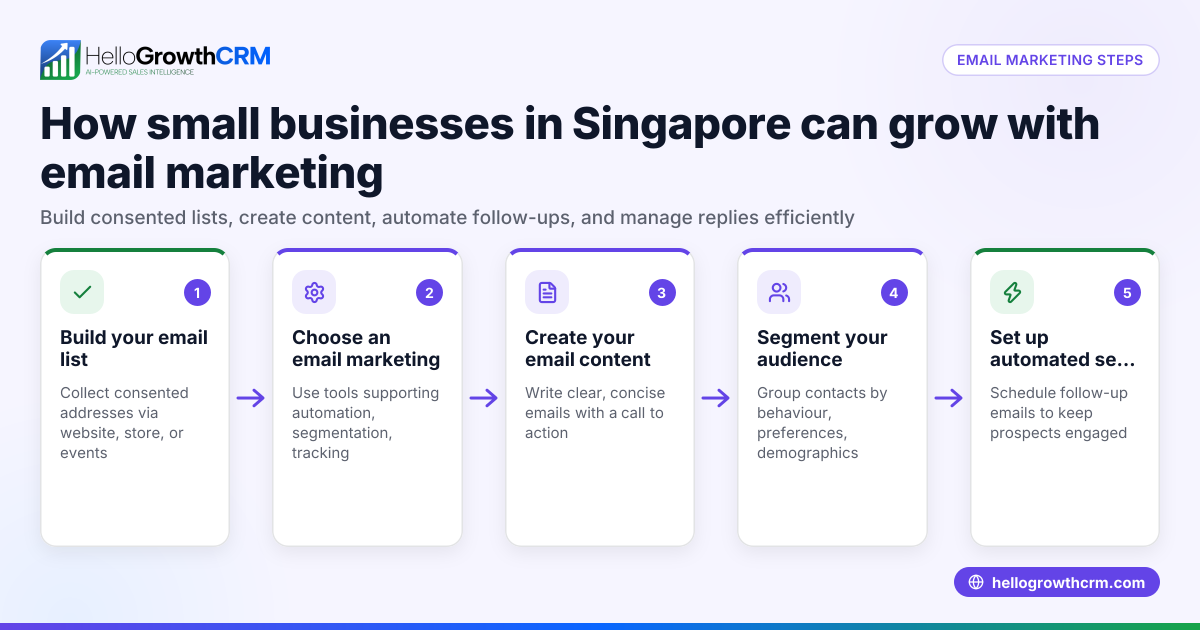
To segment customers for campaigns in Singapore, begin by gathering useful customer information such as age, location, purchase frequency, and product preferences. Next, organise customers into meaningful groups based on these traits to tailor your marketing messages effectively. This article explains why segmentation is important, provides clear step-by-step instructions, illustrates with a local example, highlights common errors, and shows how HelloGrowthCRM supports campaign management and follow-up.
Why this comes up / what goes wrong
Many small-business owners in Singapore run marketing campaigns without segmenting their customers, leading to generic messages that fail to engage. For example, a retailer might send the same promotion to all customers, missing chances to upsell loyal buyers or re-engage inactive ones. Without segmentation, campaigns waste resources and miss higher conversion rates. Business owners often struggle because customer data is scattered across WhatsApp chats, emails and spreadsheets, making it hard to analyse and group customers effectively.
Step-by-step
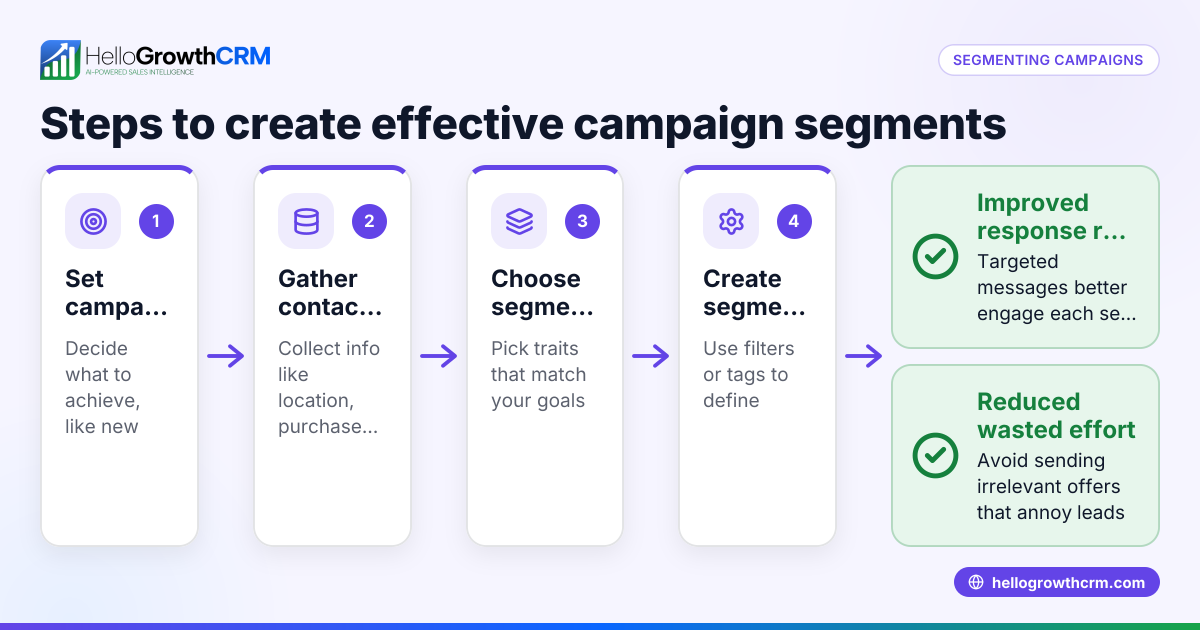
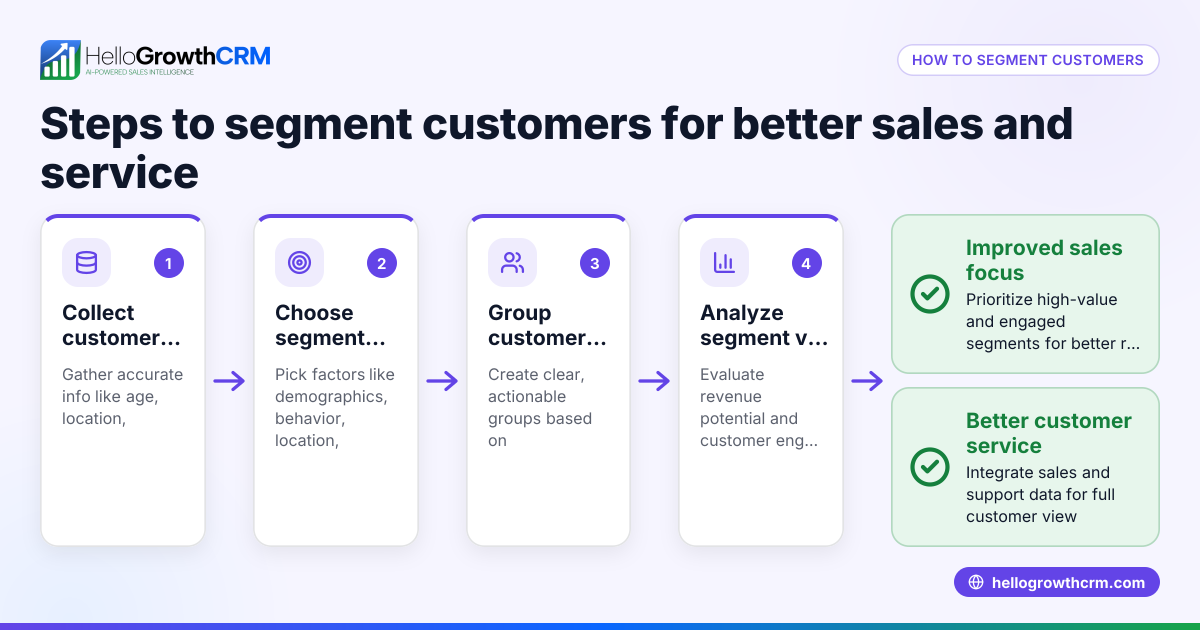
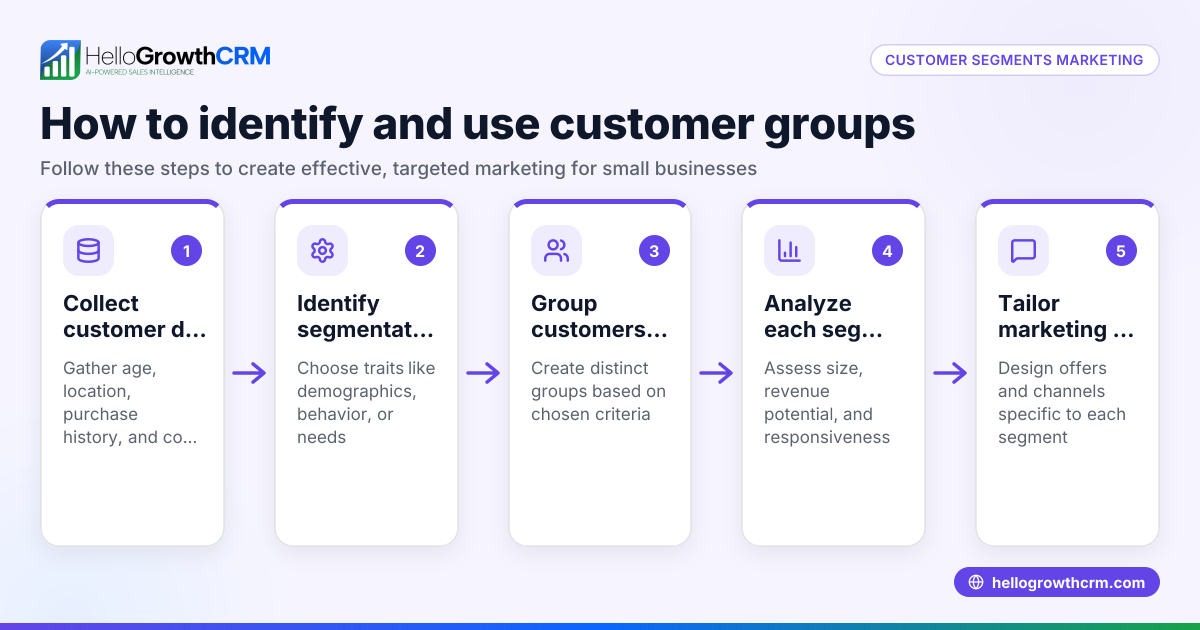
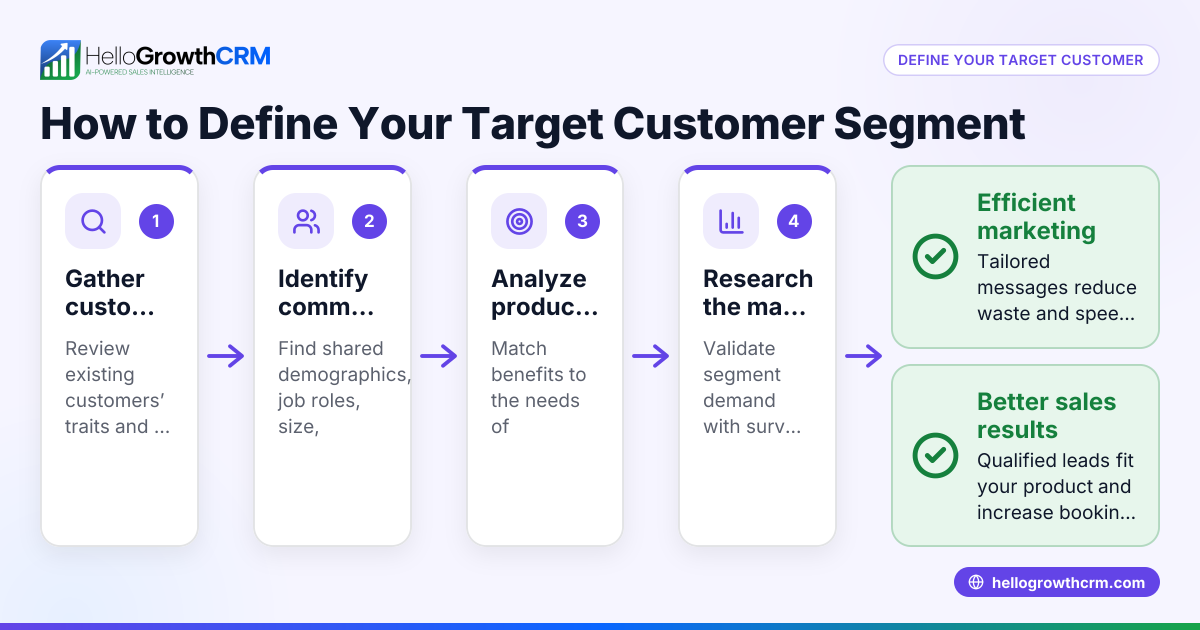
- Collect customer data: Gather data like age, gender, location, purchase history, and communication preferences. Check that data is accurate and up-to-date.
- Define segmentation criteria: Decide which traits matter for your campaign goals. Common criteria include demographic (e.g., age, location), behavioural (e.g., purchase frequency, amount spent), and engagement (e.g., last purchase date).
- Create customer groups: Use your criteria to group customers into segments. For example, “frequent buyers in Bukit Timah” or “customers who bought product A in the last 3 months.”
- Analyse segment size and value: Check each segment’s size and potential value. Avoid segments that are too small to target effectively.
- Tailor campaign messages: Develop messages that address each segment’s specific needs or interests.
- Test and refine: Run a small campaign on each segment, then review response rates to adjust segments or messages.
You can also track customer engagement and health score to prioritise leads and improve follow-up using tools like HelloGrowthCRM’s customer health score.
Example (fictional figures)
An F&B supplier in Woodlands wants to segment customers for a promotion on new organic snacks.
- Total customers: 1,200
- Data available: location, last purchase date, total spend last 6 months
Step 1: Define segments based on location and recent spend.
Segment A: Customers in Woodlands who spent over S$500 in last 6 months Segment B: Customers outside Woodlands who spent over S$500 Segment C: Customers in Woodlands who spent less than S$500
Step 2: Count customers in each segment.
Segment A: 300 Segment B: 400 Segment C: 500
Step 3: Calculate potential revenue if 15% of each segment buys a S$50 snack pack (assumed conversion rate for illustration).
Segment A revenue = 300 × 15% × S$50 = 300 × 0.15 × 50 = S$2,250 Segment B revenue = 400 × 15% × S$50 = 400 × 0.15 × 50 = S$3,000 Segment C revenue = 500 × 15% × S$50 = 500 × 0.15 × 50 = S$3,750
Step 4: Prioritise segments A and B for personalised campaigns since they have higher spend and potential revenue.
This clear segmentation lets the supplier focus marketing efforts where they are most likely to succeed.
Common mistakes
- Using too many segments: Creating overly narrow groups makes campaigns complex and inefficient. Prevent this by limiting segments to those with meaningful size and value.
- Ignoring data quality: Outdated or incorrect customer data leads to wrong segmentation. Regularly update and clean your data.
- Segmenting only by demographics: Behavioural and engagement data often predict buying better. Combine multiple criteria.
- Not testing campaigns per segment: Assume all segments respond the same way. Always test and adjust.
- Failing to track results: Without measuring campaign success per segment, you can’t improve. Use reporting tools to monitor.
Using a CRM with multi-channel campaign tools like WhatsApp and SMS sequences can help avoid these mistakes by centralising data and automating follow-ups, as in HelloGrowthCRM’s WhatsApp and SMS CRM.
Doing this in HelloGrowthCRM
HelloGrowthCRM supports customer segmentation and campaign management with features such as Sequences and campaigns, which automate multi-step outreach workflows sending timed messages across email, SMS and WhatsApp. A five-step follow-up over two weeks runs on its own and stops the moment a prospect replies, saving time and improving engagement. After a sale, service requests stay linked to the same customer record via the Customer portal, referrals, tickets and knowledge base feature, helping your team provide better support. For founders without a sales manager, Managed RevOps assigns a revenue specialist to manage weekly follow-up execution and pipeline hygiene, ensuring no lead is overlooked. Learn more at HelloGrowthCRM for Singapore.
Frequently asked questions
What data should I use to segment customers in Singapore? Use a mix of demographic data (age, location), behavioural data (purchase history, frequency), and engagement data (last contact date). Combining these gives a fuller picture for effective segmentation.
How often should I update my customer segments? Update segments regularly, at least quarterly or after major campaigns, to reflect changes in customer behaviour and keep campaigns relevant.
Can I automate segmentation and campaigns? Initial segmentation is manual, but tools like Sequences and campaigns automate outreach and follow-up based on your segments.
Why segment customers instead of sending one message to all? Segmenting allows targeted messaging that matches customer needs, increasing response rates and reducing wasted marketing spend.
How do I measure if my customer segmentation works? Track campaign metrics like open rates, click rates, and sales per segment. Compare these to unsegmented campaigns to see improvements.
Key takeaways
- Start segmentation by collecting accurate customer data including demographics, behaviour and engagement.
- Group customers into meaningful segments that are large enough to target effectively.
- Tailor campaign messages to each segment’s needs and test responses.
- Avoid common mistakes like over-segmentation and ignoring data quality.
- Use tools like HelloGrowthCRM’s sequences, customer portal, and Managed RevOps to automate and improve campaign follow-up.
Start segmenting your customers today to improve your campaign results. Start on the Free Forever plan (200 leads, no credit card).
Ready to put this into practice?
Set up your pipeline, WhatsApp follow-ups, and AI lead scoring in minutes — free, no credit card.
Try HelloGrowthCRM freeGet CRM tips in your inbox
Join thousands of sales professionals who get weekly insights on CRM strategy, AI automation, and pipeline optimization.

The HelloGrowthCRM team publishes guides on CRM strategy, AI sales tools, and revenue operations for small business sales teams.