HelloGrowthCRM software
Built for real small-business sales teams
HelloGrowthCRM helps reps qualify faster, follow up on time, and close more deals—with practical automation in one place.
- AI lead scoring and pipeline visibility
- Built-in dialer, WhatsApp, and email automation
- Sales forecasting and RevOps-ready reporting
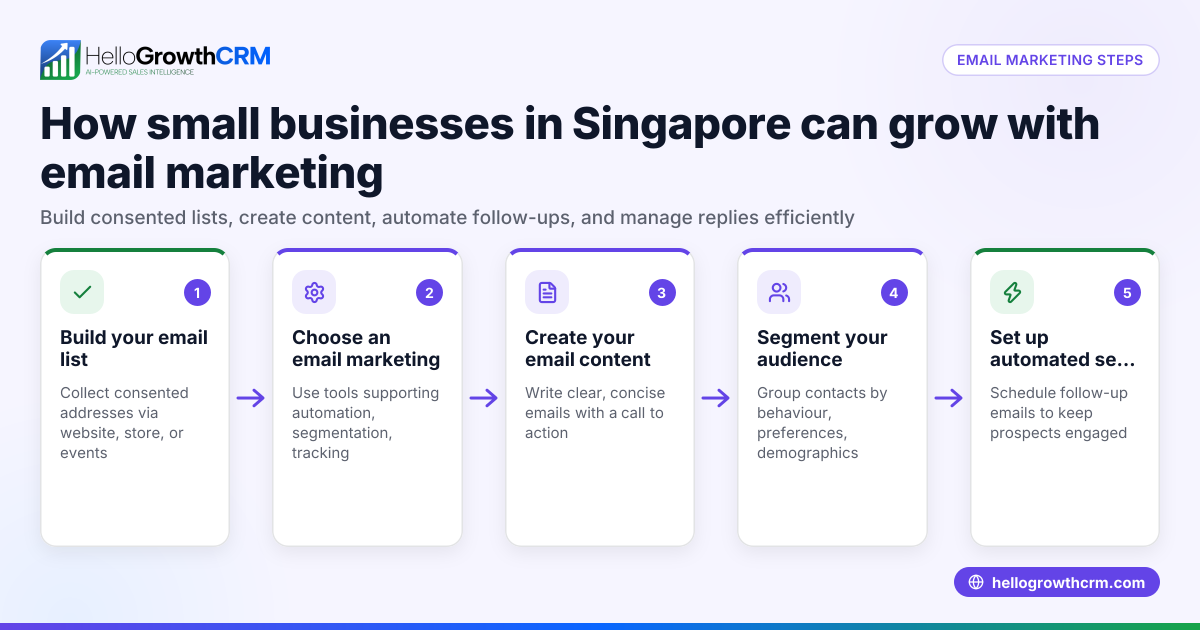
To segment leads for email marketing in Singapore, start by collecting detailed lead data such as demographics, interests, and behaviour. Then, group leads based on criteria like location, purchase intent, or engagement level. This article covers why segmentation matters, step-by-step instructions, a worked example, common mistakes, and how HelloGrowthCRM can help.
Why this comes up / what goes wrong
Small-business owners in Singapore often gather leads from multiple sources such as website forms, WhatsApp chats, or phone calls. Without proper organisation, these leads end up scattered in notebooks, spreadsheets, or messaging apps. This makes it hard to send targeted emails that match each lead’s interests or readiness to buy. As a result, email campaigns become generic, reducing open rates and conversions. Segmenting leads lets you tailor messages for groups with similar needs, improving engagement and sales.
Step-by-step
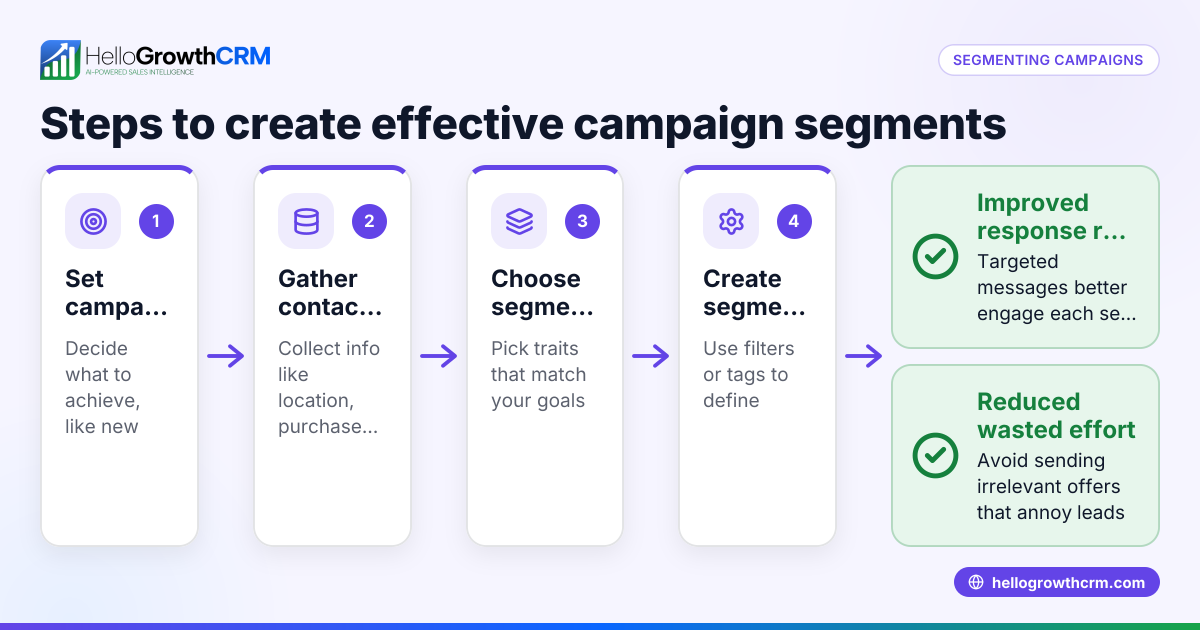
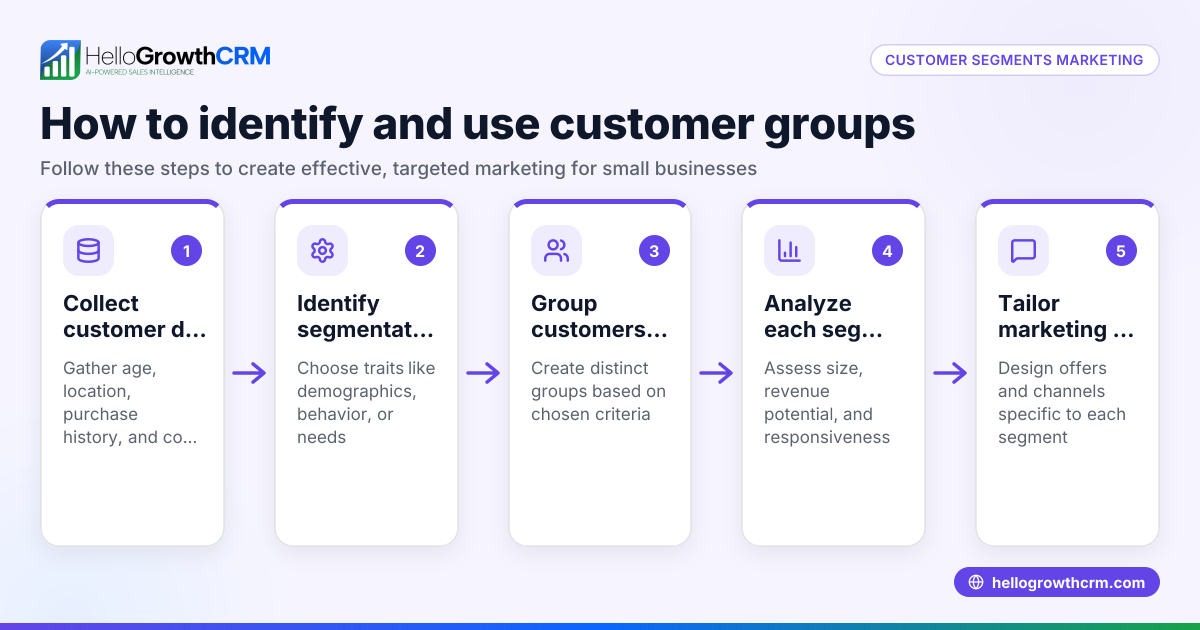
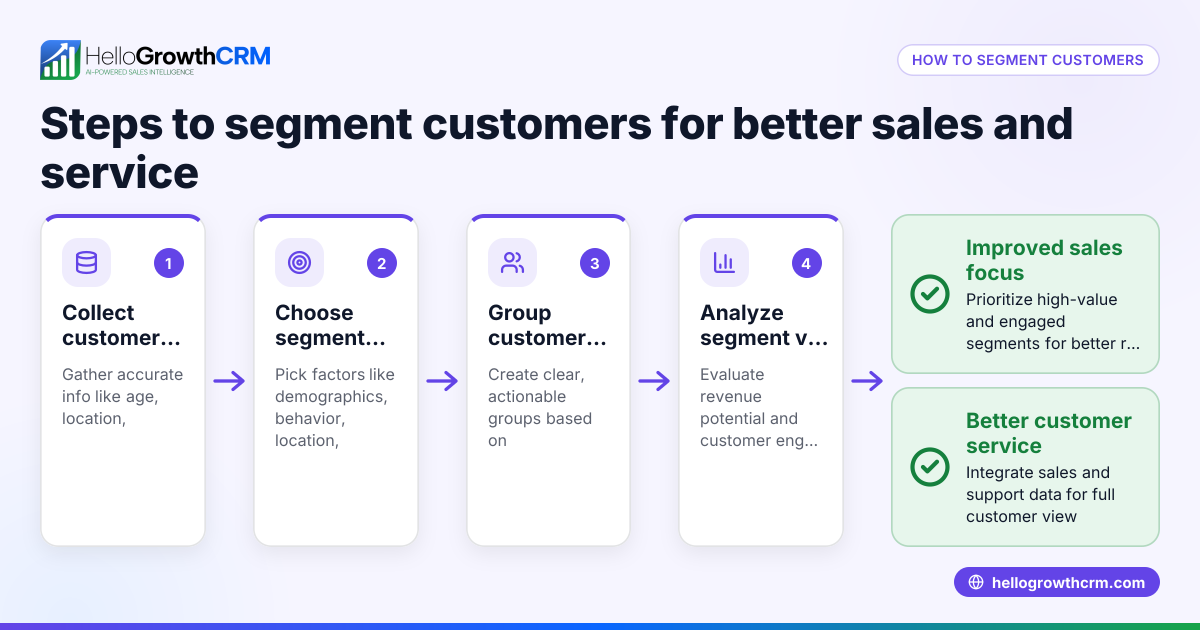
- Collect Lead Information Consistently
- Ensure every lead provides key data like name, contact, location, and product interest.
- Check that data is accurate and complete.
- Choose Segmentation Criteria
- Common segments include:
- Geographic location (e.g., Singapore districts)
- Industry or business size
- Purchase intent (e.g., inquiry stage vs ready to buy)
- Engagement level (e.g., opened emails, clicked links)
- Source of lead (e.g., website, WhatsApp, referral)
- Verify these criteria are relevant to your business goals.
- Group Leads into Segments
- Use your data to assign leads to one or more segments.
- Check for overlaps or gaps to ensure no lead is missed.
- Create Targeted Email Content
- Develop messages tailored to each segment’s needs and stage in the sales funnel.
- Confirm content is personalised and relevant.
- Set Up Email Sequences for Each Segment
- Schedule emails to send automatically based on segment behaviour.
- Monitor open and click rates to refine segments.
- Update Segments Regularly
- Add new leads and remove inactive ones.
- Adjust segments based on new information or campaign results.
- Measure Campaign Performance by Segment
- Track conversions and ROI per segment.
- Use insights to improve future segmentation and messaging.
Example (fictional figures)
An interior-design studio in Tanjong Pagar receives 1,000 leads from its website and WhatsApp over three months. They want to segment leads by location and purchase intent.
- Total leads: 1,000
- Leads from Central Singapore: 600
- Leads from other areas: 400
- Leads ready to buy (based on enquiry): 300
Segment 1: Central Singapore, ready to buy = 600 × (300 ÷ 1,000) = 600 × 0.3 = 180 leads
Segment 2: Central Singapore, not ready to buy = 600 - 180 = 420 leads
Segment 3: Other areas, ready to buy = 400 × 0.3 = 120 leads
Segment 4: Other areas, not ready to buy = 400 - 120 = 280 leads
The studio then creates personalised emails for each segment, focusing on quick project starts for ready buyers and design tips for others.
Common mistakes
- Using too few segments: Avoid lumping all leads together. Prevent this by defining at least 3-4 segments based on clear criteria.
- Segmenting without updated data: Leads change over time. Regularly refresh data to keep segments accurate.
- Ignoring lead source: Different sources may require different messaging. Always track and segment by source.
- Not personalising emails: Sending generic emails reduces engagement. Tailor content to each segment’s interests.
- Failing to measure results by segment: Without tracking, you can’t improve. Set up metrics to evaluate each segment’s performance.
Doing this in HelloGrowthCRM
HelloGrowthCRM helps organise leads by capturing every enquiry from forms, calls or WhatsApp as a lead with an owner and next step, preventing data loss or confusion. Its AI lead scoring prioritises telecallers to contact leads most likely to convert first. Replies to quotation emails are visible to the whole team via the HelloMail shared inbox, keeping communication transparent and efficient. Learn more about AI lead scoring and email automation and sequences to enhance your segmentation and follow-up. Find out why HelloGrowthCRM is a good fit for your business in HelloGrowthCRM for Singapore.
Frequently asked questions
What data should I collect to segment leads effectively? Collect basic contact details, location, product or service interest, how they found your business, and their readiness to buy. This information enables meaningful segmentation.
How often should I update my lead segments? Update segments at least monthly or whenever you add a batch of new leads. Regular updates keep your campaigns relevant and improve engagement.
Can I segment leads by engagement with previous emails? Yes, tracking who opened or clicked your emails lets you create segments for active and inactive leads, allowing tailored follow-ups.
Is it better to have many small segments or a few large ones? Balance is key. Too many segments can be hard to manage, while too few reduce personalisation. Start with 3-5 segments and adjust based on results.
How does AI lead scoring help with segmentation? AI lead scoring ranks leads by likelihood to convert, helping you focus on high-potential segments first. This improves sales efficiency.
Key takeaways
- Collect detailed and accurate lead data consistently.
- Segment leads by relevant criteria like location, intent, and engagement.
- Personalise email content and automate sequences for each segment.
- Regularly update segments and measure campaign performance.
- Avoid common mistakes like generic messaging and outdated data.
- Use HelloGrowthCRM features like lead capture, AI lead scoring, and shared inbox to streamline segmentation and follow-up.
Start organising your leads today and improve your email marketing by starting on the Free Forever plan (200 leads, no credit card).
Ready to put this into practice?
Set up your pipeline, WhatsApp follow-ups, and AI lead scoring in minutes — free, no credit card.
Try HelloGrowthCRM freeGet CRM tips in your inbox
Join thousands of sales professionals who get weekly insights on CRM strategy, AI automation, and pipeline optimization.

The HelloGrowthCRM team publishes guides on CRM strategy, AI sales tools, and revenue operations for small business sales teams.