HelloGrowthCRM software
Built for real small-business sales teams
HelloGrowthCRM helps reps qualify faster, follow up on time, and close more deals—with practical automation in one place.
- AI lead scoring and pipeline visibility
- Built-in dialer, WhatsApp, and email automation
- Sales forecasting and RevOps-ready reporting
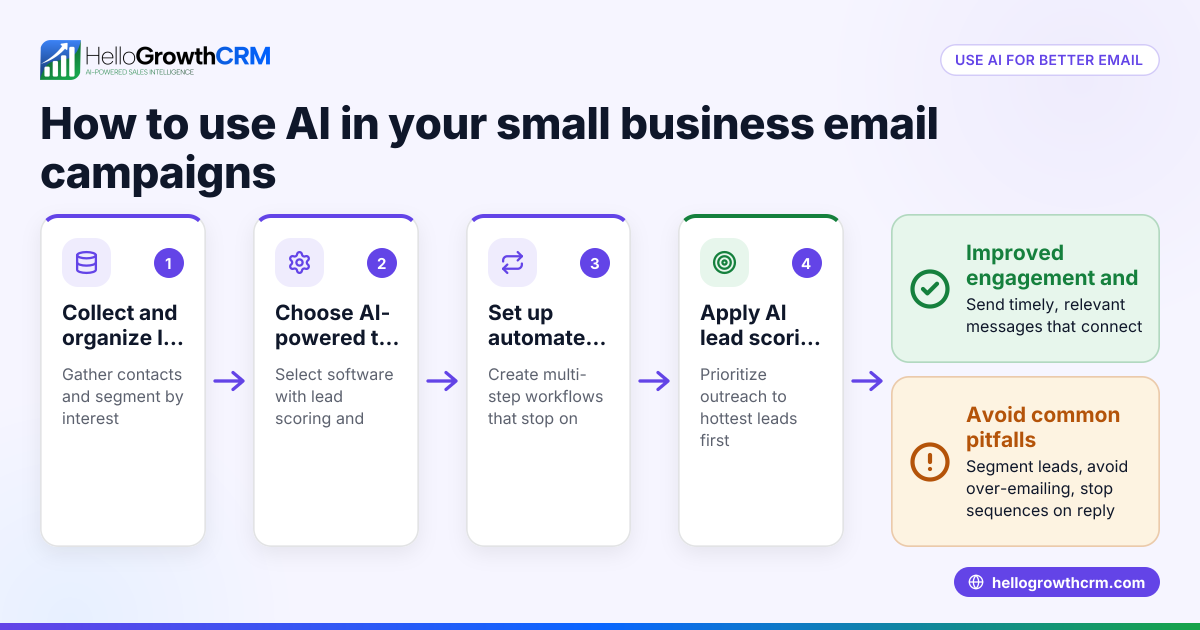
To segment leads for email marketing in the UK, start by collecting key data points such as demographics, behaviour, and purchase history. Then categorise leads into meaningful groups based on shared traits or actions. This article covers why segmentation matters, detailed steps to segment leads, a worked example with UK figures, common pitfalls, and how HelloGrowthCRM supports this process.
Why this comes up / what goes wrong
Small and mid-sized UK businesses often collect leads from multiple channels like web forms, calls, and WhatsApp messages. Without proper segmentation, all leads are treated the same, resulting in generic emails that fail to engage. This leads to lower open rates, fewer conversions, and wasted marketing effort. Business owners may struggle with manual spreadsheets or disorganised contact lists, making it hard to target the right leads with the right message at the right time.
Step-by-step
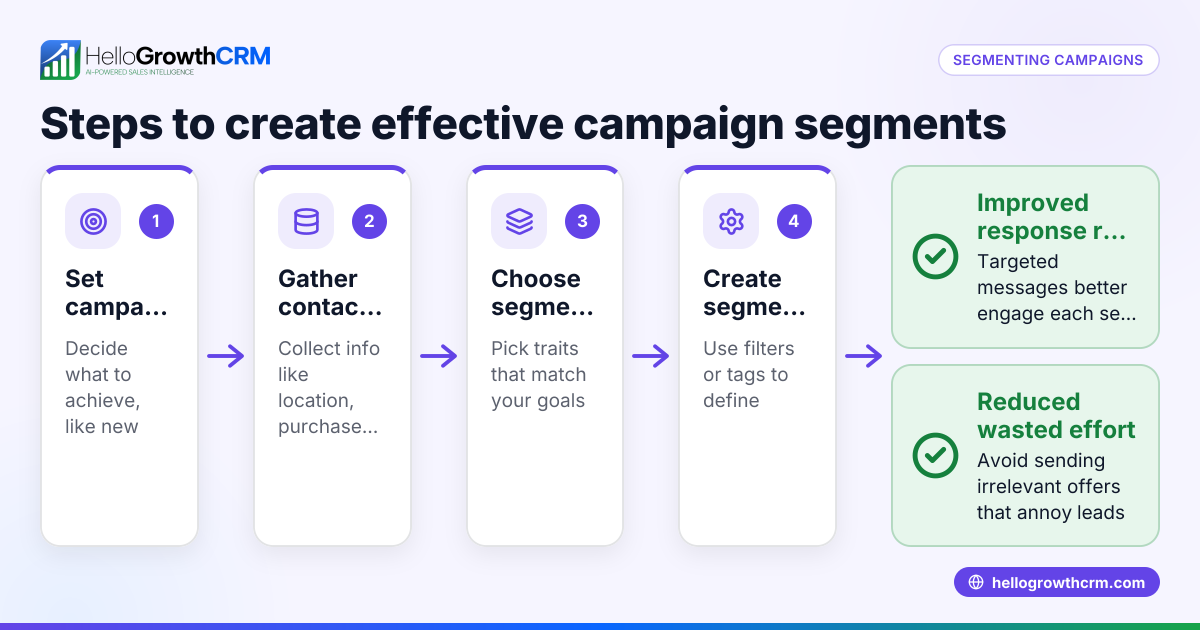
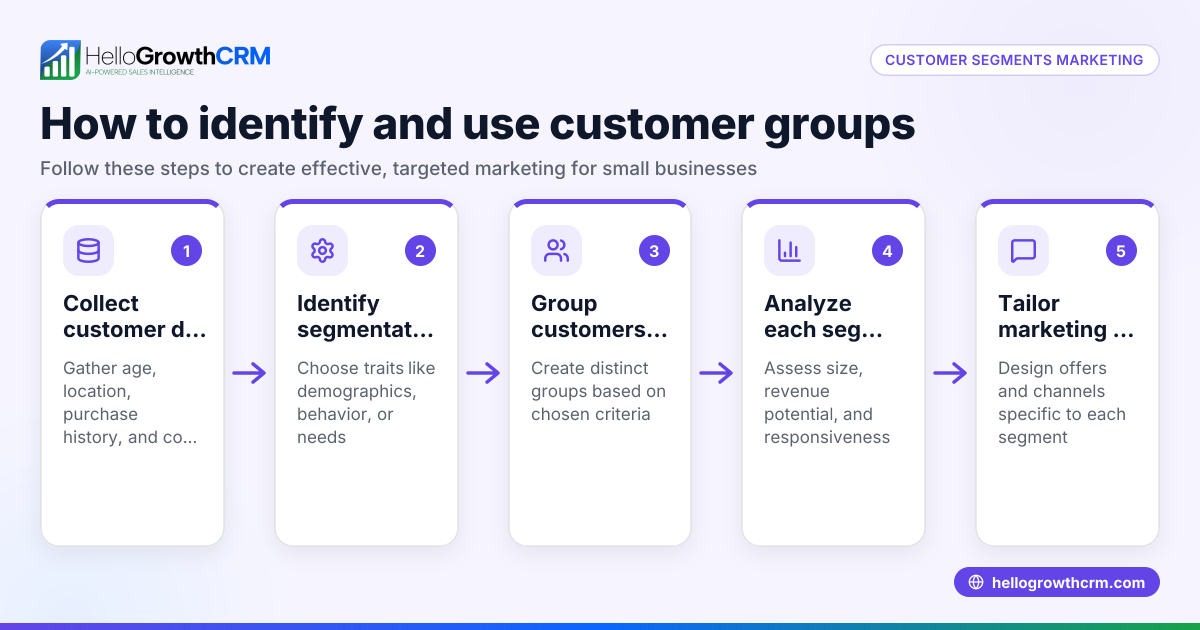
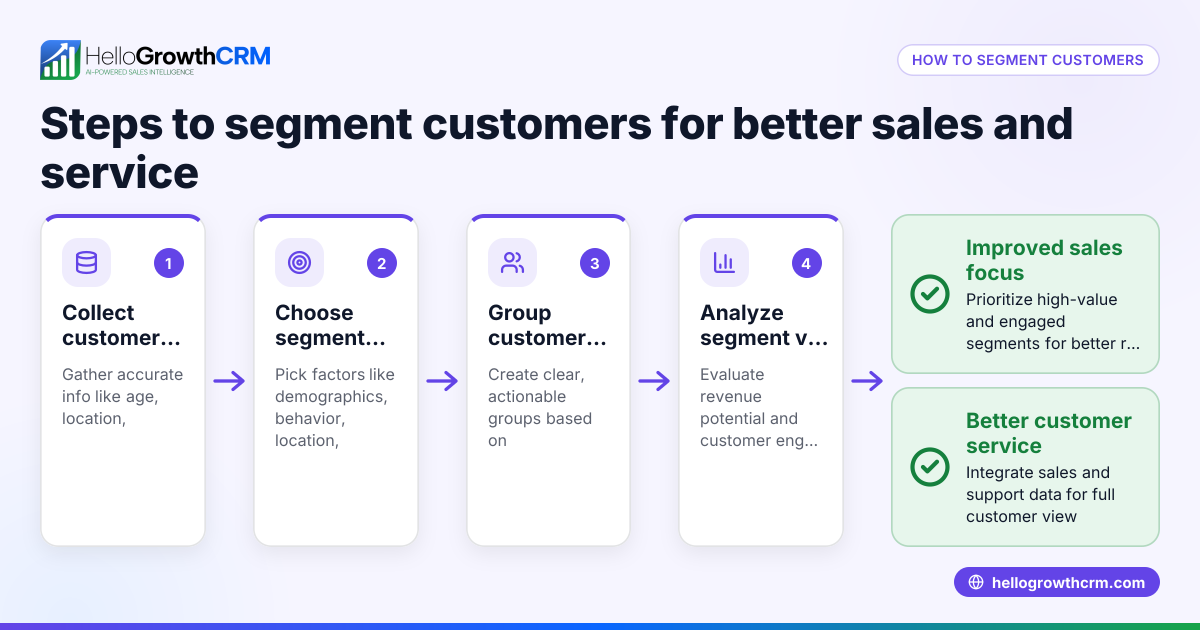
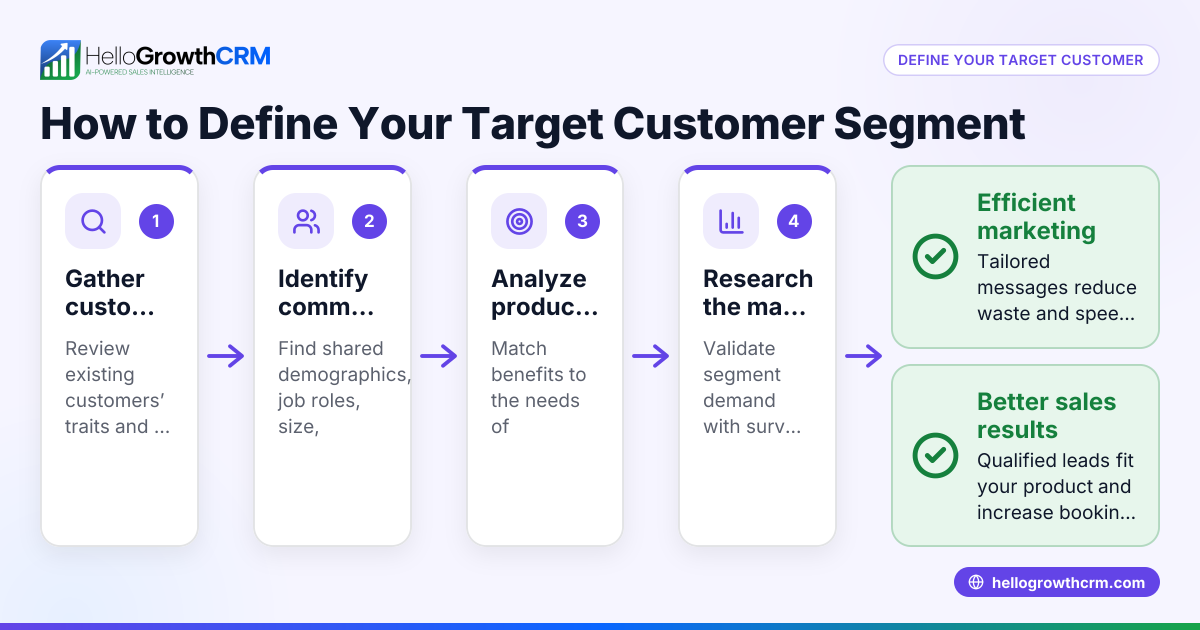
- Gather lead data consistently: Collect information such as name, location, job role, company size, enquiry source, and product interest. Check that your lead capture forms and channels prompt for these fields.
- Choose segmentation criteria: Decide which lead attributes matter most for your marketing goals. Common criteria include geographic location (e.g., city or region), industry sector, lead source (web form, WhatsApp, call), and engagement level.
- Create lead groups: Use your chosen criteria to divide leads into segments. For example, separate leads from London interested in product A from those in Manchester interested in product B.
- Label and tag leads clearly: Assign tags or labels to each lead in your CRM or spreadsheet to mark their segment. Confirm tags are consistent and descriptive.
- Verify data accuracy: Regularly check lead information for errors or missing data. Clean your list by removing duplicates or outdated contacts.
- Develop tailored email content: Prepare email campaigns customised to each segment’s interests and needs.
- Test and refine segments: Monitor open and conversion rates per segment to identify which groups respond best. Adjust criteria or messaging accordingly.
- Automate where possible: Use CRM tools to automatically assign segments based on lead data and trigger email sequences targeted to each group. This saves time and reduces errors.
Example (fictional figures)
A recruitment consultancy in Bristol wants to segment its leads for a new email campaign on 15/05/2024.
- Total leads collected: 1,200
- Lead data includes location, job sector, and enquiry source
Step 1: Segment by location:
- Bristol leads: 600
- London leads: 400
- Manchester leads: 200
Step 2: Segment Bristol leads by job sector:
- IT sector: 300
- Healthcare sector: 200
- Education sector: 100
Step 3: Label leads accordingly:
- Bristol_IT: 300
- Bristol_Healthcare: 200
- Bristol_Education: 100
Step 4: Create targeted email content for each segment.
Step 5: Send emails and track results.
This segmentation allows the consultancy to send relevant job opportunities matching each sector and location, increasing engagement and conversion.
Common mistakes
- Not collecting enough data upfront: Prevent by designing lead capture forms that ask for all necessary fields.
- Over-segmenting leads into too many small groups: Prevent by focusing on key criteria that impact marketing results.
- Using inconsistent or unclear tags: Prevent by standardising tag names and training the team.
- Failing to clean data regularly: Prevent by scheduling routine data audits.
- Ignoring lead behaviour and engagement: Prevent by including activity data in segmentation.
- Not automating segmentation and email flows: Prevent by using CRM features like AI lead scoring and email automation email automation and sequences.
Doing this in HelloGrowthCRM
HelloGrowthCRM helps by capturing every enquiry from forms, calls, or WhatsApp as a lead with an owner and a next step, so leads are organised and ready for segmentation. Its AI lead scoring prioritises leads most likely to convert, helping telecallers focus their efforts effectively AI lead scoring. The HelloMail shared inbox makes replies to quotation emails visible to the whole team, keeping communication clear and collaborative email automation and sequences. Learn more about HelloGrowthCRM for the United Kingdom here.
Frequently asked questions
What data should I collect to segment leads effectively? Collect demographic details like location and job role, behavioural data such as enquiry source and engagement level, and any product or service interests. This data helps you create meaningful segments.
How often should I update lead segments? Regularly review and update segments at least monthly or after major campaigns. This keeps your lists accurate and responsive to changes in lead behaviour or business focus.
Can I segment leads automatically? Yes, using a CRM with automation features you can assign segments based on lead data and trigger email sequences tailored to each group, saving time and reducing errors.
Is it better to have few large segments or many small ones? Balance is key. Too few segments mean generic messaging; too many create complexity and small groups. Focus on segments that clearly affect your marketing outcomes.
How can I use AI lead scoring to improve segmentation? AI lead scoring identifies leads most likely to convert, allowing you to prioritise these in your segments and tailor communications accordingly.
Key takeaways
- Collect consistent, relevant lead data from all channels.
- Choose clear, impactful segmentation criteria.
- Label leads with standard tags to keep segments organised.
- Clean and update data regularly to maintain accuracy.
- Use automation and AI lead scoring to streamline segmentation and prioritise high-potential leads.
- Tailor email content to each segment for better engagement.
Start organising your leads today with HelloGrowthCRM and see how easy segmentation and targeted email marketing can be. Start on the Free Forever plan (200 leads, no credit card) Get HelloGrowthCRM free plan details.
Ready to put this into practice?
Set up your pipeline, WhatsApp follow-ups, and AI lead scoring in minutes — free, no credit card.
Try HelloGrowthCRM freeGet CRM tips in your inbox
Join thousands of sales professionals who get weekly insights on CRM strategy, AI automation, and pipeline optimization.

The HelloGrowthCRM team publishes guides on CRM strategy, AI sales tools, and revenue operations for small business sales teams.