HelloGrowthCRM software
Built for real small-business sales teams
HelloGrowthCRM helps reps qualify faster, follow up on time, and close more deals—with practical automation in one place.
- AI lead scoring and pipeline visibility
- Built-in dialer, WhatsApp, and email automation
- Sales forecasting and RevOps-ready reporting
Sending bulk emails without spamming means emailing only those who have agreed to receive your messages, making your content relevant, and respecting recipients' preferences. This approach helps your emails reach the inbox, keeps your audience engaged, and protects your business reputation. This article covers why spamming happens, step-by-step instructions to avoid it, a worked example, common mistakes, and answers to frequently asked questions.
Why this comes up / what goes wrong
Small-business owners often send bulk emails to promote products, share news, or nurture leads. Problems arise when emails are sent without consent, are generic, or include too many images or links. These practices trigger spam filters or annoy recipients, causing low engagement, unsubscribes, or blacklisting by email providers. Many small businesses lack a clear process for managing email lists and content, leading to ineffective campaigns and lost sales opportunities.
Step-by-step
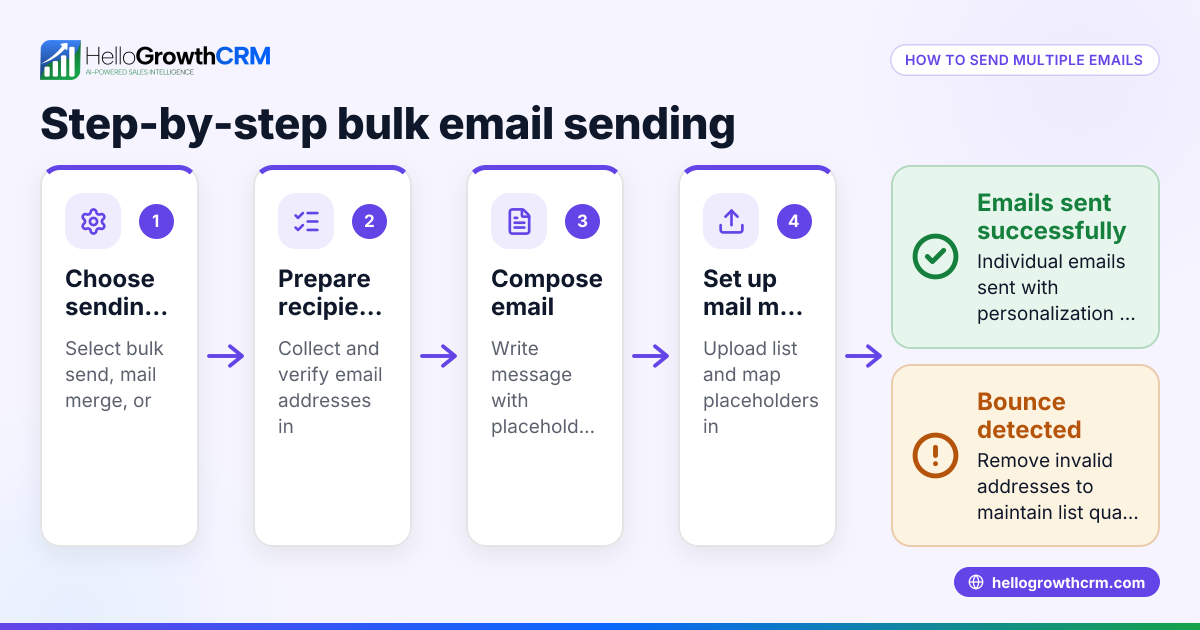
- Build a clean, permission-based email list
- Only email contacts who have explicitly opted in to receive your messages.
- Collect email addresses through signup forms on your website or during sales conversations.
- Regularly remove bounced or inactive addresses to maintain list health.
- Use a reputable email service provider (ESP)
- Select an ESP that supports bulk sending with good deliverability and compliance features.
- Avoid sending bulk emails from personal or generic email accounts to prevent spam flags.
- Personalize your emails
- Include the recipient’s name and tailor content to their interests or past interactions.
- Segment your list by customer type, location, or behavior for targeted messaging.
- Craft clear, relevant subject lines and email content
- Avoid spam trigger words like "free," "urgent," or excessive punctuation.
- Provide valuable information or offers to encourage recipients to open and engage.
- Include a clear unsubscribe option
- Make it easy for recipients to opt out of future emails.
- Process unsubscribe requests promptly to comply with laws.
- Test your emails before sending
- Send test emails to check formatting, links, and spam scores.
- Preview how emails appear on different devices and email clients.
- Monitor your email campaign metrics
- Track open rates, click-through rates, bounce rates, and unsubscribe rates.
- Remove or re-engage contacts who do not interact to improve deliverability.
- Follow US email marketing laws (CAN-SPAM Act)
- Include your physical mailing address in every email.
- Clearly identify the email as an advertisement.
For more on automating and managing email campaigns effectively, see email automation and sequences.
Example (fictional figures)
Sunset Realty Group, a residential real-estate team in Phoenix, Arizona, plans to send a bulk email campaign on 07/01/2026.
- They start with a list of 6,000 contacts but remove 1,000 who have not opted in.
- The ESP charges $0.01 per email sent.
- They expect a 20% open rate and 5% click-through rate.
Calculations:
Number of emails sent = 6,000 - 1,000 = 5,000 Cost = 5,000 × $0.01 = $50 Expected opens = 5,000 × 20% = 1,000 Expected clicks = 5,000 × 5% = 250
Sunset Realty personalizes each email with the recipient’s first name and segments contacts by recent home search activity. They include an unsubscribe link and their office address at the bottom. Before sending, they test the email for spam triggers and preview it on mobile devices.
Common mistakes
- Emailing without consent: Prevent by collecting explicit opt-ins only.
- Using a generic "no-reply" sender address: Use a monitored email address to build trust.
- Ignoring unsubscribe requests: Always process opt-outs immediately.
- Overloading emails with images or links: Keep content balanced to avoid spam filters.
- Not cleaning your email list regularly: Remove invalid or inactive emails to maintain deliverability.
- Sending emails too frequently: Set a consistent, reasonable schedule to avoid annoying recipients.
For more on managing multi-channel outreach including WhatsApp and SMS, check WhatsApp and SMS CRM.
Frequently asked questions
What is the difference between bulk email and spam? Bulk email is sending messages to many recipients who have given permission and receive relevant content. Spam is unsolicited, irrelevant, or deceptive email sent without consent. The key difference is permission and value.
How often can I send bulk emails without annoying my contacts? It depends on your audience, but typically 1-4 emails per month is acceptable. Monitor engagement and adjust based on feedback and open rates.
Can I use my personal email account to send bulk emails? No, personal email accounts are not designed for bulk sending and risk being marked as spam. Use a professional email service provider with bulk sending capabilities.
What laws regulate bulk emailing in the US? The CAN-SPAM Act requires clear identification, an unsubscribe option, and inclusion of your physical address in bulk emails, but it does not require prior consent. (ftc.gov) Following these rules helps avoid penalties and keeps your emails out of spam folders.
How do I improve email deliverability? Use a clean contact list, personalize content, avoid spammy language, authenticate your domain (SPF, DKIM), and monitor your sender reputation.
For more on managing your sales and marketing communications efficiently, see HelloGrowthCRM for the United States.
Key takeaways
- Always get explicit permission before sending bulk emails.
- Personalize and segment your emails to increase relevance.
- Use a reputable email service provider to manage bulk sends.
- Include a clear unsubscribe link and honor opt-out requests.
- Test emails for spam triggers and monitor engagement metrics.
- Follow US email marketing laws to stay compliant.
Start sending bulk emails that get results without spamming. Start on the Free Forever plan (200 leads, no credit card).
Ready to put this into practice?
Set up your pipeline, WhatsApp follow-ups, and AI lead scoring in minutes — free, no credit card.
Try HelloGrowthCRM freeGet CRM tips in your inbox
Join thousands of sales professionals who get weekly insights on CRM strategy, AI automation, and pipeline optimization.

The HelloGrowthCRM team publishes guides on CRM strategy, AI sales tools, and revenue operations for small business sales teams.