HelloGrowthCRM software
Built for real small-business sales teams
HelloGrowthCRM helps reps qualify faster, follow up on time, and close more deals—with practical automation in one place.
- AI lead scoring and pipeline visibility
- Built-in dialer, WhatsApp, and email automation
- Sales forecasting and RevOps-ready reporting
To set customer service SLA targets in Singapore, you must define specific, measurable goals for how quickly your team responds to and resolves customer requests. These targets should reflect your customers’ expectations and your operational capacity. This article explains why SLA targets are important, provides step-by-step instructions, a worked example with Singapore business figures, common mistakes to avoid, and how HelloGrowthCRM helps manage service requests.
Why this comes up / what goes wrong
Small and mid-sized businesses in Singapore often lose leads and customers due to slow or inconsistent follow-up. Many use WhatsApp, email, and spreadsheets for customer service, which makes it hard to track response times and SLA compliance. Without clear SLA targets, teams may delay replying or resolving issues, damaging customer satisfaction and business reputation. Setting SLA targets helps standardise service levels, improve customer satisfaction, and prioritise urgent issues.
Step-by-step
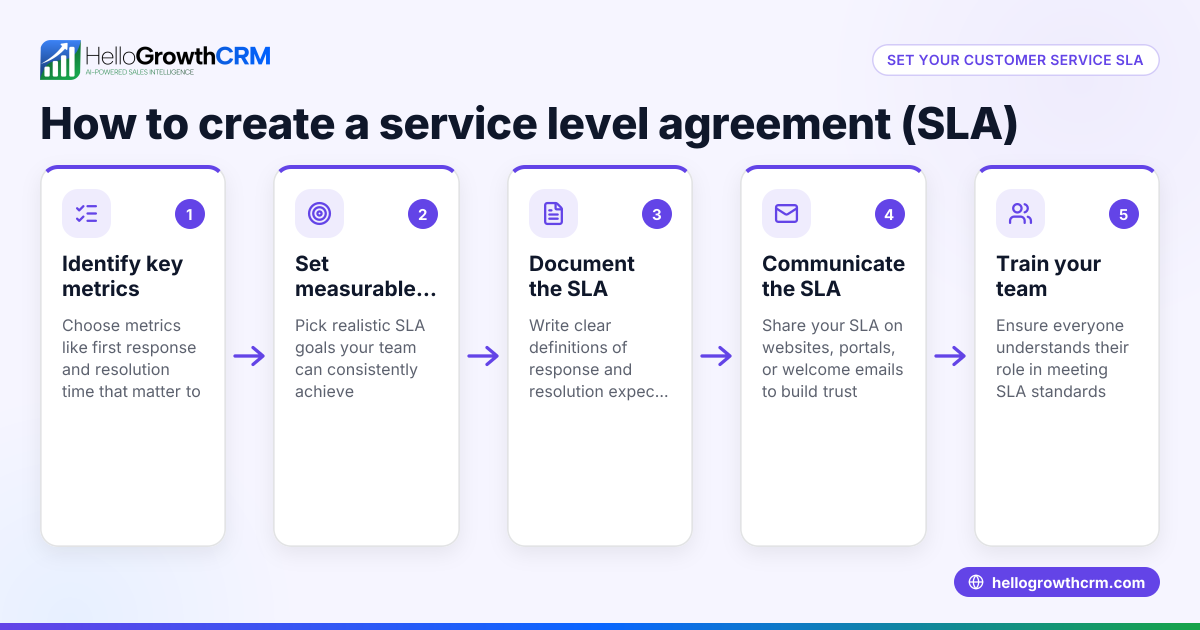
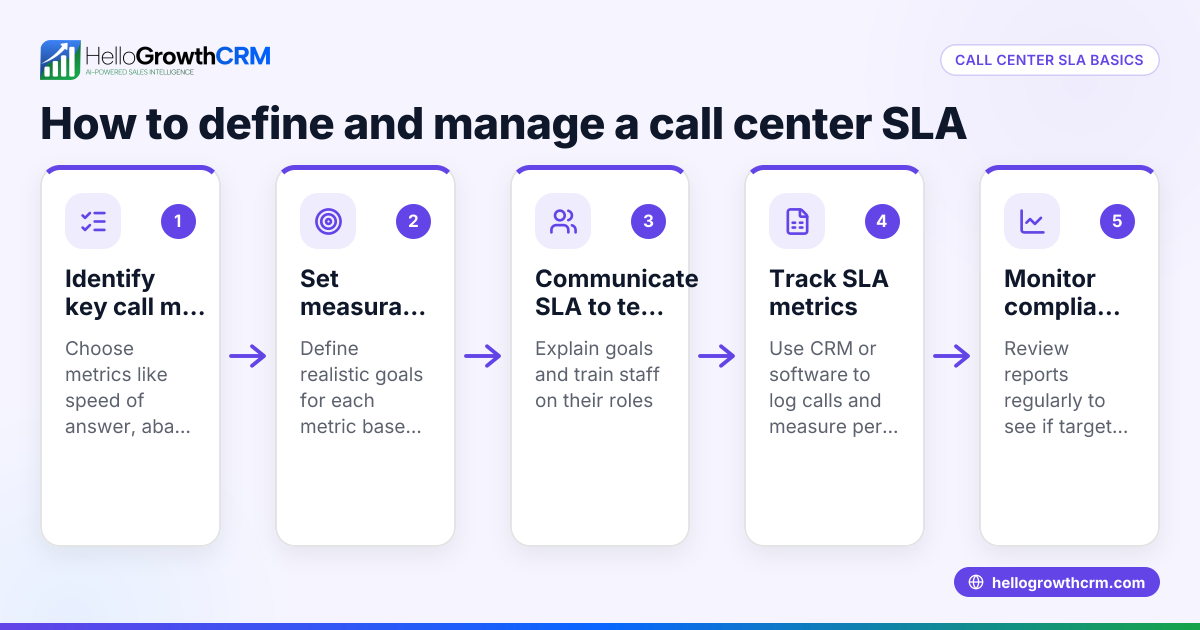
- Identify key customer service request types: List the main types of requests your team handles, such as product questions, complaints, or technical support.
- Gather customer expectations: Use feedback, surveys, or past data to understand how quickly customers expect responses and resolutions.
- Assess your team’s capacity: Consider your staffing levels, skills, and tools to set realistic targets your team can meet.
- Define SLA metrics:
- Response time: Time to acknowledge or reply to a request.
- Resolution time: Time to fully resolve the issue.
- Set target times for each request type and metric: For example, respond to product inquiries within 3 hours and resolve complaints within 24 hours.
- Document SLA targets clearly: Create an internal SLA policy and share it with your team.
- Communicate SLA targets to customers: Publish them on your website or customer portal to set clear expectations.
- Implement tools to track SLA compliance: Use a CRM or ticketing system to monitor response and resolution times.
- Review and adjust SLA targets regularly: Analyse performance monthly or quarterly and update targets as your business changes.
Example (fictional figures)
An F&B supplier in Woodlands sets SLA targets on 01/06/2024 for two request types: order inquiries and delivery issues.
- Customer data shows expectations:
- Respond within 4 hours for order inquiries
- Respond within 1 hour for delivery issues
- The team agrees these are achievable.
Set SLA targets:
Response time for order inquiries = 4 hours Response time for delivery issues = 1 hour Resolution time for order inquiries = 24 hours Resolution time for delivery issues = 8 hours
They track SLA weekly using their CRM.
Calculations for weekly SLA workload:
Number of order inquiries per week = 120 Number of delivery issues per week = 30
Total response hours needed = (120 × 4) + (30 × 1) Total response hours needed = 480 + 30 = 510 hours
Total resolution hours needed = (120 × 24) + (30 × 8) Total resolution hours needed = 2,880 + 240 = 3,120 hours
This helps them allocate team hours and adjust staffing if needed.
Common mistakes
- Setting unrealistic targets: Avoid goals your team cannot meet. Assess capacity carefully.
- Not differentiating request types: Different issues need different SLA times.
- Failing to communicate SLAs: Both your team and customers must know the targets.
- Ignoring SLA tracking: Without monitoring, you cannot improve service.
- Using multiple unintegrated tools: This causes lost data and missed SLAs; use a unified system with integrated ticketing and customer records.
- Not reviewing SLAs regularly: Business needs change; update SLAs accordingly.
Doing this in HelloGrowthCRM
HelloGrowthCRM keeps service requests on the same customer record as the deal, helping your team track and resolve issues efficiently. Its support tickets and knowledge base features organise requests, while the branded self-service customer portal allows customers to submit and check tickets. Referral programme tracking and reference libraries support engagement after the sale. Learn more about HelloGrowthCRM for Singapore businesses here. For managing customer health and service quality, see customer health score.
Frequently asked questions
What is a good SLA target for customer service in Singapore? Good SLA targets depend on your business and customer expectations. Common response times range from 1 to 4 hours for first replies and 8 to 24 hours for resolution. Start with achievable goals based on your team’s capacity and adjust as needed.
How can I track SLA compliance easily? A CRM with ticketing features helps track response and resolution times automatically. HelloGrowthCRM’s tickets and customer portal keep all service requests in one place, making SLA monitoring straightforward.
Should SLA targets differ by communication channel? Yes. For example, WhatsApp messages might require faster responses than emails. HelloGrowthCRM supports WhatsApp and SMS CRM here, allowing you to tailor SLAs by channel.
How often should I review SLA targets? Review SLA targets at least quarterly or when your business changes significantly. Regular reviews keep targets realistic and aligned with customer needs.
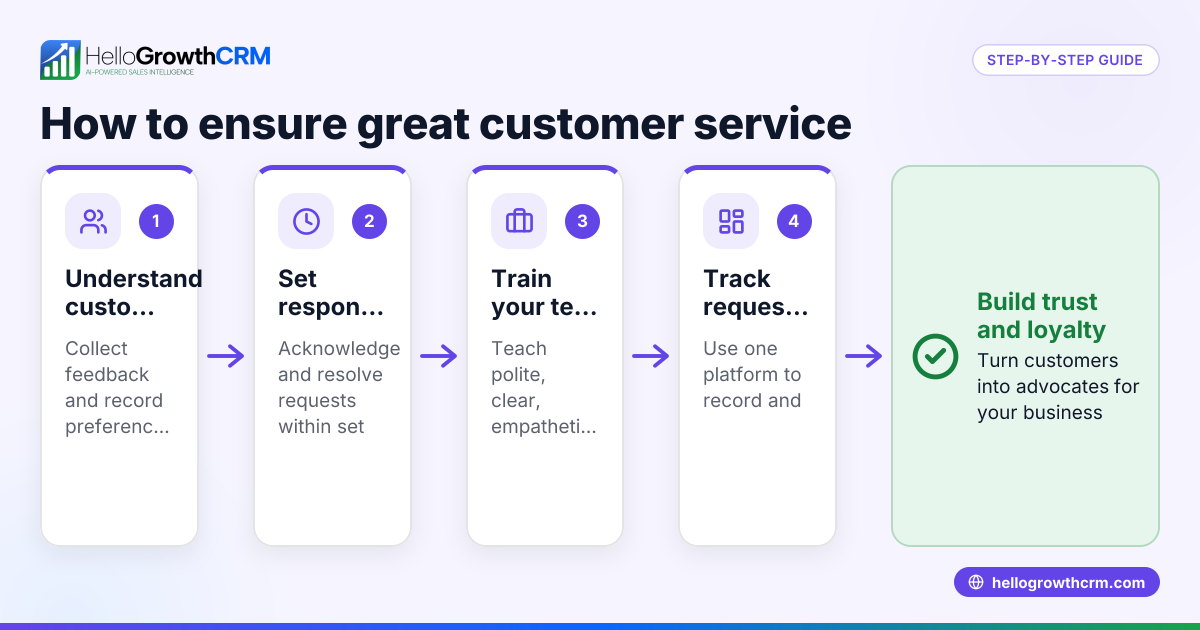
Can SLAs improve customer satisfaction? Yes. Clear, timely responses and resolutions build trust and loyalty. SLAs help your team prioritise requests and avoid delays.
Key takeaways
- Define measurable response and resolution times for each request type.
- Set realistic SLA targets aligned with customer expectations and team capacity.
- Communicate SLA targets clearly to your team and customers.
- Use a unified CRM system to track SLA compliance and manage tickets.
- Review and update SLA targets regularly to keep them relevant.
- HelloGrowthCRM supports SLA management with integrated tickets and customer portal.
Start setting your customer service SLA targets today to improve your Singapore business’s customer satisfaction and operational efficiency. Get started with the Free Forever plan (200 leads, no credit card) at Start on the Free Forever plan (200 leads, no credit card).
Ready to put this into practice?
Set up your pipeline, WhatsApp follow-ups, and AI lead scoring in minutes — free, no credit card.
Try HelloGrowthCRM freeGet CRM tips in your inbox
Join thousands of sales professionals who get weekly insights on CRM strategy, AI automation, and pipeline optimization.

The HelloGrowthCRM team publishes guides on CRM strategy, AI sales tools, and revenue operations for small business sales teams.