HelloGrowthCRM software
Built for real small-business sales teams
HelloGrowthCRM helps reps qualify faster, follow up on time, and close more deals—with practical automation in one place.
- AI lead scoring and pipeline visibility
- Built-in dialer, WhatsApp, and email automation
- Sales forecasting and RevOps-ready reporting
Setting up an effective follow-up system in your B2B sales pipeline is crucial for converting prospects into customers. A structured process ensures no lead falls through cracks and keeps your sales team productive. Using CRM tools optimized for follow-up, like HelloGrowthCRM’s AI-powered features, helps automate and prioritize outreach efficiently.
Key takeaways
- Follow-up systems improve lead engagement and increase conversion rates.
- Timely, personalized follow-ups prevent missed sales opportunities.
- Automation and AI, including ai follow up, optimize scheduling and lead prioritization.
- Compliance with US laws such as TCPA and CAN-SPAM is essential in outreach.
- A CRM with built-in follow-up features supports pipeline management and sales forecasting.
- Regularly reviewing follow-up performance ensures continuous improvement.
Why is a follow-up system important in your B2B sales pipeline?
In B2B sales, few prospects buy immediately after the first contact. A follow-up system helps nurture relationships over time. It reminds sales reps when and how to reach out next, improving consistency. Without it, leads can slip away unnoticed, reducing revenue. A structured system also lets you track communication history, aiding personalized conversations.
An effective follow-up system is especially critical in the US market, where business buyers expect clear, professional contact and often conduct extended decision-making. Meeting those expectations builds trust and positions your brand as reliable.
What is a “follow up boss” and how does it impact sales?
The phrase “follow up boss” may refer to either a sales culture or a tool designed to ensure follow-ups happen efficiently. Essentially, it highlights a disciplined approach where someone oversees follow-ups to guarantee no lead is neglected. This role or mindset drives accountability in the sales process.
Sales teams that adopt a “follow up boss” mentality see better pipeline health and fewer lost deals. Using a CRM with AI lead scoring and automatic reminders relieves reps from manual tracking while reinforcing prompt follow-up actions. This leads to higher responsiveness and more closed deals.
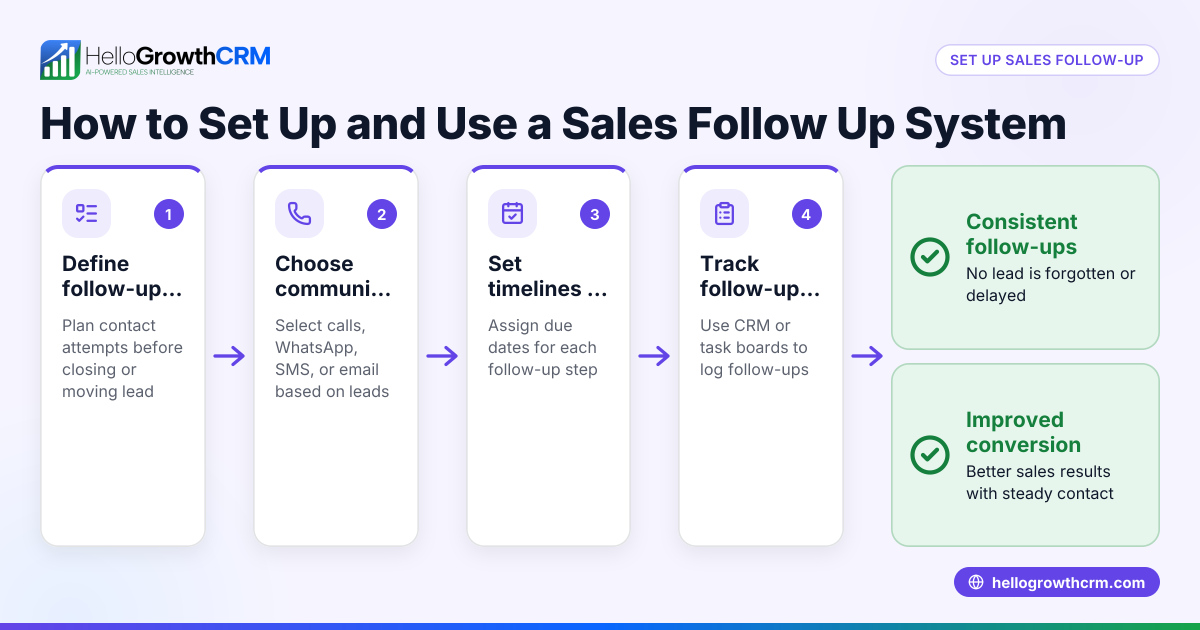
How to set up an effective follow-up process step by step
Setting up an effective follow-up process involves clear goals, prioritized leads, the right channels, automation, and ongoing review. Follow these steps to build a system that captures opportunities without overwhelming your team or prospects.
Step 1: Define your follow-up objectives and timeline
Start by deciding what you want to achieve with follow-ups: setting meetings, answering questions, or closing deals. Then, map out a reasonable cadence: when and how often to contact leads after the first touch. For B2B, initial follow-up is best within 24-48 hours. Subsequent touches depend on buyer response and stage in the sales pipeline.
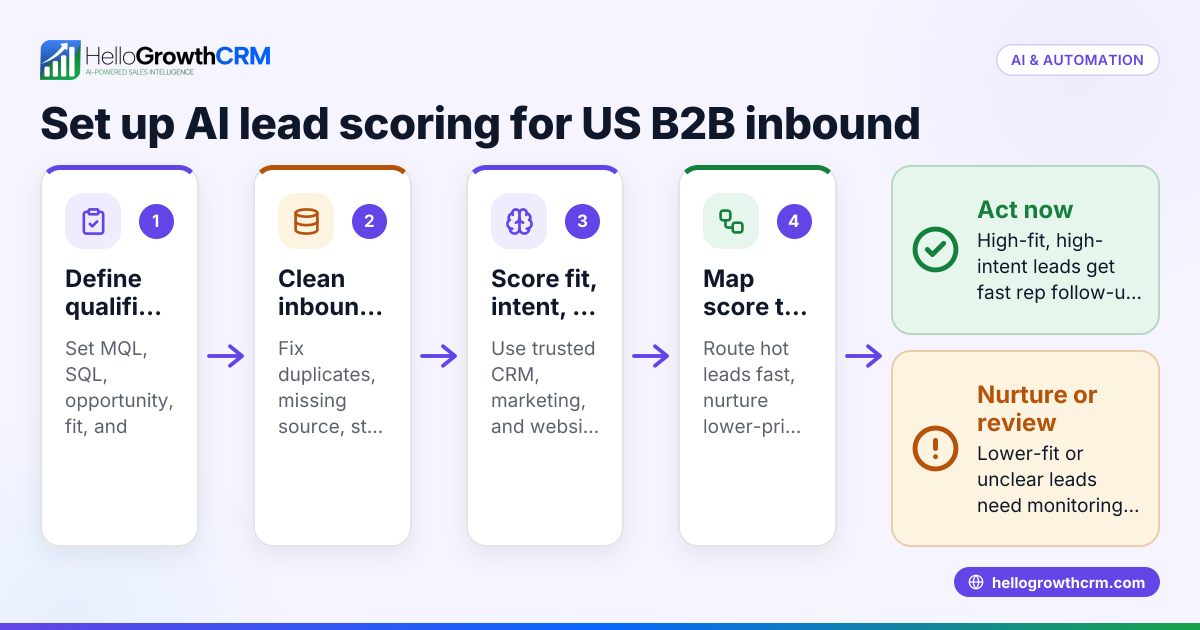
Step 2: Segment leads and prioritize based on potential
Not every lead requires the same intensity of follow-up. Use criteria like company size, budget, or engagement level to segment your contacts. AI lead scoring can help assign priority scores, letting your reps focus on the hottest prospects first. Lower-priority leads get periodic nurturing instead of daily contact.
Step 3: Choose your follow-up channels – email, phone, or WhatsApp
Most US B2B sales leverage email and phone calls as primary channels. Increasingly, WhatsApp gets used for faster, less formal messaging, mainly in industries open to this. Ensure that every chosen channel complies with CAN-SPAM and TCPA regulations to avoid legal issues. Multi-channel follow-up improves chances of a response.
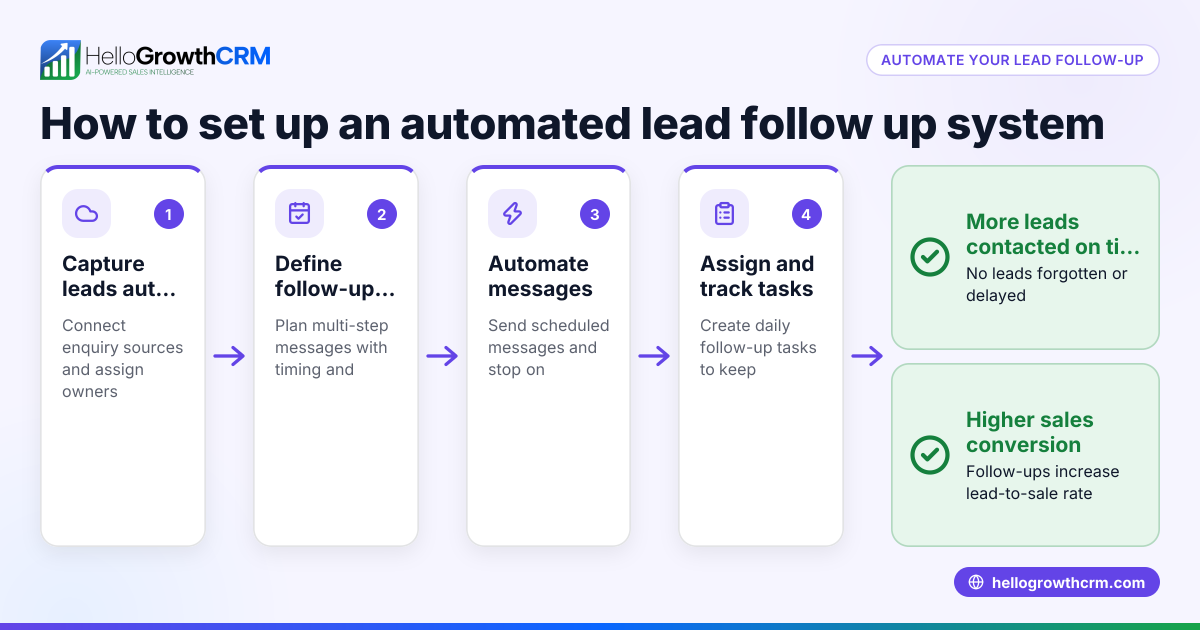
Step 4: Automate and personalize your follow-up sequences
Create email templates and call scripts tailored to different pipeline stages. Then build automated sequences in your CRM that schedule messages based on triggers like a lead’s latest action or elapsed time since last contact. With tools like HelloGrowthCRM’s email automation and AI CRM features, you can personalize content dynamically to increase engagement without adding manual workload.
Step 5: Track, analyze, and optimize your follow-up performance
Use your CRM’s reporting capabilities to review metrics such as response rates, meeting conversions, and pipeline velocity. Identify where leads drop off and adjust the timing or messaging accordingly. Regularly update your AI models with fresh data to improve [ai follow up] accuracy and lead prioritization. Continuous improvement keeps your follow-up system aligned with evolving buyer preferences.
What does ai follow up do for your B2B sales pipeline?
AI follow-up uses machine learning to schedule and personalize outreach automatically. It predicts the best times to contact leads and suggests messaging that resonates with each prospect. This reduces manual tasks and boosts conversion rates by focusing efforts where they matter most.
Using AI-driven follow-up tools, like those in HelloGrowthCRM, transforms raw data into actionable sales sequences. It continuously adapts based on results, increasing efficiency and helping your team close deals faster in competitive US markets such as Chicago or Houston.
How can you ensure your follow-up system complies with US sales and marketing laws?
Compliance with US sales and marketing laws requires respecting consumer rights and using proper consent processes. Follow CAN-SPAM guidelines for emails, including opt-out options, and adhere to TCPA rules for calls and texts, ensuring prior consent for outreach.
Your CRM should track consent and automate compliance checks. HelloGrowthCRM supports these safeguards, helping US B2B companies avoid penalties and maintain trust in regulated industries.
Expand on compliance: The CAN-SPAM Act mandates clear identification of commercial email messages, inclusion of valid physical addresses, and easy opt-out methods. The TCPA restricts calling and texting without prior express written consent, especially for automated communications. Using your CRM to capture and document consent helps maintain legal outreach and prevents costly violations.
Why does integrating follow-up with pipeline management matter?
Integrating your follow-up system within overall pipeline management creates a seamless view of where each lead stands. Reps know when next actions are due, what’s been communicated, and how close leads are to closing. This cohesion reduces lost leads due to confusion or poor timing.
HelloGrowthCRM’s pipeline management and sales forecasting tools work alongside the follow-up system to help sales leaders predict revenue and allocate resources more effectively at companies across the US.
How to train your team to adopt a follow-up discipline
Ensure every sales rep understands the importance of follow-up and knows how to use your CRM’s features. Provide onboarding sessions and clear documentation on timelines, messaging templates, and compliance standards.
Encourage adopting the “follow up boss” mentality by assigning managers to monitor follow-up metrics and coach the team. Recognize reps who maintain strong follow-up habits and close more deals to reinforce best practices.
What role does managed RevOps play in optimizing follow-ups?
Managed RevOps services help by continuously monitoring and tuning your sales operations, including the follow-up process. They bring expertise and dedicate resources to keep workflows efficient and aligned with business goals.
US B2B businesses benefit from managed RevOps when complex integrations, like ERP or finance platforms (e.g., QuickBooks or Stripe), need to sync with CRM follow-up systems. HelloGrowthCRM offers managed RevOps to enhance pipeline effectiveness and accelerate growth.
Getting started with an effective follow-up system
Building a successful follow-up system takes careful planning, the right technology, and ongoing refinement. Start by evaluating your existing sales process and identifying gaps in follow-up. Explore AI-powered CRM tools like HelloGrowthCRM, which combine AI lead scoring, automation, and pipeline management in one platform.
Ready to see how an efficient, compliant follow-up system can boost your B2B sales? Try a free trial or book a demo today and empower your team to become true follow-up bosses.
Frequently asked questions
What is the best timing for follow-ups in B2B sales?
The ideal first follow-up is within 24-48 hours after initial contact to show responsiveness. Subsequent follow-ups depend on prospect engagement but typically occur every 3-7 business days. Your CRM’s automation can adjust timing based on lead behavior to optimize contact frequency without overdoing it.
How can AI improve the follow-up process?
AI improves follow-up by predicting the best time and channel to contact each lead, personalizing messages, and prioritizing leads based on conversion likelihood. This reduces manual guessing and lets sales reps focus on high-potential opportunities, boosting overall efficiency.
How do I stay compliant when sending follow-up emails and calls?
Comply by including opt-out options in your emails as required by CAN-SPAM. For phone and text, ensure you have prior consent under TCPA rules. Use your CRM’s compliance tools to track opt-outs, consent status, and message history to avoid violations.
Can I integrate follow-up with my existing tools like QuickBooks?
Yes, integrating follow-up with finance tools like QuickBooks or payment processors helps create a seamless end-to-end sales and revenue operation. Many CRMs, including HelloGrowthCRM, offer integrations that facilitate data sharing and automate workflows across departments.
What if my sales reps don’t follow up consistently?
Inconsistent follow-ups cost deals. Use automation to set reminders and sequences that keep reps on track. Assign managers or a “follow up boss” role to monitor activities and coach reps. Regular training and performance reviews encourage accountability.
How does pipeline management improve follow-up effectiveness?
Pipeline management provides a clear view of deal stages and what follow-up actions are pending. It helps reps avoid duplicated efforts or missed contacts and supports forecasting by tracking progress. Combining follow-up and pipeline tools leads to a more predictable revenue flow.
Read next
This article covers one part of a bigger topic. For the complete picture, read our guide to follow up boss.
Frequently Asked Questions
Ready to put this into practice?
Set up your pipeline, WhatsApp follow-ups, and AI lead scoring in minutes — free, no credit card.
Try HelloGrowthCRM freeGet CRM tips in your inbox
Join thousands of sales professionals who get weekly insights on CRM strategy, AI automation, and pipeline optimization.

The HelloGrowthCRM team publishes guides on CRM strategy, AI sales tools, and revenue operations for small business sales teams.