HelloGrowthCRM software
Built for real small-business sales teams
HelloGrowthCRM helps reps qualify faster, follow up on time, and close more deals—with practical automation in one place.
- AI lead scoring and pipeline visibility
- Built-in dialer, WhatsApp, and email automation
- Sales forecasting and RevOps-ready reporting
Tracking customer interaction history means keeping a complete, organised record of every communication and service event with your customers. This helps you respond faster, personalise service, and avoid losing leads due to slow follow-up.
Why this comes up / what goes wrong
Many Indian small-business owners rely on WhatsApp chats, spreadsheets, or scattered notes to manage customer conversations. This leads to lost or delayed responses, repeated questions, and missed sales opportunities. Without a clear history, sales and support teams waste time asking customers to repeat information, and owners cannot measure customer health or forecast sales accurately. Tracking customer interactions helps you keep all communication in one place, making follow-ups timely and personalised.
Step-by-step
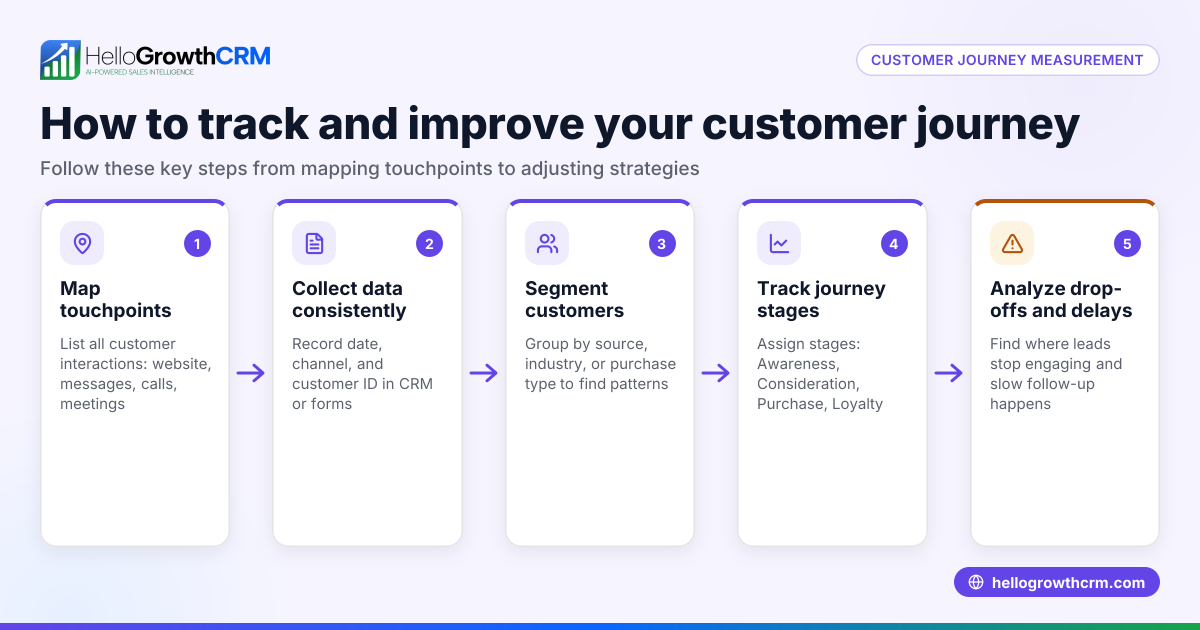
- Create a detailed customer profile for each lead or buyer. Include contact details, lead source (e.g., IndiaMART, JustDial), and any initial notes.
- Record every interaction immediately after it happens. Enter the date, communication channel (call, WhatsApp, email), a brief summary of the conversation, and any agreed next steps.
- Use a centralised system or CRM to log interactions. Avoid keeping records in separate WhatsApp chats or Excel sheets by consolidating data in one place.
- Tag interactions by type and status. For example, mark entries as 'follow-up', 'service request', or 'payment reminder' to filter and prioritise later.
- Schedule reminders and tasks linked to each interaction. Set follow-up dates and alerts to ensure timely responses.
- Review the full interaction history before contacting a customer again. This helps personalise communication and avoid repeating questions.
- Keep post-sale service requests and tickets on the same customer record as the deal. This maintains the full customer journey in one place.
- Analyse interaction patterns regularly, such as monthly. Identify customers needing attention or at risk of churn.
Check that each interaction entry includes the date, communication channel, content summary, and next action. Regularly back up your records to avoid data loss.
Example (fictional figures)
Rajesh runs a small electronics parts business in Pune. On 01/05/2024, he receives a lead from IndiaMART for ₹1,50,000 worth of capacitors.
- On 01/05/2024, Rajesh creates a customer profile:
- Name: Mr. Sharma
- Lead source: IndiaMART
- Contact: 9876543210
- On 02/05/2024, Rajesh calls Mr. Sharma and logs: "Discussed product specs, price ₹1,50,000, delivery in 7 days, next follow-up on 05/05/2024."
- On 05/05/2024, Rajesh sends a WhatsApp message reminder.
- On 06/05/2024, Mr. Sharma confirms the order. Rajesh updates the profile:
- "Order confirmed ₹1,50,000, delivery scheduled 13/05/2024."
- On 14/05/2024, Rajesh logs a service request:
- "Delivery delay complaint resolved."
Rajesh’s interaction log helps him track all communications and follow-ups without missing details.
Calculations example
- Order value: ₹1,50,000
- Advance payment received (30%): ₹1,50,000 × 30% = ₹45,000
- Balance due: ₹1,50,000 - ₹45,000 = ₹1,05,000
This calculation helps Rajesh track payment status alongside interaction history.
Common mistakes
- Not logging interactions promptly. Prevent this by entering details immediately after contact.
- Using separate tools for calls, messages, and notes. Prevent this by centralising all records in one CRM or log.
- Missing follow-up reminders. Prevent this by scheduling tasks linked to each interaction.
- Not reviewing past interactions before new contact. Prevent this by training your team to check history before reaching out.
- Losing post-sale service data. Prevent this by keeping service requests on the same customer record.
- Ignoring analysis of interaction history. Prevent this by reviewing interaction data regularly.
Using a CRM that supports WhatsApp and SMS communication helps avoid these mistakes. See WhatsApp and SMS CRM for options.
Doing this in HelloGrowthCRM
HelloGrowthCRM lets you track customer interaction history efficiently with features like a branded customer portal, referral tracking, support tickets, and a knowledge base. After the sale, all service requests stay linked to the same customer record as the deal, ensuring your team sees the full history. Learn more about how HelloGrowthCRM supports Indian SMBs at HelloGrowthCRM for India.
Frequently asked questions
How can I track customer interactions on WhatsApp effectively? Use a CRM that integrates WhatsApp messages into customer profiles, logging every chat and call automatically. This prevents lost messages and keeps all communication in one place.
What details should I record in each customer interaction? Record the date, communication channel (call, WhatsApp, email), summary of the discussion, and any agreed next steps or follow-ups.
How often should I update the interaction history? Update immediately after each contact to avoid missing details. Regularly review and clean up records monthly.
Can tracking customer interactions improve sales forecasting? Yes. Detailed interaction history helps identify hot leads and customer health, improving the accuracy of sales forecasts. See customer health score for more.
Is it necessary to track service requests after sales? Yes. Keeping service requests on the same customer record helps maintain full visibility of customer satisfaction and recurring issues.
Key takeaways
- Create and maintain detailed customer profiles with every interaction logged.
- Centralise all communication records in one system.
- Schedule and track follow-up tasks linked to interactions.
- Review interaction history before contacting customers.
- Keep post-sale service requests on the same customer profile.
- Analyse interaction data regularly to improve customer relationships.
Start tracking your customer interactions today to improve follow-ups and customer satisfaction. You can begin with HelloGrowthCRM’s Free Forever plan with 200 leads and no credit card at Start on the Free Forever plan (200 leads, no credit card).
Ready to put this into practice?
Set up your pipeline, WhatsApp follow-ups, and AI lead scoring in minutes — free, no credit card.
Try HelloGrowthCRM freeGet CRM tips in your inbox
Join thousands of sales professionals who get weekly insights on CRM strategy, AI automation, and pipeline optimization.

The HelloGrowthCRM team publishes guides on CRM strategy, AI sales tools, and revenue operations for small business sales teams.