HelloGrowthCRM software
Built for real small-business sales teams
HelloGrowthCRM helps reps qualify faster, follow up on time, and close more deals—with practical automation in one place.
- AI lead scoring and pipeline visibility
- Built-in dialer, WhatsApp, and email automation
- Sales forecasting and RevOps-ready reporting
To comply with Making Tax Digital (MTD) requirements in the UK, you must keep digital records of all sales invoices. This means recording each invoice's date, unique number, customer details, net amount, VAT rate, and total in a digital format that supports your VAT returns. Keeping these records accurate and up to date helps you file VAT returns correctly and avoid penalties. This article explains why invoice tracking matters, provides a step-by-step guide, a worked example, highlights common mistakes, and shows how HelloGrowthCRM can assist your sales and follow-up process.
Why this comes up / what goes wrong
Small business owners often struggle to meet MTD requirements because they track invoices across various formats like paper, spreadsheets, WhatsApp, and email. This scattered approach makes it difficult to produce accurate VAT returns digitally. Delays or errors in recording invoice details cause mismatches in VAT submissions, risking penalties from HMRC. The key challenge is to maintain a consistent digital record of all invoices from issue through payment, ensuring every invoice is traceable and reconciled with your VAT returns.
Step-by-step
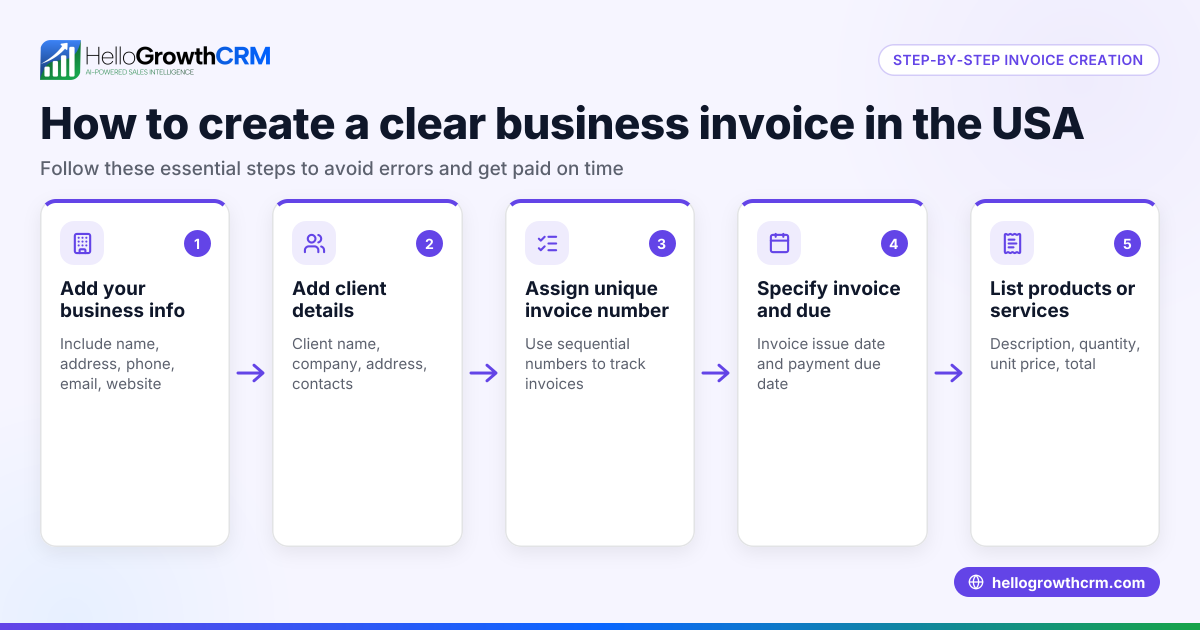
- Assign a unique invoice number to each sale: Use a sequential numbering system (e.g., INV0001, INV0002) to avoid duplicates.
- Record the invoice date accurately: This is the date the invoice is issued and is essential for VAT reporting.
- Include full customer details: Record the customer’s name and address to link invoices to clients.
- Enter invoice amounts and VAT details: Break down the total into net amount, VAT rate, and VAT amount.
- Store all invoices digitally: Use spreadsheets, accounting software, or CRM systems that allow digital export of invoice records compliant with MTD.
- Update payment status promptly when payments are received: Mark invoices as paid and record payment dates and amounts.
- Regularly reconcile your invoice records with your VAT returns: Check that your recorded invoices match the sales figures submitted.
- Back up your digital records securely: Use cloud storage or external drives to prevent data loss.
Check each step carefully to ensure no invoice is missing or duplicated. Consistency in data entry is essential for smooth VAT filing. Using a CRM that integrates communication tools like WhatsApp and SMS can help centralise your sales process and reduce errors. See more on WhatsApp and SMS CRM and the built-in CRM dialer.
Example (fictional figures)
Business: Birmingham Accountancy Ltd Date: 15/04/2024
- Invoice number: INV0015
- Invoice date: 10/04/2024
- Customer: GreenTech Solutions Ltd
- Net amount: £3,000
- VAT rate: 20%
- VAT amount: £3,000 × 20% = £600
- Total invoice amount: £3,000 + £600 = £3,600
- Payment received: £3,600 on 14/04/2024
Steps shown:
- Assign invoice number: INV0015
- Record invoice date: 10/04/2024
- Enter customer details: GreenTech Solutions Ltd
- Calculate VAT: £3,000 × 0.20 = £600
- Calculate total invoice: £3,000 + £600 = £3,600
- Record payment date and amount: 14/04/2024, £3,600
- Check that invoice figures match VAT return sales for April 2024
This clear record ensures the invoice is traceable, correctly recorded, and ready for MTD submission.
Common mistakes
- Not numbering invoices sequentially: Prevent by setting a clear numbering system and checking for duplicates.
- Mixing paper and digital records: Prevent by digitising all invoices promptly.
- Delaying payment updates: Prevent by recording payments as soon as they are received.
- Missing customer details: Prevent by requiring customer name and address on every invoice.
- Failing to reconcile invoices with VAT returns: Prevent by regular monthly checks.
- Storing data insecurely or without backup: Prevent by using cloud storage and regular backups.
Using a CRM like HelloGrowthCRM can reduce these mistakes by centralising your sales pipeline and follow-up tasks, ensuring no leads or deals are lost. See features on HelloGrowthCRM for the United Kingdom.
Doing this in HelloGrowthCRM
HelloGrowthCRM supports quotes, proposals, invoices, and payments received directly from each deal record. You can build, send, and track commercial documents with statuses like sent, viewed, and accepted visible alongside follow-up tasks on the same screen. This helps keep your sales process organised and digital, supporting your invoice tracking indirectly by ensuring deals progress and payments are recorded. For founders without sales managers, Managed RevOps support provides weekly follow-up execution and pipeline hygiene to maintain clean records. Learn more about these features on HelloGrowthCRM for the United Kingdom.
Frequently asked questions
Do I have to keep all invoices digitally for Making Tax Digital? Yes, MTD requires digital records of all sales invoices to ensure VAT returns can be submitted digitally. Paper-only or manual records are not compliant. Digital formats like spreadsheets or CRM systems are necessary.
What details must I include on each invoice? Each invoice must have a unique invoice number, invoice date, customer name and address, net amount, VAT rate, VAT amount, and total amount. These details ensure the invoice can be traced and reconciled with your VAT return.
Can I use Excel to track invoices for MTD? Yes, Excel can be used if you maintain a clear, consistent digital record with all required invoice details. It must be updated regularly and backed up securely. Many businesses find CRM software easier to manage.
How often should I update my invoice records? Update your invoice records as soon as invoices are issued and payments are received. Regular monthly reconciliation with your VAT returns is recommended to avoid errors.
What happens if I miss an invoice in my digital records? Missing invoices can cause discrepancies in your VAT returns, risking HMRC penalties. Prevent this by thorough checks and using tools like HelloGrowthCRM to keep your sales pipeline organised.
Key takeaways
- Keep a digital, sequential record of all sales invoices including full details.
- Update payment status promptly to maintain accurate records.
- Regularly reconcile invoices with VAT returns to avoid errors.
- Avoid mixing paper and digital records; digitise everything.
- Use backup systems to protect your invoice data.
- HelloGrowthCRM supports your sales process with quotes, invoices, and follow-up tasks.
Start tracking your invoices today with reliable digital records to meet Making Tax Digital requirements. To get started with a CRM that supports quotes, invoices, and payment tracking, Start on the Free Forever plan (200 leads, no credit card).
This article is general information, not tax or legal advice. Rules change; confirm the current position with HMRC or your accountant before acting.
Ready to put this into practice?
Set up your pipeline, WhatsApp follow-ups, and AI lead scoring in minutes — free, no credit card.
Try HelloGrowthCRM freeGet CRM tips in your inbox
Join thousands of sales professionals who get weekly insights on CRM strategy, AI automation, and pipeline optimization.

The HelloGrowthCRM team publishes guides on CRM strategy, AI sales tools, and revenue operations for small business sales teams.