HelloGrowthCRM software
Built for real small-business sales teams
HelloGrowthCRM helps reps qualify faster, follow up on time, and close more deals—with practical automation in one place.
- AI lead scoring and pipeline visibility
- Built-in dialer, WhatsApp, and email automation
- Sales forecasting and RevOps-ready reporting
Tracking pending sales follow ups is essential for Indian small and mid-sized businesses to avoid losing potential customers due to delays or missed contacts. A clear, organised method ensures no lead is forgotten and sales opportunities are maximised.
Why this comes up / what goes wrong
Many Indian small business owners and sales teams struggle with tracking pending sales follow ups because they rely on informal methods such as WhatsApp chats or spreadsheets. These methods often lack reminders, clear visibility, and accountability. Without a centralised system, it becomes difficult to know which leads require attention, when to call back, or what was discussed last. This causes follow-ups to be delayed or missed, resulting in lost sales and wasted effort.
Sales teams may also fail to assign specific follow-up dates or update lead statuses after contact, leading to confusion and inefficiency. When only one person manages follow-ups, leads can be missed if that person is unavailable. A structured approach with daily reviews and shared tracking tools helps prevent these issues.
Step-by-step
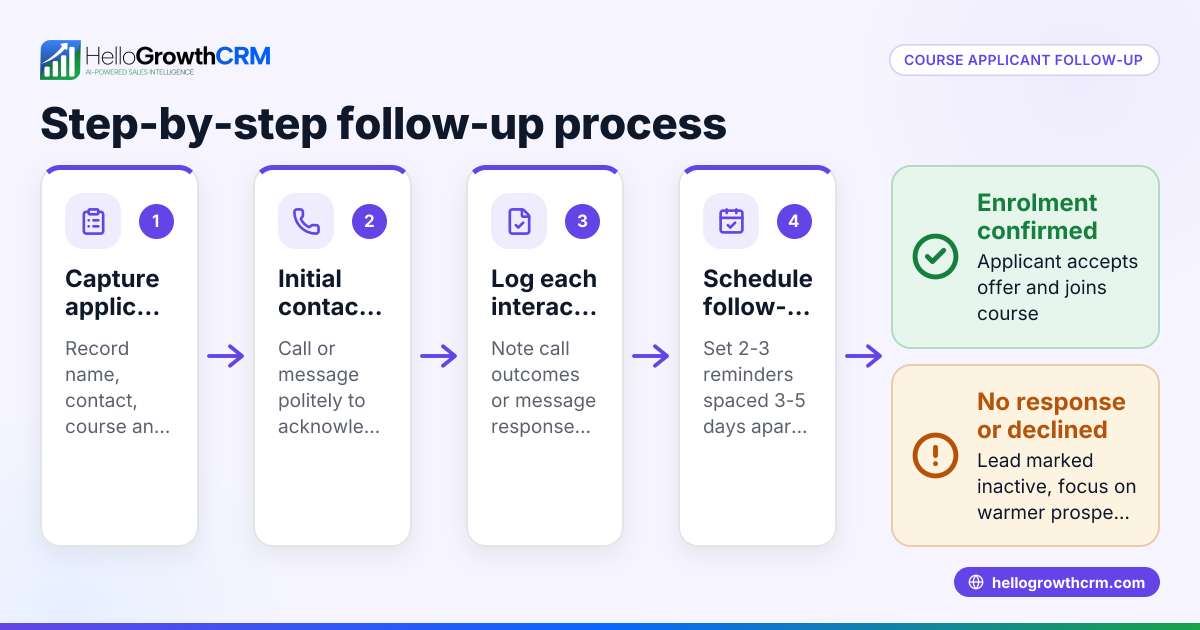
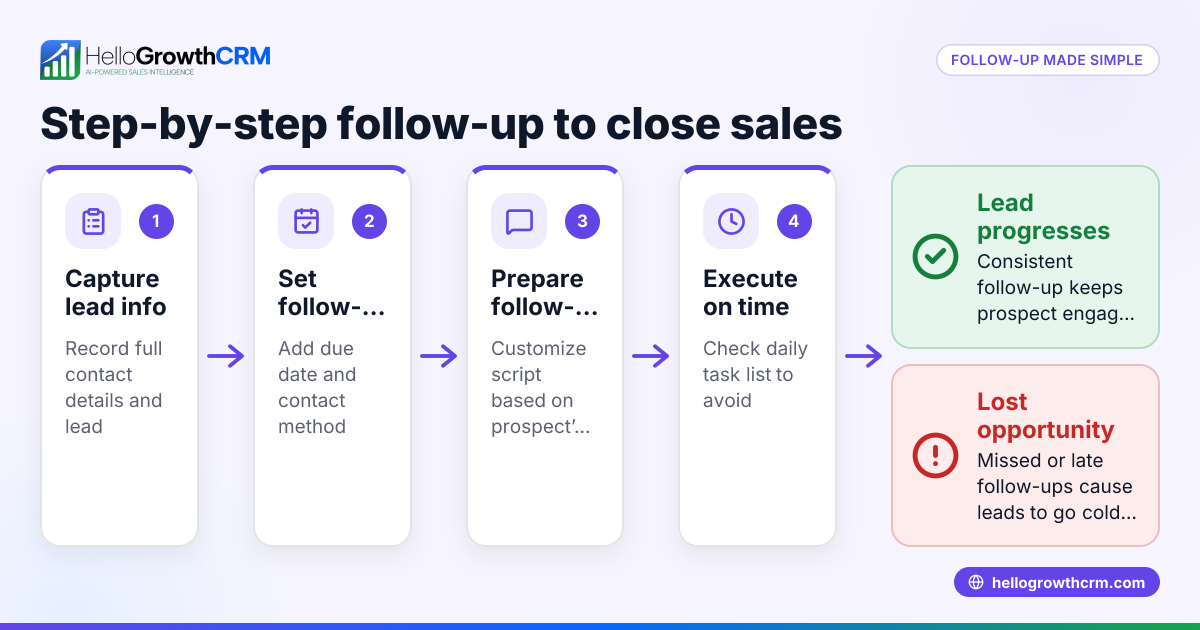
- Compile a list of all leads with contact details and enquiry dates. Include name, phone number, email or WhatsApp, and source (e.g., IndiaMART, JustDial).
- Set a follow-up date for each lead after the first contact or quotation sent. This is the next date you must reach out.
- Create a follow-up status column: Pending, Contacted, Interested, Not Interested, or Closed.
- Record the last interaction date and notes about the conversation or outcome. This helps recall details during future calls.
- Every morning, filter your list to show leads with follow-up dates due today or earlier. These are your pending follow ups.
- Contact the leads via their preferred channel (phone, WhatsApp, email). Immediately log the call or message outcome.
- Update the follow-up date if another contact is needed or change the status if the lead has moved forward or closed.
- Repeat this process daily to keep the sales pipeline active and avoid missing any pending follow ups.
- Use a shared task board or CRM to ensure all team members can view and update follow-ups. This prevents leads from being missed if one person is unavailable.
This methodical approach keeps your sales efforts organised and timely.
Example (fictional figures)
Sharma Engineering received an enquiry on 10/05/2024 from a client interested in a machinery part priced at ₹1,00,000.
- Enquiry date: 10/05/2024
- Quotation sent: 15/05/2024
- Follow-up date set: 20/05/2024
On 20/05/2024, the sales representative called the client. The client requested more time to decide.
- Update follow-up date to 27/05/2024
- Log call notes: "Client wants to review budget."
On 27/05/2024, the client agreed to purchase the part.
- Mark lead as Interested
- Move to next sales stage
This process prevented Sharma Engineering from losing the ₹1,00,000 sale by timely follow-up.
Calculation steps:
Quotation value = ₹1,00,000
No discount applied, so expected sale value remains ₹1,00,000
Follow-up interval from quotation sent (15/05/2024) to first follow-up (20/05/2024) = 5 days
Extended follow-up interval (20/05/2024 to 27/05/2024) = 7 days
Total days from quotation to sale confirmation = 12 days
This example shows how setting and updating follow-up dates keeps the sales process on track.
Common mistakes
- Not setting clear follow-up dates: Leads get lost without deadlines. Always assign a next contact date.
- Relying on memory or WhatsApp chats alone: These can be forgotten or buried in messages. Use a dedicated list or task board.
- Failing to update follow-up status after contact: Without updates, you won’t know which leads need attention.
- Checking follow-ups irregularly: Daily review is essential to prevent backlog.
- Using a single-person tracking system: If only one person manages follow-ups, leads can be missed when that person is unavailable. Use a shared tool.
- Not recording call or message outcomes: Without notes, future calls lack context and reduce chances of conversion.
Learn how sales task boards help organise follow-ups visually and keep your team aligned.
Doing this in HelloGrowthCRM
HelloGrowthCRM offers Deals (pipeline) where a quotation sent last week appears as a deal at the "quote sent" stage with a follow-up date, ensuring it is not forgotten. Each follow-up becomes a task with a due date in the Activities and task boards, turning daily calls into a manageable list rather than a memory test. You can also use Sequences and campaigns to automate a five-step follow-up over two weeks that stops as soon as the prospect replies. These features help Indian SMB sales teams track pending follow ups efficiently. Learn more on HelloGrowthCRM for India.
Frequently asked questions
How often should I review pending sales follow ups? Review your pending follow ups daily to ensure no lead is forgotten or delayed. This keeps your sales pipeline active and responsive.
Can I track follow ups without software? Yes, you can track follow ups using Excel or paper lists, but it requires discipline to update and check daily. Tools like task boards reduce errors and improve organisation.
What if a lead does not respond after multiple follow ups? Mark the lead as "Not Interested" or "Cold" after a reasonable number of attempts (for example, 3-5 calls or messages) to focus on active prospects.
Is WhatsApp enough for follow ups? WhatsApp is useful but without a system to remind you of pending follow ups, leads can be missed. Combining WhatsApp with task boards or CRM pipelines is better.
How can I automate follow ups? Automation tools like sequences send timed messages via email, SMS, or WhatsApp until the prospect replies, reducing manual effort. See email automation and sequences for details.
Key takeaways
- Set clear follow-up dates for every lead after contact or quotation.
- Review and update follow-ups daily to avoid missing pending tasks.
- Use a shared list or task board to track follow-ups and statuses.
- Avoid relying solely on memory or WhatsApp chats.
- Record call and message outcomes for context.
- Automate multi-step follow-ups where possible to save time.
Start tracking your pending sales follow ups today and avoid losing leads. Try HelloGrowthCRM with its pipeline, task boards, and follow-up automation. Start on the Free Forever plan (200 leads, no credit card).
Ready to put this into practice?
Set up your pipeline, WhatsApp follow-ups, and AI lead scoring in minutes — free, no credit card.
Try HelloGrowthCRM freeGet CRM tips in your inbox
Join thousands of sales professionals who get weekly insights on CRM strategy, AI automation, and pipeline optimization.

The HelloGrowthCRM team publishes guides on CRM strategy, AI sales tools, and revenue operations for small business sales teams.