HelloGrowthCRM software
Built for real small-business sales teams
HelloGrowthCRM helps reps qualify faster, follow up on time, and close more deals—with practical automation in one place.
- AI lead scoring and pipeline visibility
- Built-in dialer, WhatsApp, and email automation
- Sales forecasting and RevOps-ready reporting
Tracking solar project sales leads in New Zealand requires a clear process to capture enquiries, organise follow-ups, and monitor progress until a sale closes. Without this, leads can be lost or forgotten, costing you business. This guide explains why lead tracking is critical for small businesses, provides detailed steps to follow, shows a worked example, highlights common mistakes, and introduces how HelloGrowthCRM supports this process.
Why this comes up / what goes wrong
Small solar project businesses in NZ often get enquiries from multiple sources—phone calls, website forms, WhatsApp messages, or emails. Without a structured way to capture and track these leads, details can be missed or follow-ups delayed. Many owners rely on notebooks, spreadsheets, or text messages, which are hard to keep updated and share with their teams. This leads to lost opportunities and inefficiencies.
Tracking leads properly helps you assign responsibility, schedule follow-ups, and prioritise calls to the most promising prospects. It also provides a clear view of your sales pipeline so you can forecast revenue and plan workload.
Step-by-step
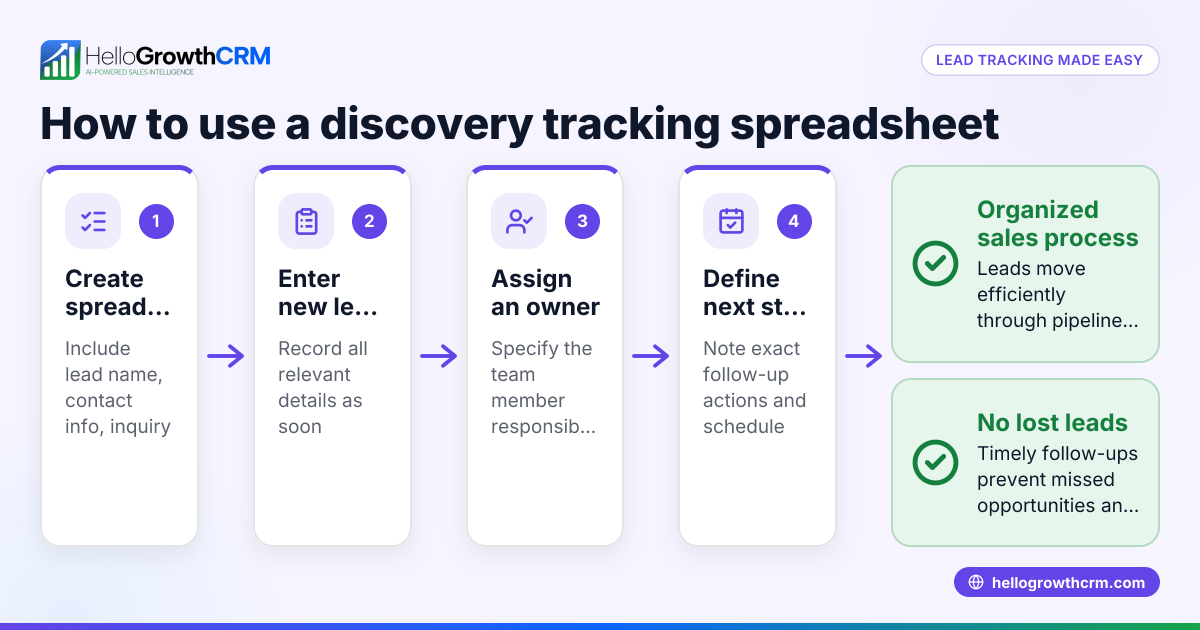
- Capture every lead in one place: Record every enquiry from phone, website form, WhatsApp, or email immediately. Include contact details, enquiry date, and project specifics.
- Assign an owner and next step: Allocate the lead to a sales team member responsible for follow-up. Set a clear next action, such as a phone call or site visit.
- Qualify the lead: Check if the prospect has a budget, timeline, and interest level to decide if they are a serious opportunity.
- Prioritise leads using scoring: Use criteria like project size, urgency, and decision-maker availability to rank leads. Follow up high-scoring leads first.
- Enter qualified leads into a sales pipeline: Track each lead’s stage—new enquiry, site visit arranged, quote sent, negotiation, or won/lost.
- Schedule follow-ups and reminders: Set dates to contact the lead again, especially after sending quotes or meeting onsite.
- Record all communications and updates: Keep notes of calls, messages, and changes in project status.
- Review pipeline regularly: Check for stalled leads or overdue follow-ups and take action.
- Analyse sales data monthly: Look at conversion rates, average deal size, and lead sources to improve your process.
- Use tools that integrate communication channels: This reduces missed enquiries and keeps history in one place.
Example (fictional figures)
Solar Solutions Ltd, an electrical contractor in Wellington, receives a web enquiry on 15/05/2024 for a residential solar system.
- Lead captured from website form: contact John Smith, email john.smith@example.nz, phone 021 555 123.
- Assigned to sales rep Sarah with next step: call John on 16/05/2024.
- Sarah calls John; he confirms interest and budget of NZ$15,000.
- Lead scored as high priority due to immediate timeline.
- Lead enters pipeline at 'qualified' stage.
- On 20/05/2024, Sarah schedules a site visit for 22/05/2024.
- Site visit done; quote prepared and sent on 25/05/2024 for NZ$14,500.
- Follow-up set for 30/05/2024.
- On 30/05/2024, John accepts quote; deal moves to 'won'.
Calculations:
Quoted price: NZ$14,500
Deposit required: 20% × NZ$14,500 = NZ$2,900
Balance on installation: NZ$14,500 - NZ$2,900 = NZ$11,600
This clear tracking helped Solar Solutions Ltd close the sale without delays or missed steps.
Common mistakes
- Not capturing all leads immediately: Leads slip through cracks. Prevent by using a single place to record enquiries.
- Failing to assign ownership: Leads get ignored. Assign a clear owner and next step.
- No prioritisation of leads: Time wasted on low-value prospects. Use lead scoring to focus effort.
- Ignoring follow-up schedules: Leads cool off and disappear. Set reminders and stick to them.
- Scattered communication records: Important details lost. Keep all notes and messages in one system.
- Not reviewing pipeline regularly: Stalled deals go unnoticed. Hold weekly reviews to keep momentum.
Doing this in HelloGrowthCRM
HelloGrowthCRM helps you track solar project sales leads by capturing every enquiry from forms, calls, or WhatsApp as a lead with an owner and next step. Its AI lead scoring lets telecallers focus on leads most likely to convert first. The Deals (pipeline) feature shows quotations sent, like those for solar projects, at the correct sales stage with follow-up dates, so no opportunity is forgotten. Learn more about AI lead scoring, WhatsApp and SMS CRM, and HelloGrowthCRM for New Zealand.
Frequently asked questions
How do I qualify a solar project lead? Qualify by confirming the prospect’s budget, timeline, and decision-making authority. Ask if they have a preferred installation date and any specific requirements. This helps focus on leads likely to convert.
What is lead scoring and why is it useful? Lead scoring ranks leads based on criteria like project size and urgency. It helps sales teams prioritise calls to leads most likely to buy, saving time and increasing conversions. HelloGrowthCRM includes AI lead scoring to automate this.
How often should I review my sales pipeline? Review your pipeline at least weekly to identify stalled leads, overdue follow-ups, or new opportunities. Regular reviews keep your sales process on track and improve forecasting.
Can I track communications from WhatsApp and calls in one place? Yes, using a CRM that integrates WhatsApp and call logs ensures all communication history is stored with the lead record. This prevents information loss and keeps the team informed.
What happens if I miss a follow-up? Missing a follow-up can cool a lead and reduce chances of closing. Use reminders and pipeline tracking to avoid this. If a follow-up is missed, contact the lead promptly to apologise and reschedule.
Key takeaways
- Capture every solar project enquiry in one central place immediately.
- Assign a lead owner and clear next step to ensure follow-up.
- Use lead scoring to prioritise high-value and urgent leads.
- Track leads through defined sales pipeline stages with scheduled follow-ups.
- Keep all communications and updates recorded and accessible.
- Review your sales pipeline regularly to avoid stalled deals.
Start managing your solar project sales leads today with a system that keeps you organised and responsive. Start on the Free Forever plan (200 leads, no credit card).
Ready to put this into practice?
Set up your pipeline, WhatsApp follow-ups, and AI lead scoring in minutes — free, no credit card.
Try HelloGrowthCRM freeGet CRM tips in your inbox
Join thousands of sales professionals who get weekly insights on CRM strategy, AI automation, and pipeline optimization.

The HelloGrowthCRM team publishes guides on CRM strategy, AI sales tools, and revenue operations for small business sales teams.