HelloGrowthCRM software
Built for real small-business sales teams
HelloGrowthCRM helps reps qualify faster, follow up on time, and close more deals—with practical automation in one place.
- AI lead scoring and pipeline visibility
- Built-in dialer, WhatsApp, and email automation
- Sales forecasting and RevOps-ready reporting
To write a sales follow up email in Singapore, start with a clear subject line, personalise the greeting, reference your previous contact, state the purpose briefly, include a call to action, and close politely. This article covers why follow-ups matter, detailed steps to write your email, a worked example with Singapore figures, common mistakes to avoid, and how HelloGrowthCRM can assist in managing follow-ups effectively.
Why this comes up / what goes wrong
Small-business owners in Singapore often lose leads because they delay or fail to send effective follow-up emails after initial contact. Many rely on WhatsApp, email, and spreadsheets without a structured process, resulting in missed opportunities and unorganised communication. Writing a sales follow up email can feel daunting without clear guidance, and without a good template, messages may seem generic or pushy, reducing the chance of a reply. This is why a step-by-step approach tailored for local business contexts is essential.
Step-by-step
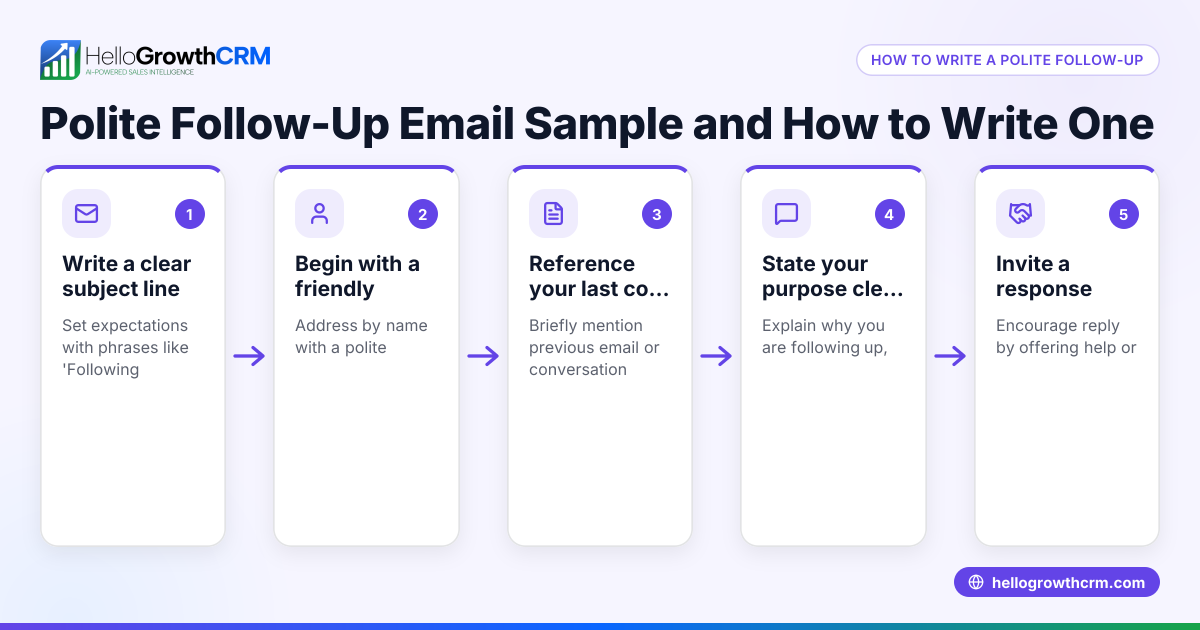
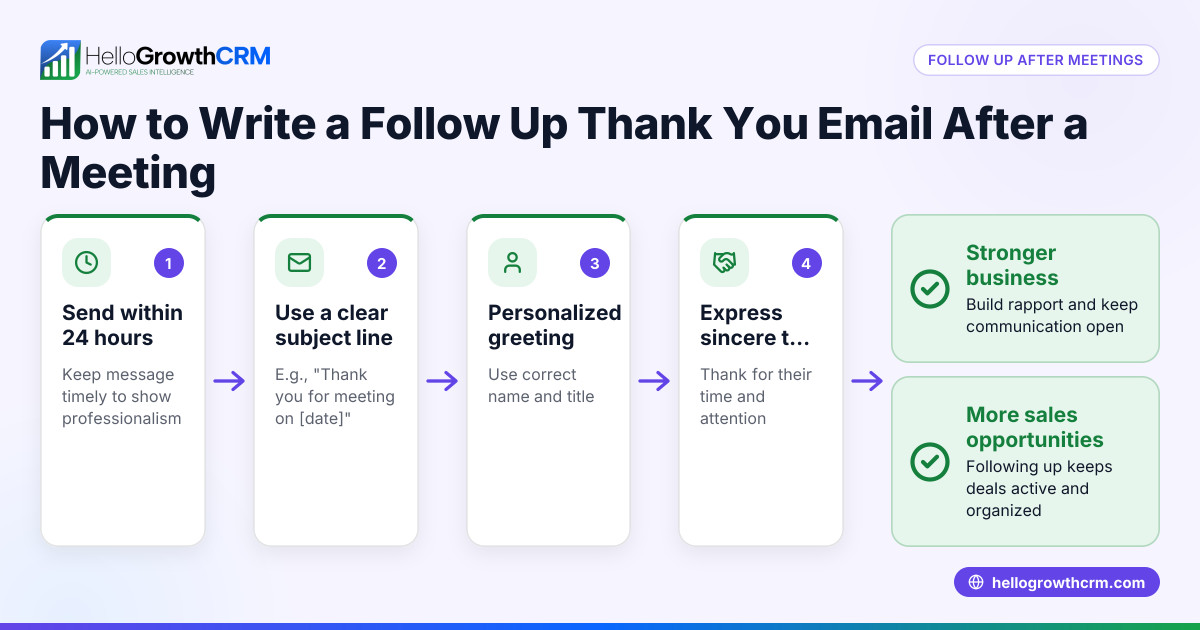
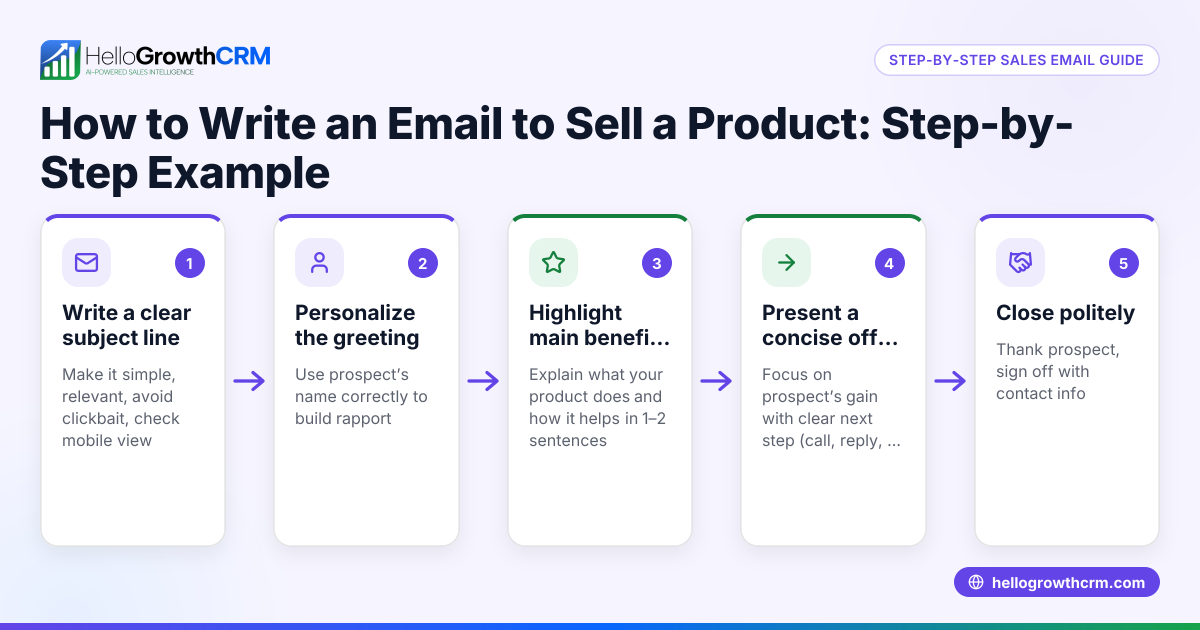
- Choose a clear subject line: Use a simple, direct subject like "Following up on our recent conversation" or "Quick follow-up on your interest in [product/service]". Check it is concise and relevant.
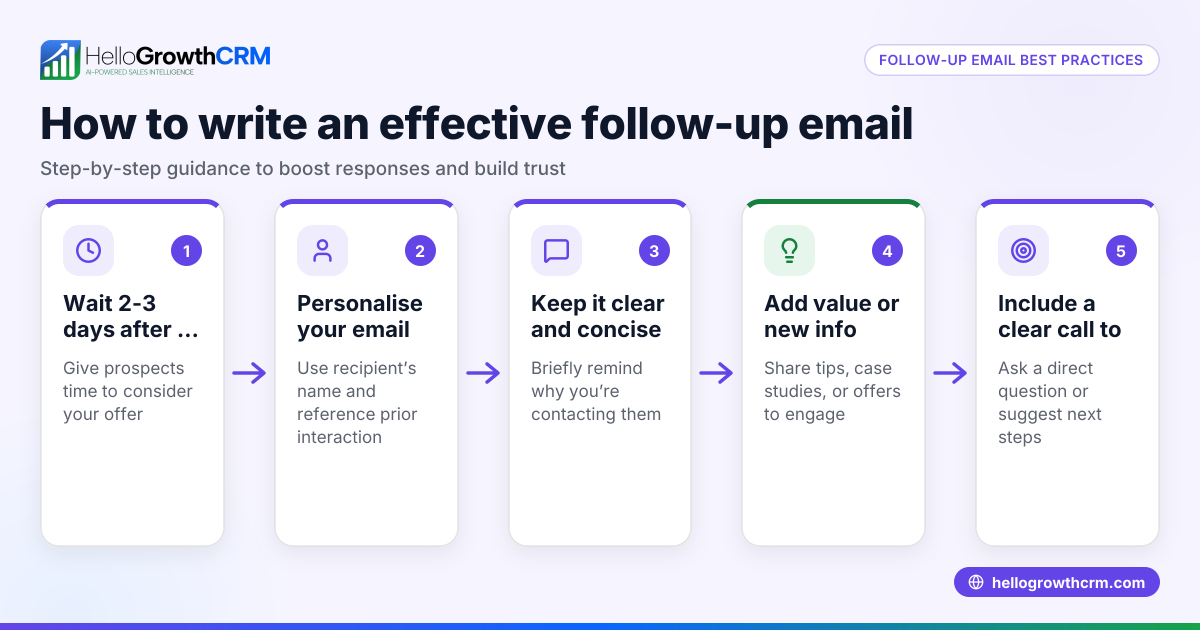
- Start with a personalised greeting: Address the recipient by name to show this is not a mass email. Confirm the spelling and title.
- Reference your last interaction: Remind them briefly where you met or what was discussed to jog their memory. For example, "I enjoyed our chat at the Tanjong Pagar expo last week."
- State the purpose clearly and briefly: Explain why you are following up, such as to provide more information, answer questions, or send a quotation. Avoid lengthy paragraphs.
- Include a clear call to action (CTA): Tell them what you want next, for example, "Please let me know if you would like to schedule a call this week."
- Close politely and professionally: Use a courteous sign-off like "Best regards" or "Thank you for your time" followed by your full name and contact details.
- Proofread and check tone: Review for spelling, grammar, and a friendly yet professional tone. Avoid slang or overly casual language.
- Send at an appropriate time: Aim for mid-morning or early afternoon on a weekday when emails are more likely to be read.
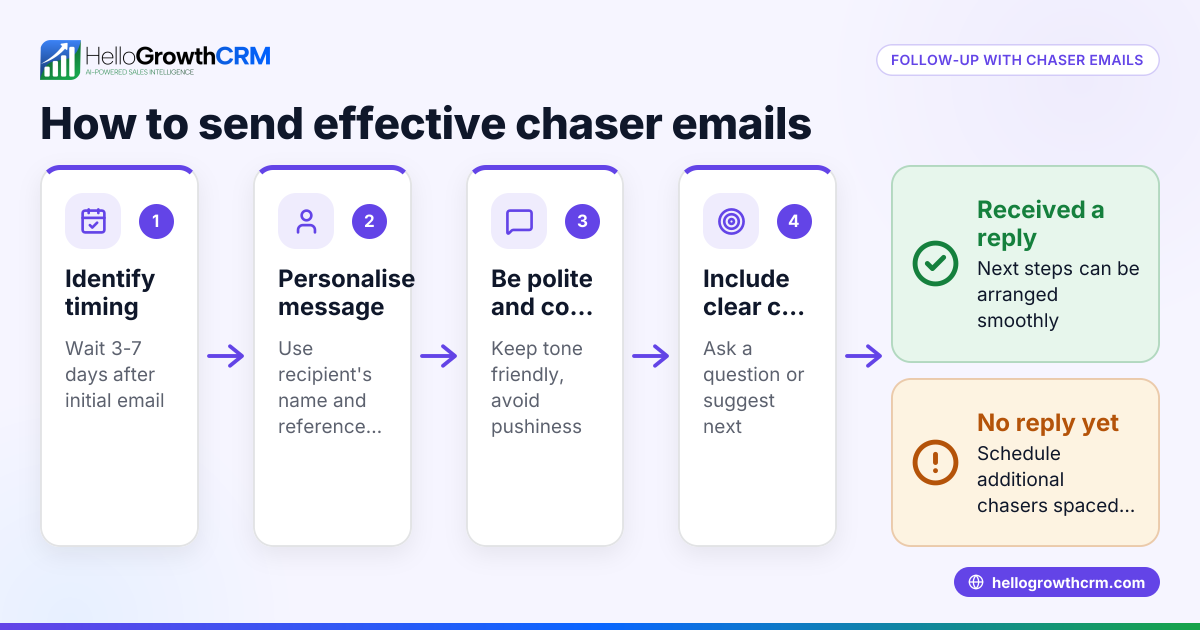
- Track your email and plan next steps: Note the date sent and set a reminder to follow up again if no reply after about one week.
For managing these steps efficiently, consider using sales task boards to organise follow-up activities.
Example (fictional figures)
An interior design studio in Tanjong Pagar wants to follow up on a lead interested in office renovations.
- Date of last contact: 15/04/2024
- Follow-up email sent: 22/04/2024
Email subject: Following up on your office renovation enquiry
Email body:
Dear Ms Tan,
I hope this finds you well. I enjoyed our discussion at your office on 15/04/2024 regarding your upcoming renovation plans.
I wanted to follow up and see if you had any questions about the quotation I sent on 18/04/2024. We are happy to adjust the design or provide further details.
Please let me know if you would like to schedule a call this week to discuss next steps.
Thank you for considering our services.
Best regards,
James Lee Interior Design Studio james.lee@interiorsg.com +65 9123 4567
Calculation for follow-up timing:
Date of last contact (15/04/2024) + 7 days = 22/04/2024 (follow-up email date)
This timing balances giving the prospect enough time to review the quotation while keeping your offer top of mind.
Common mistakes
- Sending a generic email: Prevent by personalising with the recipient’s name and referencing specific details.
- Being too pushy or salesy: Avoid by keeping the tone polite and offering help rather than pressing for an immediate decision.
- Forgetting to include a call to action: Always tell the recipient what you want them to do next.
- Neglecting to proofread: Mistakes reduce professionalism; always double-check spelling and grammar.
- Following up too soon or too late: Set reminders to follow up about a week after the last contact; too soon can annoy, too late can lose the lead.
- Not tracking follow-ups: Use tools like sales task boards to keep organised and avoid missed opportunities.
Doing this in HelloGrowthCRM
HelloGrowthCRM offers several features to streamline your sales follow-up process. You can set up Sequences and campaigns that automate a five-step follow-up over two weeks, which stops automatically when the prospect replies. Each follow-up becomes a task with a due date in Activities and task boards, so you see your daily calls and tasks clearly without relying on memory. Replies to your quotation emails appear in the shared HelloMail inbox, making them visible to your whole team and ensuring no reply is missed. Learn more about email automation and sequences and sales task boards to improve your follow-up efficiency.
Frequently asked questions
How soon should I send a sales follow up email in Singapore? Aim to send your first follow-up about 7 days after your last contact or quotation. This timing respects the prospect’s need to consider your offer while keeping your business fresh in their mind.
What is a good subject line for a follow-up email? Use a clear and relevant subject line such as "Following up on your enquiry" or "Checking in on your interest in [product/service]". Avoid vague or overly salesy phrases.
How many follow-up emails should I send? Typically, 3 to 5 follow-ups spaced over two weeks work well. More than that can feel intrusive, but some prospects may need gentle reminders. Automating this with a CRM sequence can help.
Can I use WhatsApp instead of email for follow-ups? WhatsApp can be effective but is best used alongside email for formal communication. Ensure you have consent to message on WhatsApp and keep messages professional.
How do I keep track of multiple follow-ups? Use a CRM with task boards to assign due dates and reminders for each follow-up. This prevents leads from slipping through the cracks and reduces stress.
Key takeaways
- Personalise your follow-up email with names and references to previous contact.
- Keep your message clear, brief, and include a call to action.
- Send follow-ups about one week after last contact and space subsequent emails appropriately.
- Avoid generic, pushy, or error-filled emails to maintain professionalism.
- Use tools like sales task boards and email automation and sequences to organise and automate follow-ups.
- HelloGrowthCRM’s shared inbox helps your team stay aligned on email replies.
Start improving your sales follow-up emails today to convert more leads and grow your Singapore business. Start on the Free Forever plan (200 leads, no credit card).
Ready to put this into practice?
Set up your pipeline, WhatsApp follow-ups, and AI lead scoring in minutes — free, no credit card.
Try HelloGrowthCRM freeGet CRM tips in your inbox
Join thousands of sales professionals who get weekly insights on CRM strategy, AI automation, and pipeline optimization.

The HelloGrowthCRM team publishes guides on CRM strategy, AI sales tools, and revenue operations for small business sales teams.