HelloGrowthCRM software
Built for real small-business sales teams
HelloGrowthCRM helps reps qualify faster, follow up on time, and close more deals—with practical automation in one place.
- AI lead scoring and pipeline visibility
- Built-in dialer, WhatsApp, and email automation
- Sales forecasting and RevOps-ready reporting
Inbound call solutions are systems and processes that help small businesses manage incoming customer calls efficiently by routing calls correctly, logging details, and enabling timely follow-up. This article covers why inbound call solutions matter, how to implement them step-by-step, common mistakes to avoid, and how HelloGrowthCRM’s built-in dialer can support your sales team.
Why this comes up / what goes wrong
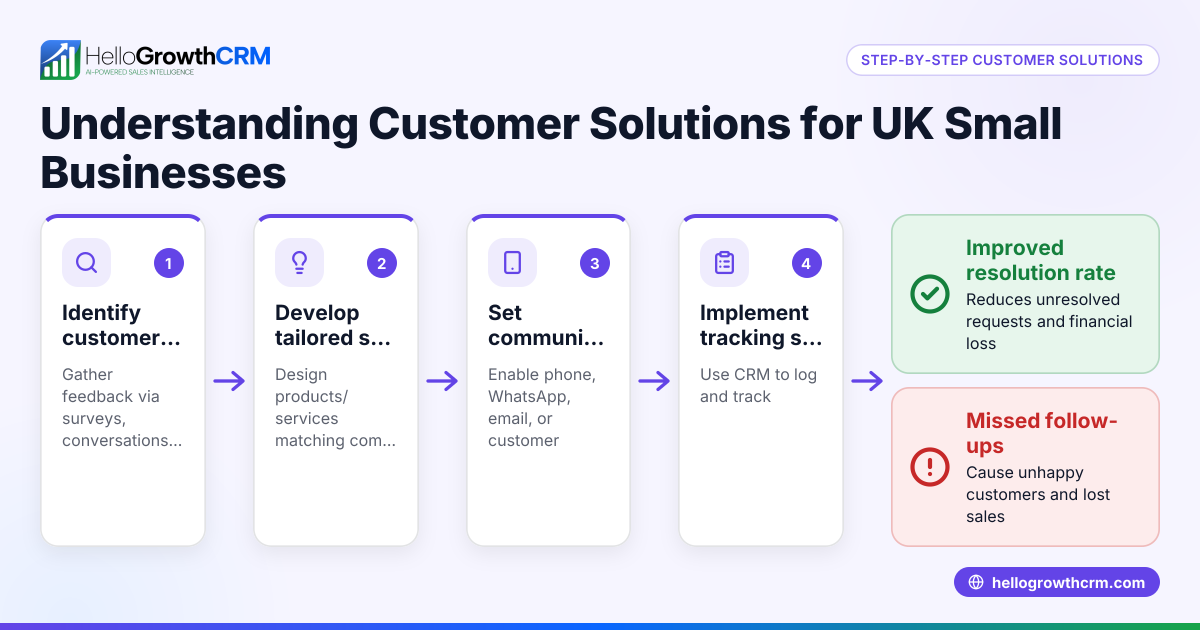
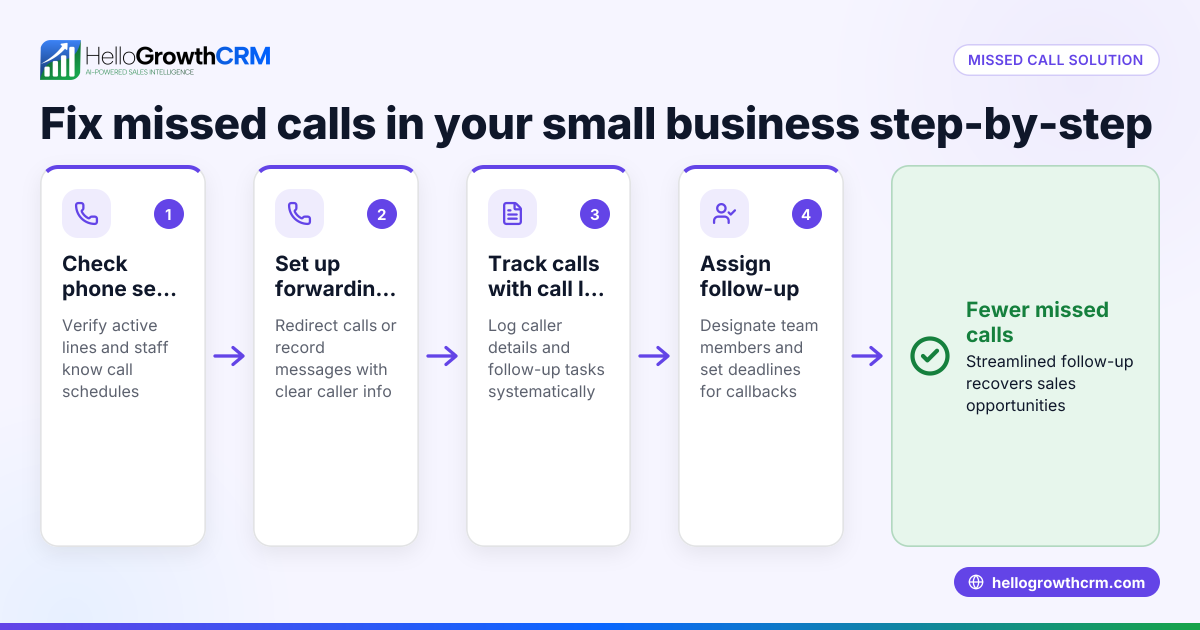
Small business owners often face lost leads and wasted time because inbound calls are not handled effectively. Common problems include calls going unanswered, no clear way to track who called or what was discussed, and no system for follow-up. Many rely on personal phones, text messages, or spreadsheets, which leads to missed opportunities and scattered customer data. Without a proper inbound call solution, teams struggle to keep up with prospects and customers, slowing growth.
Step-by-step
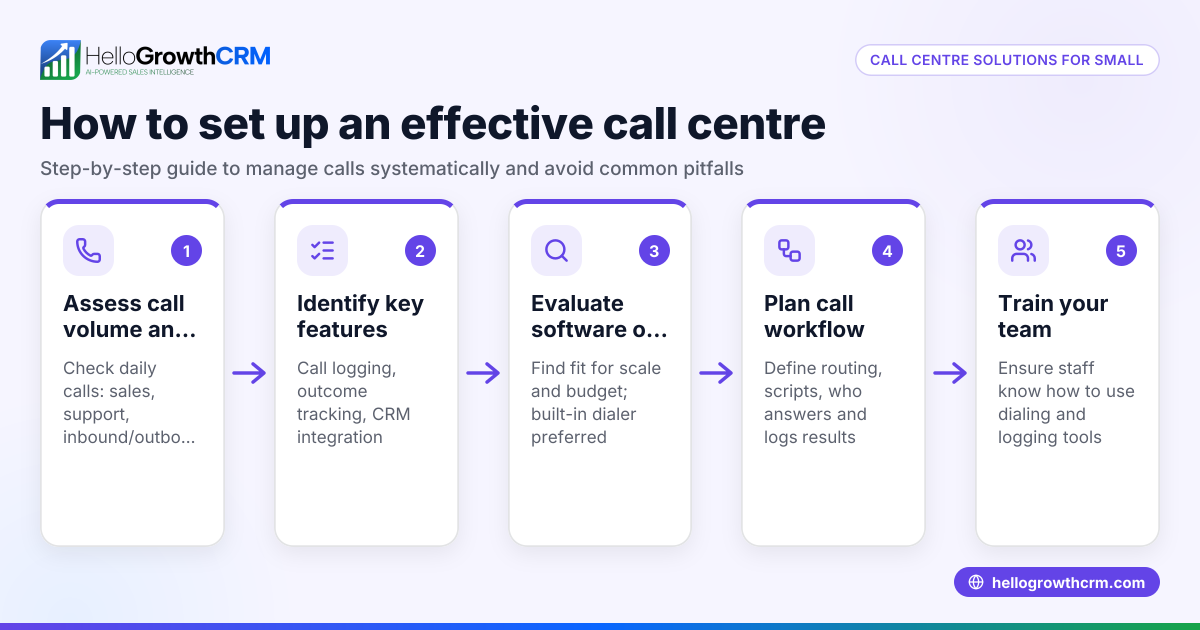
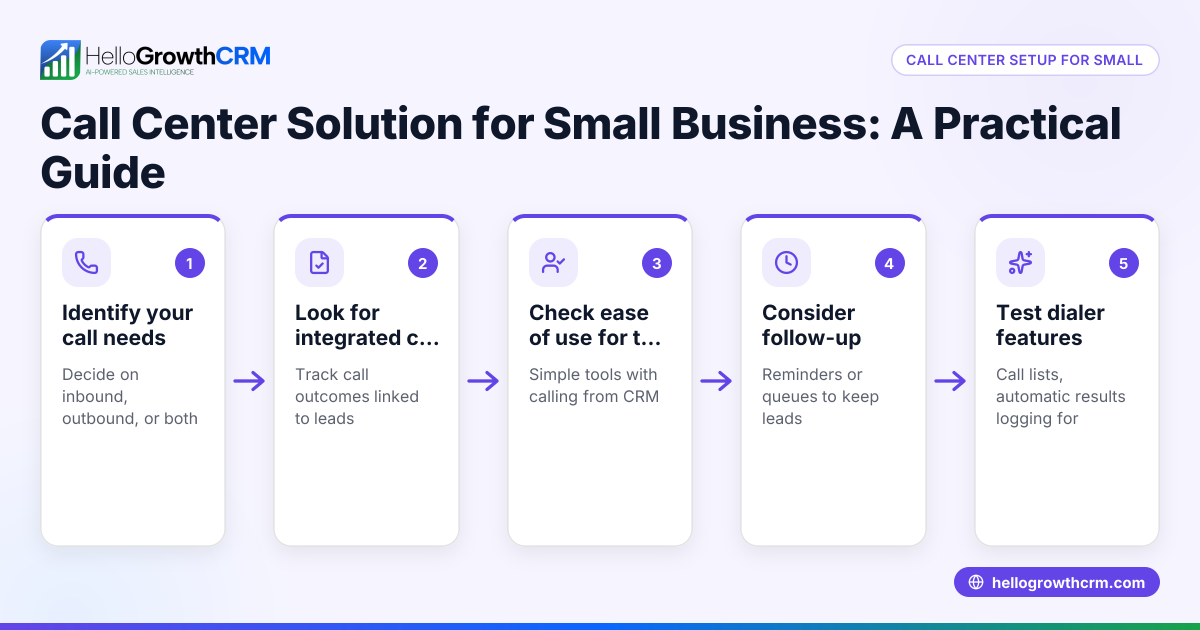
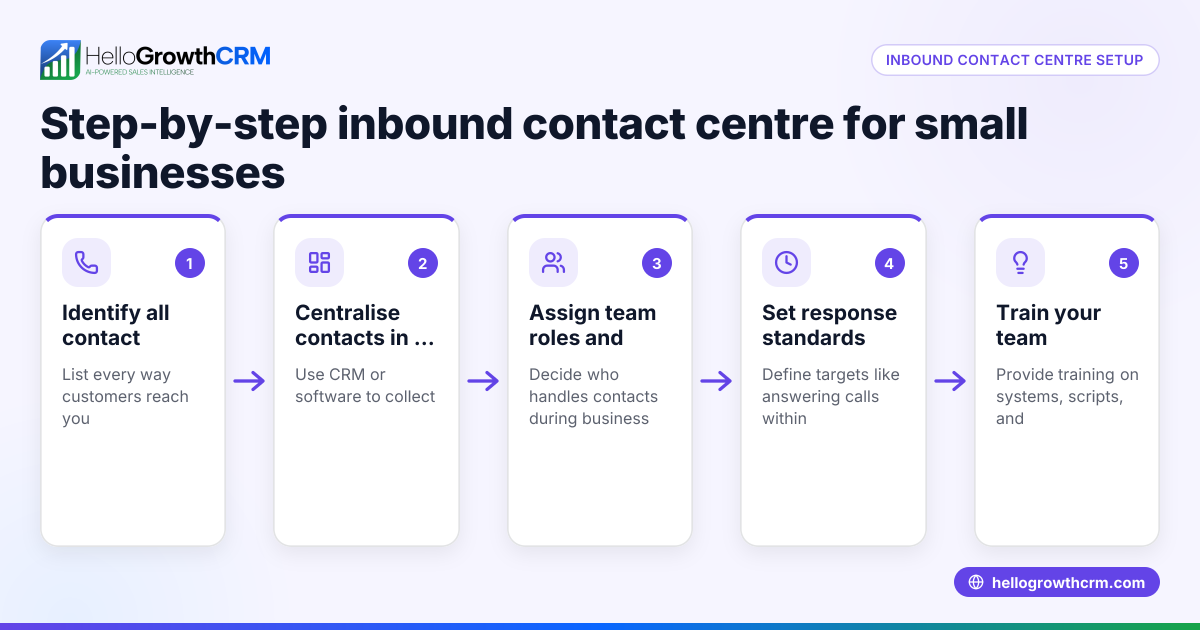
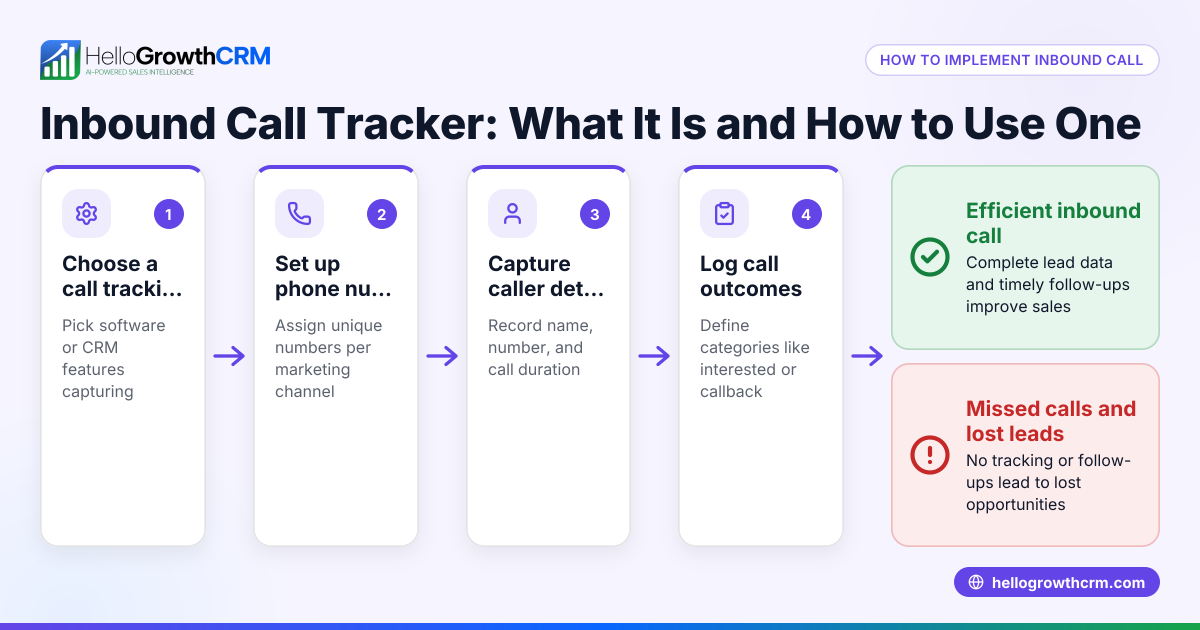
- Choose a call management system: Select a solution that fits your business size and workflow. It should handle call routing, logging, and reporting. Check if it integrates with your CRM or lead management tools.
- Set up call routing rules: Decide how calls should be directed—by department, agent availability, or skill set. Confirm the system can handle peak call times without dropping calls.
- Train your team: Ensure everyone answering calls knows how to use the system, log call outcomes, and schedule follow-ups. Provide scripts or guidelines for consistent customer experience.
- Log every call: Ensure each inbound call is recorded with caller details, time, and notes. This helps track lead status and prevents lost information.
- Follow up promptly: Assign calls to the right sales reps or teams for timely follow-up. Monitor response times and call outcomes regularly.
- Analyze call data: Use call reports to identify bottlenecks, peak hours, and team performance. Adjust routing and staffing based on insights.
- Integrate with CRM: Connect your inbound call system to your CRM to centralize customer data, track interactions, and automate next steps.
See more about the built-in CRM dialer and how to manage customer communications efficiently with WhatsApp and SMS CRM.
Example (fictional figures)
A two-location dental practice in Columbus, Ohio, receives about 120 inbound calls weekly. They adopt an inbound call solution to improve lead handling.
- Weekly calls: 120
- Average conversion rate before: 15%
- Average conversion rate after: 25%
Calculations:
Before solution: 120 calls × 15% = 18 new appointments
After solution: 120 calls × 25% = 30 new appointments
Increase in appointments: 30 - 18 = 12 additional appointments weekly
Assuming each appointment generates $200 revenue: 12 × $200 = $2,400 additional weekly revenue
Annual impact: $2,400 × 52 weeks = $124,800 additional revenue per year
This example shows how a structured inbound call solution can increase sales and revenue by improving call handling and follow-up.
Common mistakes
- Ignoring call logging: Not recording call details leads to lost information and missed follow-ups. Prevent this by using a system that automatically logs calls.
- Poor call routing: Routing calls randomly or to unavailable agents frustrates customers. Set clear routing rules and test them regularly.
- No team training: Untrained staff can mishandle calls or forget to update records. Provide regular training and easy-to-follow guidelines.
- Delayed follow-up: Waiting too long to contact leads reduces conversion chances. Assign calls quickly and monitor follow-up times.
- Using multiple disconnected tools: Managing calls on phones, texts, and spreadsheets causes data silos. Use integrated solutions like a CRM with a built-in dialer to centralize data and calls.
- Neglecting call data analysis: Without reviewing call metrics, you miss opportunities to improve. Schedule regular reviews of call reports.
Learn more about managing calls with the built-in CRM dialer.
Doing this in HelloGrowthCRM
HelloGrowthCRM includes a built-in dialer that lets your sales reps call leads directly from the CRM. Each call’s outcome is logged automatically on the lead record, keeping your sales pipeline updated without extra work. This feature helps your team stay organized, track conversations, and follow up efficiently. See details about the built-in CRM dialer.
Frequently asked questions
What are inbound call solutions? Inbound call solutions are tools and processes that manage incoming customer calls. They help route calls properly, log call details, and enable timely follow-up to convert leads into customers.
Why do small businesses need inbound call solutions? Small businesses often lose leads due to missed or poorly handled calls. Inbound call solutions ensure calls are answered, tracked, and acted on quickly, improving customer experience and sales.
Can inbound call solutions integrate with my CRM? Yes, many inbound call solutions integrate with CRMs to centralize customer data and automate follow-up tasks. Using a CRM with a built-in dialer allows call outcomes to be logged directly on lead records.
How do I train my team on inbound call solutions? Provide clear instructions on how to answer calls, use the system features, log call outcomes, and schedule follow-ups. Regular refreshers help maintain consistency.
Are inbound call solutions expensive? Costs vary by provider and features. Some CRMs include built-in dialers that reduce the need for separate phone systems, which can save money and simplify workflows.
Learn about managing customer communications with WhatsApp and SMS CRM.
Key takeaways
- Inbound call solutions help small businesses handle customer calls efficiently by routing, logging, and enabling follow-up.
- Proper call management prevents lost leads and improves customer experience.
- Training your team and analyzing call data are essential for success.
- Avoid common mistakes like poor routing, no logging, and delayed follow-up.
- Using a CRM with a built-in dialer helps keep call records organized and follow-ups timely.
Start improving your inbound call handling today. Start on the Free Forever plan (200 leads, no credit card).
Ready to put this into practice?
Set up your pipeline, WhatsApp follow-ups, and AI lead scoring in minutes — free, no credit card.
Try HelloGrowthCRM freeGet CRM tips in your inbox
Join thousands of sales professionals who get weekly insights on CRM strategy, AI automation, and pipeline optimization.

The HelloGrowthCRM team publishes guides on CRM strategy, AI sales tools, and revenue operations for small business sales teams.