HelloGrowthCRM software
Built for real small-business sales teams
HelloGrowthCRM helps reps qualify faster, follow up on time, and close more deals—with practical automation in one place.
- AI lead scoring and pipeline visibility
- Built-in dialer, WhatsApp, and email automation
- Sales forecasting and RevOps-ready reporting
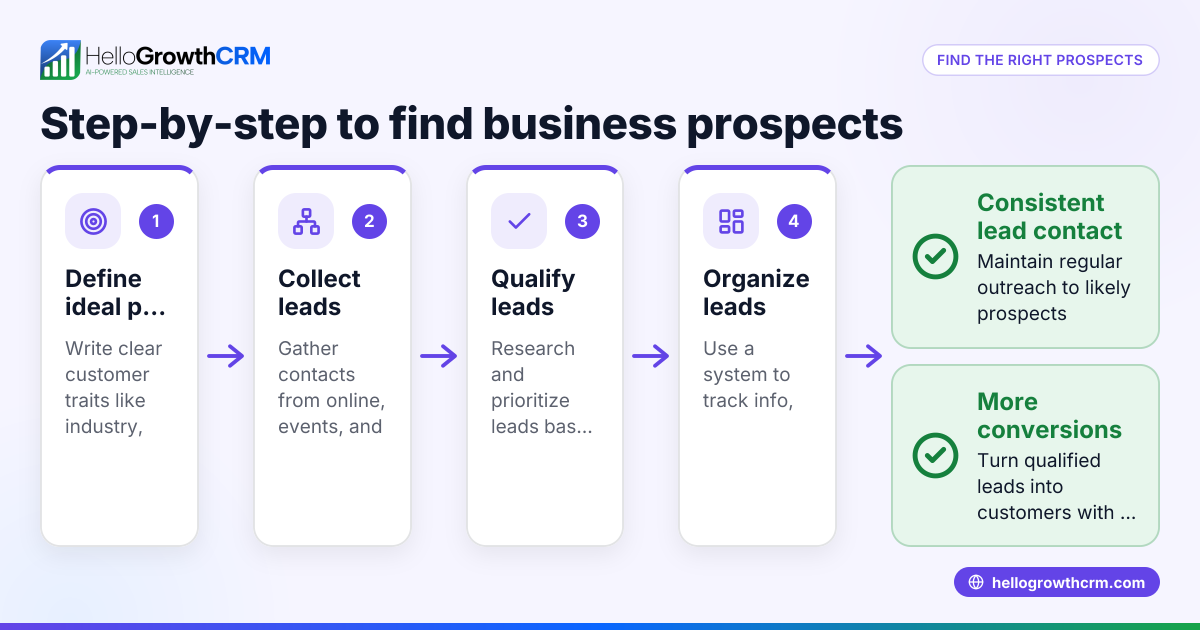
An insurance prospect is a potential client who has expressed interest in insurance products or services and may be ready for follow-up by an agent or broker. Insurance business owners and accountants in the US need to recognize and qualify these prospects efficiently to focus sales efforts and increase conversion rates. This article explains why insurance prospecting is important, provides clear steps to qualify prospects, includes a US-based example, highlights common mistakes, and answers practical questions.
Why this comes up / what goes wrong
Insurance business owners and accountants often face challenges managing leads effectively. Prospects may come from various sources such as referrals, web forms, cold outreach, or marketing campaigns. Without a clear process, many leads go cold due to slow or inconsistent follow-up. Insurance products are complex, and prospects vary widely in their needs and readiness to buy. Agents need to quickly assess if a prospect fits their target market, the type of insurance product suitable, and the prospect’s likelihood to convert. Poor qualification wastes time and resources chasing unlikely buyers, while missing key prospects reduces sales.
For example, a small insurance agency may receive dozens of leads weekly but lack a system to score and prioritize them. This results in missed opportunities and inefficient use of sales time. Accountants supporting these agencies also struggle to track lead status and forecast revenue accurately. Implementing a clear qualification process helps both owners and accountants manage prospects better.
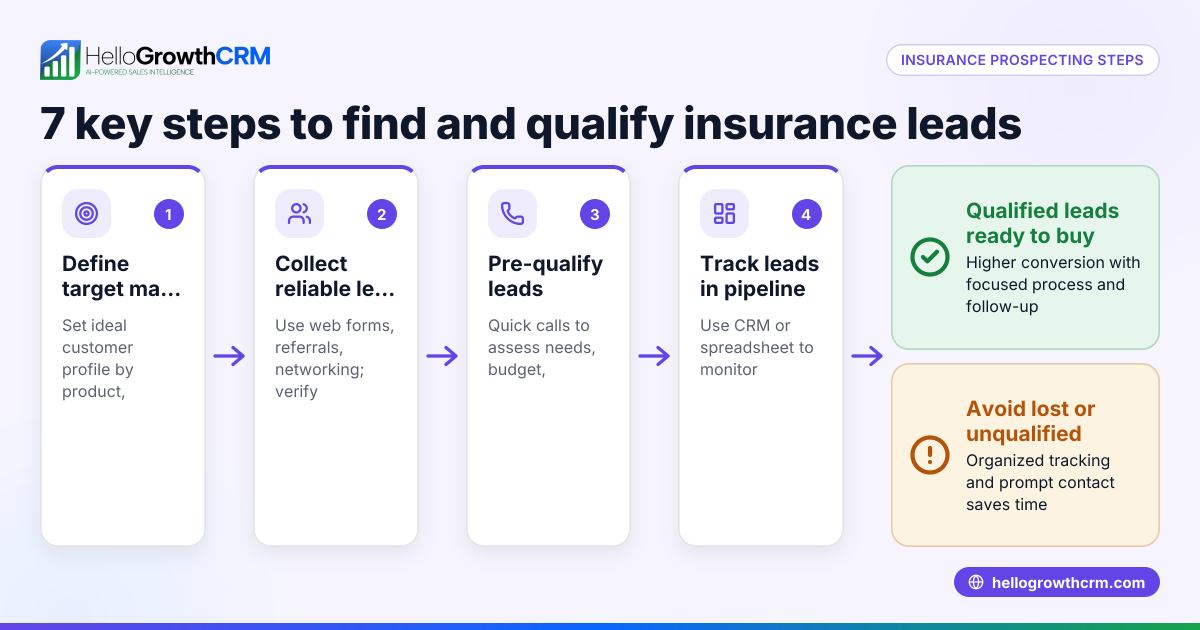
Step-by-step
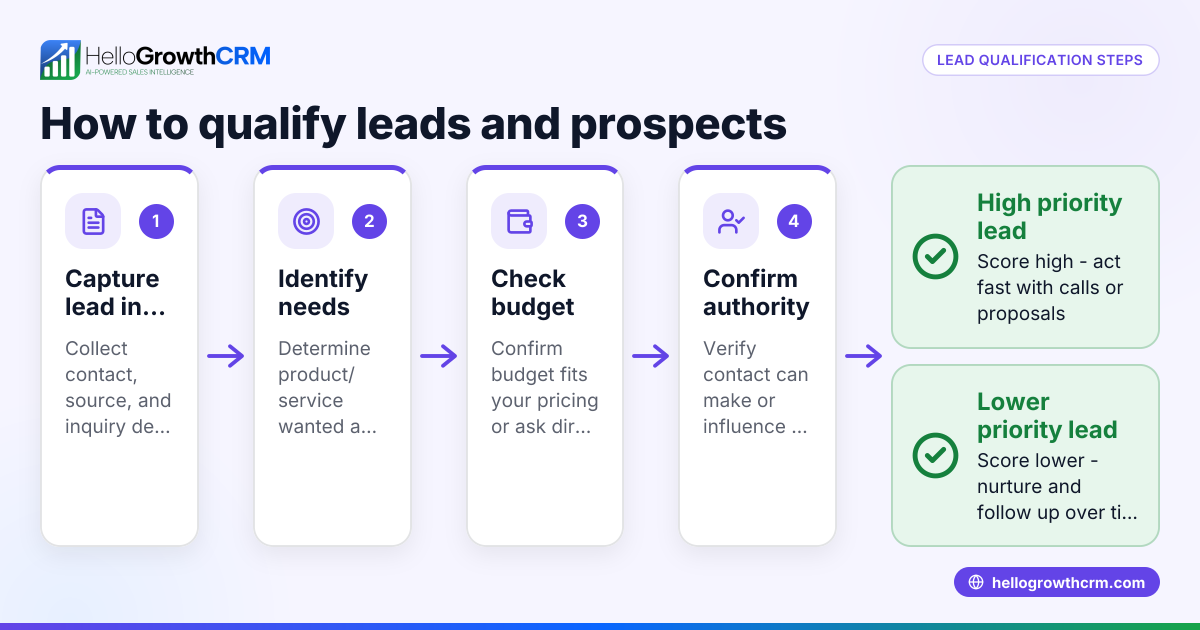
- Capture the prospect’s information accurately
- Collect basic details: full name, phone number, email address.
- Identify the type of insurance interest (e.g., life, health, auto, property).
- Confirm how the prospect heard about your business (referral, website, ad).
- Assess prospect needs and eligibility
- Ask about existing coverage and gaps.
- Identify specific concerns or goals (e.g., family protection, asset coverage).
- Check eligibility criteria such as age limits, health conditions, or credit scores.
- Score the prospect’s readiness to buy
- Determine urgency: immediate need, within 3 months, or casual inquiry.
- Evaluate budget or willingness to pay premiums.
- Rate the prospect on a simple scale (e.g., high, medium, low).
- Prioritize follow-up based on scoring
- High-priority prospects get immediate personalized contact.
- Medium priority prospects receive educational material or scheduled check-ins.
- Low priority prospects are nurtured with newsletters or re-engaged later.
- Schedule meetings or calls for detailed discussions
- Use calendar invites and reminders to ensure no prospect is forgotten.
- Prepare questions tailored to the prospect’s needs.
- Record all interactions and next steps
- Keep detailed notes on prospect preferences, objections, and questions.
- Set tasks for follow-up calls, sending quotes, or additional information.
- Review and refine your prospect list regularly
- Remove unresponsive or disqualified leads.
- Update prospect status as conversations progress.
Following these steps helps insurance agents and financial services professionals maintain an organized sales pipeline and improve conversion rates. For more on managing leads in financial services, see Insurance agents, NBFCs and financial services.
Example (fictional figures)
A Denver, Colorado insurance agency focuses on term life insurance policies. They receive a lead from a web form on 04/15/2026.
- Prospect: John Smith
- Age: 35
- Interested in: Term life insurance
- Current coverage: None
- Budget: $50/month
- Urgency: Wants coverage within 1 month
Step 1: Capture info
- Name = John Smith
- Contact = john.smith@example.com
- Interest = Term life insurance
Step 2: Assess needs
- John has no current coverage and wants to protect his family.
Step 3: Score readiness
- Urgency = immediate (within 1 month)
- Budget = $50/month
- Score = High priority
Step 4: Prioritize
- High priority due to urgency and clear need.
Step 5: Schedule call
- Call set for 04/16/2026 at 10:00 AM
Step 6: Record interaction
- Notes: John is healthy, non-smoker, prefers a 20-year term.
Step 7: Review
- Follow-up scheduled for 04/20/2026 to send quote.
Calculation example:
Assuming the monthly premium is $50, the annual premium is: $50 × 12 = $600
If John chooses a 20-year term, the total premium paid over the term is: $600 × 20 = $12,000
This example shows how detailed information capture and prompt follow-up help convert an insurance prospect into a paying client.
Common mistakes
- Not capturing complete prospect information: Leads to missed opportunities and inefficient follow-up. Prevent by using standardized forms and checklists.
- Ignoring prospect readiness: Contacting uninterested or unready prospects wastes time. Prevent by scoring urgency and budget early.
- Delayed follow-up: Leads lose interest quickly if not contacted promptly. Prevent by setting immediate tasks and reminders.
- Failing to update prospect status: Causes confusion and duplicated efforts. Prevent by regularly reviewing and cleaning the prospect list.
- Overlooking qualification criteria: Trying to sell unsuitable products frustrates prospects. Prevent by verifying eligibility early.
- Relying on spreadsheets or scattered notes: Leads to lost data and missed communication. Prevent by using organized CRM tools designed for insurance and financial services.
For more guidance on managing prospects and leads, see HelloGrowthCRM for the United States and WhatsApp and SMS CRM.
Frequently asked questions
What is an insurance prospect? An insurance prospect is a potential client who has shown interest in insurance products and may be ready to buy. They differ from cold leads by having some level of engagement or inquiry.
How do I qualify an insurance prospect? Qualification involves collecting key information such as coverage needs, eligibility, budget, and urgency. Scoring these factors helps prioritize follow-up efforts and focus sales time on the best opportunities.
Where do insurance prospects come from? Prospects can come from referrals, web forms, marketing campaigns, cold outreach, or events. Each source may require a different approach to qualification and follow-up.
How often should I follow up with a prospect? Follow-up frequency depends on the prospect’s readiness and interest level. High-priority prospects need prompt and frequent contact, while exploratory prospects may require periodic check-ins.
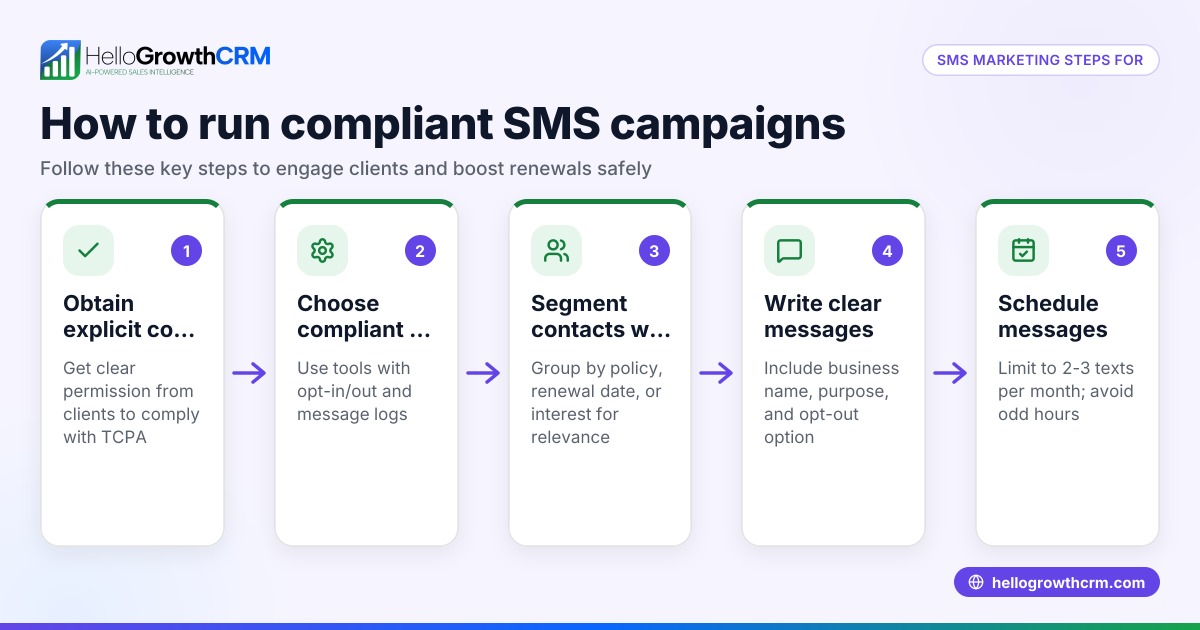
What tools help manage insurance prospects? CRMs designed for financial services can organize prospect data, automate follow-ups, and track interactions. For US businesses, solutions with WhatsApp and SMS integration can improve communication and response times.
Key takeaways
- An insurance prospect is a potential client with interest and some engagement.
- Capturing complete and accurate prospect data is essential for effective follow-up.
- Qualify prospects by assessing needs, eligibility, budget, and urgency.
- Prioritize follow-up based on scoring to focus sales efforts and improve conversion.
- Avoid common mistakes like delayed follow-up, poor data management, and ignoring qualification.
- Use specialized CRM tools to organize and automate prospect management.
Start managing your insurance prospects effectively. Start on the Free Forever plan (200 leads, no credit card).
Ready to put this into practice?
Set up your pipeline, WhatsApp follow-ups, and AI lead scoring in minutes — free, no credit card.
Try HelloGrowthCRM freeGet CRM tips in your inbox
Join thousands of sales professionals who get weekly insights on CRM strategy, AI automation, and pipeline optimization.

The HelloGrowthCRM team publishes guides on CRM strategy, AI sales tools, and revenue operations for small business sales teams.