HelloGrowthCRM software
Built for real small-business sales teams
HelloGrowthCRM helps reps qualify faster, follow up on time, and close more deals—with practical automation in one place.
- AI lead scoring and pipeline visibility
- Built-in dialer, WhatsApp, and email automation
- Sales forecasting and RevOps-ready reporting
Insurance sales pitches work best when they focus on the prospect’s specific concerns and show how your insurance product solves their problem. A good pitch begins by identifying a common risk or worry, then explains how your coverage provides protection or peace of mind, and finishes by inviting the prospect to take the next step, such as receiving a personalized quote. This article covers why crafting effective insurance pitches matters, a step-by-step method to create them, a detailed example using realistic US business figures, common pitfalls to avoid, and ways to track your sales pipeline efficiently.
Why this comes up / what goes wrong
Insurance business owners and accountants in the US often face challenges in communicating the value of their products clearly and quickly. Prospects can feel overwhelmed by insurance jargon or generic offers that don’t address their specific needs. Without a structured sales pitch, agents may forget to emphasize key benefits or fail to follow up promptly, especially when managing multiple leads. This leads to lost sales opportunities and inefficient use of time. Small to mid-sized insurance agencies frequently encounter these issues due to limited resources and time.
Step-by-step
- Identify your prospect’s main concern. Ask questions to uncover what risks they worry about most, such as health, property damage, or liability.
- Select the insurance product that best matches their concern. Focus on features that directly address those risks.
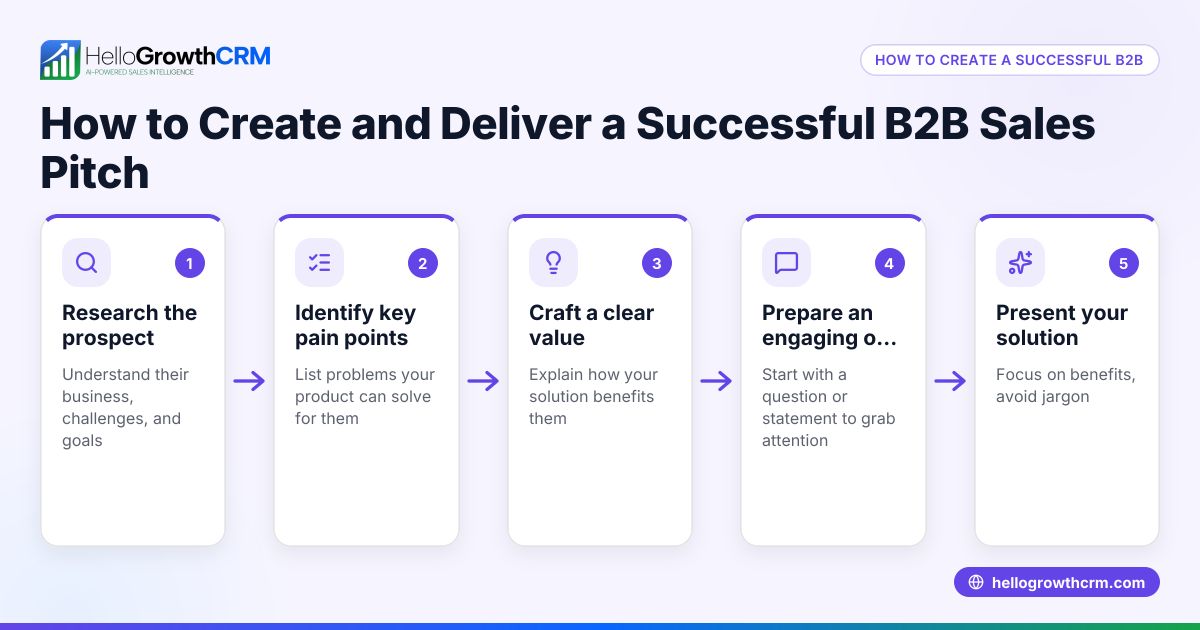
- Create a concise opening statement. Start by mentioning a relatable problem or question to engage your prospect.
- Explain the benefits of your insurance solution. Use clear, simple language to show how it protects the prospect financially or provides peace of mind.
- Share a brief success story or example. This builds trust and shows real-world value.
- Invite the prospect to take the next step. Offer a free quote or consultation to move the conversation forward.
- Set a clear follow-up plan. Schedule a call or meeting and confirm the date.
- Track your pitch progress in a CRM. Use pipeline stages to ensure no leads are forgotten and follow-ups happen on time.
Make sure your pitch avoids technical jargon, stays under two minutes, and ends with a clear call to action. Confirm that follow-up dates and next steps are logged properly.
For more on managing insurance sales pipelines, see Insurance agents, NBFCs and financial services.
Example (fictional figures)
A two-location dental practice in Columbus, Ohio, seeks liability insurance. The agent prepares this pitch:
"Hi, Dr. Smith, I understand that protecting your dental practice from liability claims is essential. Our policy covers legal fees and settlements up to $1,000,000, so you can focus on patient care without worry. Last year, a similar practice avoided a $75,000 out-of-pocket expense because of this coverage. Can I prepare a personalized quote for your locations?"
Follow-up plan:
- Quote sent on 04/10/2026
- Follow-up call scheduled for 04/17/2026
Tracking in CRM:
- Deal created at 'quote sent' stage
- Follow-up reminder set for 04/17/2026
Calculations for the example:
Coverage limit = $1,000,000 Potential avoided out-of-pocket expense = $75,000 Total potential financial protection = $1,000,000 + $75,000 = $1,075,000
This pitch highlights the prospect’s concern, offers a clear financial benefit, uses a relatable example, and sets a next step.
Common mistakes
- Using jargon or technical terms. Prevent this by using simple, clear language.
- Not identifying the prospect’s true concerns. Prevent by asking open-ended questions before pitching.
- Failing to include a clear call to action. Prevent by always ending with a next step, like scheduling a quote.
- Neglecting follow-up scheduling. Prevent by logging follow-up reminders in a CRM.
- Overloading the pitch with too many product details. Prevent by focusing on benefits that matter to the prospect.
- Not tracking pitch progress. Prevent by using pipeline stages in your CRM to monitor deals.
For tools to help with territory management and sales tracking, see HelloGrowthCRM for the United States.
Doing this in HelloGrowthCRM
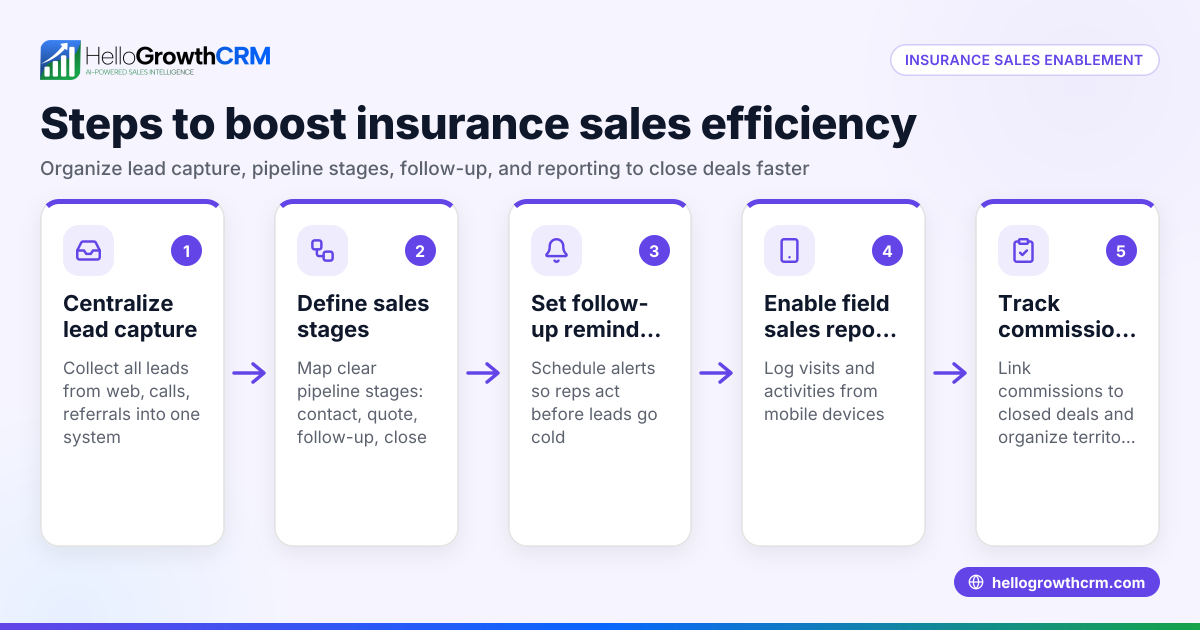
HelloGrowthCRM helps insurance sales teams by tracking deals in a pipeline from first contact through stages like 'quote sent' with follow-up dates, so no lead is forgotten. Field sales reps can log visits directly from their phones, and managers can monitor daily activity. If you don’t have a dedicated sales manager, Managed RevOps support can help keep your follow-up queue active every week. Learn more about these features on WhatsApp and SMS CRM.
Frequently asked questions
What makes an insurance sales pitch effective? An effective pitch focuses on the prospect’s specific risk concerns, explains how your insurance product addresses those risks clearly, uses simple language, and ends with a clear next step like scheduling a quote or call.
How long should an insurance sales pitch be? Keep your pitch under two minutes to maintain the prospect’s attention. Focus on key benefits and avoid overwhelming them with too many details.
What questions should I ask before pitching? Ask about the prospect’s biggest risks, previous insurance experiences, and what coverage features are most important to them. This helps tailor your pitch to their needs.
How can I avoid losing leads after a pitch? Use a CRM to track deals and set follow-up reminders. HelloGrowthCRM’s pipeline feature helps you manage these stages and prevents leads from slipping through.
Can HelloGrowthCRM help with field sales in insurance? Yes, field reps can log visits and activities using their mobile devices, and managers can monitor daily sales routes and activities, improving accountability and follow-up.
Key takeaways
- Start your pitch by identifying the prospect’s main insurance concern.
- Use simple, benefit-focused language and real examples.
- Always end with a clear call to action and schedule follow-up.
- Avoid jargon, too many details, and neglecting follow-up.
- Track your pitches and leads with a CRM pipeline to prevent lost opportunities.
- HelloGrowthCRM supports pipeline tracking, field operations, and managed follow-up.
Start managing your insurance sales pitches effectively with HelloGrowthCRM. Start on the Free Forever plan (200 leads, no credit card).
This article is general information, not tax or legal advice. Rules change; confirm the current position with the IRS or your state's department of revenue, or with your CPA, before acting.
Ready to put this into practice?
Set up your pipeline, WhatsApp follow-ups, and AI lead scoring in minutes — free, no credit card.
Try HelloGrowthCRM freeGet CRM tips in your inbox
Join thousands of sales professionals who get weekly insights on CRM strategy, AI automation, and pipeline optimization.

The HelloGrowthCRM team publishes guides on CRM strategy, AI sales tools, and revenue operations for small business sales teams.