HelloGrowthCRM software
Built for real small-business sales teams
HelloGrowthCRM helps reps qualify faster, follow up on time, and close more deals—with practical automation in one place.
- AI lead scoring and pipeline visibility
- Built-in dialer, WhatsApp, and email automation
- Sales forecasting and RevOps-ready reporting
Marketing to existing customers involves nurturing relationships with people who already know and trust your business. This approach aims to increase repeat purchases, generate referrals, and build long-term loyalty through personalized communication and excellent service. This article explains why small businesses should prioritize this strategy, practical steps to implement it, an example with numbers, common pitfalls, and how HelloGrowthCRM’s features can support these efforts.
Why this comes up / what goes wrong
Many small-business owners focus most of their energy on attracting new customers and neglect the potential of their existing customer base. This often results in missed revenue opportunities because existing customers usually cost less to market to and tend to spend more over time. Without a clear plan, businesses may fail to cross-sell or upsell, lose track of customer preferences, or miss chances to encourage referrals. Poor follow-up, generic messaging, and disconnected customer records can cause customers to lose interest or switch to competitors.
Step-by-step
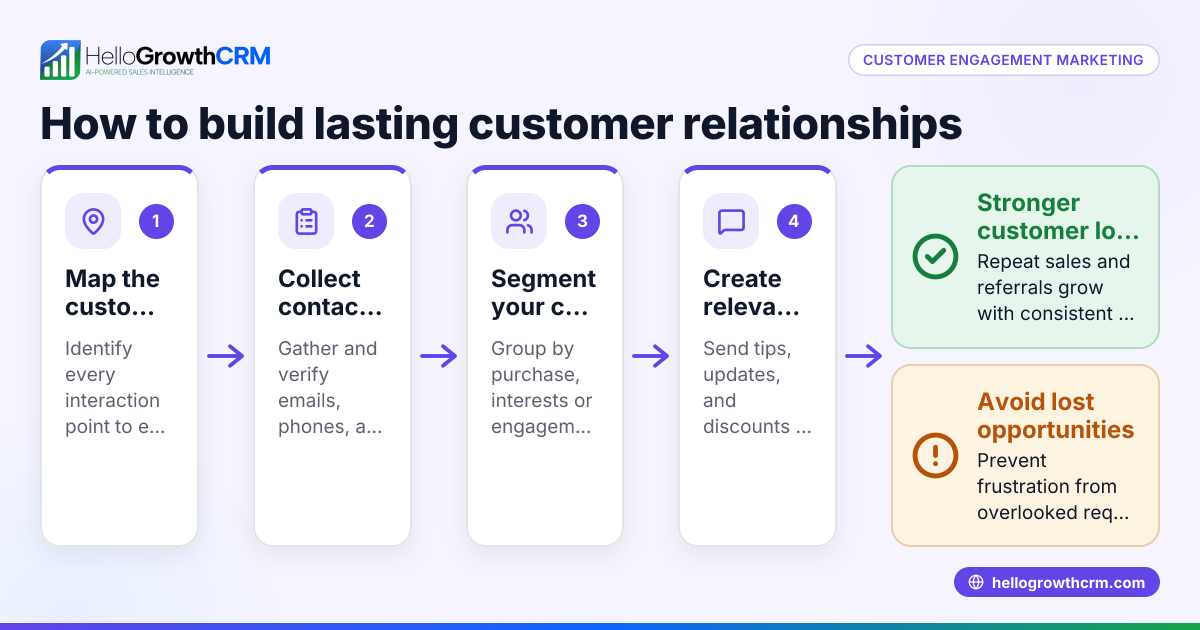
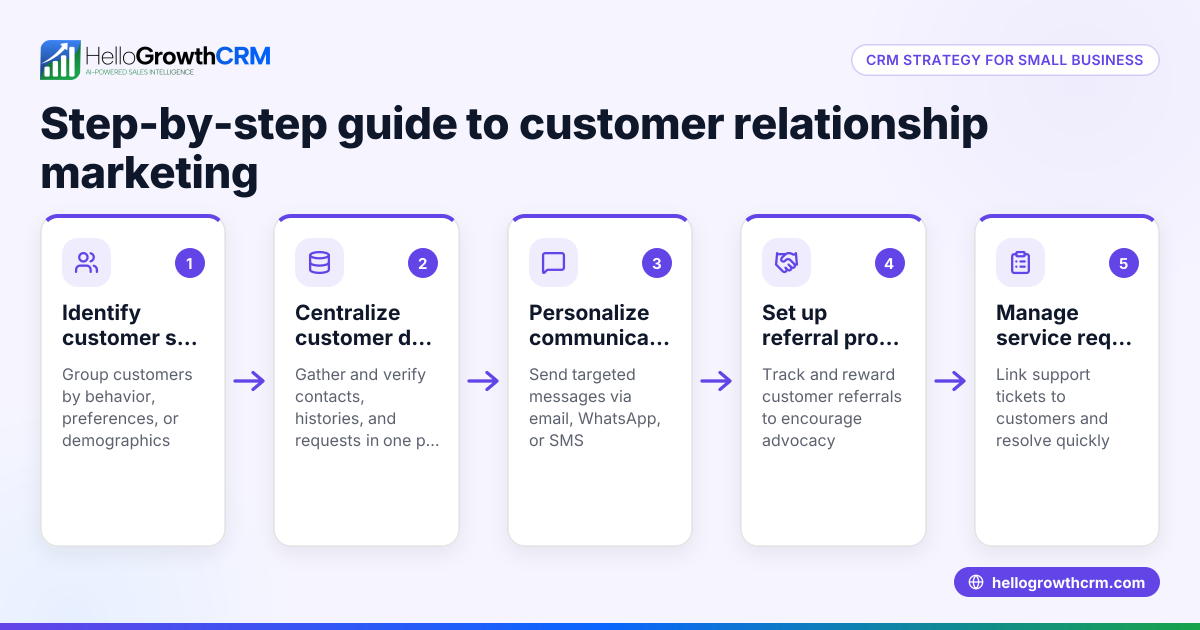
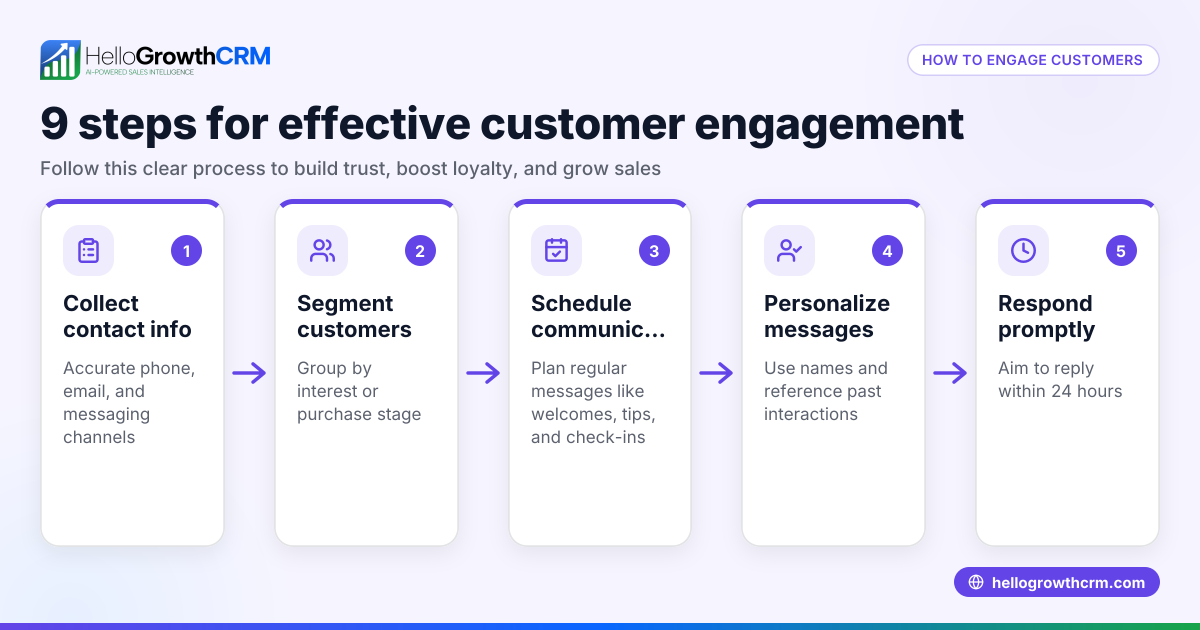
- Segment your customers: Group customers based on purchase history, preferences, or engagement. Check your data regularly to keep segments accurate and relevant.
- Create personalized offers: Design promotions or discounts tailored to each segment. Verify that offers meet customer needs and reflect past buying behavior.
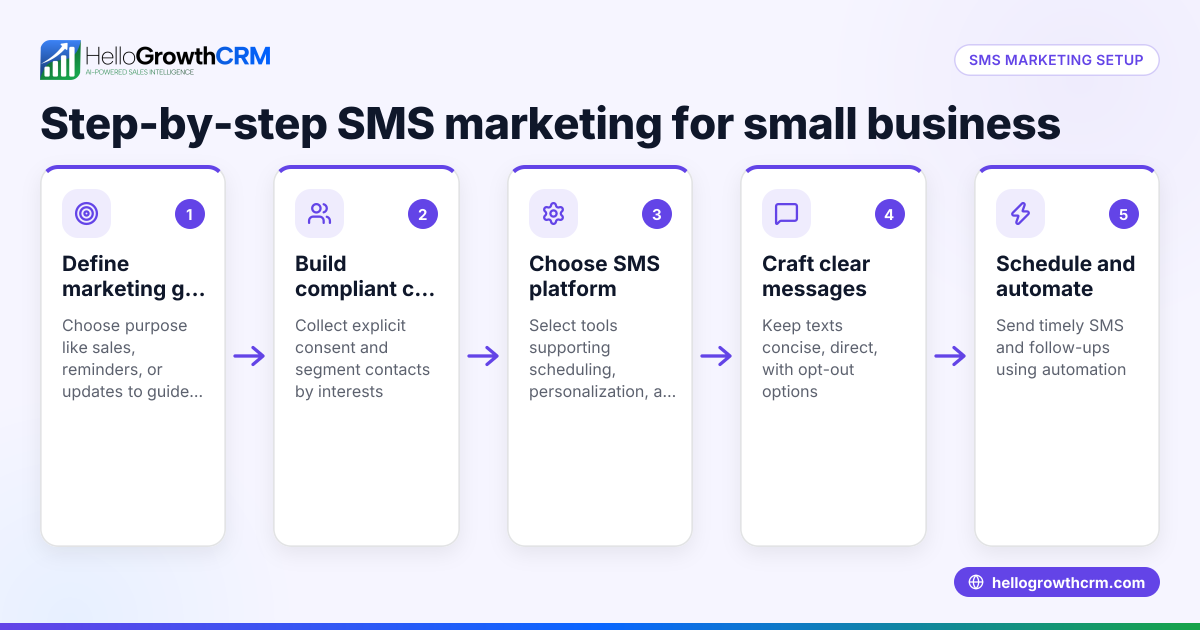
- Use multiple communication channels: Reach customers via email, WhatsApp, SMS, or your branded customer portal. Check that your messages are timely, clear, and relevant.
- Ask for referrals: Encourage happy customers to refer others by making the process simple and rewarding. Track referrals carefully to ensure proper recognition.
- Provide excellent post-sale support: Use support tickets and a knowledge base to handle service requests promptly. Confirm that all interactions stay linked to the customer record for context and continuity.
- Measure engagement and sales: Monitor repeat purchase rates, referral numbers, and customer satisfaction. Adjust your marketing based on these insights.
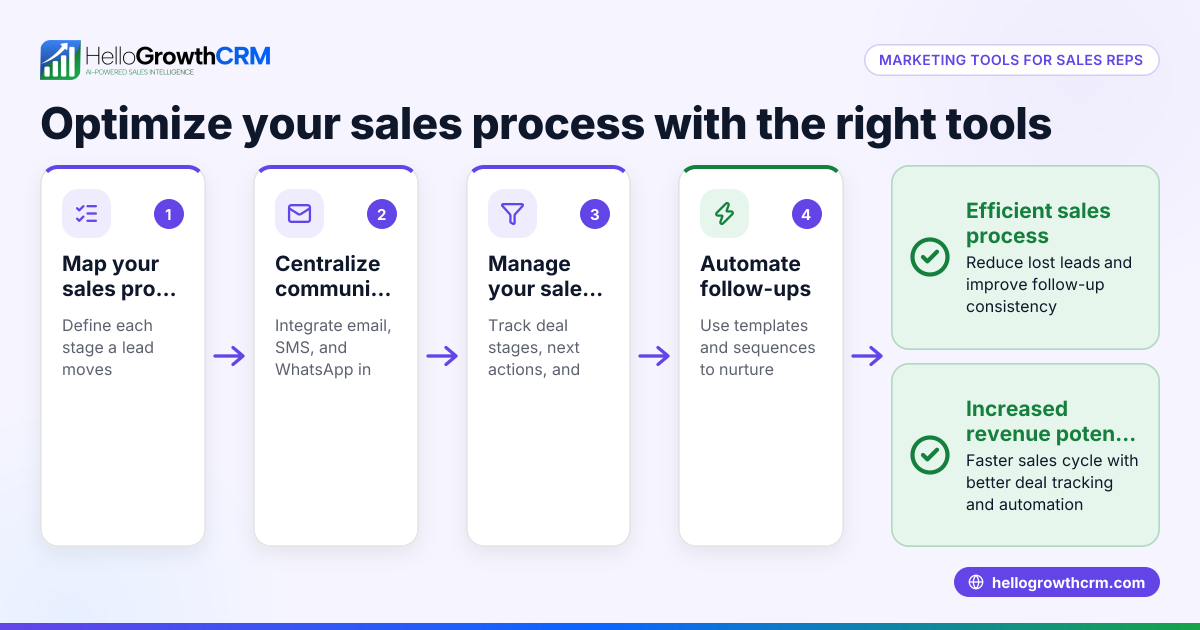
Using a CRM that supports referral tracking and keeps service requests on the same customer record as the deal helps manage these steps efficiently. See more about the customer health score for monitoring engagement.
Example (fictional figures)
Phoenix Home Realty, a residential real-estate team in Phoenix, Arizona, decides to market to existing clients to increase repeat business and referrals.
- They have 500 active customers.
- Average repeat purchase value per customer is $15,000.
- They create a referral program offering $500 per successful referral.
- They expect 50 customers to participate and refer one new client each.
Calculations:
Repeat sales revenue = 500 customers × $15,000 = $7,500,000 Referral cost = 50 referrals × $500 = $25,000
If referrals convert to new sales worth $20,000 each: New sales from referrals = 50 referrals × $20,000 = $1,000,000
Net revenue including referrals = $7,500,000 + $1,000,000 - $25,000 = $8,475,000
This example shows how marketing to existing customers can significantly boost revenue with manageable costs.
Common mistakes
- Ignoring customer segmentation: Prevent this by regularly updating and analyzing customer data to tailor marketing.
- Overloading customers with messages: Avoid by spacing communications and focusing on value.
- Not tracking referrals properly: Use referral tracking tools to ensure no rewards are missed.
- Separating service requests from sales data: Keep all customer interactions linked to the same record to maintain context and improve service.
- Failing to measure results: Regularly review customer engagement and sales metrics to refine your approach.
Using a CRM that supports referral tracking and keeps service requests linked to deals helps avoid these mistakes. Learn about the WhatsApp and SMS CRM capabilities that facilitate this.
Doing this in HelloGrowthCRM
HelloGrowthCRM offers a branded self-service customer portal, referral programme tracking, support tickets, and a knowledge base. After the sale, service requests stay on the same customer record as the deal, keeping all information organized and accessible. This integration helps maintain strong customer relationships and simplifies marketing to your existing base. Learn more about HelloGrowthCRM for the United States.
Frequently asked questions
How often should I contact existing customers? Contact frequency depends on your business and customer preferences. Generally, avoid overwhelming customers; monthly or quarterly updates with valuable offers and information work well.
What types of offers work best for existing customers? Personalized discounts, loyalty rewards, early access to new products, and referral incentives are effective. Tailor offers based on purchase history and customer feedback.
How can I encourage customers to refer others? Make referrals easy with clear instructions and rewards. Use referral tracking to acknowledge and reward customers promptly.
Why is linking service requests to sales records important? It provides context for customer interactions, helping your team deliver better support and identify upsell opportunities.
Can I use WhatsApp and SMS to market to existing customers? Yes, these channels are effective for timely and personal communication. HelloGrowthCRM integrates WhatsApp and SMS sequences to streamline this process.
Key takeaways
- Marketing to existing customers increases repeat sales and referrals at a lower cost than acquiring new customers.
- Segment customers and personalize offers to improve engagement.
- Use multiple channels like email, WhatsApp, and SMS for communication.
- Track referrals and link service requests to customer records for better service.
- Measure results and adjust your marketing based on customer data.
- HelloGrowthCRM supports these efforts with a customer portal, referral tracking, and integrated service tickets.
Marketing to your existing customers is a practical way to grow your business steadily. To get started, try the Free Forever plan with 200 leads and no credit card at Start on the Free Forever plan (200 leads, no credit card).
Ready to put this into practice?
Set up your pipeline, WhatsApp follow-ups, and AI lead scoring in minutes — free, no credit card.
Try HelloGrowthCRM freeGet CRM tips in your inbox
Join thousands of sales professionals who get weekly insights on CRM strategy, AI automation, and pipeline optimization.

The HelloGrowthCRM team publishes guides on CRM strategy, AI sales tools, and revenue operations for small business sales teams.