HelloGrowthCRM software
Built for real small-business sales teams
HelloGrowthCRM helps reps qualify faster, follow up on time, and close more deals—with practical automation in one place.
- AI lead scoring and pipeline visibility
- Built-in dialer, WhatsApp, and email automation
- Sales forecasting and RevOps-ready reporting
OKR for sales means setting Objectives and Key Results to define clear sales goals and measurable outcomes. It helps sales teams focus on what matters, track progress, and improve results. This article explains why sales OKRs matter, how to set them step-by-step, a realistic example, common mistakes to avoid, and how HelloGrowthCRM supports your sales OKRs.
Why this comes up / what goes wrong
Many small and mid-sized business owners struggle with sales because their goals are unclear or too broad. Without clear objectives, sales teams may chase the wrong leads or miss follow-ups. Tracking progress becomes difficult when key results are not defined or measured. This leads to missed quotas, slow follow-up, and lost deals. Business owners often run sales on text messages, email, and spreadsheets, which are not designed to track OKRs or sales pipelines effectively. As a result, teams lack focus and accountability.
Step-by-step
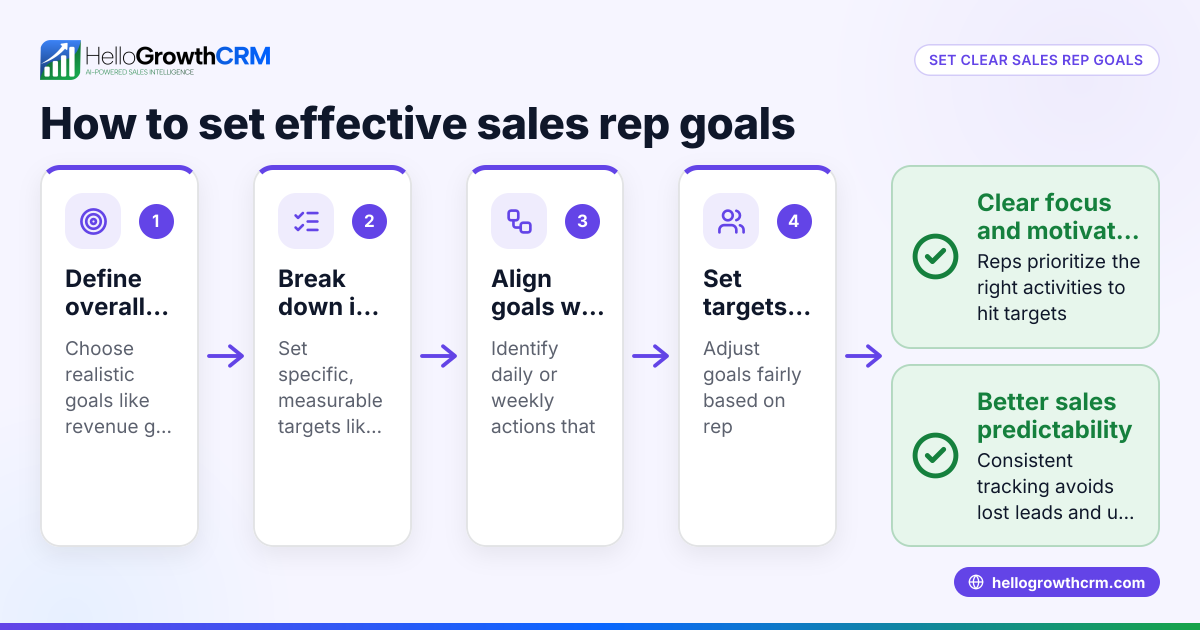
- Define your Sales Objective: Choose a clear, ambitious, but achievable goal for the sales period (usually a quarter). Example: "Increase new customer revenue by 20% in Q3."
- Set Key Results: Identify 3-5 measurable outcomes that show progress toward the objective. Key results should be specific and quantifiable. Example: "Close $500,000 in new contracts," "Increase average deal size by 10%," "Reduce sales cycle time from 45 to 30 days."
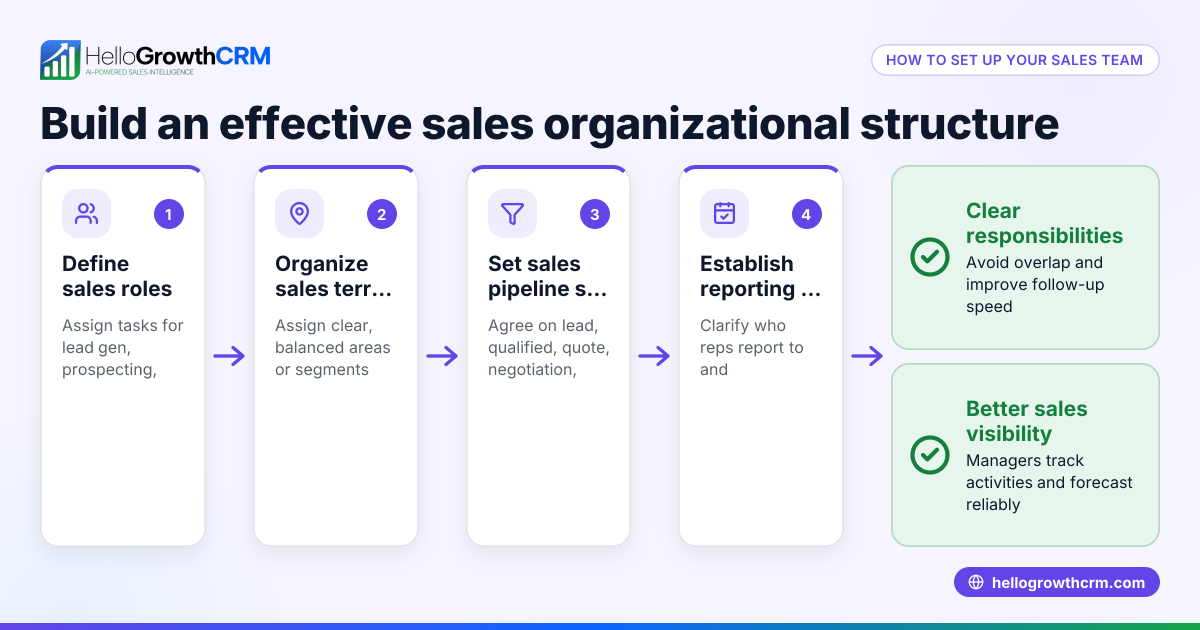
- Assign Responsibility: Decide who owns each key result. This could be individual sales reps or the sales manager. Clear ownership ensures accountability.
- Track Progress Regularly: Use a simple tracking method like a spreadsheet or CRM pipeline to update progress weekly. Check if key results are on track.
- Review and Adjust: At the end of the period, review OKR outcomes. Celebrate wins and analyze misses. Adjust next quarter's OKRs based on lessons learned.
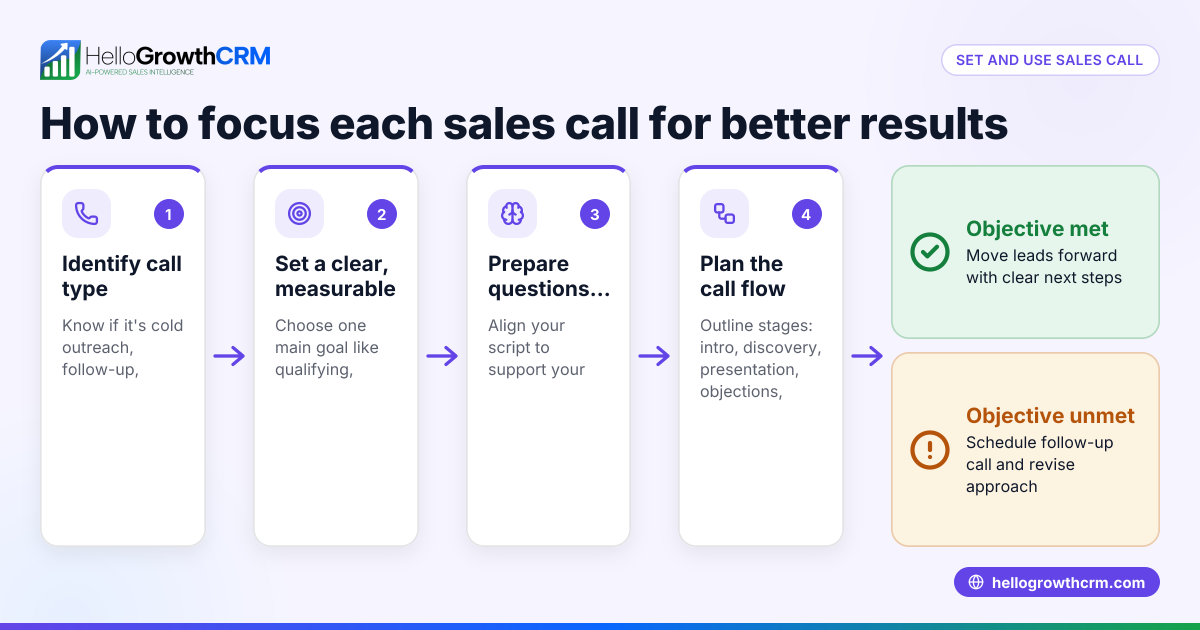
- Integrate OKRs with Sales Processes: Link OKRs to daily sales activities such as lead follow-up, quote sending, and field visits. This keeps the team focused on results, not just activity.
- Communicate OKRs Clearly: Share OKRs with the whole sales team and other stakeholders. Transparency helps align efforts and motivates the team.
Example (fictional figures)
A residential real-estate team in Phoenix, Arizona sets a Q3 sales OKR.
Objective: Increase new home sales revenue by 15% in Q3 (07/01/2026 to 09/30/2026).
Key Results:
- Close $1,150,000 in new home sales.
- Increase average sale price from $350,000 to $370,000.
- Reduce average sales cycle from 60 days to 45 days.
Calculations:
- Previous quarter new home sales revenue = $1,000,000
- Target increase = $1,000,000 × 15% = $150,000
- Target revenue = $1,000,000 + $150,000 = $1,150,000
- Previous average sale price = $350,000
- Target average sale price = $370,000
- Increase = ($370,000 − $350,000) ÷ $350,000 ≈ 5.7%
- Previous sales cycle = 60 days
- Target sales cycle = 45 days
The team tracks weekly leads, deals, and follow-ups in their CRM pipeline to measure progress toward these key results.
Common mistakes
- Setting vague objectives: Avoid generic goals like "Increase sales." Instead, specify the target amount or percentage increase to make it measurable.
- Too many key results: Limit to 3-5 key results to keep focus. Too many dilute effort and tracking.
- Ignoring accountability: Assign clear owners for each key result to ensure responsibility.
- Not tracking progress regularly: Without weekly or biweekly updates, problems go unnoticed.
- Separating OKRs from daily sales work: OKRs should connect to daily activities like follow-ups and deal stages, not just sit in a document.
- Failing to communicate OKRs: Keep the whole team informed to align efforts and motivation.
Prevent these by following the step-by-step method and using tools that integrate OKR tracking with sales activities, such as a CRM with pipeline views and task boards.
Doing this in HelloGrowthCRM
HelloGrowthCRM supports sales OKRs by helping you manage deals and follow-ups effectively. Its Deals (pipeline) feature tracks open opportunities from first contact through close, showing stage movement, probability, and expected value. For example, a quotation sent last week appears as a deal at the 'quote sent' stage with a follow-up date, so it is not forgotten.
For business owners without a sales manager, the Managed RevOps service assigns a revenue specialist to work the follow-up queue weekly, ensuring no lead gets missed. This supports your OKR of improving sales follow-up and closing rates.
If your sales involve field reps, HelloGrowthCRM’s Territories, field operations and commissions tools let reps log visits from their phones, with managers able to see the day’s activity. This helps track progress on OKRs related to field sales and territory coverage.
Learn more about HelloGrowthCRM for the United States and its WhatsApp and SMS CRM features, including the built-in CRM dialer.
Frequently asked questions
What is the difference between sales goals and OKRs? Sales goals are general targets, like hitting $1,000,000 in revenue. OKRs break those goals into measurable key results and link them to specific objectives, adding clarity and accountability.
How often should sales OKRs be reviewed? Review sales OKRs weekly or biweekly to track progress and adjust tactics. Regular reviews help catch issues early and keep the team focused.
Can OKRs work for small sales teams? Yes. OKRs are especially useful for small teams to align efforts and prioritize high-impact activities without overwhelming complexity.
How do I link daily sales activities to OKRs? Track daily tasks like lead follow-ups, quote sending, and client visits in your CRM pipeline or task board. These activities contribute directly to key results.
What if we miss our OKRs? Use misses as learning opportunities. Analyze what held you back, adjust your approach, and set realistic OKRs for the next period.
Key takeaways
- OKR for sales means setting clear objectives and measurable key results to focus your sales efforts.
- Define specific sales objectives, assign key results with owners, and track progress weekly.
- Connect OKRs to daily sales activities like follow-ups and deal stages for better execution.
- Avoid vague goals, too many key results, and lack of accountability.
- HelloGrowthCRM helps manage deals, follow-ups, and field sales activities supporting your OKRs.
Start setting your sales OKRs today to improve focus and results. Start on the Free Forever plan (200 leads, no credit card).
Ready to put this into practice?
Set up your pipeline, WhatsApp follow-ups, and AI lead scoring in minutes — free, no credit card.
Try HelloGrowthCRM freeGet CRM tips in your inbox
Join thousands of sales professionals who get weekly insights on CRM strategy, AI automation, and pipeline optimization.

The HelloGrowthCRM team publishes guides on CRM strategy, AI sales tools, and revenue operations for small business sales teams.