HelloGrowthCRM software
Built for real small-business sales teams
HelloGrowthCRM helps reps qualify faster, follow up on time, and close more deals—with practical automation in one place.
- AI lead scoring and pipeline visibility
- Built-in dialer, WhatsApp, and email automation
- Sales forecasting and RevOps-ready reporting
A re-engagement campaign is a focused outreach aimed at leads or customers who have gone silent or stopped engaging with your business. The goal is to rekindle their interest and encourage them to respond or take action. Small businesses often face this issue when leads collected from web forms, events, or past customers become inactive, risking lost revenue.
Why this comes up / what goes wrong
Small business owners frequently collect leads through multiple channels like website forms, email lists, or trade shows. Over time, some of these contacts stop responding to emails, calls, or messages. This can happen because of changing priorities, lack of timely follow-up, or simply forgetting about your business. Without a systematic way to re-engage these contacts, potential sales slip away unnoticed. Running a re-engagement campaign helps revive these relationships before they go cold permanently.
Step-by-step
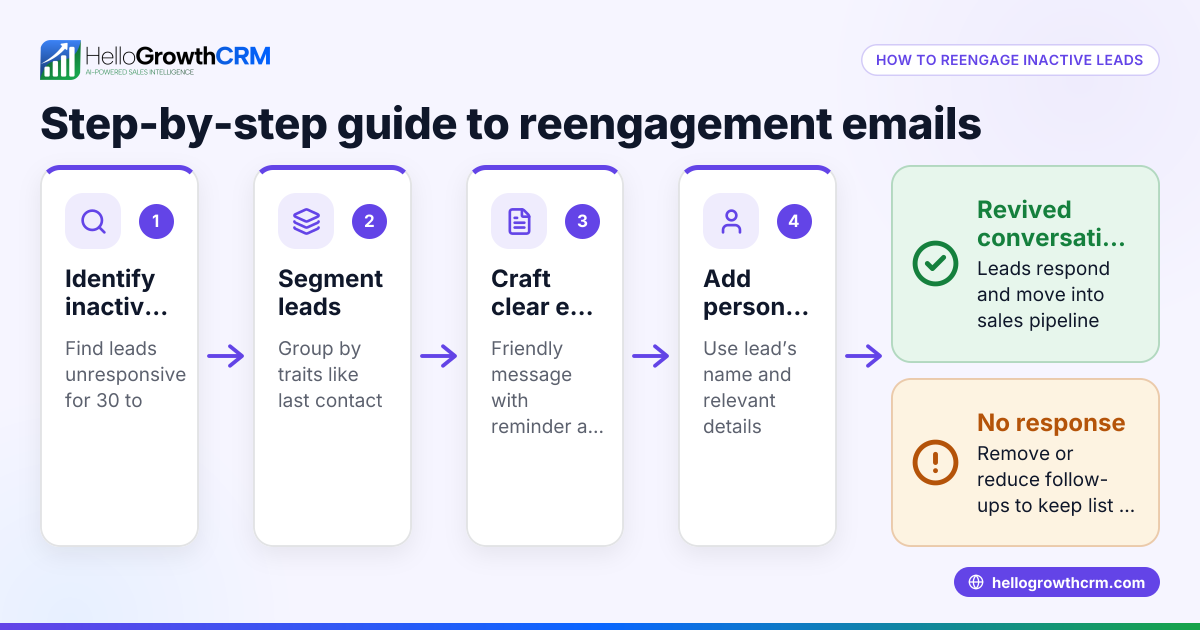
- Identify inactive leads or customers
- Pull a list of contacts who haven’t responded or engaged for a set period, based on what makes sense for your business.
- Check your CRM or spreadsheets for last contact dates to find these inactive contacts.
- Segment your list
- Group contacts by previous interaction type, purchase history, or lead source.
- Tailor messages to each segment to make your outreach more relevant and personal.
- Craft your message sequence
- Develop a series of 3 to 5 personalized messages spaced over one to two weeks.
- Include value offers, helpful content, or direct questions to encourage replies.
- Make sure each message clearly invites a response or action.
- Choose communication channels
- Decide which channels to use based on your contacts’ past preferences: email, SMS, WhatsApp, or phone calls.
- Using multiple channels can increase the chance of re-engagement.
- Schedule and automate follow-ups
- Set up your message sequence to send automatically at planned intervals.
- Stop the sequence immediately once the contact replies to avoid overwhelming them.
- Monitor results and adjust
- Track open rates, reply rates, and conversions to see how your campaign performs.
- Refine your message content or timing based on what works best.
- Follow up personally if needed
- For contacts who respond, assign a sales rep to continue the conversation and close the deal.
Using a CRM with automation features can simplify these steps and ensure no lead is forgotten.
Example (fictional figures)
A B2B software reseller in Denver, Colorado, has 500 leads who have not responded in over 60 days. They decide to run a re-engagement campaign over two weeks using a five-step message sequence.
- Total inactive leads: 500
- Expected response rate: 10% (50 leads)
- Average deal value: $3,000
Potential revenue from re-engaged leads:
50 leads × $3,000 = $150,000
If the campaign costs $1,000 to run (including software and labor), the net gain is:
$150,000 − $1,000 = $149,000
This example shows how re-engagement can unlock significant revenue from dormant leads.
Common mistakes
- Sending generic messages: Prevent this by segmenting your list and personalizing each message to the recipient’s interests and history.
- Following up too aggressively: Space your messages reasonably over days or weeks and stop outreach immediately on reply to avoid annoying contacts.
- Ignoring preferred communication channels: Use WhatsApp, SMS, or email based on what your contacts respond to best (WhatsApp and SMS CRM).
- Failing to track results: Monitor open and response rates to identify what works and improve future campaigns.
- Manual follow-up overload: Automate your sequences and let the system stop outreach once a reply arrives to save time (built-in CRM dialer).
Doing this in HelloGrowthCRM
HelloGrowthCRM offers Sequences and campaigns that automate multi-step outreach workflows. You can set up a five-step follow-up over two weeks that runs on its own and stops the moment the prospect replies. This automation ensures timely, consistent re-engagement without manual effort. Learn more about these features and how they fit US small businesses HelloGrowthCRM for the United States.
Frequently asked questions
What is the main goal of a re-engagement campaign? The main goal is to reconnect with inactive leads or customers and encourage them to respond or take a desired action, such as booking a call or making a purchase.
How often should I send messages in a re-engagement campaign? Typically, messages are spaced over one to two weeks with three to five touchpoints. This timing balances persistence with respectfulness to avoid overwhelming contacts.
Which channels work best for re-engagement? Email, SMS, and WhatsApp are effective channels. Using the channel your contact prefers increases chances of response. Combining channels can improve results.
How do I know if my re-engagement campaign is working? Track metrics like open rates, reply rates, and conversions. A rising response rate indicates success. Adjust your messaging or timing if results are low.
Can I automate re-engagement campaigns? Yes, HelloGrowthCRM supports automated sequences that send timed messages and stop automatically when a prospect replies, saving time and preventing over-contacting.
Key takeaways
- A re-engagement campaign targets inactive leads to renew interest and prompt action.
- Segment your contacts and personalize messages for better results.
- Use a multi-step sequence over one to two weeks, stopping outreach on reply.
- Choose channels like email, SMS, or WhatsApp based on contact preferences.
- Automate follow-ups with HelloGrowthCRM’s sequences to save time and improve consistency.
Re-engagement campaigns help small businesses recover lost opportunities and boost sales without extra lead generation costs. Start your own campaign today to revive dormant contacts.
Start your re-engagement campaign easily with HelloGrowthCRM. Start on the Free Forever plan (200 leads, no credit card).
Ready to put this into practice?
Set up your pipeline, WhatsApp follow-ups, and AI lead scoring in minutes — free, no credit card.
Try HelloGrowthCRM freeGet CRM tips in your inbox
Join thousands of sales professionals who get weekly insights on CRM strategy, AI automation, and pipeline optimization.

The HelloGrowthCRM team publishes guides on CRM strategy, AI sales tools, and revenue operations for small business sales teams.